Prescription Pad PDF Template

Prescription Pad PDF Template

The Prescription Pad form is a vital document used by healthcare providers to prescribe medications to patients. It ensures that the right medication is given to the right person, minimizing errors and enhancing patient safety. Ready to get started? Fill out the form by clicking the button below.

Article Guide

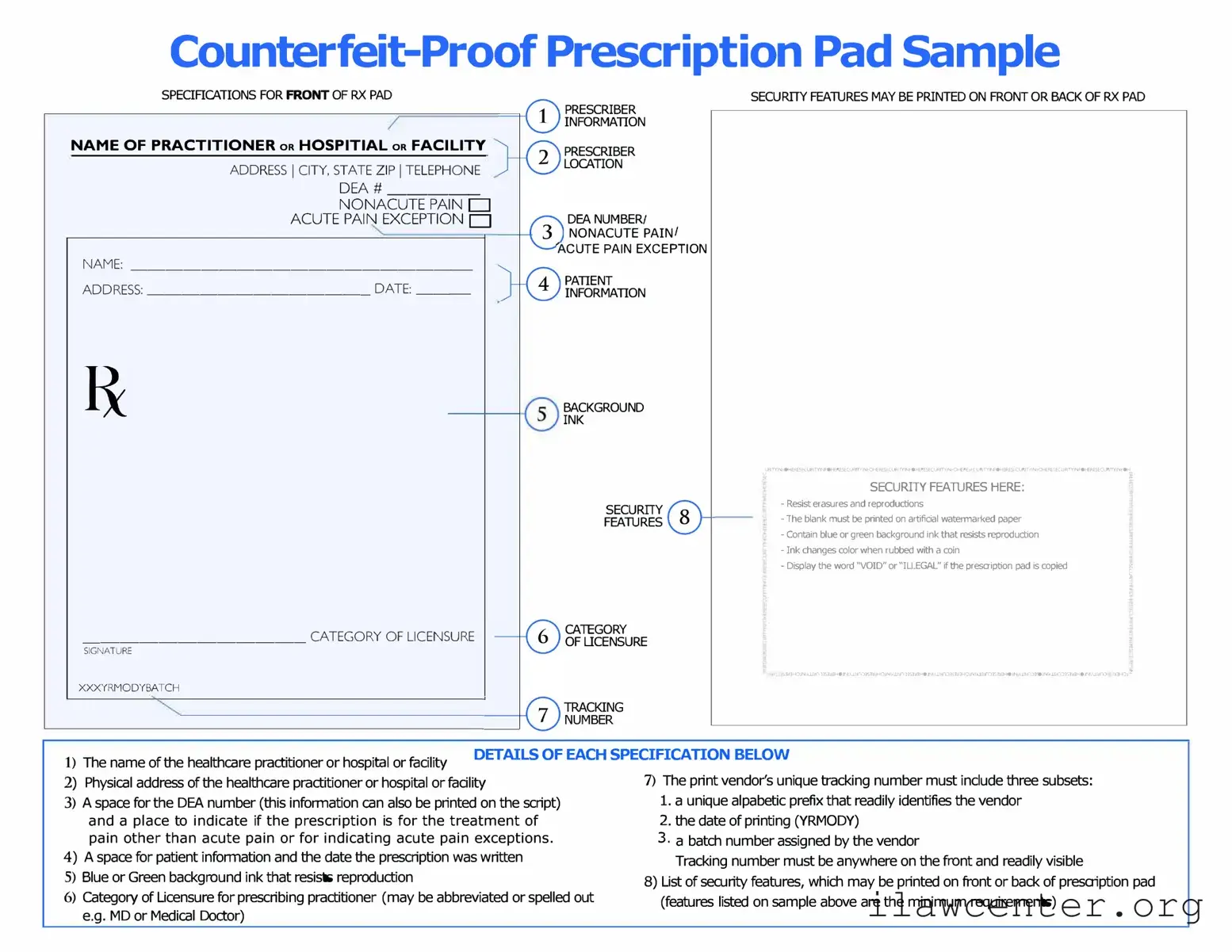
The Prescription Pad form is an essential tool in the healthcare system, serving as a means for healthcare providers to communicate medication needs to pharmacies. It includes critical information such as the patient's name, date of birth, and the specific medication prescribed. Additionally, the form requires the prescribing physician's details, including their name and contact information, to ensure proper verification and accountability. Dosage instructions and the duration of the treatment are also clearly outlined, allowing for safe and effective medication management. Furthermore, the Prescription Pad form often features security measures to prevent tampering and misuse, safeguarding both patients and providers. This form is not just a piece of paper; it represents a vital part of the healthcare process, ensuring that patients receive the correct medications in a timely manner.

Prescription Pad Preview


FRONT 
NAME OF PRACTITIONER oR HOSPITIAL oR FACILITY

















 
 






XXXYRMODYBATCH








  








  
 

 
 
    
  
 
 
 
 
 
 

 

 


File Properties

Fact Name Description
Definition A Prescription Pad form is a document used by healthcare providers to prescribe medications to patients.
State-Specific Requirements Each state may have its own requirements for the format and content of prescription pads.
Governing Laws In the United States, the governing laws for prescription pads include the Controlled Substances Act and state pharmacy regulations.
Security Features Prescription pads often include security features to prevent forgery and unauthorized use.
Record Keeping Healthcare providers are typically required to maintain records of prescriptions written for a specified period.
Electronic Prescribing Many states encourage or require electronic prescribing, which can enhance safety and efficiency.

Instructions on Utilizing Prescription Pad

Completing the Prescription Pad form is an important step in ensuring that the necessary medications are provided accurately. Follow these steps carefully to fill out the form correctly.

  1. Begin by entering the patient's full name in the designated field.
  2. Next, fill in the patient's date of birth to confirm their identity.
  3. Provide the patient's address, including street, city, state, and zip code.
  4. Indicate the date on which the prescription is being written.
  5. List the medication name, including the dosage and frequency of administration.
  6. Specify the quantity of the medication to be dispensed.
  7. Include any special instructions for the pharmacist, if necessary.
  8. Sign the form with your full name and credentials.
  9. Finally, ensure that all information is legible and accurate before submitting the form.

Important Facts about Prescription Pad

What is a Prescription Pad form?

The Prescription Pad form is a standardized document used by healthcare providers to prescribe medications to patients. It typically includes essential information such as the patient's name, the medication prescribed, dosage instructions, and the prescribing physician's details. This form ensures that prescriptions are clear and legally valid, facilitating safe and effective patient care.

Who can use a Prescription Pad form?

Only licensed healthcare professionals, such as physicians, nurse practitioners, and physician assistants, are authorized to use a Prescription Pad form. These individuals must have the appropriate credentials and training to prescribe medications. The form serves as a formal request for a pharmacist to dispense the specified medication to a patient.

What information is required on the Prescription Pad form?

A complete Prescription Pad form typically requires several key pieces of information. This includes the patient's full name and date of birth, the medication name, dosage, route of administration, frequency of intake, and the duration of treatment. Additionally, the prescriber must include their name, contact information, and signature to validate the prescription.

How is a Prescription Pad form different from a regular note?

A Prescription Pad form is specifically designed for the purpose of prescribing medications. Unlike a regular note, which may contain general information or instructions, the Prescription Pad form adheres to specific legal and regulatory requirements. It is a formal document that can be presented to a pharmacy for medication dispensing, whereas a regular note may not carry the same legal weight.

Can a Prescription Pad form be sent electronically?

Yes, many healthcare providers now use electronic health records (EHR) systems that allow for electronic prescriptions. This method enhances efficiency and reduces the risk of errors associated with handwritten prescriptions. However, it is essential for the prescriber to ensure that the electronic prescription complies with all applicable laws and regulations.

What should I do if I lose my Prescription Pad form?

If a Prescription Pad form is lost or stolen, it is crucial to report the incident to the appropriate authorities immediately. Healthcare providers should notify their licensing board and take steps to prevent unauthorized use of the lost form. Additionally, they may need to issue a replacement prescription to the patient, ensuring continuity of care while adhering to legal protocols.

Common mistakes

Filling out a Prescription Pad form may seem straightforward, but there are common mistakes that can lead to complications. One frequent error is failing to include the patient's full name. Without this crucial information, pharmacists may struggle to verify the prescription, which can delay treatment and potentially put the patient’s health at risk.

Another common mistake is neglecting to specify the dosage clearly. Ambiguities in dosage can lead to misunderstandings, resulting in patients receiving too much or too little of their medication. It’s essential to write the dosage in a way that is easy to read and understand, avoiding abbreviations that could be misinterpreted.

Many people also forget to include the date on the Prescription Pad form. The date is important because it indicates when the prescription was written. Without it, there could be confusion about the validity of the prescription, especially if the medication is time-sensitive or has refill limits.

Additionally, some individuals mistakenly skip the section for the prescriber’s signature. A prescription without a signature is not legally valid, meaning that pharmacists cannot fill it. This oversight can lead to unnecessary delays in obtaining medication, which can be frustrating for both patients and healthcare providers.

Lastly, another error occurs when the prescriber does not provide contact information. Including a phone number or email address is crucial for pharmacists who may need to clarify details about the prescription. If questions arise and there is no way to reach the prescriber, it can lead to significant delays in patient care.

Documents used along the form

When managing prescriptions, several forms and documents may be necessary to ensure everything runs smoothly. Here’s a list of common documents that are often used alongside the Prescription Pad form.

  • Patient Information Form: This document collects essential details about the patient, including their name, contact information, and medical history.
  • Insurance Information Form: This form captures the patient’s insurance details to facilitate billing and verify coverage for prescribed medications.
  • Medication History Form: This document outlines the patient’s previous medications, allergies, and any adverse reactions to drugs, helping providers make informed decisions.
  • Consent Form: Patients sign this form to give permission for treatment and to acknowledge understanding of the prescribed medications and their potential side effects.
  • Referral Form: This document is used when a patient needs to see a specialist. It includes relevant information about the patient's condition and the reason for the referral.
  • Follow-Up Appointment Form: This form schedules a follow-up visit to monitor the patient's progress and make any necessary adjustments to their treatment plan.
  • Medication Administration Record (MAR): This document tracks the administration of medications, ensuring that patients receive the correct dosages at the right times.
  • Discharge Instructions: When a patient is released from care, this form provides important information about medication use, follow-up appointments, and signs to watch for.

These documents play a vital role in patient care, ensuring that all necessary information is communicated effectively. Proper management of these forms helps streamline the prescription process and enhances patient safety.

Similar forms

  • Medical Prescription Form: This document is used by healthcare providers to prescribe medications to patients. Like the Prescription Pad, it includes details such as the patient's name, medication name, dosage, and instructions for use.

  • Order Form: An order form is utilized in various industries to request goods or services. Similar to the Prescription Pad, it specifies what is needed, who is requesting it, and any relevant details to fulfill the order.

  • Referral Form: A referral form is used by healthcare professionals to direct patients to specialists. It shares similarities with the Prescription Pad in that it contains patient information and details about the recommended care.

  • Authorization Form: This document grants permission for a specific action, often in healthcare or legal contexts. Like the Prescription Pad, it requires signatures and contains essential information to ensure clarity and compliance.

Dos and Don'ts

When filling out the Prescription Pad form, attention to detail is crucial. Here are five important dos and don'ts to keep in mind:

  • Do ensure all patient information is accurate and complete.
  • Do write legibly to avoid any misunderstandings regarding the medication.
  • Do include the correct dosage and frequency of the medication.
  • Don't leave any sections of the form blank unless specifically instructed.
  • Don't use abbreviations that could lead to confusion.

Following these guidelines can help prevent errors and ensure that patients receive the correct medications in a timely manner.

Misconceptions

Many people have misunderstandings about the Prescription Pad form. These misconceptions can lead to confusion and improper use of the form. Here are four common misconceptions:

  • The Prescription Pad form is only for doctors. While it is primarily used by healthcare providers, other authorized professionals, such as nurse practitioners and physician assistants, can also use it to prescribe medications.
  • All prescriptions must be handwritten. This is not true. Electronic prescriptions are valid and often preferred for their convenience and accuracy. The Prescription Pad form can be used both in handwritten and electronic formats.
  • Prescriptions can be filled anywhere. Not all pharmacies accept every prescription. Patients should ensure that the pharmacy they choose is able to fill the specific medication prescribed on the form.
  • Once a prescription is written, it cannot be changed. This is a misconception. If a change is necessary, the healthcare provider can issue a new prescription or modify the existing one, depending on the situation.

Understanding these points can help ensure that the Prescription Pad form is used correctly and effectively.

Key takeaways

When using the Prescription Pad form, it’s essential to understand its purpose and how to fill it out correctly. Here are some key takeaways to keep in mind:

  1. Patient Information: Always include the patient's full name, date of birth, and contact information to ensure accurate identification.
  2. Medication Details: Clearly list the name of the medication, dosage, and frequency. This helps prevent any confusion regarding the prescription.
  3. Prescriber Information: Provide your full name, contact number, and medical license number. This establishes your authority to prescribe.
  4. Signature: Always sign the prescription. An unsigned prescription is not valid and cannot be filled by a pharmacy.
  5. Refills: Specify the number of refills allowed. This gives the patient clear instructions on how to manage their medication.
  6. Special Instructions: If there are any specific instructions for the patient or pharmacist, include them clearly on the form.
  7. Controlled Substances: Be aware of the regulations surrounding controlled substances. Ensure compliance with state and federal laws.
  8. Formatting: Use legible handwriting or type the prescription to avoid any misinterpretation of the medication details.
  9. Expiration Date: Note that prescriptions have an expiration date. Inform patients about the timeframe in which they need to fill their prescription.
  10. Record Keeping: Maintain a copy of the prescription for your records. This can be helpful for future reference or in case of disputes.

By following these guidelines, you can ensure that your Prescription Pad form is filled out correctly and effectively serves its purpose.