Fillable Purchase Agreement Addendum Document

Fillable Purchase Agreement Addendum Document

The Purchase Agreement Addendum form is a legal document that modifies or adds to the terms of an existing purchase agreement. This addendum allows parties involved in a transaction to clarify specific details or address new circumstances that may arise after the initial agreement has been signed. To ensure all parties are on the same page, it is essential to complete this form accurately.

For assistance in filling out the Purchase Agreement Addendum, please click the button below.

Article Guide

When navigating the complex world of real estate transactions, clarity and precision are paramount. One essential tool that helps ensure both parties are on the same page is the Purchase Agreement Addendum form. This document serves as a supplementary agreement to the original purchase contract, allowing buyers and sellers to modify terms, add conditions, or clarify details that may have emerged after the initial agreement was signed. Whether it's addressing changes in financing, extending deadlines, or specifying contingencies related to inspections or repairs, the addendum plays a crucial role in protecting the interests of all involved. By providing a clear outline of any adjustments or additional agreements, this form helps prevent misunderstandings and disputes, fostering a smoother transaction process. Understanding its components and how to properly utilize the Purchase Agreement Addendum can empower both buyers and sellers, ensuring that their rights and responsibilities are well-defined throughout the journey of property ownership.

Purchase Agreement Addendum Preview

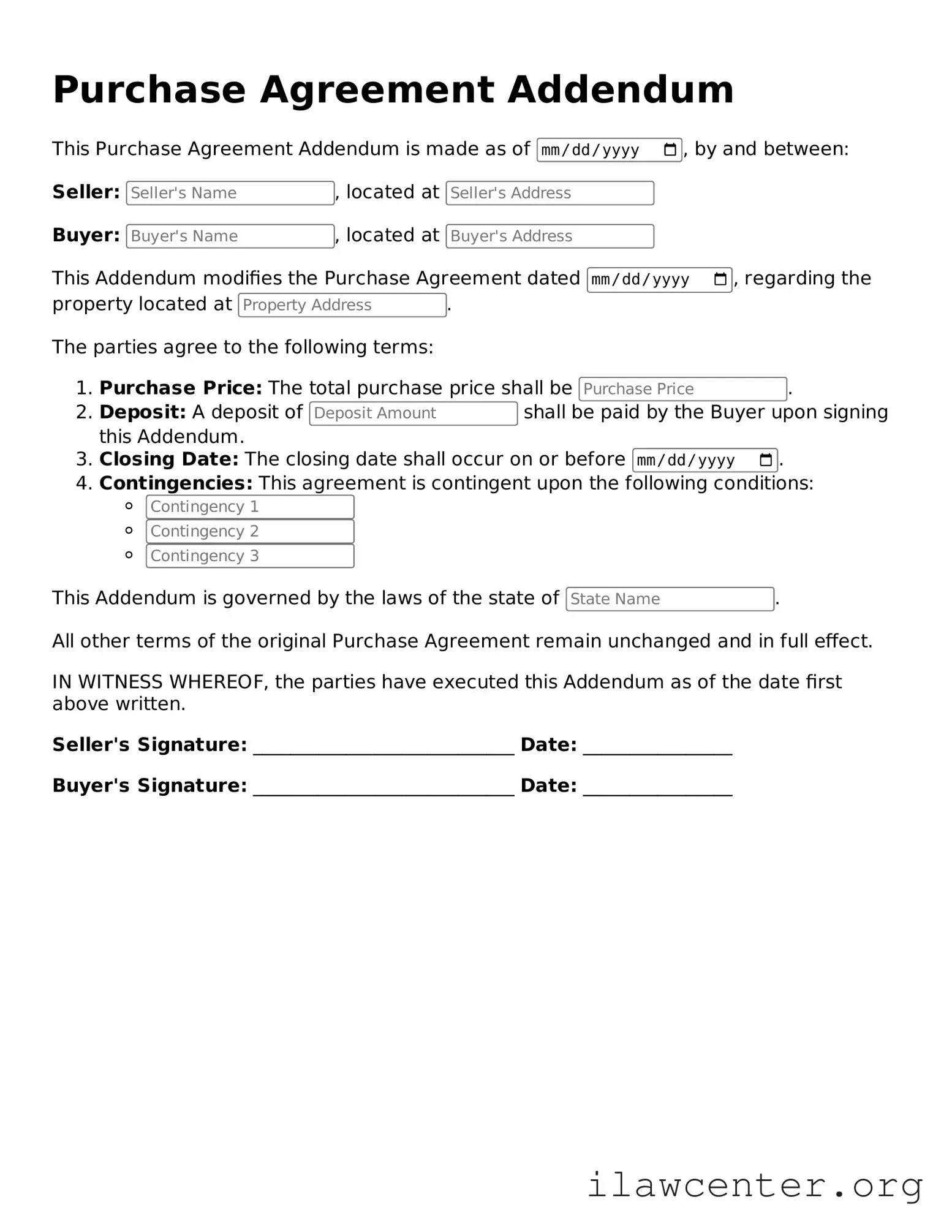
Purchase Agreement Addendum

This Purchase Agreement Addendum is made as of , by and between:

Seller: , located at

Buyer: , located at

This Addendum modifies the Purchase Agreement dated , regarding the property located at .

The parties agree to the following terms:

  1. Purchase Price: The total purchase price shall be .
  2. Deposit: A deposit of shall be paid by the Buyer upon signing this Addendum.
  3. Closing Date: The closing date shall occur on or before .
  4. Contingencies: This agreement is contingent upon the following conditions:

This Addendum is governed by the laws of the state of .

All other terms of the original Purchase Agreement remain unchanged and in full effect.

IN WITNESS WHEREOF, the parties have executed this Addendum as of the date first above written.

Seller's Signature: ____________________________ Date: ________________

Buyer's Signature: ____________________________ Date: ________________

PDF Form Characteristics

Fact Name Description
Purpose The Purchase Agreement Addendum is used to modify or add terms to an existing purchase agreement between parties.
State-Specific Forms Different states may have specific requirements for the addendum. Always check your state’s regulations to ensure compliance.
Governing Laws In the U.S., the governing laws vary by state. For example, California law governs agreements made within California.
Signature Requirement All parties involved must sign the addendum for it to be legally binding. This ensures that everyone agrees to the changes.
Importance of Clarity Clearly outline any changes to avoid misunderstandings. Ambiguity can lead to disputes down the line.

Instructions on Utilizing Purchase Agreement Addendum

Completing the Purchase Agreement Addendum form is an important step in your real estate transaction. This document allows you to modify or add terms to an existing purchase agreement. Follow these steps carefully to ensure that all necessary information is accurately provided.

  1. Begin by entering the date at the top of the form. This helps to establish a clear timeline for the agreement.
  2. Identify the parties involved in the transaction. Include the full names of the buyer(s) and seller(s) as they appear in the original purchase agreement.
  3. Reference the original purchase agreement by including its date and any relevant identification numbers. This ensures clarity and avoids confusion.
  4. Clearly state the specific changes or additions you wish to make to the original agreement. Be concise and precise in your language.
  5. If applicable, include any new terms, conditions, or contingencies that you want to introduce. Make sure these are clearly defined.
  6. Provide spaces for all parties to sign and date the addendum. Each party must acknowledge the changes for the addendum to be valid.
  7. Review the completed form for accuracy. Ensure that all information is correct and that there are no missing signatures.
  8. Make copies of the signed addendum for all parties involved. Distributing copies ensures everyone has the updated terms for their records.

Important Facts about Purchase Agreement Addendum

What is a Purchase Agreement Addendum?

A Purchase Agreement Addendum is a document that modifies or adds to an existing purchase agreement. It allows both parties to clarify terms, add contingencies, or make other adjustments without needing to rewrite the entire agreement. This flexibility can be crucial in real estate transactions, where conditions may change after the initial agreement is signed.

When should I use a Purchase Agreement Addendum?

You should consider using a Purchase Agreement Addendum whenever there are changes to the terms of your original agreement. This could include adjustments to the purchase price, changes in closing dates, or the addition of contingencies related to inspections or financing. If both parties agree to these changes, an addendum is a straightforward way to document them.

How do I create a Purchase Agreement Addendum?

Creating a Purchase Agreement Addendum is relatively simple. Begin by referencing the original agreement, including the date and parties involved. Clearly outline the changes or additions you wish to make. Both parties should review the document carefully and sign it to indicate their agreement. It’s often helpful to consult with a real estate professional or legal advisor to ensure that the addendum is clear and enforceable.

Is a Purchase Agreement Addendum legally binding?

Yes, a Purchase Agreement Addendum is legally binding, provided it is signed by all parties involved in the original purchase agreement. Once signed, it becomes part of the original contract. However, it’s important to ensure that the terms are clear and agreed upon to avoid any disputes later on.

Can a Purchase Agreement Addendum be used for any type of purchase?

While Purchase Agreement Addendums are commonly used in real estate transactions, they can also be applied to other types of purchases where a formal agreement exists. This includes business sales, vehicle purchases, or any contractual agreement where modifications are necessary. Just ensure that the changes are relevant to the specific context of the agreement.

What happens if one party does not agree to the changes in the addendum?

If one party does not agree to the changes proposed in the addendum, the original purchase agreement remains in effect. Both parties must consent to the modifications for the addendum to be valid. Open communication is key; discussing concerns or negotiating terms can often lead to a mutually acceptable solution.

Do I need a lawyer to draft a Purchase Agreement Addendum?

While it is not strictly necessary to hire a lawyer to draft a Purchase Agreement Addendum, it can be beneficial. A legal professional can help ensure that the language is clear and that all necessary elements are included. This can help prevent misunderstandings or disputes in the future. If you are unsure about the process, consulting with a lawyer is a wise choice.

How do I ensure that my Purchase Agreement Addendum is enforceable?

To ensure that your Purchase Agreement Addendum is enforceable, make sure it is clear, specific, and signed by all parties involved. Include details such as the date, the original agreement reference, and the exact changes being made. Keeping a copy of the signed addendum with the original agreement is also important for future reference.
Common mistakes

Filling out a Purchase Agreement Addendum form can be a straightforward process, but several common mistakes can lead to complications. One frequent error is failing to include all necessary parties. It is crucial to ensure that every individual or entity involved in the transaction is listed. Omitting a party can lead to disputes or delays in the closing process.

Another mistake is not specifying the correct property details. Buyers and sellers must accurately describe the property, including its address and any relevant identifiers. Incomplete or incorrect information can result in confusion and potential legal issues down the line.

Many individuals also neglect to review the terms of the original purchase agreement. The addendum should align with the original terms. Discrepancies can create misunderstandings and may even invalidate the agreement.

Additionally, some people rush through the form and fail to provide adequate explanations for any changes. Each modification should be clearly articulated. Vague language can lead to misinterpretations and disputes later on.

Another common oversight is not dating the addendum. A date is essential for establishing a timeline and ensuring that all parties are on the same page regarding when changes take effect. Without a date, the addendum may lack legal clarity.

Moreover, individuals often overlook the importance of signatures. All parties involved must sign the addendum to validate it. Failing to obtain necessary signatures can render the document unenforceable.

Some individuals also forget to attach supporting documents. If the addendum references additional agreements or amendments, those documents should be included. This practice helps to provide context and clarity.

Another mistake is not keeping a copy of the signed addendum for personal records. It is vital to retain documentation for future reference. Losing track of important documents can complicate matters if questions arise later.

Furthermore, individuals may fail to communicate changes to all relevant parties. After submitting the addendum, it is essential to inform everyone involved about the updates. Lack of communication can lead to misunderstandings and disputes.

Lastly, some people do not seek professional advice when needed. While it may seem straightforward, consulting with a real estate professional or attorney can help ensure that the addendum is filled out correctly. Taking this step can prevent costly mistakes and save time in the long run.

Documents used along the form

The Purchase Agreement Addendum is a critical document in real estate transactions, often used to modify or add to the terms of an existing purchase agreement. Alongside this form, several other documents can be essential for ensuring clarity and compliance in the transaction. Here are some commonly used forms and documents that may accompany the Purchase Agreement Addendum:

  • Purchase Agreement: This is the primary document that outlines the terms of the sale, including the purchase price, property details, and conditions of the sale.
  • Disclosure Statements: These documents inform buyers of any known issues with the property, such as structural problems or environmental hazards, ensuring transparency in the transaction.
  • Inspection Reports: Often generated after a property inspection, these reports provide details about the property's condition and may influence negotiations or modifications in the purchase agreement.
  • Financing Addendum: This document outlines the terms of financing, including loan details and contingencies related to the buyer’s ability to secure financing.
  • Title Report: A title report verifies the ownership of the property and identifies any liens or claims against it, which is crucial for ensuring a clear title transfer.
  • Closing Statement: This document summarizes the financial aspects of the transaction, including costs, fees, and the final amounts to be paid at closing.
  • Contingency Addendum: This form specifies conditions that must be met for the sale to proceed, such as the sale of the buyer’s current home or the completion of repairs.

Understanding these documents can help both buyers and sellers navigate the complexities of real estate transactions more effectively. Each form plays a unique role in ensuring that all parties are informed and protected throughout the process.

Similar forms

  • Amendment Agreement: This document modifies the original purchase agreement. It outlines specific changes agreed upon by both parties, similar to how the addendum provides additional terms.
  • Letter of Intent: This is a preliminary document expressing interest in a transaction. Like the addendum, it sets the stage for further negotiations and clarifies intentions before final agreements.
  • Escrow Agreement: This outlines the terms under which funds are held during a transaction. Both documents ensure that specific conditions are met before the final transfer of ownership.
  • Disclosure Statement: This document provides essential information about the property. Similar to the addendum, it ensures transparency and informs the buyer of critical details affecting the purchase.
  • Sales Contract: This is the main agreement for the sale of property. The addendum supplements this contract by adding or changing terms that were not initially included.
  • Termination Agreement: This document is used to formally end a contract. It shares similarities with the addendum by addressing changes in the agreement's status, though it typically concludes rather than modifies the terms.
  • Counteroffer: This is a response to an initial offer that includes different terms. Like the addendum, it represents a negotiation process and seeks to reach a mutually agreeable outcome.

Dos and Don'ts

When filling out the Purchase Agreement Addendum form, it's essential to follow certain guidelines to ensure accuracy and compliance. Here’s a list of things you should and shouldn't do:

  • Do read the entire Purchase Agreement before completing the addendum.
  • Do provide clear and concise information.
  • Do double-check all figures and dates for accuracy.
  • Do sign and date the addendum once completed.
  • Do keep a copy for your records.
  • Don't leave any fields blank unless instructed.
  • Don't use abbreviations that may cause confusion.
  • Don't submit the form without reviewing it thoroughly.
  • Don't assume that all parties understand your intentions without clarification.
  • Don't forget to consult with a professional if you're unsure about any section.

Misconceptions

Understanding the Purchase Agreement Addendum form can be challenging. Many people have misconceptions about its purpose and usage. Here are five common misunderstandings:

  1. It is only for major changes.

    Many believe that the addendum is only necessary for significant modifications. In reality, it can also address minor changes, clarifications, or additional terms that enhance the agreement.

  2. It replaces the original Purchase Agreement.

    Some think that an addendum invalidates the original agreement. However, it simply supplements the original document, adding or modifying specific terms while keeping the rest intact.

  3. It does not require signatures.

    A common misconception is that an addendum can be made without signatures from all parties. In fact, all involved parties must sign the addendum for it to be legally binding.

  4. It can be verbal.

    Some individuals believe that verbal agreements are sufficient. However, for clarity and enforceability, any changes should be documented in writing through an addendum.

  5. Only real estate transactions require an addendum.

    While often associated with real estate, addendums can be used in various types of contracts. Any agreement that may need modifications can benefit from a well-drafted addendum.

By clarifying these misconceptions, individuals can better navigate the complexities of the Purchase Agreement Addendum and ensure that their agreements are clear and enforceable.

Key takeaways

When navigating the Purchase Agreement Addendum form, it's essential to keep a few key points in mind. This document can play a crucial role in real estate transactions, providing clarity and additional terms beyond the standard purchase agreement. Here are some important takeaways:

  • Understand the Purpose: The addendum serves to modify or add to the existing purchase agreement. It can address specific concerns or conditions that were not included initially.
  • Be Clear and Specific: When filling out the form, ensure that all terms and conditions are clearly stated. Ambiguities can lead to misunderstandings later on.
  • Include All Parties: Make sure that all parties involved in the transaction sign the addendum. This ensures that everyone is in agreement with the changes made.
  • Consult with Professionals: If you're unsure about any aspect of the addendum, consider seeking advice from a real estate agent or attorney. Their expertise can help you avoid potential pitfalls.
  • Keep Copies: After completing the addendum, retain copies for your records. This documentation can be crucial if any disputes arise in the future.