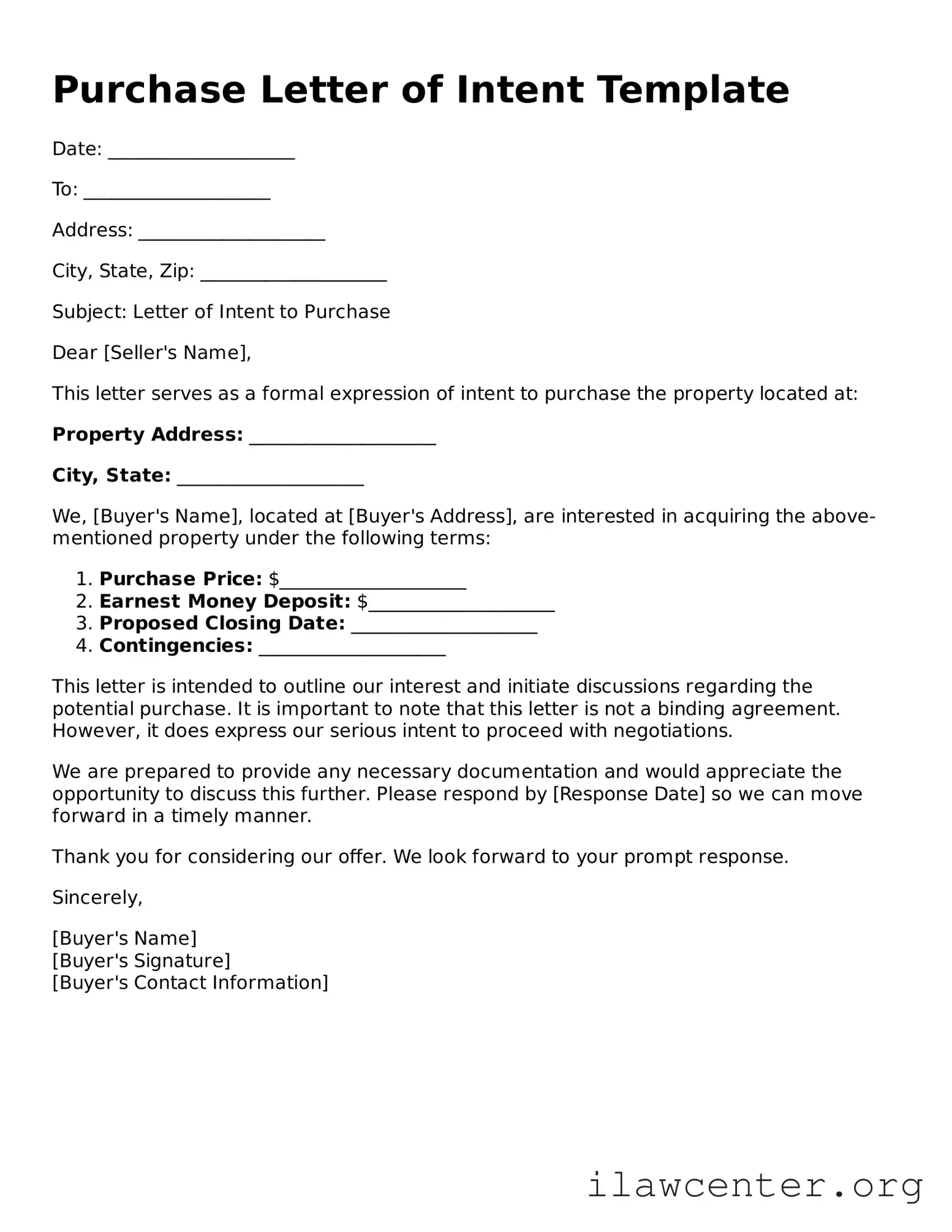
What is a Purchase Letter of Intent?
A Purchase Letter of Intent (LOI) is a document that outlines the preliminary understanding between a buyer and a seller regarding the purchase of a property or business. It serves as a starting point for negotiations and indicates the buyer's serious interest in the transaction.
Why is a Purchase Letter of Intent important?
The LOI is important because it sets the framework for the deal. It helps both parties clarify their intentions and expectations before entering into a formal purchase agreement. This can save time and resources by identifying potential deal breakers early in the process.
What should be included in a Purchase Letter of Intent?
Typically, an LOI should include the names of the parties involved, a description of the property or business, the proposed purchase price, terms of payment, and any contingencies. It may also outline the timeline for the transaction and any confidentiality agreements.
Is a Purchase Letter of Intent legally binding?
Generally, a Purchase Letter of Intent is not legally binding. However, some sections may create binding obligations, such as confidentiality or exclusivity clauses. It is essential to clearly state which parts of the LOI are binding and which are not.
How does a Purchase Letter of Intent affect negotiations?
The LOI can facilitate negotiations by providing a clear outline of the key terms. It helps both parties focus on the main issues and can lead to a smoother negotiation process. However, it is important to remember that it is just a starting point and not a final agreement.
Can a Purchase Letter of Intent be modified?
Yes, a Purchase Letter of Intent can be modified. If both parties agree to changes, they can amend the document accordingly. It’s important to keep a record of any modifications to ensure both parties are on the same page.
What happens after a Purchase Letter of Intent is signed?
After the LOI is signed, the parties typically move forward with due diligence. This process involves verifying the details of the transaction, including financials and legal matters. Once due diligence is complete, a formal purchase agreement can be drafted and signed.
Who should prepare the Purchase Letter of Intent?
While either party can draft the LOI, it is often beneficial to have a legal professional involved. This ensures that the document accurately reflects the intentions of both parties and complies with any relevant laws or regulations.
What are common pitfalls to avoid with a Purchase Letter of Intent?
Common pitfalls include being vague about terms, failing to include key details, and misunderstanding the binding nature of certain clauses. It’s crucial to be clear and precise in the LOI to avoid confusion and potential disputes later on.