
Rabbit Pedigree PDF Template

Rabbit Pedigree PDF Template

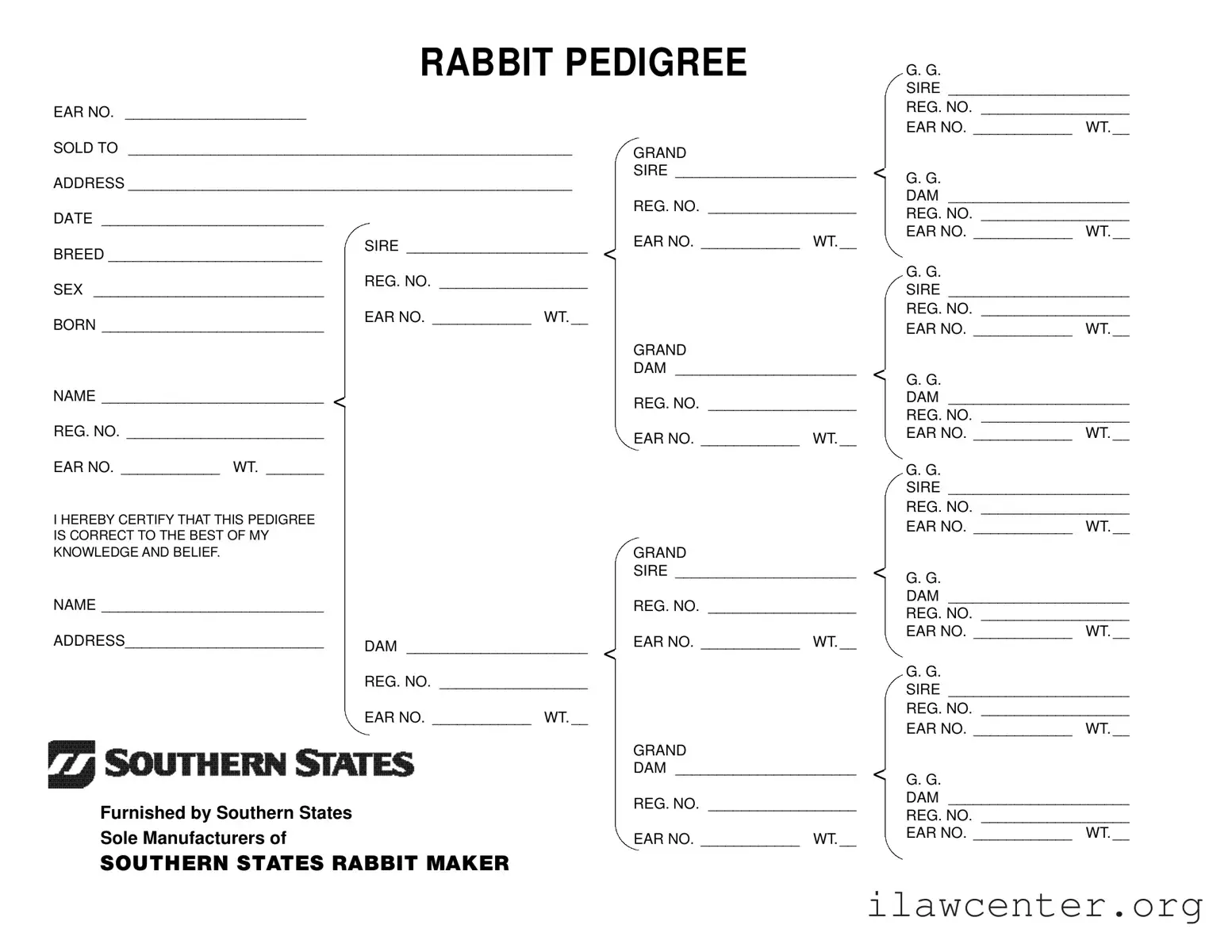
The Rabbit Pedigree form is a crucial document used to record the lineage and breeding information of rabbits. It ensures that breeders maintain accurate records for health, genetic traits, and lineage verification. For those looking to fill out the form, please click the button below.

Article Guide

The Rabbit Pedigree form serves as a vital tool for breeders and enthusiasts in the rabbit community, ensuring accurate tracking of lineage and breeding information. This form captures essential details about the rabbit, including its sire and dam, along with their respective registration numbers and ear tags. The pedigree extends back to the grand sire and grand dam, providing a comprehensive view of the rabbit's ancestry. Each entry includes specific weights and identifiers, which help maintain the integrity of the breed. The form also requires certification from the breeder, affirming that the information presented is accurate to the best of their knowledge. Moreover, the inclusion of various registration numbers enhances the traceability of the rabbit's lineage, making it easier for breeders to establish breeding programs and maintain genetic diversity. This document not only aids in responsible breeding practices but also promotes transparency within the rabbit breeding community.

Rabbit Pedigree Preview

RABBIT PEDIGREE
EAR NO. ______________________
SOLD TO ______________________________________________________
ADDRESS ______________________________________________________
DATE ___________________________
BREED __________________________
SEX ____________________________
BORN ___________________________
NAME ___________________________
REG. NO. ________________________
EAR NO. ____________ WT. _______
I HEREBY C E RT I F Y T H AT THIS PEDIGREE
IS CORRECT TO THE BEST OF MY
KNOWLEDGE AND BELIEF.
NAME ___________________________
ADDRESS________________________
Furnished by Southern States
Sole Manufacturers of
SOUTHERN STATES RABBIT MAKER
<
<
SIRE ______________________
REG. NO. __________________
EAR NO. ____________ WT. __
DAM ______________________
REG. NO. __________________
EAR NO. ____________ WT. __
GRAND
SIRE ______________________
REG. NO. __________________
EAR NO. ____________ WT.__
GRAND
DAM ______________________
REG. NO. __________________
EAR NO. ____________ WT.__
<
G. G.
SIRE ______________________
REG. NO. __________________
EAR NO. ____________ WT.__
G. G.
DAM ______________________
REG. NO. __________________
EAR NO. ____________ WT. __
<
G. G.
SIRE ______________________
REG. NO. __________________
EAR NO. ____________ WT. __
G. G.
DAM ______________________
REG. NO. __________________
EAR NO. ____________ WT. __
<
GRAND
SIRE ______________________
REG. NO. __________________
EAR NO. ____________ WT.__
GRAND
DAM ______________________
REG. NO. __________________
EAR NO. ____________ WT. __
<
G. G.
SIRE ______________________
REG. NO. __________________
EAR NO. ____________ WT. __
G. G.
DAM ______________________
REG. NO. __________________
EAR NO. ____________ WT. __
<
G. G.
SIRE ______________________
REG. NO. __________________
EAR NO. ____________ WT. __
G. G.
DAM ______________________
REG. NO. __________________
EAR NO. ____________ WT. __

File Properties

Fact Name Description
Purpose The Rabbit Pedigree form is used to document the lineage of a rabbit, providing essential information for breeders.
Key Components It includes sections for the sire, dam, and their respective registration numbers, ear numbers, and weights.
Certification The form contains a certification statement where the seller affirms the accuracy of the pedigree information.
Governing Law In some states, such as California, the use of pedigree forms may be governed by agricultural laws related to animal breeding.
Furnishing Authority The form is furnished by Southern States, which is noted as the sole manufacturer of the Rabbit Maker.
Information Required Breeders must provide details such as birth date, breed, and sex, which are crucial for maintaining accurate records.
Usage This form is commonly used in rabbit shows and competitions to verify the lineage and eligibility of the animals.

Instructions on Utilizing Rabbit Pedigree

Filling out the Rabbit Pedigree form is an important step in documenting the lineage of your rabbit. This form captures essential information about the rabbit's ancestry, which can be useful for breeding and registration purposes. Follow these steps to ensure you complete the form accurately.

  1. Start by entering the name of the rabbit in the SIRE section at the top of the form.
  2. Write the EAR NO. of the rabbit in the designated space.
  3. Fill in the name of the person or entity you sold the rabbit to in the SOLD TO section.
  4. Provide the address of the new owner in the ADDRESS section.
  5. Next, list the name of the GRAND SIRE and include the REG. NO. and EAR NO. for this ancestor.
  6. Record the WT. (weight) of the grand sire, if applicable.
  7. Complete the G. G. DAM section with the name and relevant registration information.
  8. Fill in the date of birth in the DATE section.
  9. Indicate the breed of the rabbit in the BREED section.
  10. Specify the sex of the rabbit in the SEX section.
  11. Document the birth date in the BORN section.
  12. Continue with the SIRE information, filling in the name, REG. NO., and EAR NO..
  13. Record the weight in the WT. section for the sire.
  14. Repeat the process for the G. G. SIRE and G. G. DAM, including their names, registration numbers, ear numbers, and weights.
  15. In the NAME section, enter the name of the rabbit again, along with its registration and ear numbers.
  16. Fill in the GRAND DAM section with the necessary details, including registration and ear numbers.
  17. Complete the G. G. SIRE and G. G. DAM sections similarly, ensuring all information is accurate.
  18. Finally, sign the form to certify that the pedigree information is correct to the best of your knowledge.

Important Facts about Rabbit Pedigree

What is the purpose of the Rabbit Pedigree form?

The Rabbit Pedigree form serves to document the lineage of a rabbit. This form provides essential information about the rabbit's ancestry, including details about the sire and dam, as well as their respective registration numbers and ear numbers. By maintaining accurate records, breeders can track genetic traits and improve breeding practices.

What information is required to complete the Rabbit Pedigree form?

To complete the Rabbit Pedigree form, several key pieces of information are necessary. This includes the names and registration numbers of the rabbit's sire and dam, their ear numbers, and weights. Additionally, details about the grand sires and grand dams are also required. The form must be filled out accurately to ensure the pedigree is credible.

How can I verify the information on the Rabbit Pedigree form?

Verification of the information on the Rabbit Pedigree form can be done through the respective rabbit registry. Breeders can contact the registry to confirm the registration numbers and lineage details provided on the form. This step is crucial for ensuring the authenticity of the pedigree and for potential buyers who may want to know the rabbit's genetic background.

What does it mean if a rabbit has a registered pedigree?

A registered pedigree indicates that the rabbit's lineage has been officially documented by a recognized registry. This status enhances the rabbit's value and credibility within the breeding community. It also provides assurance to potential buyers regarding the rabbit's genetic background, which can influence breeding decisions.

Who is responsible for certifying the accuracy of the Rabbit Pedigree form?

The breeder or seller of the rabbit is responsible for certifying the accuracy of the Rabbit Pedigree form. By signing the form, they affirm that the information provided is correct to the best of their knowledge and belief. This certification is important for maintaining trust and integrity within the breeding community.

Can the Rabbit Pedigree form be used for any breed of rabbit?

The Rabbit Pedigree form is generally applicable to various breeds of rabbits. However, specific registries may have unique requirements or forms tailored to particular breeds. It is advisable for breeders to consult with their respective breed registry to ensure compliance with any specific guidelines or additional documentation needed.

Common mistakes

Filling out the Rabbit Pedigree form can be straightforward, but many people make common mistakes that can lead to confusion or inaccuracies. One major error is leaving out important details. For instance, failing to fill in the ear numbers or registration numbers can make it difficult to trace the rabbit's lineage accurately. Ensure every section is complete to avoid any gaps in information.

Another frequent mistake is not double-checking the spelling of names. A simple typo can lead to significant issues down the line. If the name of a rabbit is misspelled, it can create discrepancies when trying to verify pedigree information. Take a moment to review names before submitting the form.

People often forget to include the date of birth of the rabbit. This detail is crucial for tracking age and breeding cycles. Without it, you may miss important milestones in your rabbit's life. Always make sure to include this information to keep a comprehensive record.

Inaccurate weight listings are another common pitfall. Weight should be recorded accurately, as it can affect breeding decisions and overall health assessments. Ensure that you weigh the rabbit before filling out the form to provide the most precise information.

Some individuals neglect to sign the certification statement at the bottom of the form. This signature serves as a declaration that the information provided is correct to the best of your knowledge. Without it, the form may be considered incomplete or invalid.

Another mistake is not providing complete contact information. Including an accurate address and phone number is essential for future correspondence. If there are questions or issues regarding the pedigree, having your contact details readily available can save time and frustration.

Failing to include both the sire and dam information can also lead to problems. It’s important to document both parents to establish a clear lineage. Omitting one parent can result in an incomplete pedigree, which can affect breeding decisions.

Many people overlook the need for consistent formatting. For example, using different styles or abbreviations can create confusion. Stick to a uniform format for all entries to ensure clarity and ease of understanding.

Lastly, not keeping a copy of the completed form for your records is a mistake that can have long-term consequences. Having a backup can be helpful if you need to reference it later or if any issues arise. Always keep a copy for your files.

By avoiding these common mistakes, you can ensure that your Rabbit Pedigree form is filled out accurately and completely. This attention to detail will benefit both you and the future owners of your rabbits.

Documents used along the form

The Rabbit Pedigree form is an essential document for tracking the lineage and health of rabbits. However, it is often used alongside several other important forms and documents. Each of these plays a unique role in maintaining accurate records and ensuring the proper care and breeding of rabbits. Below is a list of commonly associated documents.

  • Rabbit Registration Form: This form is used to officially register a rabbit with a breeding organization. It typically includes details like the rabbit's breed, color, and registration number.
  • Health Certificate: Issued by a veterinarian, this document confirms that the rabbit is healthy and free from diseases. It is often required for transportation or sale.
  • Breeding Record: This record tracks breeding dates, outcomes, and the health of both the sire and dam. It is vital for maintaining accurate breeding histories.
  • Sales Agreement: This document outlines the terms of sale between the seller and buyer, including price, payment terms, and any guarantees regarding the rabbit's health.
  • Transfer of Ownership Form: When a rabbit is sold or given away, this form officially transfers ownership from the seller to the buyer. It helps maintain accurate records within breeding organizations.
  • Rabbit Care Guidelines: This document provides detailed instructions on the proper care, feeding, and housing of rabbits. It is essential for new owners to ensure the well-being of their pets.
  • Genetic Testing Results: If a rabbit undergoes genetic testing, the results can be documented to inform breeding decisions and assess potential health risks.
  • Show Entry Form: For those participating in rabbit shows, this form registers the rabbit for competition and includes details about the rabbit and its pedigree.

Using these documents in conjunction with the Rabbit Pedigree form helps ensure a comprehensive understanding of a rabbit's lineage, health, and care requirements. Keeping accurate records not only benefits breeders but also promotes the welfare of the animals involved.

Similar forms

The Rabbit Pedigree form serves a specific purpose in documenting the lineage and characteristics of rabbits. However, it shares similarities with several other documents used in various animal breeding and ownership contexts. Below are eight documents that are comparable to the Rabbit Pedigree form, along with explanations of how they are alike.

  • Dog Pedigree Certificate: Like the Rabbit Pedigree form, this document details the ancestry of a dog, including information about its parents and grandparents. It serves to establish the dog's lineage and breed standards.
  • Cat Pedigree Registration: This document provides similar lineage information for cats, including registration numbers and breeding details. It helps verify the cat's breed and lineage, much like the Rabbit Pedigree does for rabbits.
  • Horse Pedigree Report: A horse pedigree report outlines the ancestry of a horse, detailing its lineage and any notable ancestors. This is crucial for breeding decisions, paralleling the purpose of the Rabbit Pedigree form.
  • Livestock Registration Certificate: This document is used for various livestock, detailing the breed and lineage of animals like cattle or sheep. It serves a similar function in ensuring the quality and genetic history of the animal.
  • Breed Registration Application: This application is often required to officially register an animal within a specific breed association. It collects information about the animal's lineage, akin to the details found in the Rabbit Pedigree form.
  • Animal Health Certificate: While primarily focused on health status, this document often includes information about the animal's breeding and lineage. It ensures that the animal meets health standards while providing background information.
  • Equine Passport: This document is used for horses and includes details about the horse's breeding, ownership, and health records. It shares the pedigree documentation aspect found in the Rabbit Pedigree form.
  • Rabbit Registration Certificate: Similar to the Rabbit Pedigree form, this certificate verifies the registration of a rabbit with a specific breed association, including its lineage and relevant details about its ancestry.

Dos and Don'ts

When filling out the Rabbit Pedigree form, attention to detail is crucial. Here’s a helpful list of things to do and avoid to ensure your form is completed accurately.

  • Do provide clear and legible information.
  • Do double-check all registration numbers for accuracy.
  • Do include the ear numbers for each rabbit listed.
  • Do fill in the weight of the rabbits where indicated.
  • Do verify the breeding information of the sire and dam.
  • Don't leave any fields blank unless specified.
  • Don't use abbreviations that may confuse the reader.
  • Don't forget to sign and date the form at the bottom.
  • Don't rush through the form; take your time to ensure accuracy.
  • Don't submit the form without reviewing it thoroughly.

By following these guidelines, you can help ensure that your Rabbit Pedigree form is completed correctly and efficiently. This not only helps in maintaining accurate records but also supports the integrity of rabbit breeding.

Misconceptions

Here are ten common misconceptions about the Rabbit Pedigree form, along with clarifications to help you understand its purpose and use.

  1. It’s only for show rabbits. Many believe the pedigree form is only necessary for rabbits intended for competitions. In reality, it’s useful for any breeding rabbit to track lineage.
  2. All rabbits need a pedigree. Not every rabbit requires a pedigree. It’s primarily important for purebred rabbits or those intended for breeding.
  3. Pedigree forms are the same across all breeds. Each breed may have specific requirements or formats for their pedigree forms. It’s essential to use the correct one for your rabbit's breed.
  4. The pedigree guarantees quality. While a pedigree provides information about lineage, it doesn’t guarantee the quality or health of the rabbit.
  5. Filling out the form is optional. For breeders, completing the pedigree form accurately is often a requirement for registration and can affect the rabbit's value.
  6. Only the breeder needs the pedigree. Buyers should also request the pedigree to understand the rabbit's background and genetics.
  7. Pedigree information is permanent. If a mistake is made on the form, it can often be corrected. It’s important to ensure accuracy when filling it out.
  8. All pedigree forms look the same. Different organizations may have unique formats for their pedigree forms. Familiarity with your specific form is important.
  9. Pedigree forms are only for adults. Pedigree forms can and should be used for rabbits of all ages, including kits, to establish their lineage early on.
  10. Once filled out, the pedigree is unchangeable. Updates can be made as necessary, especially if new information about the rabbit’s lineage becomes available.

Key takeaways

When filling out the Rabbit Pedigree form, it’s important to keep a few key points in mind. This form helps track the lineage of your rabbits, ensuring accurate records. Here are some essential takeaways:

  • Ensure all sections are completed accurately, including the names and registration numbers of the rabbits.
  • Use clear and legible handwriting to avoid any confusion.
  • Double-check the ear numbers and weights, as these details are crucial for identification.
  • Provide complete addresses for both the seller and buyer to facilitate communication.
  • Sign the form to certify that the information is correct to the best of your knowledge.
  • Keep a copy of the completed form for your records.
  • Use the correct terminology for breeding and lineage to maintain clarity.
  • Make sure to include all relevant grandparents and great-grandparents in the pedigree.
  • Submit the form promptly to ensure the registration process is not delayed.

By following these guidelines, you can ensure that the Rabbit Pedigree form serves its purpose effectively. Accurate records benefit everyone involved in rabbit breeding.