Fillable Real Estate Purchase Agreement Document

Fillable Real Estate Purchase Agreement Document

A Real Estate Purchase Agreement is a legal document that outlines the terms and conditions for buying a property. This form serves as a binding contract between the buyer and seller, detailing important aspects like the purchase price, financing, and closing date. To get started on your real estate transaction, fill out the form by clicking the button below.

Article Guide

When embarking on the journey of buying or selling a home, one of the most crucial documents you will encounter is the Real Estate Purchase Agreement. This form serves as the backbone of the transaction, laying out the essential terms and conditions that both parties must agree upon. It typically includes details such as the purchase price, financing terms, and the closing date, ensuring that everyone is on the same page. Additionally, the agreement outlines any contingencies, such as inspections or financing approvals, that could affect the sale. It’s not just a simple contract; it also addresses the responsibilities of both the buyer and the seller, including disclosures about the property's condition and any warranties. Understanding this document is vital, as it protects the interests of both parties and helps facilitate a smooth transaction. With so much riding on this agreement, grasping its components can empower you to navigate the real estate landscape with confidence.

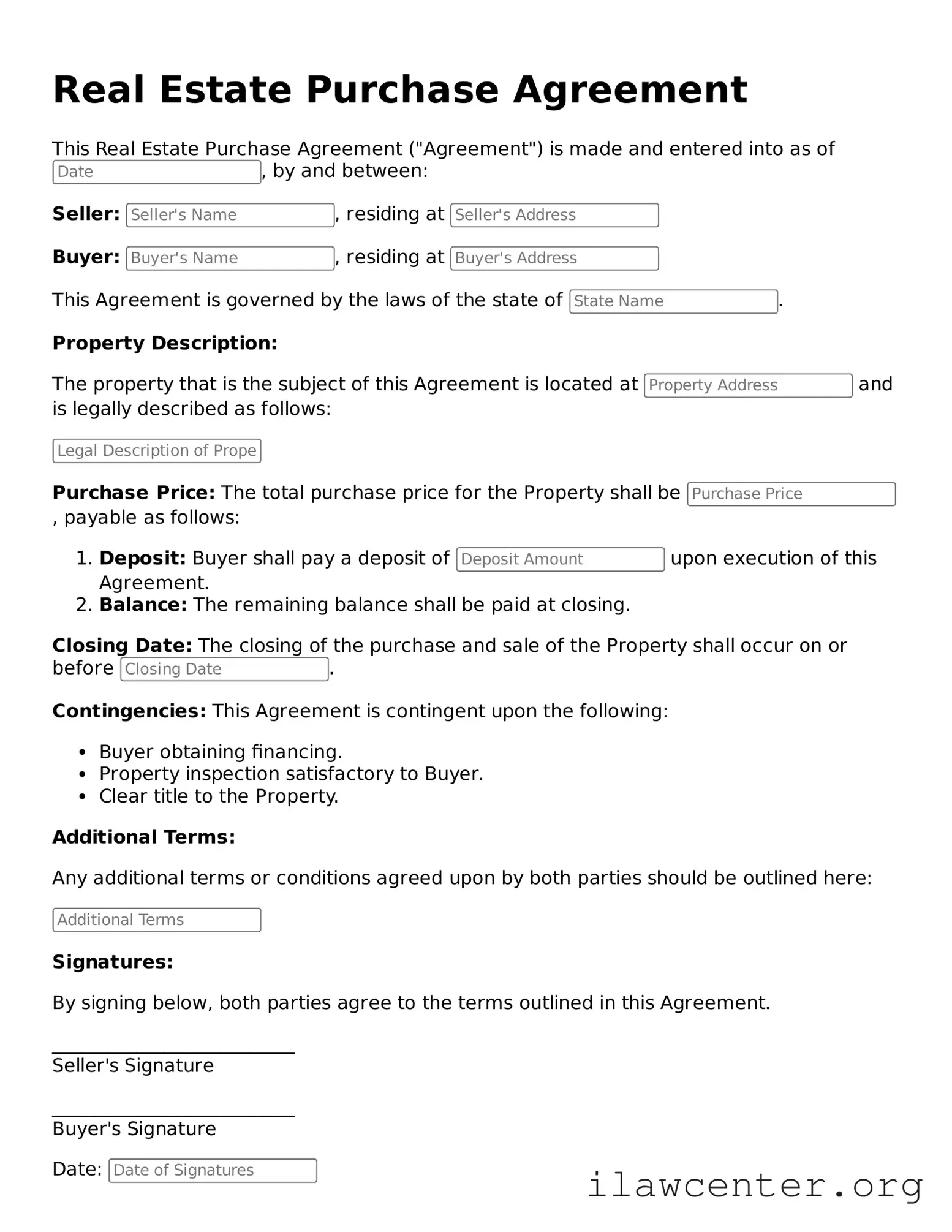
Real Estate Purchase Agreement Preview

Real Estate Purchase Agreement

This Real Estate Purchase Agreement ("Agreement") is made and entered into as of , by and between:

Seller: , residing at

Buyer: , residing at

This Agreement is governed by the laws of the state of .

Property Description:

The property that is the subject of this Agreement is located at and is legally described as follows:

Purchase Price: The total purchase price for the Property shall be , payable as follows:

  1. Deposit: Buyer shall pay a deposit of upon execution of this Agreement.
  2. Balance: The remaining balance shall be paid at closing.

Closing Date: The closing of the purchase and sale of the Property shall occur on or before .

Contingencies: This Agreement is contingent upon the following:

  • Buyer obtaining financing.
  • Property inspection satisfactory to Buyer.
  • Clear title to the Property.

Additional Terms:

Any additional terms or conditions agreed upon by both parties should be outlined here:

Signatures:

By signing below, both parties agree to the terms outlined in this Agreement.

__________________________
Seller's Signature

__________________________
Buyer's Signature

Date:

PDF Form Characteristics

Fact Name Description
Purpose The Real Estate Purchase Agreement outlines the terms and conditions under which a buyer agrees to purchase a property from a seller.
Parties Involved This agreement typically involves at least two parties: the buyer and the seller, both of whom must be clearly identified.
Property Description A detailed description of the property, including its address and legal description, is essential for clarity and legal purposes.
Purchase Price The total purchase price must be stated, along with any earnest money deposit that the buyer will provide.
Contingencies Common contingencies include financing, inspections, and appraisal, which must be clearly outlined to protect both parties.
Closing Date The agreement should specify a closing date, which is when the transfer of ownership will officially take place.
Governing Law Each state has specific laws governing real estate transactions. For example, California's laws will apply to agreements executed in California.
Signatures Both parties must sign the agreement for it to be legally binding, indicating their acceptance of the terms outlined.
Disclosure Requirements Sellers are often required to disclose certain information about the property, such as known defects or issues, to the buyer.

Instructions on Utilizing Real Estate Purchase Agreement

Filling out a Real Estate Purchase Agreement form is an important step in the home buying process. This document outlines the terms of the sale, including the price, property details, and conditions of the agreement. Once completed, it will guide both the buyer and seller through the transaction.

  1. Begin by entering the date at the top of the form.
  2. Identify the parties involved. Write the full legal names of the buyer(s) and seller(s).
  3. Provide the property address. Include the street address, city, state, and zip code.
  4. Specify the purchase price. Clearly state the amount the buyer agrees to pay for the property.
  5. Detail the earnest money deposit. Indicate the amount and when it will be paid.
  6. Outline the financing terms. Mention whether the purchase will be made with cash, a mortgage, or other financing options.
  7. Include any contingencies. This may involve home inspections, appraisals, or the sale of the buyer's current home.
  8. Set the closing date. Indicate when the transaction will be finalized.
  9. Sign and date the agreement. Ensure all parties involved sign the document to make it legally binding.

Important Facts about Real Estate Purchase Agreement

What is a Real Estate Purchase Agreement?

A Real Estate Purchase Agreement is a legally binding document that outlines the terms and conditions under which a property will be sold. This agreement serves as a foundation for the transaction, detailing the responsibilities of both the buyer and the seller. It typically includes information such as the purchase price, property description, closing date, and any contingencies that must be met before the sale is finalized. Understanding this document is crucial for both parties to ensure a smooth transaction.

What are the key components of a Real Estate Purchase Agreement?

Several key components make up a Real Estate Purchase Agreement. First, the property description is essential; it identifies the exact location and details of the property being sold. Next, the purchase price outlines the amount the buyer agrees to pay. Additionally, the agreement should specify the closing date, which is when the transfer of ownership occurs. Other important elements include contingencies, such as financing or inspection requirements, and any disclosures about the property’s condition. Each of these components plays a vital role in protecting the interests of both the buyer and the seller.

What happens if either party breaches the Real Estate Purchase Agreement?

If either party fails to fulfill their obligations under the Real Estate Purchase Agreement, it is considered a breach of contract. The consequences of such a breach can vary depending on the specific terms outlined in the agreement. Generally, the non-breaching party may have the right to seek remedies, which could include financial compensation or the enforcement of the contract. In some cases, mediation or legal action may be necessary to resolve the dispute. It is important for both parties to understand their rights and responsibilities to avoid potential conflicts.

Can a Real Estate Purchase Agreement be modified after it has been signed?

Yes, a Real Estate Purchase Agreement can be modified after it has been signed, but both parties must agree to the changes. Modifications should be documented in writing and signed by both the buyer and the seller to ensure that they are legally enforceable. Common reasons for modifications include changes in closing dates, adjustments to the purchase price, or updates to contingencies. Clear communication and mutual consent are key to successfully amending the agreement, helping to maintain a positive relationship between both parties throughout the transaction.

Common mistakes

Filling out a Real Estate Purchase Agreement can be a daunting task. Many people make mistakes that can lead to confusion or even legal issues down the line. Understanding these common errors can help ensure a smoother transaction.

One frequent mistake is not including all parties involved. Buyers and sellers often forget to list all individuals or entities participating in the transaction. Omitting a party can lead to complications, especially if one party claims they are not bound by the agreement.

Another common error is leaving out important details about the property. It’s essential to provide a complete description, including the address, legal description, and any fixtures included in the sale. Without this information, the agreement may lack clarity and could lead to disputes later.

People often fail to specify the purchase price clearly. While it may seem obvious, not stating the amount explicitly can create confusion. Ensure that the price is clearly noted and easy to find within the document.

Timing is crucial in real estate transactions. Many individuals forget to include important dates, such as the closing date or the date by which contingencies must be met. Missing these dates can delay the process or even jeopardize the sale.

Another mistake is not addressing contingencies. Buyers often overlook including contingencies like financing or inspection clauses. These are vital for protecting the buyer's interests and should be clearly outlined in the agreement.

Sometimes, people assume that verbal agreements are sufficient. Relying on verbal promises without including them in writing can lead to misunderstandings. Always document all agreements in the Purchase Agreement to avoid potential disputes.

Buyers and sellers may also neglect to review the entire document before signing. Skimming through the agreement can lead to missing critical information or terms. Take the time to read through each section carefully.

Another common oversight is not consulting with a real estate professional. Some individuals attempt to fill out the agreement without seeking advice. Having an expert review the document can help identify potential issues and ensure compliance with local laws.

Lastly, people often forget to keep copies of the signed agreement. After signing, it’s important to retain a copy for personal records. This can be helpful for future reference or if any disputes arise.

Avoiding these mistakes can make the process of filling out a Real Estate Purchase Agreement much smoother. By paying attention to detail and seeking guidance when needed, you can help ensure a successful transaction.
Documents used along the form

When engaging in a real estate transaction, several documents complement the Real Estate Purchase Agreement. Each document serves a specific purpose and is essential for ensuring a smooth process. Below is a list of commonly used forms and documents that you may encounter.

  • Property Disclosure Statement: This document outlines any known issues or defects with the property. Sellers must provide this information to potential buyers to ensure transparency.
  • Title Report: A title report details the legal ownership of the property and identifies any liens, easements, or encumbrances that may affect the sale.
  • Earnest Money Agreement: This agreement specifies the amount of money a buyer will put down to demonstrate their commitment to purchasing the property. It also outlines the conditions under which the deposit may be forfeited.
  • Inspection Report: An inspection report is generated after a professional examines the property for structural integrity and safety. This document helps buyers understand any necessary repairs.
  • Appraisal Report: An appraisal report provides an independent assessment of the property's value. Lenders often require this to ensure the loan amount aligns with the property's worth.
  • Closing Disclosure: This document outlines the final terms of the mortgage, including loan costs and closing costs. It must be provided to the buyer at least three days before closing.
  • Deed: The deed is the legal document that transfers ownership of the property from the seller to the buyer. It must be signed and recorded with the appropriate government office.
  • Loan Estimate: A loan estimate is provided by the lender and details the projected costs of the mortgage, including interest rates and monthly payments. This helps buyers make informed decisions.
  • Lease Agreement (if applicable): If the property is being sold while occupied, a lease agreement may be necessary to outline the terms of the tenant's continued occupancy after the sale.

Understanding these documents can help buyers and sellers navigate the complexities of a real estate transaction. Each form plays a vital role in protecting the interests of all parties involved, fostering a clear and organized process.

Similar forms

  • Lease Agreement: Similar to a Real Estate Purchase Agreement, a lease agreement outlines the terms under which a tenant can occupy a property. Both documents specify the rights and responsibilities of the parties involved.
  • Option to Purchase Agreement: This document gives a tenant the right to purchase the property at a later date. Like the purchase agreement, it details the price and conditions of the sale.
  • Real Estate Listing Agreement: This agreement is between a property owner and a real estate agent. It establishes the terms for selling the property, similar to how a purchase agreement outlines the terms of sale.
  • Seller Disclosure Statement: This document requires the seller to disclose known issues with the property. It complements the purchase agreement by ensuring the buyer is informed about the property’s condition.
  • Closing Disclosure: This document outlines the final terms of the mortgage, including closing costs. It is similar to the purchase agreement in that it summarizes the financial aspects of the transaction.
  • Title Report: A title report confirms the legal ownership of a property and any liens against it. It is essential for the purchase agreement, ensuring the buyer knows the property’s legal status.
  • Escrow Agreement: This document outlines the terms under which an escrow agent holds funds during the transaction. Like the purchase agreement, it ensures that both parties meet their obligations before the sale is finalized.
  • Property Management Agreement: This agreement is between a property owner and a management company. It defines the management company's responsibilities, similar to how a purchase agreement defines the buyer's and seller's roles.
  • Home Inspection Agreement: This document outlines the terms for a home inspection before purchase. It is similar to the purchase agreement as it addresses the condition of the property and potential negotiations based on findings.

Dos and Don'ts

When filling out a Real Estate Purchase Agreement form, it's essential to approach the task with care and attention to detail. Here’s a helpful list of dos and don’ts to guide you through the process.

  • Do read the entire agreement carefully before filling it out.
  • Do provide accurate and complete information about the property.
  • Do include all parties involved in the transaction.
  • Do specify the purchase price clearly.
  • Do understand the terms and conditions before signing.
  • Don’t rush through the form; take your time to ensure accuracy.
  • Don’t leave any sections blank unless instructed to do so.
  • Don’t make assumptions about terms; ask questions if you're unsure.
  • Don’t forget to include any contingencies that may apply.
  • Don’t overlook the importance of signatures and dates.

Following these guidelines can help ensure that your Real Estate Purchase Agreement is filled out correctly, paving the way for a smoother transaction.

Misconceptions

Understanding the Real Estate Purchase Agreement (REPA) is crucial for anyone involved in a property transaction. However, several misconceptions often arise. Here are ten common misconceptions, along with clarifications for each.

  1. The REPA is only for buyers.

    This is incorrect. Both buyers and sellers must agree to the terms outlined in the REPA. It serves as a mutual contract that protects the interests of both parties.

  2. Once signed, the REPA cannot be changed.

    While the REPA is a binding contract, parties can negotiate changes before finalizing the agreement. Amendments can be made as long as both parties consent.

  3. The REPA guarantees financing.

    Signing the REPA does not guarantee that financing will be approved. Buyers must still secure a mortgage or other funding to complete the purchase.

  4. All real estate transactions require a REPA.

    While most transactions benefit from a REPA, some informal agreements may not require one. However, having a formal agreement is highly recommended for legal protection.

  5. The REPA is the same in every state.

    Real estate laws vary by state, which means the REPA can differ significantly. It is essential to use a form that complies with local laws.

  6. Only real estate agents can prepare a REPA.

    While agents often handle the paperwork, buyers and sellers can also prepare the REPA, especially with the help of legal professionals.

  7. The REPA covers all aspects of the sale.

    The REPA primarily addresses the sale price and terms of the sale. Other important details, such as disclosures and contingencies, may need to be included in separate documents.

  8. Once the REPA is signed, the deal is done.

    There are still steps to complete after signing the REPA, such as inspections, appraisals, and finalizing financing. The agreement sets the stage but does not finalize the sale.

  9. All contingencies are standard in a REPA.

    Contingencies vary based on individual circumstances. Buyers and sellers should discuss specific contingencies that reflect their needs and concerns.

  10. Legal representation is unnecessary for a REPA.

    While it is possible to complete a REPA without legal assistance, having a lawyer review the agreement can help prevent potential issues and ensure that rights are protected.

Addressing these misconceptions can lead to a smoother real estate transaction. Understanding the role of the REPA helps both buyers and sellers navigate the complexities of property sales with confidence.

Key takeaways

When dealing with a Real Estate Purchase Agreement, understanding the essentials can make the process smoother and more effective. Here are some key takeaways to keep in mind:

  1. Understand the Purpose: This agreement outlines the terms and conditions of the sale. It serves as a binding contract between the buyer and the seller, detailing what each party agrees to do.
  2. Be Clear on Terms: Make sure to specify the purchase price, payment method, and any contingencies. Clarity helps prevent misunderstandings later.
  3. Include Important Dates: Key dates such as the closing date and any deadlines for inspections or financing should be clearly stated to keep the process on track.
  4. Review Contingencies: Common contingencies include financing, inspection, and appraisal. These conditions allow you to back out of the agreement if certain requirements aren’t met.
  5. Seek Professional Help: Consider having a real estate agent or attorney review the agreement. Their expertise can ensure that your interests are protected and that the document is legally sound.

By keeping these points in mind, you can navigate the Real Estate Purchase Agreement with confidence and clarity.