Fillable Release of Earnest Money Contract Form Document

Fillable Release of Earnest Money Contract Form Document

The Release of Earnest Money Contract Form is a document used in real estate transactions to formally release earnest money from escrow. This form is crucial when a buyer and seller reach an agreement to cancel the transaction or when specific conditions are met. To ensure a smooth process, consider filling out the form by clicking the button below.

Article Guide

The Release of Earnest Money Contract Form is a crucial document in real estate transactions, serving as a formal agreement between parties regarding the disposition of earnest money deposits. This form outlines the conditions under which earnest money can be released, whether to the buyer, seller, or a third party. It typically includes details such as the parties involved, the amount of earnest money, and the reasons for the release. By clearly stating the terms, this form helps prevent disputes and ensures that all parties understand their rights and obligations. The process of completing and submitting this form is essential for facilitating smooth transactions, protecting the interests of buyers and sellers alike, and ensuring compliance with applicable laws and regulations. Understanding the components of this form can significantly impact the outcome of a real estate deal.

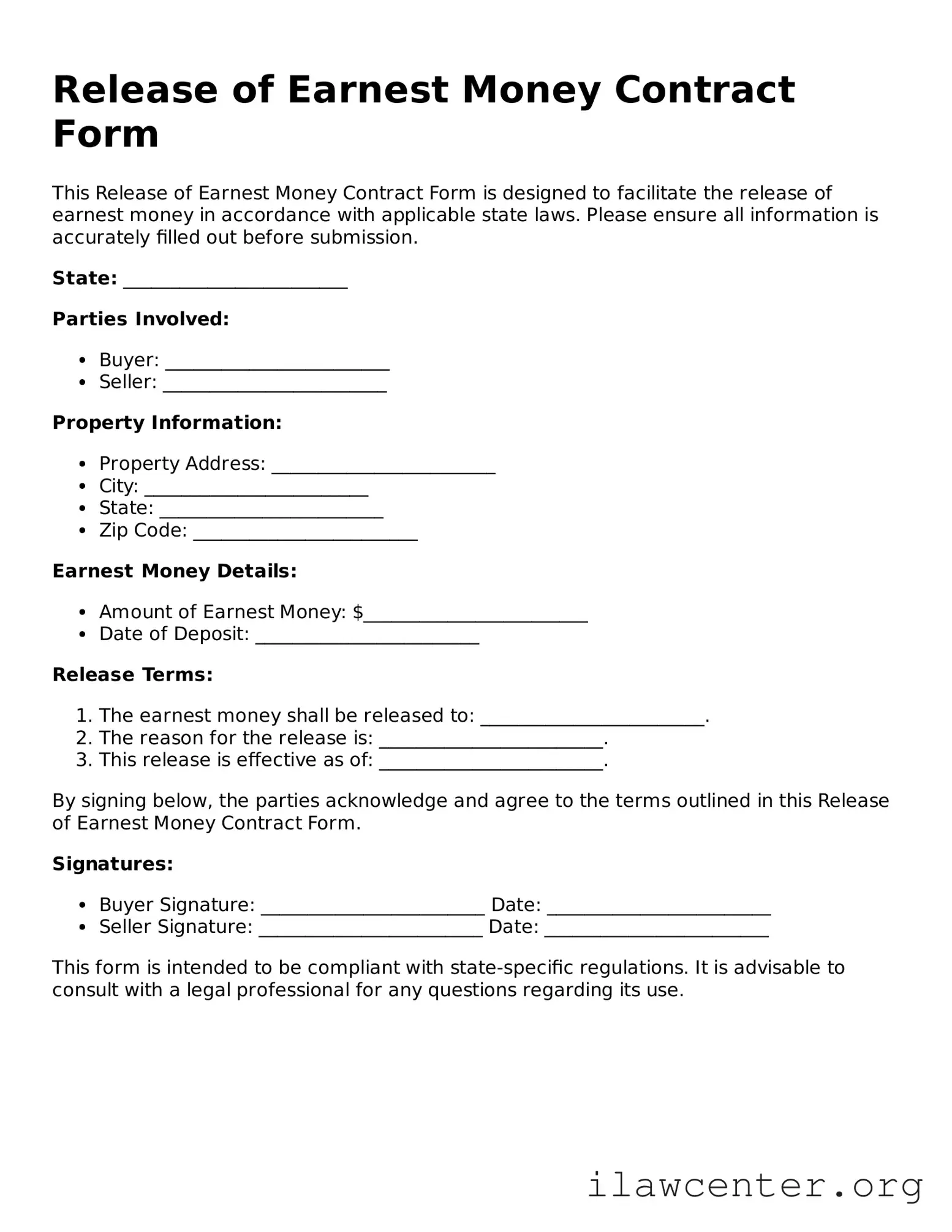
Release of Earnest Money Contract Form Preview

Release of Earnest Money Contract Form

This Release of Earnest Money Contract Form is designed to facilitate the release of earnest money in accordance with applicable state laws. Please ensure all information is accurately filled out before submission.

State: ________________________

Parties Involved:

  • Buyer: ________________________
  • Seller: ________________________

Property Information:

  • Property Address: ________________________
  • City: ________________________
  • State: ________________________
  • Zip Code: ________________________

Earnest Money Details:

  • Amount of Earnest Money: $________________________
  • Date of Deposit: ________________________

Release Terms:

  1. The earnest money shall be released to: ________________________.
  2. The reason for the release is: ________________________.
  3. This release is effective as of: ________________________.

By signing below, the parties acknowledge and agree to the terms outlined in this Release of Earnest Money Contract Form.

Signatures:

  • Buyer Signature: ________________________ Date: ________________________
  • Seller Signature: ________________________ Date: ________________________

This form is intended to be compliant with state-specific regulations. It is advisable to consult with a legal professional for any questions regarding its use.

PDF Form Characteristics

Fact Name Details
Purpose The Release of Earnest Money Contract Form is used to formally document the release of earnest money from a real estate transaction.
Parties Involved This form typically involves the buyer, seller, and the escrow agent or real estate broker managing the earnest money.
Governing Law In the United States, the governing laws may vary by state. For example, in California, it is governed by the California Civil Code.
When to Use This form should be used when the parties agree to release the earnest money, either due to the cancellation of the contract or other mutual agreements.
Signatures Required All parties involved must sign the form to ensure that the release of funds is authorized and legally binding.

Instructions on Utilizing Release of Earnest Money Contract Form

After obtaining the Release of Earnest Money Contract Form, you will need to provide specific information to ensure that the form is completed correctly. This process involves filling in details about the parties involved, the property in question, and any relevant dates. Once the form is filled out, it can be submitted to facilitate the release of earnest money as per the agreed terms.

  1. Begin by entering the date at the top of the form.
  2. Identify the parties involved in the transaction. This usually includes the buyer and the seller. Fill in their full names and addresses in the designated fields.
  3. Provide a description of the property. This should include the property address and any other identifying information that distinguishes it.
  4. Indicate the amount of earnest money that is being released. This is typically a specific dollar amount.
  5. Specify the reason for the release of the earnest money. This may involve checking a box or writing a brief explanation in the provided section.
  6. Include the signatures of both parties. Each party must sign and date the form to validate the agreement.
  7. Make copies of the completed form for all parties involved for their records.

Important Facts about Release of Earnest Money Contract Form

What is the Release of Earnest Money Contract Form?

The Release of Earnest Money Contract Form is a document used to formally release earnest money that was initially deposited in a real estate transaction. This form is typically utilized when a transaction does not proceed to closing, allowing the parties involved to agree on the distribution of the earnest money funds.

When should I use the Release of Earnest Money Contract Form?

This form should be used when a real estate deal has fallen through, and the parties need to decide what to do with the earnest money. Common scenarios include failed inspections, inability to secure financing, or mutual agreement to terminate the contract.

Who needs to sign the Release of Earnest Money Contract Form?

Generally, both the buyer and the seller must sign the form. Their signatures indicate mutual agreement on how the earnest money will be handled. In some cases, an agent or broker may also need to sign if they are involved in the transaction.

What happens if the parties cannot agree on the release of earnest money?

If the buyer and seller cannot reach an agreement, the earnest money may remain in escrow until a resolution is found. This could involve mediation, arbitration, or even legal action, depending on the terms of the original purchase agreement.

Can the Release of Earnest Money Contract Form be modified?

Yes, the form can be modified as long as all parties involved agree to the changes. Any modifications should be clearly documented, and all parties should initial or sign the changes to ensure that they are valid and enforceable.

Is there a deadline for submitting the Release of Earnest Money Contract Form?

While there is no universal deadline, it is advisable to submit the form as soon as the decision to terminate the transaction is made. Timely submission helps avoid misunderstandings and ensures that all parties are on the same page regarding the earnest money.

What information is required on the Release of Earnest Money Contract Form?

The form typically requires details such as the names of the buyer and seller, the property address, the amount of earnest money, and the reason for the release. Additionally, it may include instructions on how the funds should be distributed.

Can I use a template for the Release of Earnest Money Contract Form?

Yes, templates are available online and can be used as a starting point. However, it is important to ensure that any template used complies with local laws and regulations. Customizing the form to fit the specific circumstances of your transaction is also recommended.

What should I do after completing the Release of Earnest Money Contract Form?

After completing the form, all parties should sign it and keep a copy for their records. It is also advisable to submit the signed form to the escrow agent or broker holding the earnest money to ensure that the funds are released according to the agreed terms.
Common mistakes

Filling out the Release of Earnest Money Contract Form can be a straightforward process, yet many individuals make common mistakes that can lead to complications. One frequent error is neglecting to include accurate property details. When buyers and sellers fail to provide the correct address or legal description of the property, it can create confusion and delay the release of funds.

Another mistake involves omitting necessary signatures. Both parties must sign the form for it to be valid. Without the required signatures, the release may not be honored, leaving the earnest money in limbo. It is crucial to ensure that all parties involved are aware of their responsibilities and have consented to the terms outlined in the form.

Many individuals also overlook the importance of specifying the reason for the release. A clear explanation can help clarify the circumstances surrounding the request. Without this information, the release may be questioned, leading to potential disputes or misunderstandings between the parties.

Additionally, some people fail to provide the correct date of the transaction. The date is significant as it establishes a timeline for the release of funds. If the date is incorrect, it may create complications in processing the release, potentially delaying the return of earnest money to the appropriate party.

Inaccurate financial information is another common pitfall. Individuals sometimes misstate the amount of earnest money being released. This can lead to disputes over the correct sum, creating unnecessary tension between buyers and sellers. It is essential to double-check all financial figures to ensure accuracy.

Moreover, not reviewing the entire form before submission is a mistake that can have significant repercussions. A thorough review can catch errors or omissions that may otherwise go unnoticed. Taking the time to ensure that all information is complete and accurate can save time and prevent future headaches.

Some individuals also fail to keep copies of the completed form. Retaining a copy is vital for personal records and can serve as evidence if any disputes arise later. Without documentation, proving the terms of the release can become challenging.

Lastly, misunderstanding the implications of the release can lead to errors. Individuals may not fully grasp how the release affects their rights and obligations regarding the earnest money. It is advisable to consult with a real estate professional or legal expert if there are any uncertainties before signing the form.

Documents used along the form

The Release of Earnest Money Contract Form is an important document in real estate transactions, primarily used to outline the terms under which earnest money is returned to a buyer or forfeited to the seller. Along with this form, several other documents are commonly utilized to ensure a smooth transaction process. Below is a list of these forms and documents, along with a brief description of each.

  • Purchase Agreement: This document outlines the terms and conditions of the sale between the buyer and seller, including the purchase price, contingencies, and closing date.
  • Earnest Money Deposit Receipt: This receipt serves as proof that the buyer has submitted an earnest money deposit to the seller or their agent, indicating the buyer's serious intent to purchase the property.
  • Disclosure Statements: These statements provide essential information about the property's condition, including any known defects or issues that could affect its value or safety.
  • Title Report: A title report details the legal ownership of the property and identifies any liens, encumbrances, or claims against it, ensuring the buyer can obtain clear title.
  • Inspection Reports: Conducted by a professional inspector, these reports evaluate the property's condition and highlight any necessary repairs or maintenance issues.
  • Financing Documents: These include loan applications, approval letters, and other paperwork required by lenders to secure financing for the buyer.
  • Closing Disclosure: This document outlines the final terms of the mortgage, including loan costs, monthly payments, and closing costs, allowing the buyer to understand their financial obligations.
  • Deed: The deed is the legal document that transfers ownership of the property from the seller to the buyer once the sale is finalized.
  • Settlement Statement: This statement provides a detailed account of all financial transactions related to the sale, including fees, commissions, and the distribution of funds at closing.

Each of these documents plays a crucial role in the real estate transaction process. Understanding their purpose helps ensure that all parties are informed and protected throughout the buying or selling experience.

Similar forms

  • Purchase Agreement: This document outlines the terms of a real estate transaction, including the purchase price and conditions. It serves as a foundation for the transaction, similar to how the Release of Earnest Money addresses specific terms regarding the earnest money deposit.
  • Earnest Money Receipt: A receipt confirms that the buyer has provided earnest money to the seller. Like the Release of Earnest Money, it acknowledges the financial commitment made by the buyer.
  • Escrow Agreement: This agreement involves a neutral third party holding funds or documents until specific conditions are met. Both documents deal with the handling of earnest money in real estate transactions.
  • Termination Agreement: This document outlines the terms under which a contract is terminated. Similar to the Release of Earnest Money, it addresses the consequences of ending a transaction.
  • Refund Request Form: This form is used to request the return of earnest money under certain conditions. It relates closely to the Release of Earnest Money as both deal with the return or release of funds.
  • Buyer’s Disclosure Statement: This document provides important information about the property. It can influence decisions related to earnest money, similar to how the Release of Earnest Money addresses the implications of disclosures.
  • Seller’s Disclosure Statement: Like the Buyer’s Disclosure, this document informs the buyer about the property’s condition. The information may impact the earnest money agreement and its release.
  • Amendment to Contract: This document modifies existing terms of a contract. It can affect the earnest money provisions, similar to how the Release of Earnest Money clarifies the status of the deposit.
  • Closing Statement: This document summarizes the financial transactions at closing. It includes the handling of earnest money, much like the Release of Earnest Money outlines its final disposition.
  • Mutual Release Agreement: This agreement allows both parties to release each other from obligations under a contract. It parallels the Release of Earnest Money in that it formally concludes financial commitments.

Dos and Don'ts

When filling out the Release of Earnest Money Contract Form, it's crucial to follow specific guidelines to ensure accuracy and compliance. Below is a list of things you should and shouldn't do.

  • Do read the entire form carefully before starting.
  • Do provide accurate and complete information.
  • Do sign and date the form where indicated.
  • Do keep a copy for your records after submission.
  • Do consult with a real estate professional if you have questions.
  • Don't rush through the form; take your time to avoid mistakes.
  • Don't leave any required fields blank.
  • Don't use abbreviations or shorthand that may confuse the reader.
  • Don't forget to double-check for typos or errors.
  • Don't submit the form without ensuring all parties have agreed to the terms.

Misconceptions

  • Misconception 1: The Release of Earnest Money Contract Form is only needed if a deal falls through.

    This form is essential in various scenarios, not just when a transaction fails. It can also be used when both parties agree to release the earnest money for reasons other than a failed deal.

  • Misconception 2: Once signed, the form guarantees the return of earnest money.

    Signing the form does not automatically ensure that the earnest money will be returned. The terms of the contract and the circumstances surrounding the release will ultimately dictate the outcome.

  • Misconception 3: Only buyers can initiate the Release of Earnest Money Contract Form.

    Both buyers and sellers can request the release of earnest money. Communication and agreement between both parties are crucial in this process.

  • Misconception 4: The form is a standard document with no variations.

    The Release of Earnest Money Contract Form can vary based on state laws and individual agreements. It’s important to ensure that the form used is appropriate for the specific transaction and jurisdiction.

Key takeaways

Filling out and using the Release of Earnest Money Contract Form is an important step in real estate transactions. Here are key takeaways to keep in mind:

  1. Understand the Purpose: The form is used to release earnest money held in escrow, typically when a sale does not go through.
  2. Know the Parties Involved: Ensure all parties involved in the transaction are accurately identified on the form.
  3. Provide Accurate Information: Fill in the details correctly, including the property address and the amount of earnest money.
  4. Signatures Required: All parties must sign the form for it to be valid. Missing signatures can delay the process.
  5. Specify Release Conditions: Clearly outline the conditions under which the earnest money is being released.
  6. Consult Legal Counsel: If you have questions or concerns, it’s wise to seek legal advice before submitting the form.
  7. Submit Promptly: Once completed, submit the form to the escrow agent or title company without delay.
  8. Keep Copies: Retain a copy of the signed form for your records and future reference.
  9. Be Aware of Deadlines: Pay attention to any deadlines related to the release of earnest money.
  10. Understand State Regulations: Familiarize yourself with any state-specific laws that may affect the release of earnest money.

By following these guidelines, you can ensure a smooth process when dealing with the Release of Earnest Money Contract Form.