Rental Receipt PDF Template

Rental Receipt PDF Template

A Rental Receipt form is a document that provides proof of payment made by a tenant to a landlord for rent. It includes essential details such as the date of payment, the amount paid, and the method of payment. Completing this form is crucial for both tenants and landlords to maintain accurate records of rental transactions.

Ready to fill out your Rental Receipt? Click the button below to get started!

Article Guide

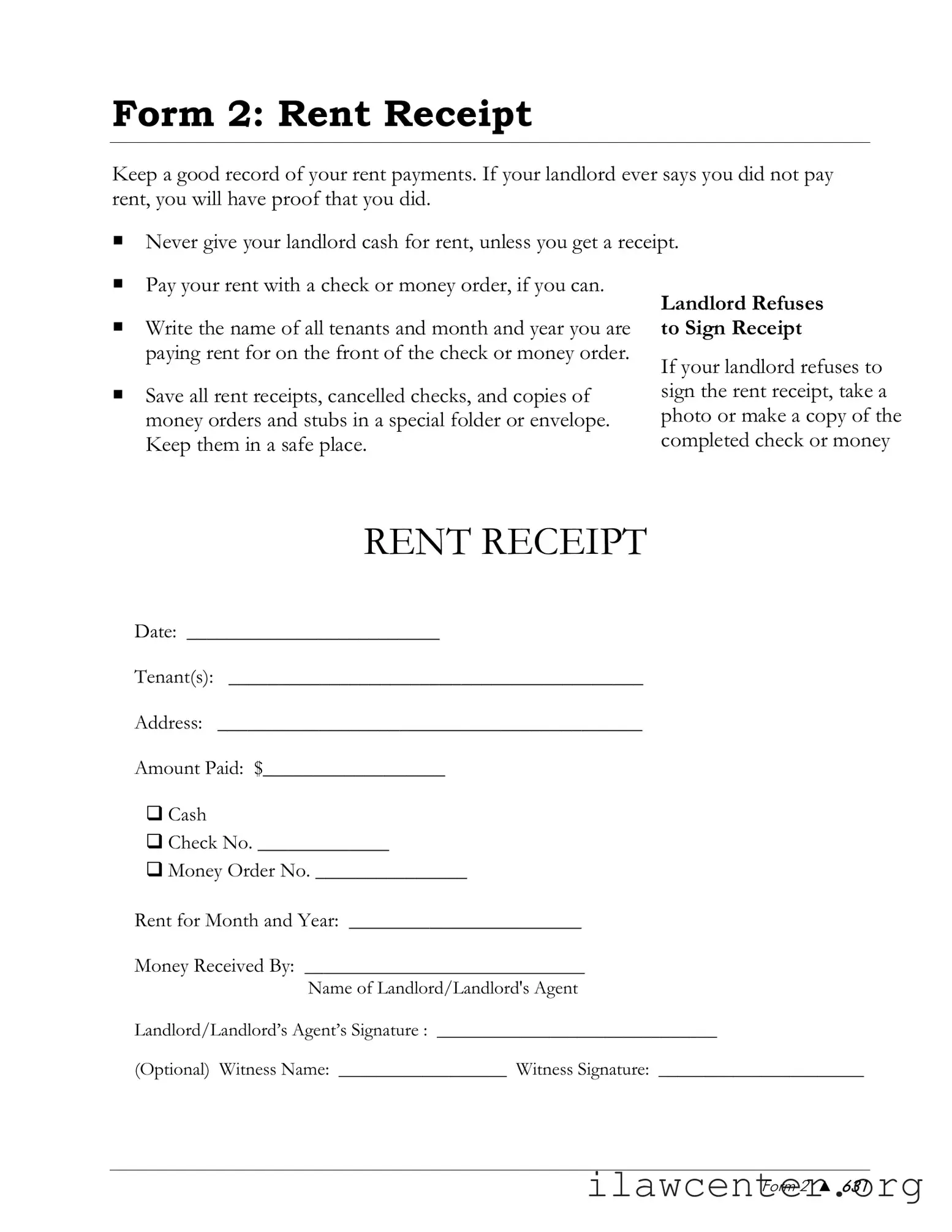
The Rental Receipt form serves as a crucial document in the landlord-tenant relationship, providing a clear record of rent payments made by tenants. This form includes essential details such as the date of payment, the names of the tenant(s), and the property address. It also specifies the amount paid, allowing for various payment methods, including cash, check, or money order. Landlords must fill in the rent amount for the specified month and year to ensure clarity on what payment is being acknowledged. Additionally, the form requires the name and signature of the landlord or their agent, which adds an extra layer of authenticity. For further validation, a witness name and signature can also be included, although this is optional. By utilizing the Rental Receipt form, both parties can maintain accurate records, reducing potential disputes and ensuring transparency in the rental process.

Rental Receipt Preview

Form 2
631
Landlord Refuses
to Sign Receipt
If your landlord refuses to
sign the rent receipt, take a
photo or make a copy of the
completed check or money
Form 2: Rent Receipt
Keep a good record of your rent payments. If your landlord ever says you did not pay
rent, you will have proof that you did.
Never give your landlord cash for rent, unless you get a receipt.
Pay your rent with a check or money order, if you can.
Write the name of all tenants and month and year you are
paying rent for on the front of the check or money order.
Save all rent receipts, cancelled checks, and copies of
money orders and stubs in a special folder or envelope.
Keep them in a safe place.
Date: _________________________
Tenant(s): _________________________________________
Address: __________________________________________
Amount Paid: $__________________
Cash
Check No. _____________
Money Order No. _______________
Rent for Month and Year: _______________________
Money Received By: ______________________________
Name of Landlord/Landlord's Agent
Landlord/Landlord’s Agent’s Signature : ______________________________
(Optional) Witness Name: __________________ Witness Signature: ______________________
RENT RECEIPT

File Properties

Fact Name Description
Date of Payment The rental receipt form requires the date when the rent payment was made, ensuring both parties have a clear record of the transaction.
Tenant Information It includes the names of the tenant(s) and the rental property address, which helps in identifying the parties involved in the rental agreement.
Payment Method The form allows for various payment methods, such as cash, check, or money order, providing flexibility for tenants in how they pay their rent.
Governing Law In many states, rental receipt forms are governed by landlord-tenant laws, which can vary. For example, in California, Civil Code Section 1947.3 outlines the requirements for receipts.

Instructions on Utilizing Rental Receipt

Completing the Rental Receipt form accurately is essential for both tenants and landlords. This ensures that all parties have a clear record of the transaction. Follow these steps carefully to fill out the form correctly.

  1. Date: Write the date on which the payment is made in the designated space.
  2. Tenant(s): Enter the names of the tenant(s) who are making the payment.
  3. Address: Fill in the address of the rental property.
  4. Amount Paid: Write the total amount paid by the tenant in the space provided.
  5. Payment Method: Check the appropriate box to indicate how the payment was made. Options include Cash, Check, or Money Order. If using a check or money order, write the corresponding number in the provided spaces.
  6. Rent for Month and Year: Specify the month and year for which the rent is being paid.
  7. Money Received By: Write the name of the person receiving the payment, typically the landlord or their agent.
  8. Landlord/Landlord's Agent’s Signature: If desired, the landlord or their agent can sign the form in the designated area.
  9. Witness Name: If applicable, enter the name of a witness who is observing the transaction.
  10. Witness Signature: The witness should sign the form if they are present.

Important Facts about Rental Receipt

What is a Rental Receipt form?

A Rental Receipt form is a document that landlords provide to tenants as proof of payment for rent. It includes essential details such as the date of payment, tenant information, the amount paid, and the method of payment. This form serves as a record for both parties and can be important for future reference or disputes.

What information is required on the Rental Receipt form?

The Rental Receipt form requires specific information to be complete. This includes the date of payment, the names of the tenant(s), the property address, the amount paid, the method of payment (cash, check, or money order), and the month and year for which the rent is being paid. Additionally, the name and signature of the landlord or their agent, along with a witness name and signature, can be included for further validation.

Why is it important to have a Rental Receipt?

Having a Rental Receipt is crucial for both landlords and tenants. For tenants, it serves as proof of payment, which can be essential if there are disputes about whether rent was paid. For landlords, it provides a record of income received and can help in tracking payments over time. This documentation can also be beneficial for tax purposes.

How should I fill out the Rental Receipt form?

To fill out the Rental Receipt form, start by entering the date of payment at the top. Next, write down the names of all tenants and the property address. Indicate the amount paid and check the appropriate box for the payment method. Specify the rent period by entering the month and year. Finally, include the name and signature of the landlord or their agent, and if desired, a witness name and signature.

Can a Rental Receipt be issued for partial rent payments?

Yes, a Rental Receipt can be issued for partial rent payments. It is important to clearly indicate the amount received on the form. This helps both parties keep accurate records and understand any outstanding balance that may still be owed.

Is it necessary for the landlord to sign the Rental Receipt?

While it is not strictly necessary for the landlord to sign the Rental Receipt, having a signature can add an extra layer of validation. It shows that the landlord acknowledges the payment and agrees to the details outlined in the receipt. Including a witness signature can further strengthen the document’s credibility.

What should I do if I lose my Rental Receipt?

If you lose your Rental Receipt, it is advisable to contact your landlord to request a duplicate. Keep in mind that maintaining records of all rental payments is essential, so consider storing receipts in a safe place or digitally for future reference.

Can I create my own Rental Receipt?

Yes, you can create your own Rental Receipt as long as it includes all the necessary information outlined above. However, using a standardized form can help ensure that all required details are captured and reduce the risk of missing important information.

Common mistakes

Filling out a Rental Receipt form might seem straightforward, but there are common pitfalls that can lead to confusion or disputes later on. One frequent mistake is leaving the date section blank. Without a specific date, it becomes difficult to establish when the payment was made, which can complicate record-keeping for both tenants and landlords.

Another common error is failing to include the amount paid. This detail is crucial as it serves as a record of the transaction. If this section is left empty, it can lead to misunderstandings about how much rent was actually paid, potentially resulting in disputes over late fees or eviction notices.

People often overlook the payment method. Selecting the payment method, whether it’s cash, check, or money order, is essential. Not marking this section can lead to questions about how the payment was made, which can be particularly problematic if there’s a need to verify the transaction later.

It's also important to fill in the rent for the month and year. Leaving this blank can cause confusion regarding which rental period the payment covers. This can lead to misunderstandings, especially if a tenant pays for multiple months at once.

Another mistake is neglecting to provide the name of the landlord or landlord's agent. This information is vital for ensuring that the receipt is properly attributed. Without it, the receipt may lack credibility, making it harder for tenants to prove payment if disputes arise.

Signatures play a crucial role in validating the transaction. Failing to include the landlord's or landlord's agent’s signature can render the receipt less official. This signature serves as confirmation that the landlord acknowledges the payment, and without it, the receipt may not hold up in future discussions or legal matters.

Lastly, many forget to include a witness name and signature. While optional, having a witness can provide an additional layer of verification. This can be particularly helpful in situations where disputes arise, as a witness can confirm the details of the transaction.

Documents used along the form

In the context of rental agreements, several forms and documents complement the Rental Receipt form. Each serves a distinct purpose in the rental process, ensuring clarity and legal protection for both landlords and tenants.

  • Lease Agreement: This document outlines the terms of the rental arrangement, including the duration of the lease, rent amount, and responsibilities of both parties. It serves as the primary legal contract between the landlord and tenant.
  • Move-In Inspection Checklist: This form is used to document the condition of the rental property before the tenant moves in. It helps identify any existing damages or issues, protecting both the tenant and landlord from disputes over security deposits later on.
  • Security Deposit Receipt: This receipt confirms the amount of the security deposit paid by the tenant. It details the conditions under which the deposit may be withheld or returned at the end of the lease.
  • Notice to Quit: This document is used by landlords to formally notify tenants of the need to vacate the property. It outlines the reasons for the eviction and provides the tenant with a specific timeframe to leave.

Understanding these documents is essential for both landlords and tenants. Each plays a crucial role in maintaining a transparent and fair rental process.

Similar forms

The Rental Receipt form serves an important purpose in documenting transactions between landlords and tenants. Several other documents share similar characteristics and functions. Here are six such documents:

  • Lease Agreement: Like the Rental Receipt, a lease agreement outlines the terms of the rental arrangement. It specifies the obligations of both the landlord and tenant, providing a written record of the agreement.
  • Security Deposit Receipt: This document acknowledges the receipt of a security deposit. It details the amount received and the conditions under which the deposit may be withheld, similar to how the Rental Receipt confirms payment.
  • Payment Ledger: A payment ledger tracks all rental payments made by the tenant. This document is akin to the Rental Receipt as it records the financial transactions between the landlord and tenant over time.
  • Notice to Quit: While primarily used to inform tenants of eviction, this notice often includes payment details. It shares similarities with the Rental Receipt in that it documents the financial relationship and obligations.
  • Tenant's Ledger: This document provides a detailed account of all payments made by the tenant, including dates and amounts. Like the Rental Receipt, it serves as a record of financial transactions and can be used to resolve disputes.
  • Lease Renewal Agreement: This document formalizes the extension of an existing lease. It often references previous payments, similar to the Rental Receipt, by confirming ongoing financial obligations between the parties.

Dos and Don'ts

When filling out the Rental Receipt form, keep the following tips in mind:

  • Do write the date clearly at the top of the form.
  • Do include the full names of all tenants.
  • Do provide the complete address of the rental property.
  • Do specify the amount paid in dollars.
  • Don't leave any fields blank; fill out all required information.
  • Don't forget to check the payment method used.
  • Don't skip the signature section; ensure the landlord or agent signs the form.

Following these guidelines will help ensure that the Rental Receipt is completed correctly and is valid for both parties.

Misconceptions

Understanding the Rental Receipt form is essential for both landlords and tenants. Here are ten common misconceptions that often arise regarding this important document:

  1. It is not necessary to provide a receipt for rent payments. Many believe that receipts are optional, but they are crucial for maintaining accurate records of transactions.
  2. Only landlords need the receipt. Tenants also benefit from having a receipt as proof of payment, which can be vital in disputes.
  3. All rental receipts must be printed. Digital receipts are acceptable as long as they include all required information.
  4. The receipt does not need to include payment method details. Including whether payment was made by cash, check, or money order is important for transparency.
  5. Landlords can refuse to sign the receipt. While the signature is optional, it is recommended for added validity and trust.
  6. There is no need for a witness signature. While not mandatory, having a witness can provide additional verification of the transaction.
  7. All receipts look the same. Each receipt can vary in format, but they must contain specific information to be valid.
  8. Rental receipts are only for monthly payments. Receipts can be issued for any rent payment, regardless of the frequency.
  9. The date on the receipt is not important. The date is critical as it indicates when the payment was made, which can be relevant for legal purposes.
  10. Once a receipt is issued, it cannot be modified. If an error is found, it is acceptable to issue a corrected receipt, but both parties should acknowledge the change.

By addressing these misconceptions, both landlords and tenants can ensure a smoother rental experience and better protect their rights.

Key takeaways

When using the Rental Receipt form, it is essential to understand its components and purpose. Here are key takeaways to consider:

  • Complete all fields: Fill in the date, tenant names, and property address to ensure clarity.
  • Specify the payment amount: Clearly indicate the total amount paid to avoid disputes later.
  • Document the payment method: Choose between cash, check, or money order, and provide relevant details such as check or money order numbers.
  • Indicate the rental period: Specify the month and year for which the rent is being paid to maintain accurate records.
  • Identify the recipient: Write the name of the landlord or their agent who received the payment.
  • Signature is optional: While the landlord or agent's signature is not mandatory, it is advisable for added verification.
  • Witness signatures: Including a witness can provide additional assurance and legitimacy to the transaction.
  • Keep a copy: Both the landlord and tenant should retain a copy of the receipt for their records.
  • Use clear language: Ensure that all information is legible to prevent misunderstandings.
  • Follow local laws: Be aware of any specific regulations regarding rental receipts in your state or municipality.