Fillable Resignation Letter Due to Health Reasons Document

Fillable Resignation Letter Due to Health Reasons Document

A Resignation Letter Due to Health Reasons is a formal document that employees use to notify their employer of their decision to leave a job due to health-related issues. This letter serves as a professional way to communicate the situation while ensuring that the employer is aware of the circumstances surrounding the resignation. If you find yourself needing to resign for health reasons, consider filling out the form by clicking the button below.

Article Guide

When an individual finds it necessary to step away from their job due to health issues, a Resignation Letter Due to Health Reasons becomes an essential document. This letter serves as a formal notification to an employer about the decision to resign, highlighting the health concerns that have influenced this choice. It typically includes the employee's name, the date of resignation, and a brief explanation of the health-related circumstances without delving into excessive personal detail. Additionally, it may express gratitude for the opportunities provided during employment, fostering a positive relationship despite the departure. The letter often requests the employer's understanding and support during this challenging time. By using this form, employees can ensure they communicate their situation respectfully and professionally, which can be beneficial for future references or reemployment opportunities. Properly completing this letter helps to maintain professionalism and clarity, ensuring that both the employee and employer can navigate the transition smoothly.

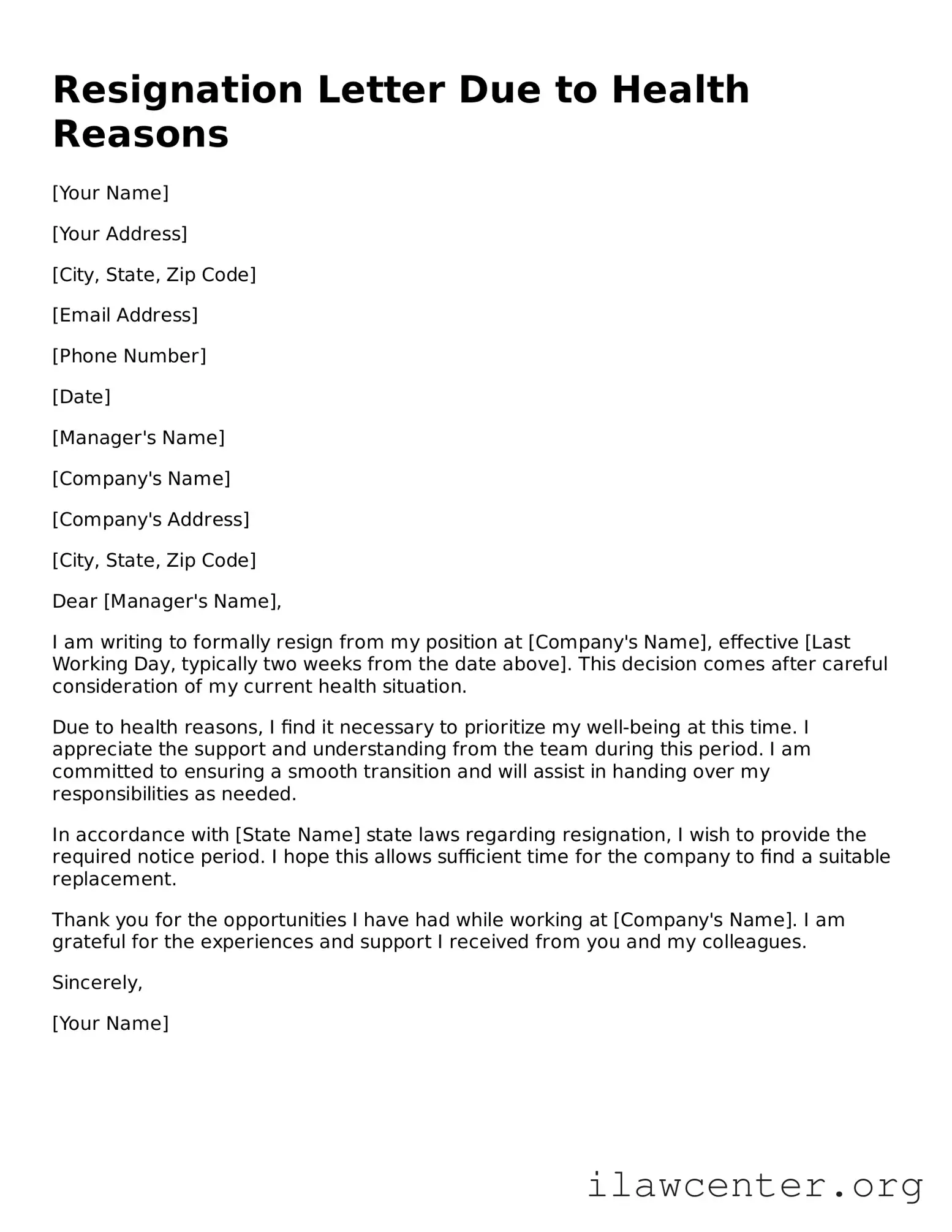
Resignation Letter Due to Health Reasons Preview

Resignation Letter Due to Health Reasons

[Your Name]

[Your Address]

[City, State, Zip Code]

[Email Address]

[Phone Number]

[Date]

[Manager's Name]

[Company's Name]

[Company's Address]

[City, State, Zip Code]

Dear [Manager's Name],

I am writing to formally resign from my position at [Company's Name], effective [Last Working Day, typically two weeks from the date above]. This decision comes after careful consideration of my current health situation.

Due to health reasons, I find it necessary to prioritize my well-being at this time. I appreciate the support and understanding from the team during this period. I am committed to ensuring a smooth transition and will assist in handing over my responsibilities as needed.

In accordance with [State Name] state laws regarding resignation, I wish to provide the required notice period. I hope this allows sufficient time for the company to find a suitable replacement.

Thank you for the opportunities I have had while working at [Company's Name]. I am grateful for the experiences and support I received from you and my colleagues.

Sincerely,

[Your Name]

PDF Form Characteristics

Fact Name Description
Purpose The Resignation Letter Due to Health Reasons form is used by employees to formally resign from their position due to health-related issues.
Notice Period Typically, employees are encouraged to provide a notice period, which can vary by company policy or state law.
Confidentiality Health information is sensitive. The letter should maintain confidentiality regarding specific health conditions.
State-Specific Forms Some states may have specific guidelines or forms for resignation due to health reasons. Always check local labor laws.
Governing Laws In many states, employment laws such as the Family and Medical Leave Act (FMLA) may apply to resignations related to health.
Format The letter should be formatted professionally, including the date, recipient's information, and a clear statement of resignation.
Final Paycheck Employees should inquire about their final paycheck and any remaining benefits or entitlements when resigning.

Instructions on Utilizing Resignation Letter Due to Health Reasons

When you need to resign from your job due to health reasons, it is important to communicate this clearly and professionally. Completing the resignation letter form is a crucial step in this process. After filling out the form, you will submit it to your employer, which will formally notify them of your decision to leave the position.

  1. Begin by writing your name at the top of the form. This identifies you as the sender of the letter.
  2. Next, include your address. This should be your current residential address, as it may be used for any future correspondence.
  3. Write the date on which you are filling out the form. This helps establish a timeline for your resignation.
  4. Include your employer's name and the company's name. This ensures that your letter reaches the correct person and organization.
  5. Address the letter to your employer using a professional greeting. "Dear [Employer's Name]" is a common format.
  6. In the body of the letter, clearly state your intention to resign due to health reasons. Be concise and straightforward.
  7. Specify your last working day. This is typically two weeks from the date of the letter, but it can vary based on your situation or company policy.
  8. Express gratitude for the opportunities you had while working at the company. A simple thank you can go a long way.
  9. Close the letter with a professional sign-off, such as "Sincerely" or "Best regards."
  10. Finally, sign your name at the bottom of the letter. If submitting electronically, a typed name may suffice, but a handwritten signature is preferred for printed letters.

Important Facts about Resignation Letter Due to Health Reasons

What is a Resignation Letter Due to Health Reasons?

A Resignation Letter Due to Health Reasons is a formal document you submit to your employer when you need to leave your job because of health issues. It communicates your decision to resign and provides a brief explanation of your situation, ensuring that your employer understands the reason for your departure.

Do I need to provide specific details about my health condition?

No, you are not required to disclose specific details about your health condition. It is generally sufficient to mention that you are resigning for health reasons. Maintaining your privacy is important, and you can keep the explanation brief and to the point.

How much notice should I give when resigning for health reasons?

The amount of notice can depend on your company's policies and your situation. If possible, aim to give at least two weeks' notice. This allows your employer time to adjust and find a replacement. However, if your health condition requires immediate action, it’s acceptable to resign with shorter notice.

Should I mention my last working day in the letter?

Yes, it's a good idea to specify your last working day in the resignation letter. This clarity helps your employer understand your timeline and plan accordingly. Include the date in your letter to avoid any confusion.

Can I request a reference in my resignation letter?

You can request a reference in your resignation letter, but it’s not necessary. If you had a positive relationship with your employer, they may offer to provide one regardless. If you choose to include it, keep the request polite and professional.

What if I have benefits or unused vacation days?

When resigning, you should inquire about any benefits or unused vacation days. Your employer may have policies regarding payout for these benefits. It’s wise to discuss this with your HR department to understand what you are entitled to upon your departure.

Can I change my mind after submitting the resignation letter?

Once you submit your resignation letter, it is typically considered final. However, if your circumstances change, you can reach out to your employer to discuss the possibility of rescinding your resignation. Keep in mind that this may not always be possible, depending on the company’s needs and policies.

Common mistakes

When filling out the Resignation Letter Due to Health Reasons form, individuals often overlook important details. One common mistake is failing to include a clear and concise statement of resignation. Without this, the intent may not be understood, leading to confusion.

Another frequent error is neglecting to specify the last working day. Providing a specific date helps ensure a smooth transition and allows the employer to plan accordingly. Omitting this information can create unnecessary complications.

Many people also forget to express gratitude toward their employer or colleagues. A simple thank you can leave a positive impression, even in difficult circumstances. It’s important to acknowledge the support received during employment.

Some individuals mistakenly use vague language when explaining their health reasons. While it’s not necessary to provide detailed medical information, being too ambiguous can raise questions. Clear but respectful communication is key.

Additionally, failing to proofread the letter can lead to typos or grammatical errors. Such mistakes can detract from the professionalism of the resignation letter. Taking the time to review the document ensures clarity and accuracy.

Another mistake is not keeping a copy of the resignation letter for personal records. This can be important for future reference, especially if there are questions about the resignation later on. Keeping a copy helps maintain a clear record.

Some people forget to check their company’s policy on resignation. Each organization may have specific guidelines or requirements for submitting resignation letters. Ignoring these can lead to misunderstandings or delays.

Another common oversight is neglecting to inform the supervisor verbally before submitting the letter. A face-to-face conversation can show respect and professionalism. It also provides an opportunity to discuss any necessary details regarding the transition.

People may also overlook the need to provide contact information in the resignation letter. Including a phone number or email address allows for future communication if needed. This small detail can make a significant difference.

Lastly, some individuals fail to submit the resignation letter in a timely manner. Giving proper notice is crucial for maintaining professional relationships. Delaying the submission can create tension and affect future references.

Documents used along the form

When an individual decides to resign from their position due to health reasons, several other forms and documents may accompany the resignation letter. Each of these documents serves a specific purpose and helps ensure a smooth transition for both the employee and the employer. Below is a list of common forms that may be used alongside a resignation letter.

  • Exit Interview Form: This document allows the employer to gather feedback from the departing employee about their experience within the organization. It can provide valuable insights for improving workplace conditions.
  • Final Paycheck Request: Employees may need to submit a request to ensure they receive their final paycheck, which includes any accrued vacation or sick leave. This form helps clarify payment details.
  • Health Insurance Continuation Notice: Under COBRA, employees may be eligible to continue their health insurance coverage after resignation. This notice outlines the options available and any necessary steps to maintain coverage.
  • Retirement Plan Distribution Form: If the employee has a retirement plan, this form is required to initiate the distribution process. It helps employees understand their options regarding their retirement savings.
  • Severance Agreement: In some cases, an employer may offer a severance package. This document outlines the terms of the severance, including any financial compensation and conditions for acceptance.
  • Return of Company Property Form: Employees are often required to return company property, such as laptops, keys, or uniforms. This form helps document the return process and ensures all items are accounted for.
  • Non-Disclosure Agreement (NDA): If the employee signed an NDA, it may be necessary to remind them of their obligations regarding confidential information even after leaving the company.
  • References Request Form: Employees may want to request references from their supervisors or colleagues for future job applications. This form helps facilitate that process.
  • Transfer of Knowledge Document: This document can be used to outline ongoing projects and responsibilities, ensuring a smooth transition for the team taking over the departing employee's duties.

Each of these documents plays a crucial role in ensuring that both the employee and employer are prepared for the resignation process. By understanding and utilizing these forms, individuals can navigate their departure with clarity and confidence, paving the way for future opportunities.

Similar forms

  • Resignation Letter: A general resignation letter not specifically citing health reasons, but still serving the purpose of formally notifying an employer of an employee's decision to leave a position.
  • Medical Leave Request: This document is used to formally request time off due to health issues. While it does not indicate resignation, it communicates the need for absence due to health concerns.
  • Disability Leave Application: Similar in nature, this application is submitted when an employee requires extended leave due to a disability, which may eventually lead to resignation.
  • Termination Letter: Though it indicates the end of employment from the employer's side, it can relate to health issues if an employee is let go due to medical conditions.
  • Exit Interview Form: This document is often completed when leaving a job. It may include questions about the reasons for departure, which can encompass health-related issues.
  • Notice of Withdrawal from Employment: This notice serves to inform an employer of an employee's decision to withdraw from a job offer, which may be due to health reasons.
  • Retirement Letter: When health issues lead to retirement, this letter formally communicates the decision to retire, often due to medical circumstances.
  • Separation Agreement: This document outlines the terms of separation from employment. It can include health-related reasons for leaving.
  • Family Medical Leave Act (FMLA) Application: This application is used to request leave for family health issues, which can overlap with personal health concerns.
  • Health Insurance Continuation Notice: While not a resignation letter, this notice may be relevant for individuals resigning due to health issues, as it addresses continued health coverage post-employment.

Dos and Don'ts

When filling out a Resignation Letter Due to Health Reasons form, it's important to approach the process thoughtfully. Here are some key points to consider:

  • Do be honest about your health situation. Transparency helps maintain trust with your employer.
  • Do keep the letter professional. Use a formal tone, even if your relationship with your employer is friendly.
  • Don't provide excessive personal details about your health. Keep the focus on your decision to resign.
  • Don't forget to express gratitude. Acknowledge the opportunities you had while working there.

Misconceptions

When it comes to resigning from a job due to health reasons, several misconceptions can cloud the understanding of the process and its implications. Below are eight common misconceptions, along with clarifications to help individuals navigate this sensitive situation.

  • Misconception 1: A resignation letter is not necessary if leaving for health reasons.
  • Many people believe that a verbal resignation suffices. However, submitting a formal resignation letter is essential as it provides a documented record of your intent to leave the company.

  • Misconception 2: You must disclose specific health details in your letter.
  • It is not required to include personal health information in your resignation letter. A simple statement indicating that you are resigning due to health reasons is sufficient.

  • Misconception 3: Resigning for health reasons will negatively impact future job opportunities.
  • While some worry that resigning for health reasons may be viewed unfavorably, most employers understand that health issues can arise. A professional resignation can maintain your reputation.

  • Misconception 4: You cannot negotiate your notice period if resigning for health reasons.
  • Although some may feel obligated to adhere to standard notice periods, it is possible to negotiate a shorter timeframe if health issues warrant it. Open communication with your employer is key.

  • Misconception 5: Health-related resignations are always permanent.
  • Some individuals assume that resigning for health reasons means they can never return. However, many people recover and later seek reemployment, either with the same company or a different one.

  • Misconception 6: A resignation letter must be delivered in person.
  • While delivering a resignation letter in person can be courteous, it is not mandatory. Emailing or mailing the letter is perfectly acceptable, especially if health issues prevent in-person communication.

  • Misconception 7: You cannot receive benefits after resigning for health reasons.
  • Some believe that resigning disqualifies them from receiving benefits. However, this depends on company policy and local laws. It is advisable to review your benefits package and consult HR for clarity.

  • Misconception 8: There are no legal protections when resigning for health reasons.
  • In reality, various laws protect employees facing health challenges. Understanding your rights can empower you to make informed decisions during the resignation process.

By addressing these misconceptions, individuals can approach their resignation with a clearer understanding and greater confidence.

Key takeaways

When filling out and using the Resignation Letter Due to Health Reasons form, consider the following key takeaways:

  1. Be Clear and Concise: Clearly state your intention to resign due to health issues. Avoid unnecessary details that may detract from your main message.
  2. Maintain Professionalism: Even though you are resigning, keep a professional tone. This helps preserve relationships and maintains your reputation.
  3. Provide Notice: Whenever possible, give your employer adequate notice. This allows them to prepare for your departure and may help in securing a positive reference in the future.
  4. Express Gratitude: Thank your employer and colleagues for the opportunities and support you received during your tenure. A simple note of appreciation can leave a lasting positive impression.
  5. Keep a Copy: Always retain a copy of your resignation letter for your records. This can be useful for future reference or in case of any disputes.

Following these guidelines can help ensure a smooth transition and maintain your professional integrity during a challenging time.