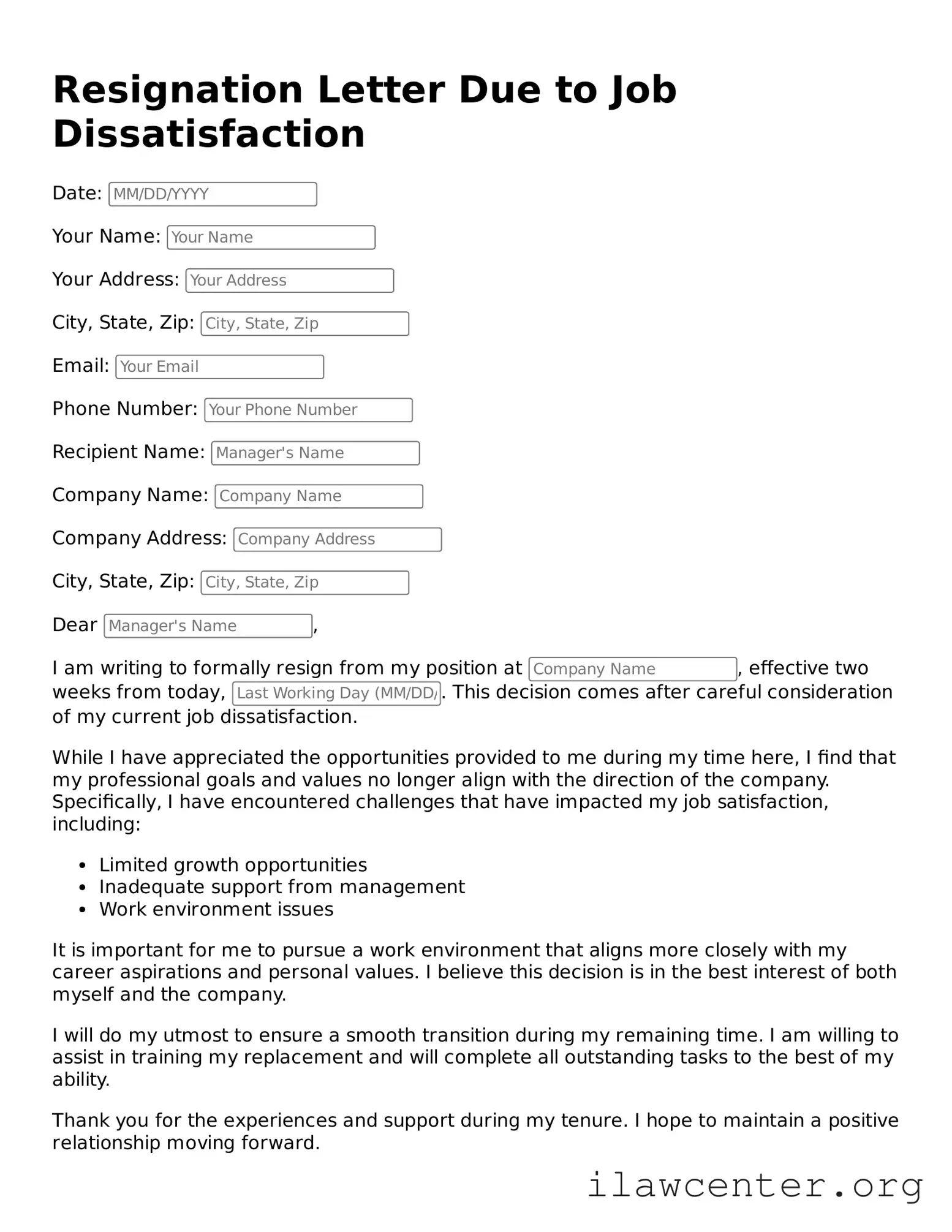
What is a Resignation Letter Due to Job Dissatisfaction?
A Resignation Letter Due to Job Dissatisfaction is a formal document submitted by an employee to their employer, indicating the decision to leave the job due to dissatisfaction with various aspects of the work environment, role, or company culture. This letter serves as a professional way to communicate the reasons for leaving while providing notice to the employer.
Why is it important to submit a resignation letter?
Submitting a resignation letter is important as it provides a written record of your intent to leave the company. It helps maintain professionalism and ensures that your employer is informed of your decision. Additionally, it can help preserve relationships and facilitate a smoother transition.
What should be included in the resignation letter?
The resignation letter should include your name, the date, and the employer’s name and address. Clearly state your intention to resign and the effective date of your resignation. It is also advisable to briefly mention your reasons for dissatisfaction, while maintaining a professional tone. Lastly, expressing gratitude for the opportunities provided can be beneficial.
How much notice should I give when resigning?
Typically, a notice period of two weeks is standard in many industries. However, depending on your role and company policies, you may want to check your employment contract for specific requirements. Providing adequate notice allows the employer time to find a replacement or make necessary arrangements.
Can I mention specific reasons for my dissatisfaction?
While you can mention specific reasons for your dissatisfaction, it is advisable to keep this section concise and professional. Focus on how the situation affected your decision to leave rather than detailing grievances. This approach helps maintain professionalism and avoids burning bridges.
What if I have a non-disclosure agreement?
If you have a non-disclosure agreement (NDA), ensure that you do not disclose any confidential information in your resignation letter. Focus on your personal reasons for leaving rather than discussing sensitive company matters. Adhering to the NDA is crucial for legal compliance.
Is it necessary to have a face-to-face conversation before submitting the letter?
While not mandatory, having a face-to-face conversation with your supervisor or manager before submitting your resignation letter is highly recommended. This allows for a respectful discussion about your decision and can provide an opportunity for feedback or potential resolutions.
What should I do after submitting my resignation letter?
After submitting your resignation letter, prepare for the transition period. Complete any outstanding work and assist in training a replacement if necessary. Maintain professionalism throughout your remaining time at the company, as this can impact future references and your professional reputation.
Can I change my mind after submitting the resignation letter?
Once you submit a resignation letter, it is generally considered a formal decision to leave. However, if you have a change of heart, it is best to communicate this with your employer as soon as possible. Be prepared for the possibility that your employer may not be able to accommodate your request to stay.