Fillable Resignation Letter Document

Fillable Resignation Letter Document

A Resignation Letter form is a formal document used by an employee to notify their employer of their intention to leave their job. This letter typically includes essential details such as the last working day and a brief reason for the resignation. To ensure a smooth transition, it's important to fill out this form correctly; click the button below to get started.

Article Guide

When it comes time to leave a job, a resignation letter serves as an important formal communication tool. This document not only notifies your employer of your intention to resign but also outlines key details such as your last working day and any necessary transition plans. Crafting a well-thought-out resignation letter can help maintain professional relationships and ensure a smoother transition. Typically, a resignation letter includes your contact information, the date, and a clear statement of resignation. Additionally, it may express gratitude for the opportunities you’ve had during your employment and offer assistance during the transition period. By following a structured format and being respectful in your tone, you can leave your job on a positive note, paving the way for future opportunities. Understanding the components of a resignation letter is essential for anyone considering a job change, as it reflects your professionalism and respect for your current employer.

Resignation Letter Preview

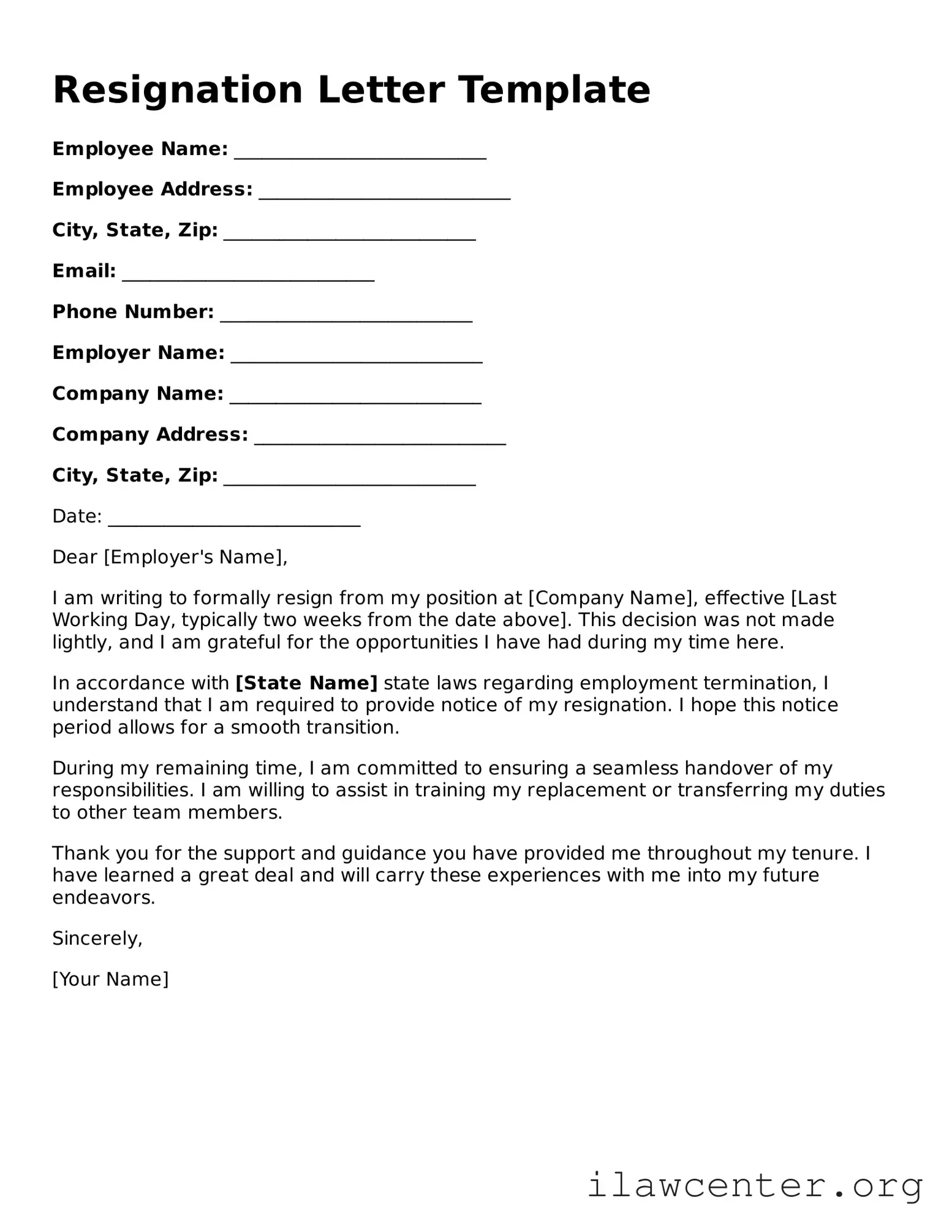
Resignation Letter Template

Employee Name: ___________________________

Employee Address: ___________________________

City, State, Zip: ___________________________

Email: ___________________________

Phone Number: ___________________________

Employer Name: ___________________________

Company Name: ___________________________

Company Address: ___________________________

City, State, Zip: ___________________________

Date: ___________________________

Dear [Employer's Name],

I am writing to formally resign from my position at [Company Name], effective [Last Working Day, typically two weeks from the date above]. This decision was not made lightly, and I am grateful for the opportunities I have had during my time here.

In accordance with [State Name] state laws regarding employment termination, I understand that I am required to provide notice of my resignation. I hope this notice period allows for a smooth transition.

During my remaining time, I am committed to ensuring a seamless handover of my responsibilities. I am willing to assist in training my replacement or transferring my duties to other team members.

Thank you for the support and guidance you have provided me throughout my tenure. I have learned a great deal and will carry these experiences with me into my future endeavors.

Sincerely,

[Your Name]

PDF Form Characteristics

Fact Name Description
Purpose A resignation letter formally notifies an employer of an employee's intention to leave their job.
Format The letter should include the date, a salutation, a clear statement of resignation, and a closing.
Notice Period It's customary to provide a notice period, typically two weeks, unless otherwise specified in the employment contract.
State-Specific Laws Some states may have specific laws regarding resignation and notice periods; check local regulations for details.
Professionalism Maintaining a professional tone in the letter is essential, as it helps preserve relationships and reputation.
Final Paycheck Employees should inquire about the timing and details of their final paycheck upon resignation.

Instructions on Utilizing Resignation Letter

After you complete the Resignation Letter form, you will need to submit it to your employer according to your company's policies. Make sure to keep a copy for your records. This ensures that both you and your employer have a clear understanding of your departure.

  1. Start by entering your name at the top of the form.
  2. Next, write the date you are submitting the resignation letter.
  3. Include your employer's name and title in the designated section.
  4. Clearly state your intention to resign in the opening paragraph.
  5. Specify your last working day, typically two weeks from the date of submission.
  6. Express gratitude for the opportunities you had during your employment.
  7. Offer assistance during the transition period, if applicable.
  8. End the letter with a professional closing and your signature.

Important Facts about Resignation Letter

What is a resignation letter?

A resignation letter is a formal document that an employee submits to their employer to announce their intention to leave their job. It serves as a record of the employee's decision and outlines their last working day. Writing this letter is an important step in the resignation process.

Why should I write a resignation letter?

Writing a resignation letter is important for several reasons. It provides a clear, written record of your resignation. This can help avoid misunderstandings. Additionally, it allows you to leave on good terms and maintain a positive relationship with your employer and colleagues.

What should I include in my resignation letter?

Your resignation letter should include several key elements. Start with your name and contact information at the top. Next, include the date and the employer's name and address. Clearly state your intention to resign, specify your last working day, and express gratitude for the opportunities you had while employed. A polite closing is also essential.

How much notice should I give in my resignation letter?

Typically, a two-week notice period is standard in many industries. However, this can vary based on your job or company policy. Always check your employment contract or company handbook for specific requirements. If possible, giving more notice can be beneficial, especially if you hold a critical position.

Can I resign verbally instead of writing a letter?

While you can verbally resign, it is advisable to follow up with a written resignation letter. A verbal resignation may not provide the same level of clarity and documentation. A letter helps ensure that your resignation is formally recognized and documented.

Should I mention the reason for my resignation?

It is not necessary to provide a reason for your resignation in your letter. If you feel comfortable sharing your reason, you can do so briefly. However, if your reason is negative, it may be best to keep the letter positive and professional.

What if I change my mind after submitting my resignation letter?

If you change your mind after submitting your resignation, it can be complicated. You should communicate your desire to stay with your employer as soon as possible. However, understand that they may have already begun to process your resignation, and your request may not be granted.

Can I use a resignation letter template?

Yes, using a resignation letter template can be helpful. Templates provide a structure and ensure you include all necessary information. However, it is important to personalize the letter to reflect your situation and maintain a professional tone.

What should I do after submitting my resignation letter?

After submitting your resignation letter, prepare for the transition. Finish any outstanding work and assist in training your replacement if required. Maintain professionalism during your remaining time at the company. This can help you leave on good terms and secure positive references for the future.

Is it necessary to have an exit interview after resigning?

While an exit interview is not mandatory, it is often encouraged. This meeting allows you to provide feedback about your experience at the company. It can also help your employer improve the workplace for future employees. Participation is up to you, but it can be a valuable opportunity to share your thoughts.
Common mistakes

When it comes to resigning from a job, many individuals underestimate the importance of a well-crafted resignation letter. A common mistake is failing to include a clear statement of resignation. Without explicitly stating that you are resigning, your employer may be left confused about your intentions. This simple omission can lead to misunderstandings and unnecessary complications.

Another frequent error is neglecting to provide a specific last working day. It’s essential to communicate when you plan to leave the company. This not only helps your employer prepare for your departure but also ensures that you fulfill any notice period required by your contract. Leaving this detail vague can create uncertainty and may even affect your professional reputation.

Many people also make the mistake of writing a resignation letter that lacks professionalism. While it’s natural to have mixed feelings about leaving a job, expressing negative emotions or grievances can backfire. It’s better to focus on gratitude for the opportunities you’ve had and to leave on a positive note. A professional tone reflects well on you and maintains good relationships for the future.

Another common pitfall is forgetting to proofread the letter before submission. Spelling mistakes and grammatical errors can undermine the professionalism of your resignation. Taking the time to review your letter helps ensure clarity and shows respect for your employer and your own career.

Lastly, some individuals forget to keep a copy of their resignation letter for their records. Having a personal copy is important for your own reference and can be useful in case of any future disputes regarding your resignation. This simple step can save you from potential headaches down the line.

Documents used along the form

When you're preparing to resign from your job, a resignation letter is an essential first step. However, there are several other forms and documents that can help you navigate this transition smoothly. Here’s a list of commonly used documents that may accompany your resignation letter.

  • Exit Interview Form: This document allows you to provide feedback about your experience at the company. It often helps employers understand employee turnover and improve workplace conditions.
  • Final Paycheck Request: If you're owed any wages or unused vacation time, this request form ensures you receive your final paycheck promptly after your departure.
  • Benefits Continuation Form: When you leave a job, you may need to fill out a form to maintain certain benefits, like health insurance, under COBRA.
  • Non-Disclosure Agreement (NDA): If you signed an NDA when you joined the company, you may need to revisit it to understand your obligations regarding confidential information after your departure.
  • Return of Company Property Form: This form is used to document the return of any company-owned items, such as laptops, keys, or uniforms, ensuring a smooth handover.
  • Recommendation Request: If you're seeking a reference for future employment, a recommendation request can help you formally ask a supervisor or colleague to vouch for your skills and character.
  • Transfer of Duties Document: This outlines the responsibilities you will hand over to a colleague, ensuring that your work continues seamlessly after your departure.
  • Unemployment Benefits Application: If you’re eligible, this application allows you to request unemployment benefits after leaving your job, providing financial support during your job search.
  • Job Offer Acceptance Letter: If you have secured a new position, this letter formally accepts the job offer, confirming your start date and any other relevant details.

By being aware of these documents, you can ensure a well-organized resignation process. Each form plays a unique role in making your transition easier and more professional. Taking these steps can help you leave your current position on good terms and prepare for your next adventure.

Similar forms

A resignation letter is a formal way to communicate your decision to leave a job. However, it shares similarities with several other important documents in the professional world. Here are eight documents that are akin to a resignation letter:

  • Job Offer Letter: Just like a resignation letter, a job offer letter is a formal document. It outlines the terms of employment and serves as a written record of the agreement between the employer and employee.
  • Termination Letter: A termination letter, issued by an employer, is similar in that it formally communicates the end of employment. Both documents require clarity and professionalism.
  • Leave of Absence Request: This document requests time away from work. Like a resignation letter, it must be written formally and may require advance notice.
  • Employment Verification Letter: This letter confirms a person's employment status. Both resignation and verification letters serve to document employment-related matters in writing.
  • Reference Letter: A reference letter is often requested when leaving a job. It shares the formal tone of a resignation letter and helps future employers understand your qualifications.
  • Acceptance Letter: When you accept a job offer, you often write an acceptance letter. This document, like a resignation letter, confirms a significant change in your employment status.
  • Non-Disclosure Agreement (NDA): An NDA protects sensitive information. Both documents require careful wording and are important in maintaining professional integrity during transitions.
  • Exit Interview Form: An exit interview form is completed when leaving a job. It gathers feedback about the employee's experience, much like a resignation letter communicates the intent to leave.

Understanding these documents can help you navigate your professional journey more effectively. Each serves a unique purpose, yet they all share the common goal of facilitating clear and respectful communication in the workplace.

Dos and Don'ts

When filling out a resignation letter form, it's important to approach it thoughtfully. Here are some do's and don'ts to keep in mind:

  • Do be clear and concise. State your intention to resign without unnecessary details.
  • Do include your last working day. This helps your employer plan for your departure.
  • Do express gratitude. A simple thank you can leave a positive impression.
  • Do proofread your letter. Ensure there are no typos or errors before submission.
  • Don't include negative comments. Keep the tone professional and positive.
  • Don't make it a lengthy explanation. Stick to the point to maintain professionalism.
  • Don't forget to sign the letter. A signature adds a personal touch.
  • Don't rush the process. Take your time to ensure everything is in order.

Misconceptions

When it comes to resignation letters, there are several misconceptions that can lead to confusion for employees. Understanding the truth behind these myths can help ensure a smooth transition when leaving a job. Here are seven common misconceptions:

  • A resignation letter is not necessary. Many believe that simply telling their boss they are leaving is enough. However, a formal resignation letter provides documentation of the decision and can help maintain a professional relationship.
  • Resignation letters must be lengthy. Some think that a resignation letter needs to be long and detailed. In reality, a concise letter stating the intention to resign, the last working day, and a brief expression of gratitude is sufficient.
  • Only employees in high-level positions need to submit a resignation letter. This is not true. Regardless of position, all employees should submit a resignation letter to ensure clarity and professionalism.
  • A resignation letter can be submitted verbally. While verbal communication is important, a written resignation letter is essential for record-keeping and to formalize the resignation process.
  • Once submitted, a resignation letter cannot be retracted. Although it is best to think carefully before submitting, it is possible to retract a resignation letter if done promptly and with proper communication.
  • Resignation letters should only focus on the negative aspects of the job. Focusing solely on negatives can create a poor impression. Instead, it's better to highlight positive experiences and express gratitude for the opportunities received.
  • There is a specific format for resignation letters. While there are common elements to include, there is no strict format. Each resignation letter can be tailored to fit the individual's style while maintaining professionalism.

By addressing these misconceptions, employees can navigate the resignation process more effectively and leave their current positions on a positive note.

Key takeaways

When filling out and using a resignation letter form, there are several important considerations to keep in mind. Below are key takeaways that can guide individuals through the process.

  1. Be Clear and Concise: Clearly state your intention to resign in the first few sentences. Avoid unnecessary details.
  2. Include Relevant Information: Include your name, position, and the date of your last working day.
  3. Maintain Professionalism: Use a professional tone throughout the letter. This helps to preserve relationships and maintain a positive reputation.
  4. Express Gratitude: Thank your employer for the opportunities you have had during your time with the company. Acknowledging positive experiences can leave a good impression.
  5. Provide Notice: If possible, give at least two weeks' notice. This allows your employer time to prepare for your departure.
  6. Offer Assistance: Consider offering to help with the transition process. This could involve training a replacement or wrapping up projects.
  7. Keep a Copy: Retain a copy of your resignation letter for your records. This can be useful for future reference.
  8. Follow Company Policy: Check if your company has specific procedures for resignations. Adhering to these can help ensure a smooth process.
  9. Deliver in Person: If possible, deliver your resignation letter in person. This shows respect and allows for a direct conversation.

By keeping these takeaways in mind, individuals can navigate the resignation process more effectively and maintain professional relationships.