Roofing Estimate PDF Template

Roofing Estimate PDF Template

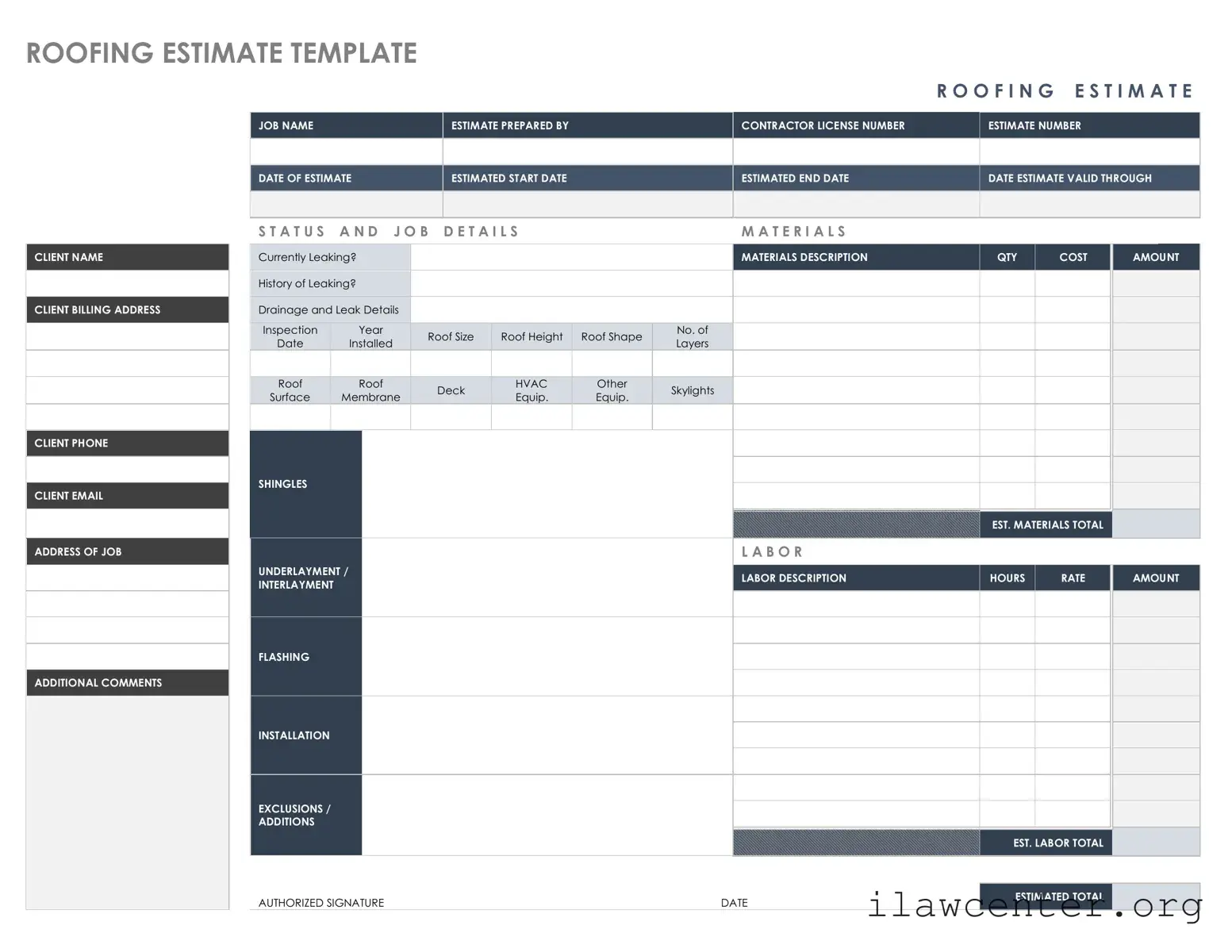
A Roofing Estimate form is a document used by homeowners and contractors to outline the costs and details associated with a roofing project. This form helps ensure that everyone is on the same page regarding the work to be done, materials needed, and the overall budget. Ready to get started? Fill out the form by clicking the button below!

Article Guide

When considering a roofing project, obtaining a detailed roofing estimate is essential for homeowners and contractors alike. This estimate serves as a comprehensive outline of the project, detailing costs, materials, and timelines. A well-structured roofing estimate form typically includes sections for the property owner's information, the type of roofing materials to be used, and a breakdown of labor costs. Additionally, it may specify any necessary permits and inspections, as well as warranties on materials and workmanship. Clear communication is critical; therefore, the form should also allow space for notes or special requests from the homeowner. By utilizing a roofing estimate form, both parties can ensure that expectations are aligned, paving the way for a successful roofing project.

Roofing Estimate Preview

ROOFING ESTIMATE TEMPLATE
R O O F I N G E S T I M A T E
JOB NAME
ESTIMATE PREPARED BY
CONTRACTOR LICENSE NUMBER
ESTIMATE NUMBER
DATE OF ESTIMATE
ESTIMATED START DATE
ESTIMATED END DATE
DATE ESTIMATE VALID THROUGH
S T A T U S A N D J O B D E T A I L S
M A T E R I A L S
CLIENT NAME
MATERIALS DESCRIPTION
QTY
COST
AMOUNT
CLIENT BILLING ADDRESS
Inspection
Year
No. of
Roof Size
Roof Height
Roof Shape
Date
Installed
Layers
Roof
Roof
HVAC
Other
Deck
Skylights
Surface
Membrane
Equip.
Equip.
CLIENT PHONE
SHINGLES
CLIENT EMAIL
EST. MATERIALS TOTAL
ADDRESS OF JOB
L A B O R
UNDERLAYMENT /
LABOR DESCRIPTION
HOURS
RATE
AMOUNT
INTERLAYMENT
FLASHING
ADDITIONAL COMMENTS
INSTALLATION
EXCLUSIONS /
ADDITIONS
EST. LABOR TOTAL
ESTIMATED TOTAL
AUTHORIZED SIGNATURE
DATE

File Properties

Fact Name Description
Purpose The Roofing Estimate form is used to provide a detailed estimate for roofing services, outlining costs and scope of work.
Content Requirements The form should include information such as the contractor's details, project description, estimated costs, and timelines.
State-Specific Regulations In California, the form must comply with the Business and Professions Code, Section 7159, which governs home improvement contracts.
Signatures Both the contractor and the client should sign the form to acknowledge agreement on the estimate provided.

Instructions on Utilizing Roofing Estimate

After gathering all necessary information, you are ready to fill out the Roofing Estimate form. Completing this form accurately will help in obtaining a precise estimate for roofing services. Follow the steps below to ensure all required fields are filled out correctly.

  1. Begin by entering your name in the designated field.
  2. Provide your address, including street, city, state, and zip code.
  3. Input your phone number and email address for contact purposes.
  4. Specify the type of roofing material you are interested in, such as asphalt shingles, metal, or tile.
  5. Indicate the size of the roof in square feet or the number of squares.
  6. Detail any special features of the roof, like skylights or chimneys.
  7. Include information about the current condition of the roof, noting any damage or issues.
  8. Submit any additional comments that may be relevant to your roofing project.

Important Facts about Roofing Estimate

What is a Roofing Estimate form?

The Roofing Estimate form is a document used to gather essential information about a roofing project. It typically includes details such as the size of the roof, the type of materials desired, and any specific concerns or requirements from the homeowner. This form helps roofing contractors provide accurate estimates for the cost and time needed to complete the work.

How do I fill out the Roofing Estimate form?

To fill out the Roofing Estimate form, begin by providing your contact information, including your name, address, and phone number. Next, describe the current condition of your roof and any issues you have noticed, such as leaks or missing shingles. Specify the type of roofing materials you prefer, if any, and include measurements of the roof area if possible. Finally, submit the form to your chosen roofing contractor for review.

Why is it important to provide accurate information on the form?

Providing accurate information on the Roofing Estimate form is crucial for several reasons. First, it allows contractors to assess the scope of the project effectively. Inaccurate details can lead to underestimations or overestimations of costs and timeframes. Additionally, clear communication of your needs and preferences helps ensure that the final roofing solution meets your expectations.

What happens after I submit the Roofing Estimate form?

Once you submit the Roofing Estimate form, the contractor will review the information provided. They may contact you for further clarification or to schedule an on-site inspection. After evaluating the project, the contractor will prepare an estimate that outlines the costs, materials, and timeline for completion. This estimate will be shared with you for approval before any work begins.

Is there a fee associated with obtaining a roofing estimate?

Many contractors offer free estimates, while others may charge a fee for their time and expertise. It is essential to inquire about any potential costs when you submit your Roofing Estimate form. Understanding the fee structure upfront can help you make informed decisions about which contractor to engage for your roofing needs.
Common mistakes

Filling out a roofing estimate form can seem straightforward, but many people make common mistakes that can lead to delays or inaccurate quotes. One frequent error is providing incomplete information. When homeowners skip sections or fail to include important details, it can create confusion and result in a less accurate estimate.

Another common mistake is not being specific about the type of roofing material desired. Whether it’s asphalt shingles, metal, or tile, each material has different costs and installation requirements. Vague descriptions can lead to misunderstandings and unexpected expenses.

Many individuals also underestimate the importance of roof measurements. Providing incorrect dimensions can significantly affect the estimate. It’s crucial to measure accurately or consult with a professional to ensure the right figures are submitted.

Additionally, failing to mention existing roof issues can be a costly oversight. If there are leaks, damage, or structural concerns, these should be noted on the form. Ignoring these problems can result in a higher cost during the actual work.

People often overlook the significance of including their contact information. Without a phone number or email address, contractors cannot reach out for clarifications or to provide the estimate. This simple mistake can lead to delays in the process.

Another issue arises when individuals do not specify their budget. While it may seem unnecessary, indicating a budget can help contractors tailor their recommendations. This can save time and ensure that the proposed solutions align with what the homeowner is willing to spend.

Some people also forget to ask about warranties or guarantees on materials and labor. This information is vital for understanding the long-term value of the roofing project. Not inquiring about these aspects can lead to surprises down the line.

Moreover, neglecting to review the form for typos or errors can lead to miscommunication. A simple mistake in a number or word can change the meaning of the information provided. Taking the time to double-check the form can prevent misunderstandings.

Finally, failing to compare multiple estimates can be a missed opportunity. Homeowners should not settle for the first quote they receive. Gathering several estimates allows for better decision-making and can lead to savings.

Documents used along the form

When engaging in roofing projects, various forms and documents play a crucial role in ensuring clarity, compliance, and communication between all parties involved. Understanding these documents can help homeowners and contractors alike navigate the process more effectively.

  • Contract Agreement: This document outlines the terms and conditions agreed upon by both the contractor and the homeowner. It includes details such as project scope, payment terms, and timelines.
  • Work Order: A work order serves as an official request for the roofing services to be performed. It details specific tasks, materials required, and any special instructions.
  • Change Order: If modifications to the original project arise, a change order documents these changes. It ensures that both parties agree to any adjustments in scope or cost.
  • Invoice: After the work is completed, an invoice is issued. This document itemizes the services provided and the total amount due, helping to clarify financial obligations.
  • Warranty Document: A warranty document outlines the coverage provided for materials and workmanship. It specifies the duration of coverage and the conditions under which claims can be made.
  • Permit Application: Before starting any roofing project, a permit may be required. This application ensures that the project complies with local building codes and regulations.
  • Insurance Certificate: This document proves that the contractor has the necessary insurance coverage. It protects homeowners from potential liabilities during the project.
  • Job Safety Analysis (JSA): A JSA outlines potential hazards associated with the roofing project and the measures taken to mitigate those risks. It promotes safety on the job site.
  • Completion Certificate: Once the roofing work is finished, a completion certificate may be issued. It confirms that the project has been completed according to the agreed-upon specifications.

Being familiar with these documents can enhance communication and transparency throughout the roofing process. Each form plays a vital role in protecting the interests of both homeowners and contractors, ensuring a smoother experience from start to finish.

Similar forms

The Roofing Estimate form serves as a crucial document in the construction and home improvement industry. It shares similarities with several other documents, each serving a specific purpose. Below is a list of seven documents that are akin to the Roofing Estimate form, along with a brief explanation of their similarities.

  • Contractor Proposal: Like the Roofing Estimate, a contractor proposal outlines the scope of work, materials, and costs. Both documents aim to provide clients with a clear understanding of the project and its financial implications.
  • Work Order: A work order specifies tasks to be completed, similar to how a Roofing Estimate details the roofing job. Both documents serve as a guide for contractors, ensuring that all parties are aligned on the work to be done.
  • Invoice: An invoice, like a Roofing Estimate, details costs associated with a project. While the estimate is provided before work begins, the invoice reflects actual charges upon completion, making them complementary documents in the billing process.
  • Change Order: A change order modifies the original agreement, similar to how a Roofing Estimate may be revised based on new information or client requests. Both documents ensure that any changes are documented and agreed upon by all parties involved.
  • Scope of Work Document: This document outlines the specific tasks and responsibilities for a project, much like the Roofing Estimate. Both are essential for clarifying expectations and deliverables between clients and contractors.
  • Project Timeline: A project timeline indicates when tasks will be completed, akin to how a Roofing Estimate may include timelines for various phases of the roofing project. Both documents help manage expectations regarding project duration.
  • Warranty Document: A warranty document provides assurances about the quality and longevity of work performed, similar to how a Roofing Estimate may outline the durability of materials used. Both documents aim to protect the interests of the client.

Dos and Don'ts

When filling out a Roofing Estimate form, it's important to provide accurate information to ensure you receive the best estimate for your roofing needs. Here are some dos and don'ts to keep in mind:

  • Do provide your full contact information, including phone number and email address.
  • Do describe the current condition of your roof in detail.
  • Do specify any particular materials you prefer for your roofing project.
  • Do mention any previous repairs or modifications made to the roof.
  • Don't leave any sections blank; incomplete forms can delay the estimate process.
  • Don't exaggerate the issues with your roof; honesty is key for accurate estimates.
  • Don't forget to include any deadlines or timeframes for the project.
  • Don't submit the form without reviewing all the information for accuracy.
  • Don't hesitate to ask questions if you’re unsure about any part of the form.

Misconceptions

Many people have misunderstandings about the Roofing Estimate form. Here are four common misconceptions:

  1. The estimate is a final price.

    Some believe that the number provided in the estimate is the total amount they will pay. In reality, estimates can change based on unforeseen circumstances or additional work needed.

  2. All roofing companies provide the same estimate.

    It’s a misconception that all roofing companies will give similar estimates. Different companies may have varying costs based on their materials, labor, and experience.

  3. The estimate includes all potential costs.

    Many assume that the estimate covers every possible expense. However, it often excludes certain fees, such as permits or disposal costs, which may arise during the project.

  4. Once I sign the estimate, I am locked into that price.

    Some individuals think that signing the estimate means they cannot negotiate or change the terms later. In fact, there is often room for discussion before the final contract is signed.

Key takeaways

When filling out and using the Roofing Estimate form, keep the following key takeaways in mind:

  • Provide accurate measurements of your roof to ensure a precise estimate.
  • List any specific materials you prefer for your roofing project.
  • Include details about your current roof condition, noting any existing damage.
  • Specify your budget to help contractors tailor their proposals accordingly.
  • Include your contact information for easy follow-up and communication.
  • Review the completed form for any errors before submitting it.
  • Use the estimate to compare different contractors and their offerings.
  • Keep a copy of the filled-out form for your records and future reference.

By following these guidelines, you can ensure a smoother process when obtaining roofing estimates.