Rt 6 PDF Template

Rt 6 PDF Template

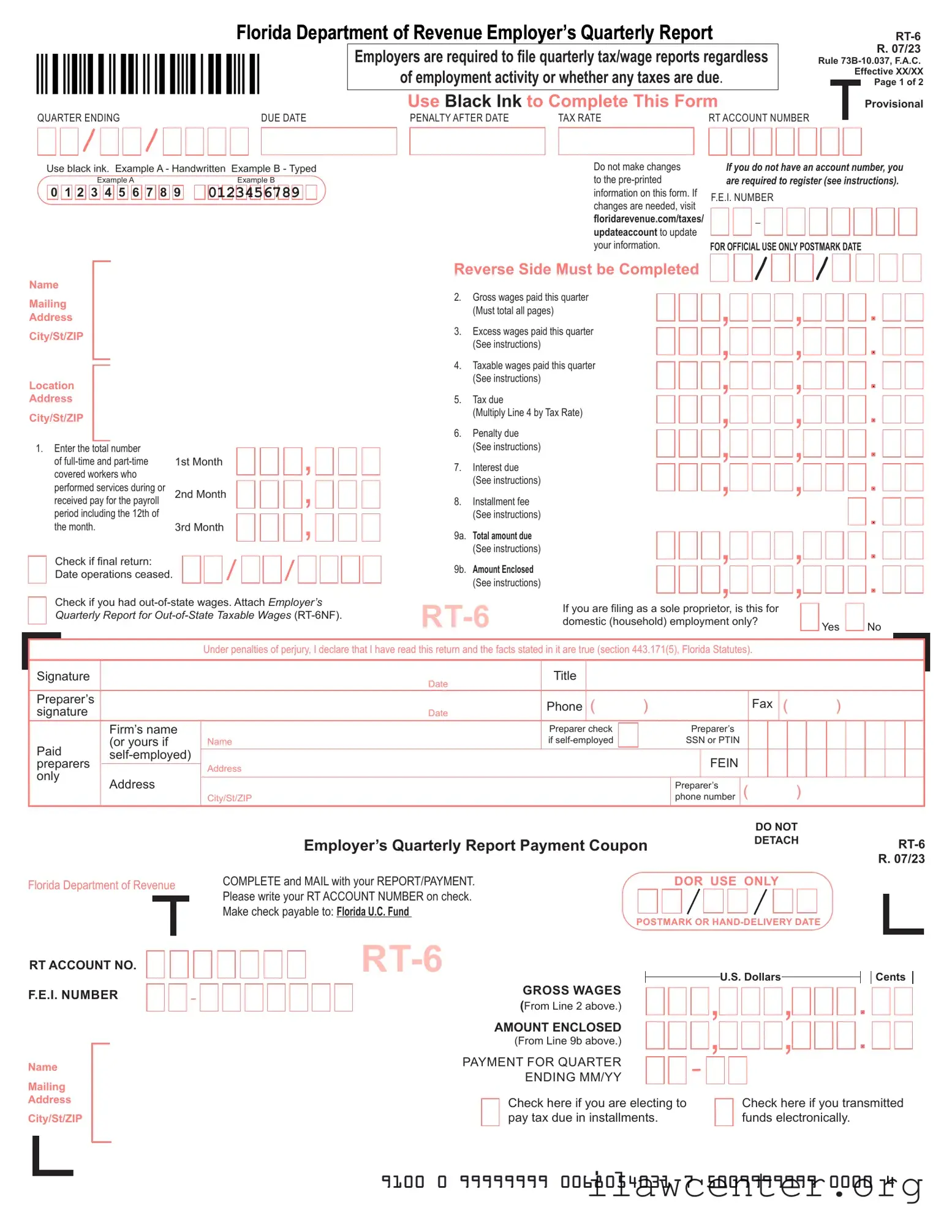
The RT-6 form is the Employer’s Quarterly Report required by the Florida Department of Revenue. This form must be completed and submitted by employers to report wages and taxes, regardless of whether any taxes are due. Ensure you fill out this important document accurately by clicking the button below.

Article Guide

The RT-6 form, officially known as the Employer’s Quarterly Report, is a crucial document for employers in Florida. This form must be filed quarterly, regardless of whether any taxes are due or if there has been any employment activity. It requires employers to report gross wages, taxable wages, and the corresponding taxes owed for the quarter. Employers must fill out the form using black ink, ensuring accuracy by not altering any pre-printed information. Key sections include the total number of employees, gross wages paid, and specific calculations for taxable wages. Additionally, penalties and interest may apply for late submissions, underscoring the importance of timely filing. If an employer does not have an account number, they must register before submitting the RT-6. The form also includes sections for out-of-state wages and provides a payment coupon for any taxes owed. Overall, understanding the RT-6 form is essential for compliance with Florida's tax regulations.

Rt 6 Preview

1. Enter the total number
of full-time and part-time
covered workers who
performed services during or
received pay for the payroll
period including the 12th of
the month.
,
,
,
1st Month
2nd Month
3rd Month
COMPLETE and MAIL with your REPORT/PAYMENT.
Please write your RT ACCOUNT NUMBER on check.
Make check payable to: Florida U.C. Fund
RT ACCOUNT NO.
Florida Department of Revenue
Employers Quarterly Report Payment Coupon
RT-6
R. 07/23
DO NOT
DETACH
DOR USE ONLY
POSTMARK OR HAND-DELIVERY DATE
U.S. Dollars
Cents
Florida Department of Revenue Employers Quarterly Report
RT-6
R. 07/23
Rule 73B-10.037, F.A.C.
Effective XX/XX
Page 1 of 2
Provisional
DUE DATE PENALTY AFTER DATE TAX RATE
Employers are required to le quarterly tax/wage reports regardless
of employment activity or whether any taxes are due.
Check here if you transmitted
funds electronically.
Use black ink. Example A - Handwritten Example B - Typed
0 1 2 3 4 5 6 7 8 9
0123456789
RT-6
F.E.I. NUMBER
/ /
FOR OFFICIAL USE ONLY POSTMARK DATE
F.E.I. NUMBER
Name
Mailing
Address
City/St/ZIP
RT-6
If you do not have an account number, you
are required to register (see instructions).
Name
Mailing
Address
City/St/ZIP
Location
Address
City/St/ZIP
Do not make changes
to the pre-printed
information on this form. If
changes are needed, visit
oridarevenue.com/taxes/
updateaccount to update
your information.
Reverse Side Must be Completed
Under penalties of perjury, I declare that I have read this return and the facts stated in it are true (section 443.171(5), Florida Statutes).
Signature
Date
Name
Title
Preparer’s
phone number
( )
Address
Preparer’s
SSN or PTIN
FEIN
Preparer check
if self-employed
Paid
preparers
only
Example A Example B
( )
Phone
Fax
RT ACCOUNT NUMBER
/
/
QUARTER ENDING
If you are ling as a sole proprietor, is this for
domestic (household) employment only?
2. Gross wages paid this quarter
(Must total all pages)
3. Excess wages paid this quarter
(See instructions)
4. Taxable wages paid this quarter
(See instructions)
5. Tax due
(Multiply Line 4 by Tax Rate)
6. Penalty due
(See instructions)
7. Interest due
(See instructions)
8. Installment fee
(See instructions)
9a. Total amount due
(See instructions)
9b. Amount Enclosed
(See instructions)
Yes No
Check if nal return:
Date operations ceased.
Check if you had out-of-state wages. Attach Employer’s
Quarterly Report for Out-of-State Taxable Wages (RT-6NF).
Check here if you are electing to
pay tax due in installments.
-
Use Black Ink to Complete This Form
Florida Department of Revenue Employers Quarterly Report
GROSS WAGES
(
From Line 2 above.)
AMOUNT ENCLOSED
(From Line 9b above.)
PAYMENT FOR QUARTER
ENDING MM/YY
( )
Preparer’s
signature
Firm’s name
(or yours if
self-employed)
Date
Address
City/St/ZIP
9100 0 99999999 0068054031 7 5009999999 0000 49100 0 99999999 0068054031 7 5009999999 0000 4
EMPLOYER’S NAME
RT ACCOUNT NUMBER
/
/
QUARTER ENDING
DO NOT DETACHDO NOT DETACH
10. EMPLOYEE’S SOCIAL SECURITY NUMBER
11. EMPLOYEE’S NAME
(please print rst twelve characters of last name and rst
eight characters of rst name in boxes)
12a. EMPLOYEE’S GROSS WAGES PAID THIS QUARTER
12b. EMPLOYEE’S TAXABLE WAGES PAID THIS QUARTER
Only the rst $7,000 paid to each employee per calendar year is taxable.
RT-6
R. 07/23
Page 2 of 2
Mail Reply To:
Reemployment Tax
Florida Department of Revenue
5050 W Tennessee St
Tallahassee FL 32399-0180
-
-
Last
Name
12a.
First
Name
Middle
Initial
12b.
-
-
Last
Name
12a.
First
Name
Middle
Initial
12b.
-
-
Last
Name
12a.
First
Name
Middle
Initial
12b.
-
-
Last
Name
12a.
First
Name
Middle
Initial
12b.
-
-
Last
Name
12a.
First
Name
Middle
Initial
12b.
-
-
Last
Name
12a.
First
Name
Middle
Initial
12b.
-
-
Last
Name
12a.
First
Name
Middle
Initial
12b.
-
-
Last
Name
12a.
First
Name
Middle
Initial
12b.
13a. Total Gross Wages (add Lines 12a only). Total this page only.
Include this and totals from additional pages in Line 2 on page 1.
13b. Total Taxable Wages (add Lines 12b only). Total this page only.
Include this and totals from additional pages in Line 4 on page 1.
Social security numbers (SSNs) are used by the Florida Department of Revenue as unique
identiers for the administration of Florida’s taxes. SSNs obtained for tax administration
purposes are condential under sections 213.053 and 119.071, Florida Statutes, and not
subject to disclosure as public records. Collection of your SSN is authorized under state
and federal law. Visit oridarevenue.com/Privacy for more information regarding the state
and federal law governing the collection, use, or release of SSNs, including authorized
exceptions.
Employers are required to le quarterly tax/wage reports regardless
of employment activity or whether any taxes are due.
Use Black Ink to Complete This Form
Florida Department of Revenue Employers Quarterly Report
E-Verify Certication
I attest, under penalty of perjury, that this employer uses the E-Verify system dened in section 448.095(1)(c), Florida Statutes
or the Employment Eligibility Verication (Form USCIS
I
-9), if E-Verify is not available within three business days of a new hire,
to verify the employment eligibility of newly hired employees.
Signature _________________________________________________
Title _________________________________________________
Today’s Date _________________________________________________

File Properties

Fact Name Description
Purpose The RT-6 form is used by employers in Florida to report quarterly tax and wage information to the Florida Department of Revenue.
Filing Requirement Employers must file the RT-6 form quarterly, regardless of whether they have employees or owe taxes.
Black Ink Requirement All entries on the RT-6 form must be completed using black ink to ensure legibility and proper processing.
Taxable Wages Only the first $7,000 paid to each employee in a calendar year is considered taxable for unemployment tax purposes.
Penalties Failure to file the RT-6 form on time may result in penalties, as outlined in Florida Statutes, specifically section 443.171.
Employer Identification Employers must provide their RT account number and Federal Employer Identification Number (FEIN) on the form.
Privacy of SSNs Social Security Numbers collected on the RT-6 form are confidential and protected under Florida law, ensuring they are not publicly disclosed.

Instructions on Utilizing Rt 6

Filling out the Rt 6 form is an important step for employers to report quarterly wages and taxes. Once you have completed the form, you will need to submit it along with any payments due. Make sure to follow the instructions carefully to ensure everything is accurate and complete.

  1. Use black ink to fill out the form.
  2. Enter the quarter ending date and the due date in the designated fields.
  3. Fill in your RT account number and F.E.I. number. If you do not have an account number, register as instructed.
  4. List the total number of full-time and part-time workers who performed services during the quarter.
  5. Complete the gross wages paid this quarter by totaling all pages.
  6. Calculate excess wages paid this quarter, if applicable, and enter the amount.
  7. Determine taxable wages paid this quarter and enter that amount.
  8. Calculate the tax due by multiplying the taxable wages by the tax rate.
  9. If applicable, check the boxes for final return or out-of-state wages.
  10. Calculate any penalties, interest, or installment fees due and enter those amounts.
  11. Add up the total amount due and the amount you are enclosing with the form.
  12. Sign and date the form, ensuring that all information is accurate.
  13. If applicable, complete the preparer's information section.
  14. Mail the completed form and payment to the address provided, ensuring it is postmarked by the due date.

Important Facts about Rt 6

What is the RT-6 form?

The RT-6 form is the Employer’s Quarterly Report required by the Florida Department of Revenue. It is used to report wages paid and taxes due for the quarter. Employers must file this report regardless of whether they have employees or owe any taxes.

When is the RT-6 form due?

The RT-6 form is due on the last day of the month following the end of each quarter. For example, if the quarter ends on March 31, the form must be submitted by April 30. Timely filing is crucial to avoid penalties.

How should I complete the RT-6 form?

Use black ink to fill out the form. Ensure that all information is accurate and matches the pre-printed details on the form. If you need to make changes, complete the Employer Account Change Form (RTS-3) instead of altering the RT-6 form directly.

What information do I need to provide on the RT-6 form?

You will need to report the total number of employees, gross wages paid, taxable wages, and any taxes due. Additionally, include any penalties or interest if applicable. Make sure to total all pages and ensure that the information is complete.

What happens if I miss the deadline for filing the RT-6 form?

If you miss the deadline, you may incur penalties and interest on any taxes due. It is important to file as soon as possible to minimize these charges. Contact the Florida Department of Revenue for guidance if you are late.

Can I file the RT-6 form electronically?

Yes, you can file the RT-6 form electronically. If you choose to do so, check the appropriate box on the form to indicate electronic transmission. Ensure that all details are accurate before submission to avoid issues.

What should I do if I do not have an RT account number?

If you do not have an RT account number, you must register with the Florida Department of Revenue. Follow the instructions provided on the form or visit their website for guidance on how to register.

What if I have out-of-state wages to report?

If you have out-of-state wages, you must attach the Employer’s Quarterly Report for Out-of-State Taxable Wages (RT-6NF) to your RT-6 form. This ensures that all wages are reported correctly according to state regulations.

How do I ensure my payment is processed correctly?

When submitting payment, write your RT account number on the check and make it payable to the Florida U.C. Fund. Double-check that the amount enclosed matches what you reported on the RT-6 form to avoid processing delays.

Common mistakes

Filling out the RT-6 form accurately is crucial for employers to avoid penalties and ensure compliance with Florida tax regulations. However, many individuals make common mistakes that can lead to complications. One frequent error is using the wrong ink color. The instructions clearly state to use black ink only. Using any other color can result in the form being rejected or processed incorrectly.

Another mistake occurs when employers fail to include their RT account number. This number is essential for identifying the employer's account with the Florida Department of Revenue. If an employer does not have an account number, they must register before submitting the form. Neglecting this step can delay processing and lead to penalties.

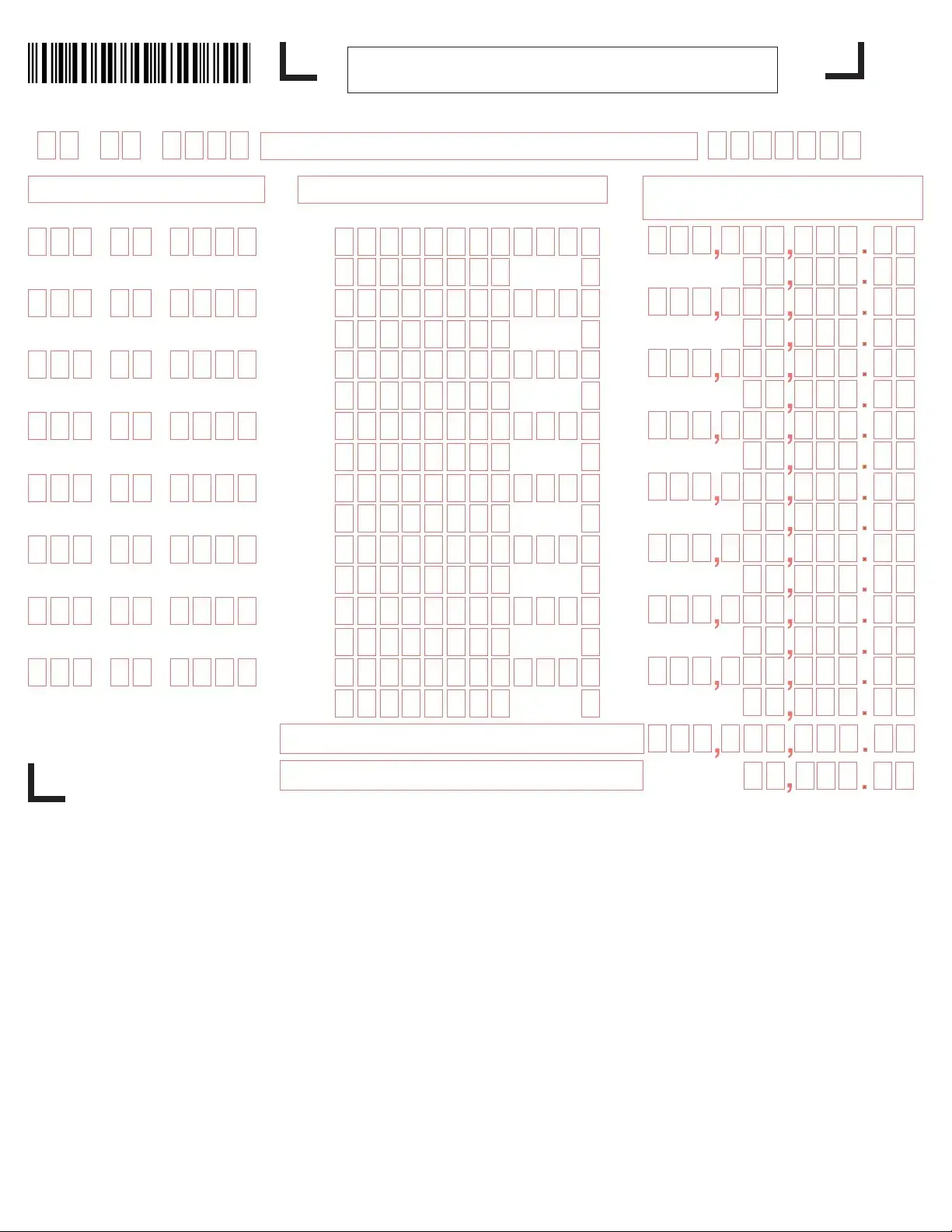
Many people also overlook the requirement to total all pages of the report accurately. Line 2 must reflect the gross wages paid this quarter, which should include totals from any additional pages submitted. Inaccurate calculations can lead to discrepancies that may prompt audits or additional penalties.

Another common issue is failing to check the appropriate boxes. Employers must indicate if they are filing a final return or if they had out-of-state wages. Not marking these boxes can lead to misunderstandings and complications in the processing of the report.

Additionally, some individuals forget to sign and date the form. The declaration under penalties of perjury emphasizes the importance of this step. Without a signature, the form is incomplete and may not be considered valid.

Lastly, many employers do not follow the instructions regarding payment. The amount enclosed must match the total amount due calculated on the form. If there is a discrepancy, the payment may not be processed correctly, leading to further issues down the line.

Documents used along the form

The RT-6 form is an essential document for employers in Florida, serving as the Employer’s Quarterly Report. This form is used to report wages and taxes owed for the quarter. In addition to the RT-6, there are several other forms and documents that employers may need to complete or reference. Below is a list of these commonly used forms.

  • RTS-3: Employer Account Change Form - This form is used by employers to request changes to their account information, such as updating contact details or changing business structure. It ensures that the Florida Department of Revenue has accurate information for tax reporting purposes.
  • RT-6NF: Employer’s Quarterly Report for Out-of-State Taxable Wages - Employers who have out-of-state wages must use this form to report those wages separately. It helps ensure compliance with tax regulations for employees working outside of Florida.
  • RT-6N: Quarterly Report Instructions - This document provides detailed instructions on how to properly fill out the RT-6 form. It is crucial for employers to follow these guidelines to avoid errors that could lead to penalties.
  • RT-7: Employer’s Annual Reemployment Tax Report - At the end of the year, employers must file this report summarizing all wages and taxes for the year. It consolidates information from the quarterly reports into a single document for state review.
  • W-2: Wage and Tax Statement - This form is provided to employees at the end of the year, detailing their total earnings and the taxes withheld. Employers must ensure accurate information on W-2s for each employee to comply with federal tax regulations.

Understanding these forms and their purposes is crucial for maintaining compliance with state and federal tax laws. Keeping accurate records and submitting the necessary documents on time can help avoid penalties and ensure smooth operations for any business.

Similar forms

The Rt 6 form, utilized for reporting employer's quarterly tax and wage information in Florida, shares similarities with several other documents used for tax and employment reporting purposes. Below is a list of eight such documents, each highlighting a specific similarity with the Rt 6 form.

  • W-2 Form: Like the Rt 6, the W-2 form reports wages paid to employees and taxes withheld. Both documents require accurate reporting of employee information and tax obligations.
  • 1099-MISC Form: This form is used to report payments made to independent contractors. Similar to the Rt 6, it includes details about payments and is essential for tax reporting.
  • 941 Form: The Employer's Quarterly Federal Tax Return (Form 941) is similar in that it requires employers to report wages, tips, and other compensation, along with tax liabilities, on a quarterly basis.
  • RTS-3 Form: The Employer Account Change Form (RTS-3) is similar because it allows for updates to employer account information, much like the Rt 6 requires accurate account details for reporting.
  • State Unemployment Tax (SUTA) Form: This form is used to report state unemployment taxes. It shares the quarterly reporting aspect with the Rt 6 and requires detailed wage information.
  • Schedule C: Self-employed individuals use Schedule C to report income and expenses. While primarily for individual reporting, it parallels the Rt 6 in that it accounts for income and tax responsibilities.
  • Form 1095-C: This form is used by applicable large employers to report health coverage offered to employees. It is similar to the Rt 6 in that it involves employer reporting obligations and employee data.
  • Form 720: The Quarterly Federal Excise Tax Return (Form 720) requires reporting of excise taxes, akin to how the Rt 6 requires reporting of employment-related taxes on a quarterly basis.

Dos and Don'ts

When filling out the RT-6 form, it's essential to follow certain guidelines to ensure accuracy and compliance. Here’s a list of what you should and shouldn’t do:

  • Use black ink to complete the form, whether handwritten or typed.
  • Ensure all required fields are filled out completely.
  • Check your math carefully, especially when calculating wages and taxes.
  • Include your RT account number on all correspondence and payments.
  • Sign and date the form before submission.
  • Do not make any changes to the pre-printed information on the form.
  • Do not forget to attach any necessary additional forms, such as the RT-6NF for out-of-state wages.
  • Do not leave any fields blank; fill in all required sections.
  • Do not submit the form late, as penalties may apply.
  • Do not detach any part of the form; keep it intact when mailing.

Misconceptions

Understanding the RT-6 form is crucial for employers in Florida. However, several misconceptions can lead to confusion. Here are ten common misconceptions about the RT-6 form, along with clarifications:

  1. Employers can skip filing if they have no employees. Many believe that if they have no employees, they do not need to file. This is incorrect. Employers must file quarterly tax reports regardless of employment activity.
  2. Handwritten forms are not accepted. Some think only typed forms are valid. In reality, both handwritten and typed submissions are acceptable as long as black ink is used.
  3. Only employers with taxable wages need to file. This is a misconception. All employers must submit the RT-6 form, even if no taxes are due.
  4. Changes to pre-printed information are allowed. Employers often believe they can modify the pre-printed information on the form. However, any changes are not permitted; if changes are needed, a different form must be completed.
  5. The due date is flexible. Some think they can submit the form whenever they want. In fact, the RT-6 form has a strict due date that must be adhered to.
  6. Filing late has no consequences. Many assume that late filings will not incur penalties. However, there are penalties and interest charges for late submissions.
  7. All wages paid are taxable. A common misunderstanding is that all wages are taxable. Only the first $7,000 paid to each employee per year is considered taxable.
  8. Employers don’t need to keep records. Some employers think that once they file the RT-6, they don’t need to keep records. In reality, maintaining accurate records is essential for compliance and audits.
  9. Social Security numbers are optional. There is a belief that providing Social Security numbers (SSNs) is not mandatory. However, SSNs are required for accurate tax administration and must be included.
  10. Instructions are not necessary. Some employers feel they can fill out the form without reviewing the instructions. This can lead to mistakes, so it’s important to refer to the instructions for proper completion.

Being aware of these misconceptions can help ensure compliance and avoid potential penalties when filing the RT-6 form.

Key takeaways

When completing the RT-6 form for the Florida Department of Revenue, several important points should be considered to ensure compliance and accuracy.

  • Use Black Ink: The form must be filled out using black ink. This applies whether you are handwriting or typing the information.
  • Report All Employment Activity: Employers are obligated to file quarterly tax and wage reports regardless of whether any taxes are due or if there were employees working during the quarter.
  • Do Not Alter Pre-Printed Information: It is crucial to leave the pre-printed information on the form unchanged. If you need to make changes, you must request an Employer Account Change Form (RTS-3).
  • Timely Submission is Essential: Ensure that the form is submitted by the due date to avoid penalties. Late submissions can incur additional fees and interest.

By adhering to these guidelines, employers can streamline the reporting process and maintain compliance with state regulations.