Running Sheet PDF Template

Running Sheet PDF Template

The Running Sheet form is a crucial tool for organizing events, providing a structured outline of all necessary actions and responsibilities. It includes essential details such as the event name, location, date, expected attendance, and a timeline of activities. To ensure a successful event, fill out the form by clicking the button below.

Article Guide

The Running Sheet form serves as a vital tool for event planning and execution, ensuring that all aspects of an event are meticulously organized and communicated. This form typically includes essential details such as the event name, location, and date, which provide a clear context for all stakeholders involved. It also captures the expected attendance, allowing organizers to prepare adequately for the number of participants. The start and finish date and time are crucial for establishing a timeline, helping to keep the event on track. Furthermore, the designation of an event coordinator is key; this individual is responsible for overseeing the various elements of the event and ensuring that everything runs smoothly. The Running Sheet also outlines specific actions to be taken, along with the individuals responsible for each task. This structured approach not only enhances accountability but also facilitates communication among team members. Regular updates to the Running Sheet, as seen in its last revision from April 2016, reflect the dynamic nature of event planning and the necessity for adaptability in response to changing circumstances.

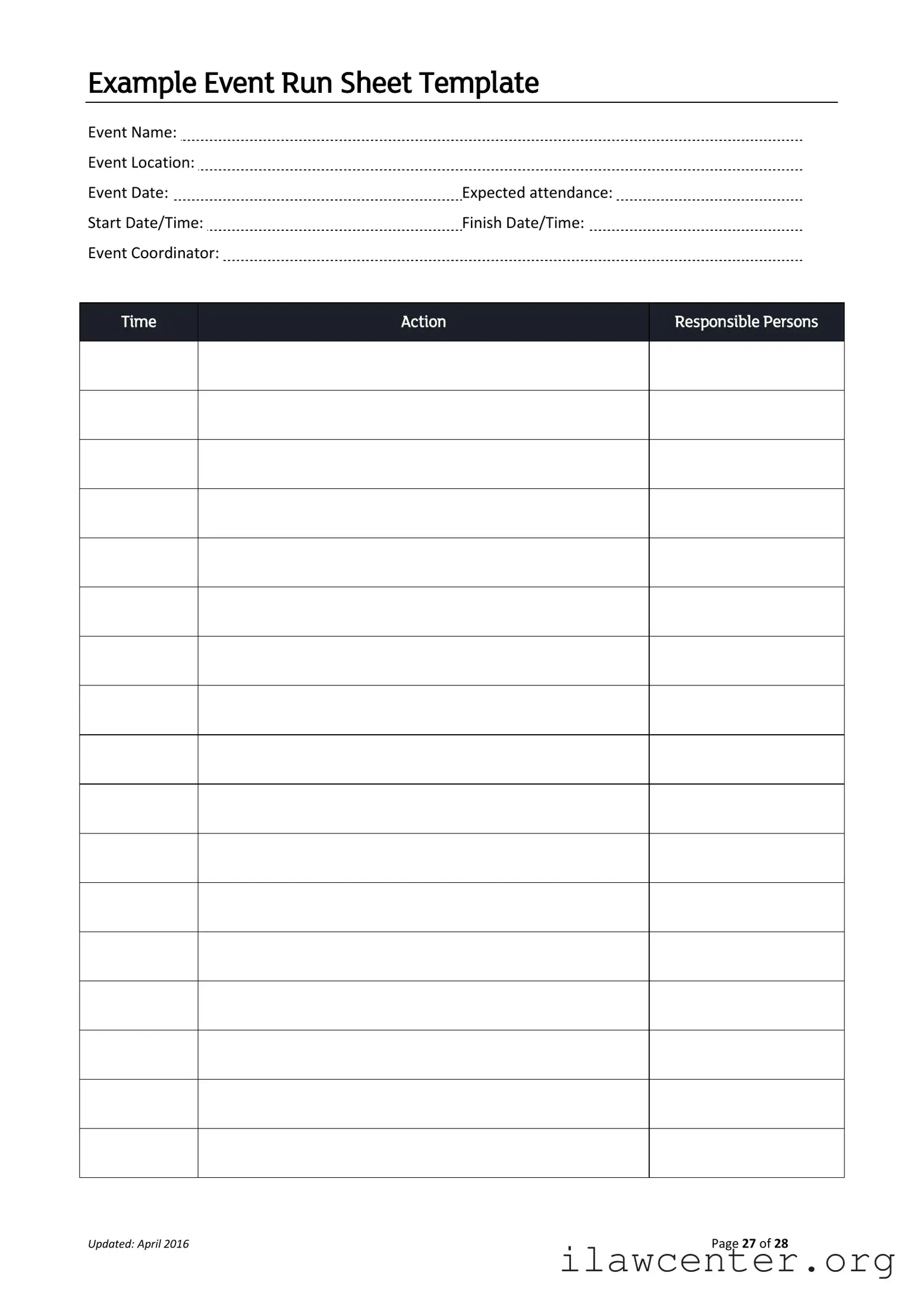
Running Sheet Preview

Updated: April 2016 Page 27 of 28
Example Event Run Sheet Template
Event Name:
Event Location:
Event Date: Expected attendance:
Start Date/Time: Finish Date/Time:
Event Coordinator:
Time
Action
Responsible Persons

File Properties

Fact Name Description
Event Name The title of the event being organized.
Event Location The physical address or venue where the event will take place.
Event Date The specific date when the event is scheduled to occur.
Expected Attendance The estimated number of participants or guests expected at the event.
Start Date/Time The exact date and time when the event will begin.
Finish Date/Time The exact date and time when the event will conclude.
Event Coordinator The individual responsible for overseeing the event's planning and execution.
Time Action A schedule of activities that outlines what actions need to be taken and when.
Responsible Persons Individuals assigned to specific tasks or actions during the event.

Instructions on Utilizing Running Sheet

After you have gathered all necessary information, you can begin filling out the Running Sheet form. This form will help you organize key details about your event and ensure that everyone involved is on the same page.

  1. Enter the Event Name at the top of the form.
  2. Fill in the Event Location where the event will take place.
  3. Specify the Event Date clearly.
  4. Indicate the Expected Attendance for the event.
  5. Set the Start Date/Time for when the event begins.
  6. Provide the Finish Date/Time for when the event concludes.
  7. List the Event Coordinator responsible for overseeing the event.
  8. Ensure all information is accurate and complete before submitting the form.

Important Facts about Running Sheet

What is a Running Sheet form?

A Running Sheet form is a detailed document that outlines the schedule and logistics of an event. It includes information such as the event name, location, date, expected attendance, and the timeline of activities. This helps ensure that everyone involved in the event knows their responsibilities and the timing of each action.

What information is required on the Running Sheet form?

The Running Sheet form requires several key pieces of information. You will need to include the event name, location, date, expected attendance, start and finish times, and the name of the event coordinator. Additionally, you should outline specific actions and assign responsible persons for each task.

Who should fill out the Running Sheet form?

How does the Running Sheet help with event planning?

The Running Sheet serves as a roadmap for the event. It helps keep everyone on the same page by detailing when and where each action will take place. This organized approach minimizes confusion and ensures that tasks are completed on time.

Can the Running Sheet be updated?

What is the purpose of assigning responsible persons on the Running Sheet?

Assigning responsible persons for each action ensures accountability. When everyone knows their specific tasks, it increases the likelihood that each part of the event will run smoothly. It also allows for easier communication if issues arise.

How often should the Running Sheet be reviewed before the event?

Is there a standard format for the Running Sheet?

How can I use the Running Sheet during the event?

What should I do if something goes wrong during the event?

Common mistakes

Filling out the Running Sheet form can seem straightforward, but many people make common mistakes that can lead to confusion and miscommunication. One major error is failing to provide complete information in the Event Name and Event Location fields. Without clear details, attendees may struggle to find the event or understand what it is about. Always double-check these sections to ensure they are filled out completely and accurately.

Another frequent mistake involves neglecting the Expected Attendance section. This number is crucial for planning purposes, such as seating arrangements, catering, and materials. If this field is left blank or filled out incorrectly, it can lead to logistical issues on the day of the event. It’s essential to estimate attendance as accurately as possible.

People often overlook the importance of the Start Date/Time and Finish Date/Time. Entering incorrect times can create chaos. If the start time is wrong, attendees may arrive late or too early. Similarly, an inaccurate finish time can disrupt schedules for both participants and organizers. Always verify these details before finalizing the form.

Lastly, many individuals forget to update the Responsible Persons section. This part of the form identifies who is in charge of various actions during the event. If this information is missing or outdated, it can lead to confusion about responsibilities. Make sure to assign roles clearly and keep this section current to ensure smooth operations.

Documents used along the form

The Running Sheet form is a crucial document for organizing events. It outlines the schedule and responsibilities, ensuring that everything runs smoothly. Along with the Running Sheet, several other forms and documents are often utilized to enhance event management. Here’s a list of those documents.

  • Event Budget: This document outlines the financial aspects of the event, including projected costs and revenues. It helps in tracking expenses and ensuring the event stays within budget.
  • Event Brief: A concise summary of the event's objectives, target audience, and key messages. This document helps all team members understand the event's purpose and goals.
  • Vendor Contracts: These are agreements with suppliers and service providers. They detail the terms of service, payment schedules, and deliverables expected from each vendor.
  • Guest List: A comprehensive list of attendees, including their contact information and RSVP status. This document is essential for planning seating arrangements and catering needs.
  • Marketing Plan: This outlines the strategies for promoting the event. It includes details on advertising channels, social media engagement, and promotional materials.
  • Staffing Plan: A document that specifies the roles and responsibilities of each team member. It ensures that everyone knows their tasks and can work efficiently.
  • Risk Management Plan: This identifies potential risks associated with the event and outlines strategies to mitigate them. It is crucial for ensuring safety and compliance.
  • Post-Event Evaluation: A form used to assess the event's success. It includes feedback from attendees and staff, helping to improve future events.
  • Logistics Plan: This document details the logistical aspects of the event, including transportation, equipment setup, and venue layout. It ensures that all physical arrangements are accounted for.

Each of these documents plays a vital role in the overall success of an event. Together with the Running Sheet, they provide a comprehensive framework for planning and executing a successful gathering.

Similar forms

The Running Sheet form is a crucial document in event planning, serving as a detailed schedule of activities and responsibilities. Several other documents share similarities with the Running Sheet, each playing a vital role in ensuring that events run smoothly. Here are four documents that are similar to the Running Sheet form:

  • Event Program: Like the Running Sheet, the Event Program outlines the sequence of activities. It details the timing and content of each segment, helping attendees know what to expect throughout the event.
  • Agenda: An Agenda serves a similar purpose by listing topics to be discussed and the order in which they will be addressed. It helps keep meetings and conferences organized, much like the Running Sheet keeps events on track.
  • Task List: A Task List breaks down responsibilities among team members. It specifies who is responsible for each task, similar to how the Running Sheet assigns actions to individuals, ensuring accountability and clarity.
  • Timeline: A Timeline provides a chronological overview of the event's key milestones. It helps visualize the flow of activities, just as the Running Sheet does, making it easier to manage time effectively during the event.

Dos and Don'ts

When filling out the Running Sheet form, it's important to ensure accuracy and clarity. Here’s a list of things you should and shouldn't do:

  • Do provide the complete event name.
  • Do include the exact event location.
  • Do specify the event date clearly.
  • Do estimate expected attendance accurately.
  • Do indicate the start and finish date/time precisely.
  • Do list the event coordinator's contact information.
  • Don't leave any fields blank unless absolutely necessary.
  • Don't use abbreviations that might confuse others.
  • Don't forget to update the form if any details change.
  • Don't submit the form without double-checking for errors.

Misconceptions

Misconceptions about the Running Sheet form can lead to confusion and mismanagement of events. Below is a list of nine common misconceptions, along with explanations to clarify each point.

  1. It is only for large events.

    The Running Sheet form is beneficial for events of all sizes. Whether organizing a small meeting or a large conference, this form helps ensure that all details are accounted for and managed effectively.

  2. It is a one-time document.

    Many believe the Running Sheet is only needed once. In reality, it is a living document that should be updated as plans evolve and details change.

  3. All event details must be finalized before creating the sheet.

    This is not true. The Running Sheet can be drafted with preliminary information and updated as more details are confirmed.

  4. It is solely the responsibility of the event coordinator.

    While the event coordinator plays a key role, input from various team members is essential. Collaboration enhances the accuracy and effectiveness of the Running Sheet.

  5. It only includes logistics.

    Logistics are crucial, but the Running Sheet also encompasses roles, responsibilities, and timelines. It serves as a comprehensive guide for the entire event.

  6. It is not necessary for virtual events.

    This misconception overlooks the fact that virtual events require planning and coordination just as much as in-person gatherings. A Running Sheet can help manage online interactions and technical requirements.

  7. Once created, it does not need to be reviewed.

    Regular reviews of the Running Sheet are important. This ensures that all team members are on the same page and that any changes are communicated effectively.

  8. It is only useful during the event.

    The Running Sheet is valuable both in the planning stages and during the event itself. It helps keep everyone organized and focused on their tasks.

  9. It is complicated to create.

    While it may seem daunting at first, the Running Sheet can be easily tailored to fit the specific needs of an event. Templates are available to simplify the process.

Key takeaways

When utilizing the Running Sheet form for event planning, several key points will enhance the process and ensure a smooth execution. Here are important takeaways to consider:

  • Event Details: Clearly fill in the event name, location, and date. This foundational information sets the stage for all planning activities.
  • Attendance Expectations: Estimate the expected attendance. This helps in organizing resources and planning logistics effectively.
  • Time Management: Specify the start and finish date and time. Keeping a strict timeline is essential for maintaining order during the event.
  • Coordination: Designate an event coordinator. This person will oversee the event's execution and serve as the primary contact for all involved parties.
  • Action Items: List out specific actions that need to be taken, along with the responsible persons for each task. This clarity fosters accountability.
  • Updates: Regularly update the Running Sheet. Keeping the document current ensures that everyone is on the same page and aware of any changes.
  • Communication: Share the Running Sheet with all stakeholders. Open communication helps in addressing any concerns and making necessary adjustments.
  • Review: Conduct a final review of the Running Sheet before the event. This step allows for last-minute adjustments and reinforces preparedness.