Fillable RV Bill of Sale Document

Fillable RV Bill of Sale Document

An RV Bill of Sale is a legal document that outlines the transfer of ownership of a recreational vehicle from one party to another. This essential form not only provides proof of the sale but also protects both the buyer and the seller by detailing the terms of the transaction. Ensure a smooth transfer of ownership by filling out the form below.

Article Guide

The RV Bill of Sale form serves as a crucial document in the transaction of recreational vehicles, ensuring that both buyers and sellers are protected during the sale process. This form outlines essential details such as the vehicle's make, model, year, and Vehicle Identification Number (VIN), providing a clear record of the transaction. Additionally, it includes information about the buyer and seller, including their names, addresses, and signatures, which helps establish ownership transfer. The form may also detail the sale price and any terms or conditions agreed upon by both parties. By documenting these key aspects, the RV Bill of Sale not only facilitates a smooth transaction but also serves as a legal record that can be referred to in the future, should any disputes arise. Properly completing this form is vital for anyone looking to buy or sell an RV, as it helps ensure that all necessary information is captured and that the sale adheres to local regulations.

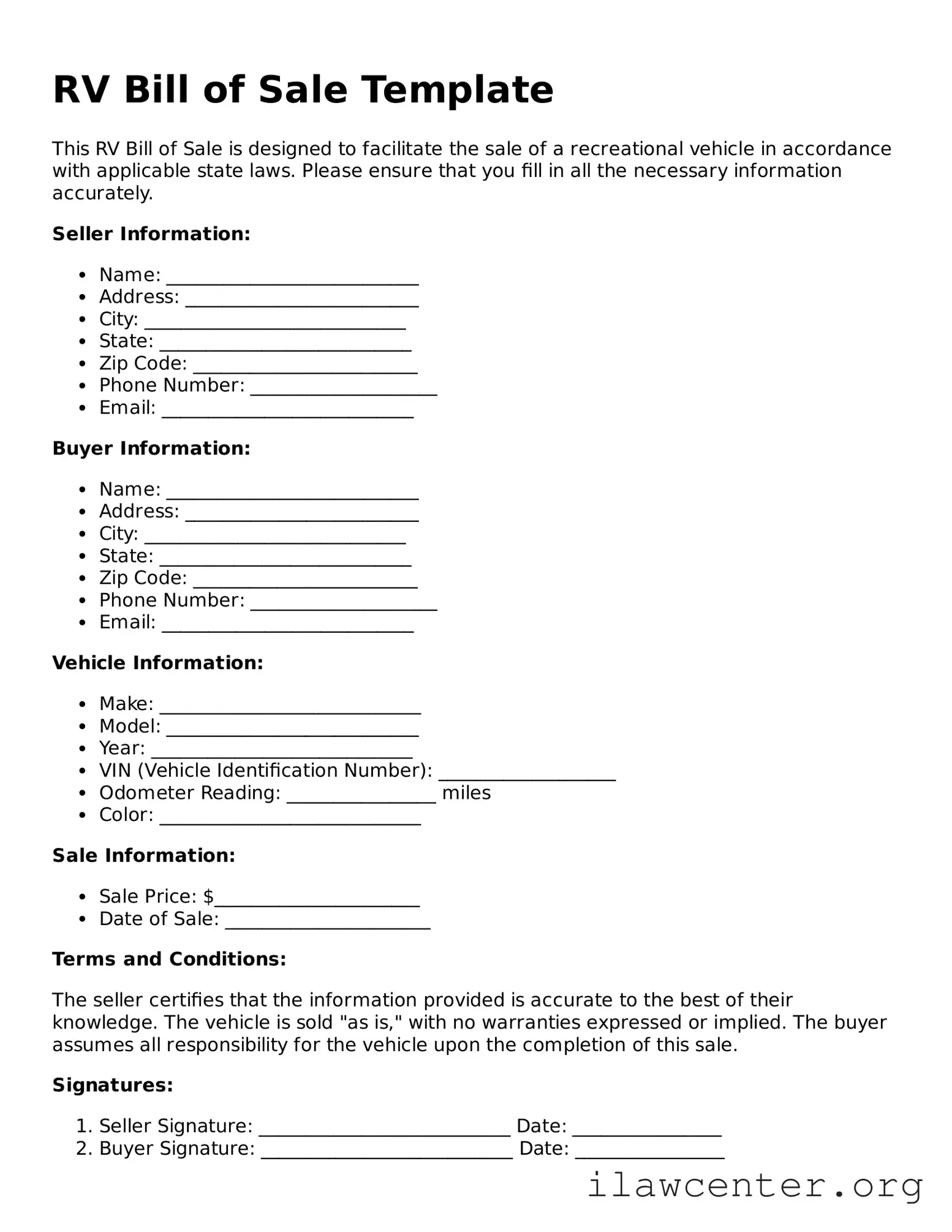
RV Bill of Sale Preview

RV Bill of Sale Template

This RV Bill of Sale is designed to facilitate the sale of a recreational vehicle in accordance with applicable state laws. Please ensure that you fill in all the necessary information accurately.

Seller Information:

  • Name: ___________________________
  • Address: _________________________
  • City: ____________________________
  • State: ___________________________
  • Zip Code: ________________________
  • Phone Number: ____________________
  • Email: ___________________________

Buyer Information:

  • Name: ___________________________
  • Address: _________________________
  • City: ____________________________
  • State: ___________________________
  • Zip Code: ________________________
  • Phone Number: ____________________
  • Email: ___________________________

Vehicle Information:

  • Make: ____________________________
  • Model: ___________________________
  • Year: ____________________________
  • VIN (Vehicle Identification Number): ___________________
  • Odometer Reading: ________________ miles
  • Color: ____________________________

Sale Information:

  • Sale Price: $______________________
  • Date of Sale: ______________________

Terms and Conditions:

The seller certifies that the information provided is accurate to the best of their knowledge. The vehicle is sold "as is," with no warranties expressed or implied. The buyer assumes all responsibility for the vehicle upon the completion of this sale.

Signatures:

  1. Seller Signature: ___________________________ Date: ________________
  2. Buyer Signature: ___________________________ Date: ________________

Both parties should retain a copy of this document for their records.

PDF Form Characteristics

Fact Name Description
Purpose The RV Bill of Sale serves as a legal document that records the sale of a recreational vehicle, providing proof of ownership transfer between the seller and buyer.
State-Specific Forms Each state may have its own specific RV Bill of Sale form. It is essential to use the correct form based on the state where the transaction occurs.
Governing Laws The governing laws for RV sales vary by state. For example, in California, the sale of an RV is governed by the California Vehicle Code.
Required Information Typically, the form must include details such as the RV's make, model, year, Vehicle Identification Number (VIN), sale price, and the names and addresses of both parties.
Notarization While notarization is not always required, having the Bill of Sale notarized can provide additional legal protection and may be necessary for certain states.

Instructions on Utilizing RV Bill of Sale

Once you have the RV Bill of Sale form ready, you will need to provide specific information to complete it. This document serves as proof of the transaction between the buyer and the seller. Ensure that all details are accurate to avoid any issues in the future.

  1. Begin by entering the date of the transaction at the top of the form.
  2. Fill in the seller's full name and address in the designated sections.
  3. Provide the buyer's full name and address as well.
  4. Describe the RV in detail, including the make, model, year, and Vehicle Identification Number (VIN).
  5. State the purchase price clearly in the appropriate field.
  6. Include any additional terms or conditions of the sale, if applicable.
  7. Both the seller and buyer should sign and date the form to validate the transaction.
  8. Make copies of the completed form for both parties' records.

Important Facts about RV Bill of Sale

What is an RV Bill of Sale?

An RV Bill of Sale is a legal document that records the sale of a recreational vehicle (RV) between a seller and a buyer. This document includes essential information such as the names and addresses of both parties, the RV’s make, model, year, vehicle identification number (VIN), and the sale price. It serves as proof of the transaction and can be useful for registration and title transfer purposes.

Why do I need an RV Bill of Sale?

You need an RV Bill of Sale to protect both the buyer and the seller during the transaction. It provides a written record of the sale, which can help resolve disputes if they arise later. Additionally, it is often required by state authorities for registering the RV in the new owner's name and for transferring the title.

Is an RV Bill of Sale required by law?

While not all states legally require a Bill of Sale for an RV transaction, many recommend it for clarity and protection. Some states may mandate it for registration or title transfer, so it's important to check your local regulations. Having a Bill of Sale can also help in proving ownership if questions arise in the future.

What information should be included in an RV Bill of Sale?

An effective RV Bill of Sale should include the following details: the full names and addresses of both the buyer and seller, a description of the RV (including make, model, year, and VIN), the sale price, the date of the sale, and any warranties or conditions of the sale. It’s also wise to include the signatures of both parties to validate the document.

Can I create my own RV Bill of Sale?

Yes, you can create your own RV Bill of Sale. However, it’s important to ensure that all necessary information is included and that it complies with your state’s requirements. Many templates are available online that can help guide you in drafting a comprehensive and effective document.

What if the RV has a loan or lien on it?

If there is an outstanding loan or lien on the RV, it’s crucial to address this before completing the sale. The seller should pay off the loan or contact the lender to discuss the transfer process. The buyer should ensure that the lien is cleared or that they understand the implications of purchasing a vehicle with a lien attached.

Do I need to notarize the RV Bill of Sale?

Notarization is not always required for an RV Bill of Sale, but it can add an extra layer of security and legitimacy to the document. Some states may require notarization for the title transfer process. Check your state’s requirements to determine if notarization is necessary.

What should I do after completing the RV Bill of Sale?

After completing the RV Bill of Sale, both the buyer and seller should keep a copy for their records. The seller should ensure that the title is transferred to the buyer, and the buyer should register the RV in their name with the appropriate state agency. This step is crucial to ensure legal ownership and compliance with local laws.
Common mistakes

Filling out an RV Bill of Sale form can seem straightforward, but many people make common mistakes that can lead to complications down the road. One frequent error is not including all necessary details about the RV. Buyers and sellers should ensure they provide the make, model, year, and Vehicle Identification Number (VIN). Omitting any of this information can create confusion and might even affect the transfer of ownership.

Another mistake involves the signatures. Both the buyer and the seller must sign the document. Sometimes, one party assumes that only one signature is needed, which can lead to disputes later on. It’s essential to have both parties sign the form to validate the transaction.

People often overlook the importance of the date on the Bill of Sale. Failing to include the date can create issues regarding the timing of the sale. It is crucial for both parties to have a clear record of when the transaction took place, especially for tax and registration purposes.

Additionally, many individuals forget to include the sale price. This detail is vital not only for the transaction itself but also for tax reporting. A clear sale price helps establish the value of the RV and can be important if there are any disputes or questions about the transaction later.

Another common error is not providing a clear description of the condition of the RV. It’s important to note any existing damages or repairs. This transparency helps protect both the buyer and the seller and can prevent misunderstandings about the RV’s condition.

People sometimes fail to check local regulations regarding the Bill of Sale. Each state may have different requirements for what needs to be included in the document. Not being aware of these regulations can lead to issues when registering the RV or during future sales.

Lastly, neglecting to make copies of the completed Bill of Sale is a mistake many make. Both parties should retain a copy for their records. This documentation can serve as proof of the transaction and can be helpful if any questions arise in the future.

Documents used along the form

When you’re buying or selling an RV, having the right documents can make the process smoother. Along with the RV Bill of Sale, several other forms are commonly used to ensure everything is clear and legally binding. Here are a few important documents to consider:

  • Title Transfer Document: This form is essential for transferring ownership of the RV from the seller to the buyer. It includes details about the vehicle and both parties' information. Proper completion is necessary to avoid future ownership disputes.
  • Odometer Disclosure Statement: This document records the RV's mileage at the time of sale. It protects both the buyer and seller by confirming the vehicle's condition and history. Many states require this statement to prevent odometer fraud.
  • Purchase Agreement: This is a written contract that outlines the terms of the sale, including the price, payment method, and any warranties. It serves as a reference for both parties and can help resolve disputes if they arise.
  • Vehicle Registration Application: After the sale, the buyer needs to register the RV in their name. This application collects necessary information for the state’s vehicle registration office and may require the bill of sale and title transfer document.

Having these documents ready can help ensure a successful transaction. Always double-check that everything is filled out correctly to avoid any issues down the line.

Similar forms

The RV Bill of Sale form serves a specific purpose in the transfer of ownership for recreational vehicles. However, several other documents share similarities in function and usage. Below are four documents that are comparable to the RV Bill of Sale form:

  • Vehicle Bill of Sale: This document is used for the sale of standard vehicles, such as cars and trucks. Like the RV Bill of Sale, it includes details about the buyer, seller, and the vehicle itself, facilitating a legal transfer of ownership.
  • Boat Bill of Sale: Similar to the RV Bill of Sale, this document is necessary for the sale of boats. It outlines the terms of the sale, includes identification information for both parties, and details about the boat, ensuring a clear transfer of ownership.
  • Motorcycle Bill of Sale: This document is used when selling motorcycles. It shares the same essential elements as the RV Bill of Sale, such as buyer and seller information, vehicle identification, and the sale price, making it a vital part of the ownership transfer process.
  • Trailer Bill of Sale: When selling a trailer, a Trailer Bill of Sale is required. This document serves a similar purpose to the RV Bill of Sale, providing necessary details about the trailer and ensuring both parties agree to the terms of the sale.

Dos and Don'ts

When filling out the RV Bill of Sale form, attention to detail is crucial. Here’s a list of what you should and shouldn't do:

  • Do ensure all information is accurate, including the RV's make, model, and VIN.
  • Don't leave any sections blank; incomplete forms can lead to issues later.
  • Do include the sale price clearly to avoid confusion.
  • Don't use vague language; be specific about the terms of the sale.
  • Do sign and date the form to validate the transaction.
  • Don't forget to have the buyer sign as well; both signatures are necessary.
  • Do keep a copy of the completed form for your records.
  • Don't ignore local laws regarding the sale of vehicles; ensure compliance.

Misconceptions

The RV Bill of Sale form is often misunderstood. Here are eight common misconceptions about this document:

  • It is not a legally binding document. Many believe that a bill of sale is just a casual agreement. In reality, it serves as a legal record of the transaction between the buyer and seller.
  • Only the seller needs to sign it. Some think that only the seller's signature is required. However, both parties should sign the document to confirm the agreement.
  • It is only necessary for new RVs. There is a misconception that a bill of sale is only needed for new RV purchases. Used RVs also require this document to protect both parties.
  • It does not need to be notarized. While notarization is not always required, having the document notarized adds an extra layer of authenticity and can be beneficial in case of disputes.
  • It is the same as a title. Some people confuse the bill of sale with the title. The bill of sale records the transaction, while the title proves ownership.
  • It does not need to include specific details. There is a belief that a simple statement is enough. In fact, including details such as the RV's VIN, make, model, and sale price is essential for clarity.
  • Once signed, it cannot be changed. Many assume that the document is set in stone after signing. Amendments can be made, but both parties must agree and initial any changes.
  • It is not necessary for private sales. Some think that a bill of sale is only required for dealership transactions. In truth, it is important for private sales as well to document the exchange.

Key takeaways

When filling out and using the RV Bill of Sale form, there are several important points to consider. Here are key takeaways to ensure a smooth transaction:

  1. Accurate Information: Ensure that all information is filled out accurately. This includes the names of both the buyer and seller, the RV’s make, model, year, and VIN.
  2. Sale Price: Clearly state the sale price of the RV. This figure is essential for both parties and may be needed for tax purposes.
  3. Condition Disclosure: Include a description of the RV's condition. This helps to set clear expectations and can protect both parties in case of disputes.
  4. Signatures Required: Both the buyer and seller must sign the document. This signifies that both parties agree to the terms of the sale.
  5. Date of Sale: Record the date of the transaction. This is important for legal and tax records.
  6. Bill of Sale Copies: Make multiple copies of the completed Bill of Sale. Each party should keep a copy for their records.
  7. State Requirements: Check if your state has specific requirements for RV sales. Some states may require additional documentation or notarization.
  8. Transfer of Ownership: Use the Bill of Sale as proof of ownership transfer. This document may be required when registering the RV in the buyer's name.

By following these guidelines, both buyers and sellers can navigate the RV sale process more effectively and with confidence.