
Safety Plan PDF Template

Safety Plan PDF Template

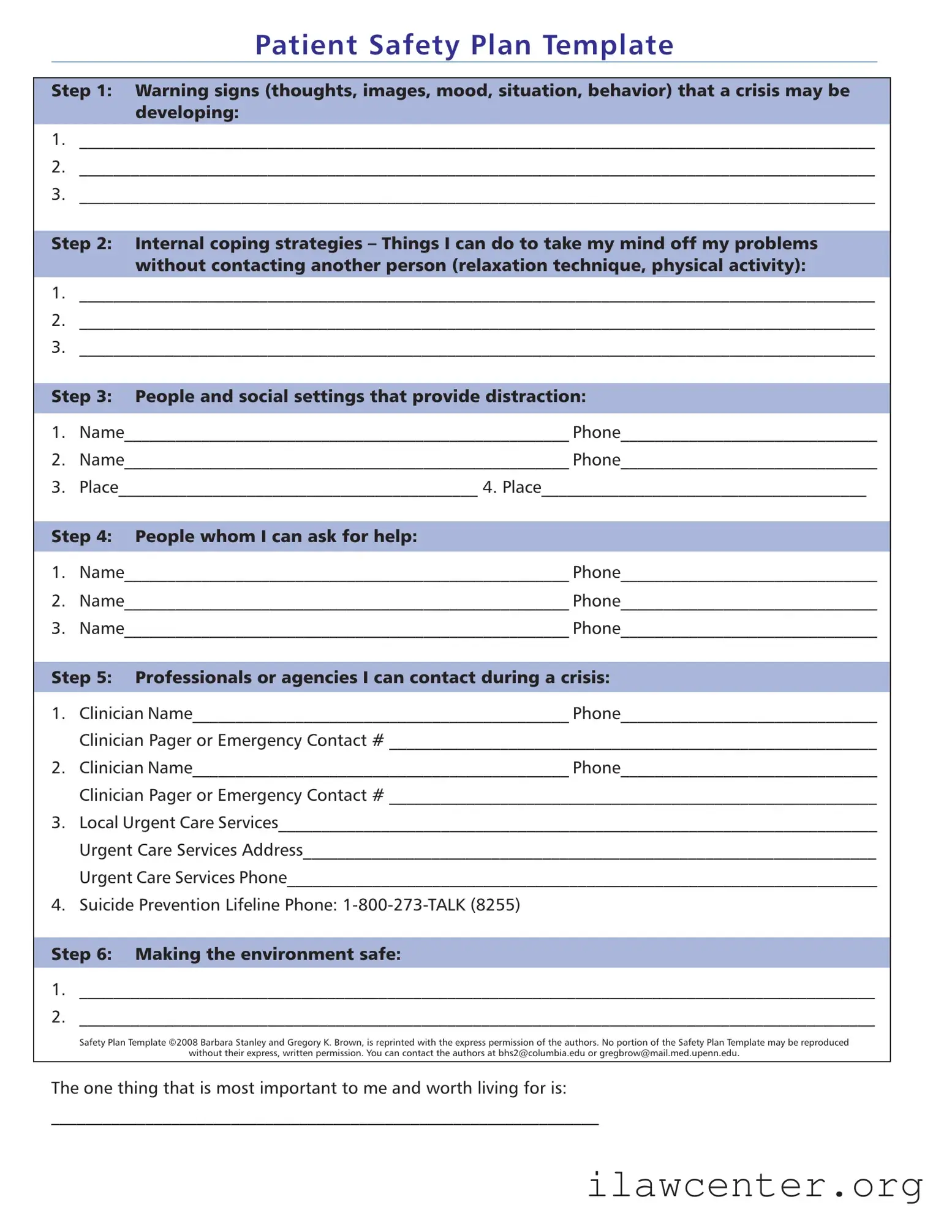
The Safety Plan form is a structured document designed to help individuals identify warning signs and develop coping strategies during a crisis. It provides a clear outline for recognizing personal triggers, establishing support networks, and ensuring safety. By filling out this form, you can take proactive steps toward managing difficult moments; click the button below to get started.

Article Guide

The Safety Plan form serves as a critical tool designed to support individuals in managing their mental health during times of crisis. It encourages proactive thinking by guiding users through a structured process to identify warning signs that may indicate an impending crisis. By recognizing these signs, individuals can take early steps to mitigate their impact. The form also emphasizes internal coping strategies, allowing users to explore activities that can provide distraction and relief without needing to reach out to others. Furthermore, it highlights the importance of social connections by listing people and places that can offer support and distraction during challenging times. Identifying trusted individuals who can provide help is a key aspect, as is knowing which professionals or agencies to contact in a crisis. The form includes essential contact information for clinicians and local urgent care services, along with the Suicide Prevention Lifeline, ensuring that immediate assistance is readily available. Finally, it addresses the need for a safe environment, prompting users to consider adjustments that can enhance their safety. Overall, the Safety Plan form is a comprehensive resource aimed at empowering individuals to take control of their mental health and navigate crises effectively.

Safety Plan Preview

Patient Safety Plan Template
Step 1: Warning signs (thoughts, images, mood, situation, behavior) that a crisis may be
developing:
1. _____________________________________________________________________________________________
2. _____________________________________________________________________________________________
3. _____________________________________________________________________________________________
Step 2: Internal coping strategies – Things I can do to take my mind off my problems
without contacting another person (relaxation technique, physical activity):
1. _____________________________________________________________________________________________
2. _____________________________________________________________________________________________
3. _____________________________________________________________________________________________
Step 3: People and social settings that provide distraction:
1. Name____________________________________________________ Phone______________________________
2. Name____________________________________________________ Phone______________________________
3. Place__________________________________________ 4. Place______________________________________
Step 4: People whom I can ask for help:
1. Name____________________________________________________ Phone______________________________
2. Name____________________________________________________ Phone______________________________
3. Name____________________________________________________ Phone______________________________
Step 5: Professionals or agencies I can contact during a crisis:
1. Clinician Name____________________________________________ Phone______________________________
Clinician Pager or Emergency Contact # _________________________________________________________
2. Clinician Name____________________________________________ Phone______________________________
Clinician Pager or Emergency Contact # _________________________________________________________
3. Local Urgent Care Services______________________________________________________________________
Urgent Care Services Address___________________________________________________________________
Urgent Care Services Phone_____________________________________________________________________
4. Suicide Prevention Lifeline Phone: 1-800-273-TALK (8255)
Step 6: Making the environment safe:
1. _____________________________________________________________________________________________
2. _____________________________________________________________________________________________
Safety Plan Template ©2008 Barbara Stanley and Gregory K. Brown, is reprinted with the express permission of the authors. No portion of the Safety Plan Template may be reproduced
without their express, written permission. You can contact the authors at bhs2@columbia.edu or gregbrow@mail.med.upenn.edu.
The one thing that is most important to me and worth living for is:
________________________________________________________________

File Properties

Fact Name Description
Purpose The Safety Plan form is designed to help individuals identify warning signs and develop coping strategies during a crisis.
Structure The form is divided into six steps, each focusing on different aspects of crisis management.
Warning Signs Step 1 emphasizes recognizing personal warning signs that indicate a crisis may be developing.
Coping Strategies In Step 2, individuals are encouraged to list internal coping strategies that can help them manage their thoughts and feelings.
Support Network Steps 3 and 4 focus on identifying people and settings that provide distraction and support, respectively.
Professional Help Step 5 lists professionals or agencies that can be contacted during a crisis, including local urgent care services and the Suicide Prevention Lifeline.
Safety Measures Step 6 encourages individuals to consider how to make their environment safe during a crisis.
Legal Considerations This Safety Plan is based on best practices and may be governed by mental health laws specific to each state, such as the Mental Health Parity and Addiction Equity Act.

Instructions on Utilizing Safety Plan

Completing the Safety Plan form is a crucial step in preparing for potential crises. This form helps individuals identify their warning signs, coping strategies, and support systems. By following the steps outlined below, you can create a personalized plan that addresses your specific needs and resources.

  1. Begin with Step 1: Write down your warning signs. List thoughts, images, moods, situations, or behaviors that indicate a crisis may be developing. Use the provided spaces to detail at least three warning signs.
  2. Move to Step 2: Identify internal coping strategies. Think of activities that can help take your mind off problems without needing to contact someone else. List at least three strategies, such as relaxation techniques or physical activities.
  3. Proceed to Step 3: List people and social settings that can provide distraction. Include names and phone numbers of individuals who can help, as well as places where you feel comfortable and can find solace. Aim to include at least two people and two places.
  4. In Step 4: Identify people whom you can ask for help. Write down the names and phone numbers of at least three trusted individuals who are willing to support you during difficult times.
  5. Next, in Step 5: List professionals or agencies you can contact during a crisis. Include the names and phone numbers of clinicians or agencies, as well as any emergency contact numbers. Don’t forget to note the local urgent care services and the Suicide Prevention Lifeline number.
  6. Finally, in Step 6: Outline steps to make your environment safe. Write down at least two actions you can take to create a safer space for yourself.

At the end of the form, reflect on what is most important to you and worth living for. This personal insight can serve as a powerful reminder during challenging times.

Important Facts about Safety Plan

What is the purpose of the Safety Plan form?

The Safety Plan form is designed to help individuals identify warning signs that indicate a crisis may be developing. It provides a structured approach to coping strategies, support systems, and resources to reach out to during difficult times. By outlining these elements, the plan aims to empower individuals to take proactive steps to ensure their safety and well-being.

How do I fill out the Safety Plan form?

Filling out the Safety Plan form involves several steps. Start by identifying your personal warning signs, such as specific thoughts or feelings that signal distress. Next, list internal coping strategies that help you manage these feelings without needing to contact someone. Then, identify people and social settings that can provide distraction, followed by those you can ask for help. Finally, include contact information for professionals or agencies you can reach out to during a crisis, and think about how to make your environment safer.

Who should I include in my Safety Plan?

Your Safety Plan should include people you trust and can rely on for support. This may include friends, family members, or professionals such as therapists or counselors. It’s important to think about individuals who understand your situation and can offer assistance when needed. Additionally, consider including local urgent care services and the Suicide Prevention Lifeline as vital resources.

What should I do with my completed Safety Plan?

Once you have completed your Safety Plan, keep it in a safe and accessible place. Share it with trusted individuals who can support you. It may also be beneficial to review the plan regularly, especially during times of stress or crisis. Make updates as necessary to ensure it remains relevant to your current situation and needs.

Common mistakes

Filling out the Safety Plan form is an essential step in ensuring personal safety and well-being. However, many individuals make common mistakes that can hinder the effectiveness of the plan. Understanding these mistakes can lead to a more successful completion of the form.

One frequent mistake is leaving sections blank. Each step of the Safety Plan is designed to address specific needs and concerns. Omitting information can create gaps in support during a crisis. It is crucial to take the time to fill out each section thoughtfully.

Another common error is failing to identify warning signs accurately. Individuals may overlook subtle signs that indicate a developing crisis. Recognizing these signs is vital for timely intervention. Therefore, it is important to reflect deeply on personal experiences and identify clear warning signs.

People often struggle with internal coping strategies. Some may write down strategies that are not effective for them personally. It is essential to choose methods that genuinely help in managing stress and anxiety. This could include relaxation techniques or physical activities that have proven beneficial in the past.

In Step 3, individuals might neglect to list supportive people or social settings. Having a reliable support network is crucial during challenging times. It is important to think about friends, family members, or community groups that can provide comfort and distraction.

Another mistake is not including contact information for people who can provide help. This oversight can lead to delays in seeking support when it is most needed. Ensure that phone numbers are accurate and accessible, making it easier to reach out in a crisis.

Some individuals may fail to list professionals or agencies that can be contacted during a crisis. This step is essential for ensuring access to mental health resources. Take the time to research and include clinicians or local services that can provide immediate assistance.

Additionally, making the environment safe is often overlooked. Individuals may not consider specific actions that can be taken to reduce risks in their surroundings. This step is crucial for creating a safe space and should be approached with careful thought.

People sometimes underestimate the importance of the final section, which asks about what is worth living for. This reflection can provide significant motivation during difficult times. It is vital to articulate what truly matters, as it can serve as a powerful reminder of hope and purpose.

Lastly, not reviewing the completed plan can lead to missed opportunities for improvement. Once the form is filled out, it is beneficial to revisit it periodically. This practice ensures that the plan remains relevant and effective as circumstances change.

By avoiding these common mistakes, individuals can create a more effective Safety Plan that truly supports their well-being. Taking the time to reflect and engage with each section can make a significant difference in times of need.

Documents used along the form

A Safety Plan is an essential tool for individuals experiencing mental health crises. It helps outline warning signs, coping strategies, and resources for support. In addition to the Safety Plan form, several other documents often accompany it to ensure comprehensive support and preparedness. Below are four commonly used forms and documents.

  • Crisis Assessment Form: This document evaluates the severity of an individual's current mental health crisis. It includes questions about symptoms, risk factors, and previous crisis history to help professionals determine the appropriate level of care.
  • Emergency Contact List: This list contains the names and contact information of trusted individuals who can be reached in case of an emergency. Having this information readily available can facilitate quicker support during a crisis.
  • Resource Directory: This directory provides a compilation of local mental health services, hotlines, and support groups. It serves as a quick reference for individuals seeking immediate help or ongoing support.
  • Follow-Up Plan: This document outlines the steps to take after a crisis has been addressed. It may include appointments with mental health professionals, support group meetings, or self-care strategies to maintain well-being.

Utilizing these documents alongside the Safety Plan can enhance an individual's ability to manage crises effectively. By having a clear plan and access to resources, individuals can feel more empowered and supported in their mental health journey.

Similar forms

  • Emergency Contact List: Similar to the Safety Plan, this document outlines individuals to contact during emergencies, ensuring that support is readily available when needed.
  • Crisis Management Plan: This document details strategies for handling crises, including warning signs and coping mechanisms, much like the Safety Plan's focus on identifying triggers and responses.
  • Behavioral Health Safety Assessment: This assessment evaluates risks and protective factors, similar to how the Safety Plan identifies warning signs and resources for support.
  • Support Network Map: This visual representation of a person's support system parallels the Safety Plan's emphasis on identifying people who can provide assistance in times of need.
  • Self-Care Plan: This document outlines strategies for maintaining well-being, akin to the internal coping strategies section of the Safety Plan that encourages self-directed care.
  • Resource Directory: A compilation of local services and contacts, this directory serves a similar purpose as the Safety Plan's section on professionals and agencies to contact during a crisis.
  • Personal Safety Checklist: This checklist provides actionable steps to enhance safety, much like the Safety Plan's focus on making the environment safe for the individual.
  • Mental Health Treatment Plan: This plan outlines therapeutic goals and interventions, similar to how the Safety Plan addresses coping strategies and support systems.
  • Wellness Recovery Action Plan (WRAP): This document emphasizes personal responsibility and self-advocacy, reflecting the Safety Plan's focus on individual coping strategies and support.
  • Relapse Prevention Plan: This plan identifies triggers and strategies to prevent relapse, akin to the Safety Plan's focus on warning signs and coping mechanisms to manage crises effectively.

Dos and Don'ts

When filling out the Safety Plan form, consider the following guidelines to ensure clarity and effectiveness.

  • Do take your time to think through each section carefully.
  • Do be honest about your warning signs and coping strategies.
  • Do include names and contact information for people you trust.
  • Do list professionals or agencies that can help in a crisis.
  • Do ensure that your environment is as safe as possible.
  • Don't rush through the form; this is important for your well-being.
  • Don't leave out any section, even if it feels difficult to fill.
  • Don't hesitate to reach out for help when needed.
  • Don't ignore the importance of having a support system in place.

Completing this form is a step towards taking control of your safety. It can help you identify resources and strategies that work for you. Remember, you are not alone in this process.

Misconceptions

Understanding the Safety Plan form is crucial for anyone seeking to create a supportive framework for managing crises. However, several misconceptions can hinder its effective use. Here are seven common misunderstandings:

  • The Safety Plan is only for people in immediate danger. Many believe that this form is only necessary when someone is at high risk of self-harm. In reality, it can be a proactive tool for anyone who experiences distressing thoughts or feelings.
  • It requires professional help to complete. Some think that only mental health professionals can assist in filling out the Safety Plan. However, individuals can and should contribute their own insights and coping strategies.
  • The plan is set in stone. Many assume that once the Safety Plan is completed, it cannot be changed. In fact, it should be a living document that evolves as circumstances and needs change.
  • It only includes contact information for professionals. Some believe that the Safety Plan is solely about reaching out to therapists or doctors. It should also include supportive friends, family members, and community resources.
  • Using the plan is a sign of weakness. A common misconception is that needing a Safety Plan indicates personal failure. In truth, it is a sign of strength and self-awareness, demonstrating a commitment to mental health.
  • The Safety Plan is only for mental health crises. Many think the plan is applicable only during mental health emergencies. However, it can be beneficial for various situations that cause distress, such as overwhelming stress or anxiety.
  • It is unnecessary if I have a therapist. Some individuals believe that having a therapist negates the need for a Safety Plan. Yet, having a personalized plan can enhance the therapeutic process and provide immediate strategies when needed.

By addressing these misconceptions, individuals can better utilize the Safety Plan form to enhance their well-being and safety.

Key takeaways

When filling out and using the Safety Plan form, consider the following key takeaways:

  • Identify Warning Signs: Clearly outline the thoughts, images, moods, situations, and behaviors that may indicate a developing crisis. This awareness is crucial for early intervention.
  • Develop Coping Strategies: List internal coping strategies that can help manage distress without needing to reach out to others. These might include relaxation techniques or physical activities.
  • Know Your Support Network: Document names and contact information for individuals and places that can provide distraction or support. This network is essential for times of need.
  • Emergency Contacts: Include professionals or agencies you can reach out to during a crisis. This list should contain clinicians, urgent care services, and helplines like the Suicide Prevention Lifeline.

Remember, the Safety Plan is a personalized tool that can help you navigate challenging times. Take the time to fill it out thoughtfully and keep it accessible.