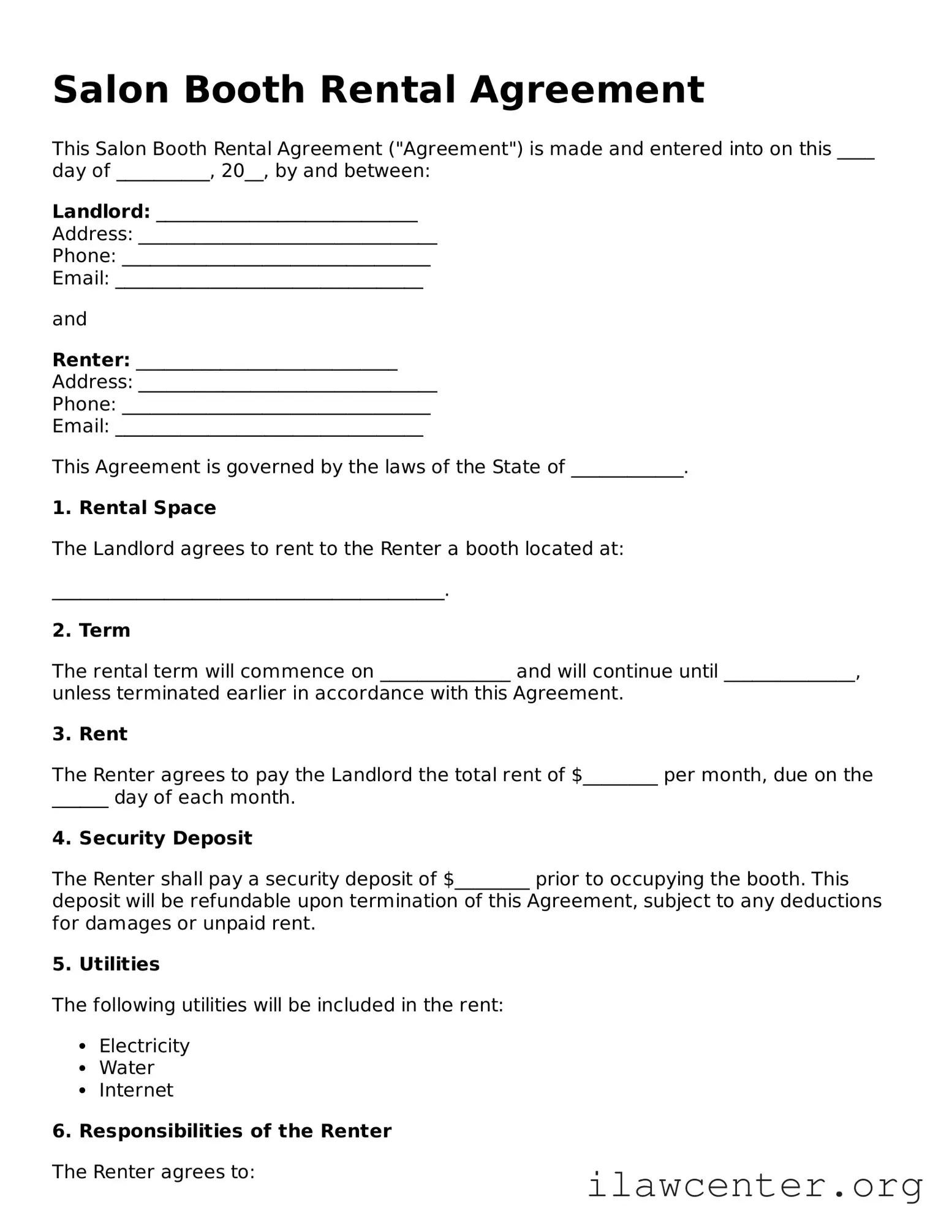
Fillable Salon Booth Rental Agreement Document

Fillable Salon Booth Rental Agreement Document

A Salon Booth Rental Agreement is a contract between a salon owner and an independent stylist, outlining the terms of renting a booth within the salon. This agreement ensures clarity on responsibilities, payment, and usage of salon facilities. To get started, fill out the form by clicking the button below.

Article Guide

When entering the world of salon booth rentals, understanding the Salon Booth Rental Agreement form is essential for both salon owners and booth renters. This document outlines the terms and conditions that govern the rental arrangement, ensuring a clear understanding between both parties. Key components include the rental rate, payment schedule, and duration of the lease. Additionally, the agreement specifies responsibilities for utilities, maintenance, and any shared spaces within the salon. It also addresses issues such as insurance requirements, liability, and termination clauses, providing a framework for resolving potential disputes. By clearly defining these aspects, the Salon Booth Rental Agreement helps create a professional relationship that benefits both the salon and the stylist, promoting a positive working environment.

Salon Booth Rental Agreement Preview

Salon Booth Rental Agreement

This Salon Booth Rental Agreement ("Agreement") is made and entered into on this ____ day of __________, 20__, by and between:

Landlord: ____________________________
Address: ________________________________
Phone: _________________________________
Email: _________________________________

and

Renter: ____________________________
Address: ________________________________
Phone: _________________________________
Email: _________________________________

This Agreement is governed by the laws of the State of ____________.

1. Rental Space

The Landlord agrees to rent to the Renter a booth located at:

__________________________________________.

2. Term

The rental term will commence on ______________ and will continue until ______________, unless terminated earlier in accordance with this Agreement.

3. Rent

The Renter agrees to pay the Landlord the total rent of $________ per month, due on the ______ day of each month.

4. Security Deposit

The Renter shall pay a security deposit of $________ prior to occupying the booth. This deposit will be refundable upon termination of this Agreement, subject to any deductions for damages or unpaid rent.

5. Utilities

The following utilities will be included in the rent:

  • Electricity
  • Water
  • Internet

6. Responsibilities of the Renter

The Renter agrees to:

  1. Maintain a clean and safe booth.
  2. Comply with all local health and safety regulations.
  3. Obtain and maintain all necessary licenses and permits.
  4. Provide their own supplies and equipment.

7. Termination

Either party may terminate this Agreement with a written notice of ____ days. Upon termination, the Renter must vacate the booth and return it in good condition.

8. Indemnification

The Renter agrees to indemnify and hold harmless the Landlord from any claims or liabilities arising from the Renter's use of the booth.

9. Governing Law

This Agreement shall be governed by and construed in accordance with the laws of the State of ____________.

IN WITNESS WHEREOF, the parties hereto have executed this Agreement as of the date first above written.

Landlord Signature: ____________________________
Date: ____________

Renter Signature: ____________________________
Date: ____________

PDF Form Characteristics

Fact Name Details
Definition A Salon Booth Rental Agreement outlines the terms under which a stylist rents space in a salon.
Purpose This agreement helps clarify responsibilities and expectations between the salon owner and the stylist.
Governing Law The agreement is typically governed by state laws, which can vary. For example, California law applies to agreements made in California.
Key Components Important elements include rental fees, duration of the agreement, and termination conditions.
Legal Protection A well-drafted agreement protects both parties in case of disputes or misunderstandings.

Instructions on Utilizing Salon Booth Rental Agreement

Filling out the Salon Booth Rental Agreement form is a straightforward process. You'll need to provide accurate information to ensure that both parties understand the terms of the rental arrangement. Follow these steps carefully to complete the form correctly.

  1. Gather necessary information: Collect details about the salon, including its name, address, and contact information. Also, have your personal information ready, such as your name and address.
  2. Review the rental terms: Read through the agreement to understand the rental period, payment terms, and any rules or regulations that apply to the booth rental.
  3. Fill in the salon details: In the designated section, enter the name and address of the salon where you will be renting the booth.
  4. Provide your information: Enter your full name, address, and contact number in the specified fields.
  5. Specify the rental period: Indicate the start and end dates of the rental agreement. Be clear and precise.
  6. Detail payment terms: Write down the rental fee amount, payment due dates, and acceptable payment methods.
  7. Include any additional terms: If there are specific rules or conditions that need to be added, write them in the appropriate section.
  8. Sign and date the agreement: Both parties must sign and date the document to validate the agreement.

Once you have completed the form, review it to ensure all information is accurate. After that, both you and the salon owner should keep a copy for your records.

Important Facts about Salon Booth Rental Agreement

What is a Salon Booth Rental Agreement?

A Salon Booth Rental Agreement is a legal document that outlines the terms and conditions between a salon owner and a stylist or beauty professional who rents a booth within the salon. This agreement typically specifies the rental fee, duration of the rental, responsibilities of both parties, and any rules or regulations that must be followed while operating within the salon. It serves to protect the interests of both the salon owner and the renter by clearly defining their rights and obligations.

What should be included in a Salon Booth Rental Agreement?

Key components of a Salon Booth Rental Agreement include the names of the parties involved, the rental amount, payment schedule, and the length of the rental term. Additionally, it should outline the responsibilities of the renter regarding maintenance and cleanliness of the booth, as well as any salon-wide policies that must be adhered to. Insurance requirements, termination clauses, and any provisions for subleasing the booth may also be included to ensure clarity and prevent disputes.

How can a Salon Booth Rental Agreement protect both parties?

This agreement provides a framework that helps prevent misunderstandings between the salon owner and the renter. By detailing each party's responsibilities, it reduces the likelihood of disputes over issues such as payment, maintenance, and compliance with salon policies. Furthermore, it can include clauses that address what happens in the event of a breach of contract, thereby offering legal recourse if necessary. This level of clarity fosters a professional relationship built on mutual respect and understanding.

Is it necessary to have a Salon Booth Rental Agreement in writing?

While verbal agreements can be made, having a written Salon Booth Rental Agreement is highly advisable. A written document provides a clear record of the terms agreed upon, which can be referenced in case of any disagreements or misunderstandings. It also adds a layer of professionalism to the business relationship. In many cases, having a written agreement is essential for legal enforceability, ensuring that both parties are protected under the law.

Common mistakes

Filling out a Salon Booth Rental Agreement form is a crucial step for both salon owners and independent stylists. However, several common mistakes can lead to misunderstandings or disputes. Recognizing these pitfalls can help ensure a smoother process.

One frequent error is not providing complete personal information. Renters must include their full name, contact details, and relevant licenses. Incomplete information can delay the approval process and create confusion later on.

Another common mistake is overlooking the rental terms. Renters should read the agreement carefully to understand the duration of the rental, payment schedules, and any additional fees. Misunderstanding these terms can lead to financial strain or unexpected penalties.

Some individuals fail to specify their services offered. This omission can create issues regarding client expectations and service availability. Clearly outlining services helps both parties understand the scope of work and avoid conflicts.

Additionally, neglecting to discuss shared responsibilities can lead to disputes. Renters should clarify who is responsible for cleaning, maintenance, and supplies. Establishing these responsibilities upfront can prevent misunderstandings later.

Another mistake involves not addressing insurance requirements. Renters should ensure they have the necessary liability insurance to protect themselves and the salon. Failing to do so can expose both parties to significant risks.

Some individuals may forget to include termination clauses. It is essential to understand the conditions under which either party can terminate the agreement. This knowledge can protect both the renter and the salon owner in case of unforeseen circumstances.

Lastly, failing to keep a copy of the signed agreement is a common oversight. Having a copy is vital for reference and can serve as a point of clarification in case of disputes. Both parties should retain a signed version for their records.

Documents used along the form

When entering into a Salon Booth Rental Agreement, several other forms and documents may be necessary to ensure a smooth and legally compliant operation. Understanding these documents can help both salon owners and booth renters navigate their professional relationship more effectively.

  • Salon Policies Document: This outlines the rules and regulations of the salon, including operating hours, conduct expectations, and procedures for handling client complaints.
  • Independent Contractor Agreement: This document clarifies the relationship between the salon owner and the booth renter, specifying that the renter operates as an independent contractor rather than an employee.
  • Liability Waiver: A liability waiver protects the salon owner from legal claims arising from accidents or injuries that may occur on the premises.
  • Client Intake Form: This form collects essential information from clients, including contact details, medical history, and preferences, ensuring that services are tailored to individual needs.
  • Service Menu: A detailed list of services offered, including pricing, helps clients understand what is available and assists booth renters in managing their offerings.
  • Payment Agreement: This outlines the payment terms between the booth renter and the salon owner, including rent amounts, due dates, and accepted payment methods.
  • Insurance Certificate: Proof of liability insurance is often required to protect both parties in case of accidents or damages during salon operations.
  • Inventory List: This document tracks the products and supplies used by the booth renter, ensuring proper stock levels and facilitating reordering when necessary.
  • Marketing Agreement: If the salon owner and booth renter collaborate on promotional efforts, this document outlines the terms of marketing activities and responsibilities.
  • Termination Notice: Should either party wish to end the agreement, this formal notice provides a clear procedure for termination, ensuring both parties are aware of their rights and obligations.

Each of these documents plays a crucial role in the successful operation of a salon booth rental arrangement. By familiarizing themselves with these forms, both salon owners and booth renters can foster a professional environment that encourages growth and collaboration.

Similar forms

  • Lease Agreement: Like the Salon Booth Rental Agreement, a lease agreement outlines the terms under which a tenant occupies a space. Both documents specify rental amounts, duration, and responsibilities of each party.
  • Independent Contractor Agreement: This document shares similarities with the Salon Booth Rental Agreement in that it establishes a working relationship between a business owner and an independent contractor. It details the scope of work, payment terms, and obligations.
  • Service Agreement: A service agreement also resembles the Salon Booth Rental Agreement by defining the services to be provided, payment terms, and the responsibilities of both parties involved in the agreement.
  • Commercial Rental Agreement: This type of agreement is similar in nature as it governs the rental of commercial spaces. It includes terms related to rent, maintenance, and use of the property.
  • Roommate Agreement: While often used in residential settings, a roommate agreement parallels the Salon Booth Rental Agreement by outlining shared responsibilities and expectations between individuals sharing a space.
  • Vendor Agreement: This document is akin to the Salon Booth Rental Agreement as it establishes the terms between a business and a vendor. It specifies services, payment terms, and responsibilities, much like the booth rental setup.
  • Partnership Agreement: Similar to the Salon Booth Rental Agreement, a partnership agreement outlines the roles, responsibilities, and profit-sharing arrangements between partners in a business venture.

Dos and Don'ts

When filling out the Salon Booth Rental Agreement form, it’s important to approach the process with care. Here are five things to keep in mind:

  • Do read the entire agreement carefully. Understanding all terms and conditions is crucial before signing.
  • Don't rush through the form. Take your time to ensure accuracy and completeness.
  • Do provide accurate personal and business information. This helps prevent any issues in the future.
  • Don't leave any sections blank. If a section doesn’t apply, indicate that clearly.
  • Do ask questions if you’re unsure. Clarifying doubts with the salon owner can prevent misunderstandings.

Following these guidelines can lead to a smoother rental experience and foster a positive relationship with the salon management.

Misconceptions

Many people have misconceptions about the Salon Booth Rental Agreement form. Understanding these misconceptions can help both salon owners and booth renters navigate their agreements more effectively. Below are ten common misconceptions along with clarifications.

  1. It is a standard form that everyone uses.

    In reality, the terms of a booth rental agreement can vary significantly from one salon to another. Each salon may have its own specific requirements and conditions.

  2. It protects only the salon owner.

    This agreement is designed to protect both parties. It outlines the rights and responsibilities of the booth renter and the salon owner, ensuring clarity for both sides.

  3. Once signed, the agreement cannot be changed.

    Many agreements can be amended if both parties agree to the changes. It is important to communicate openly about any necessary adjustments.

  4. Booth renters are independent contractors.

    While booth renters often operate as independent contractors, the specifics can depend on the terms of the agreement. Some agreements may impose certain restrictions that could affect this status.

  5. The agreement covers everything.

    Not all details may be included in the agreement. Renters should ensure that all important aspects of their working relationship are addressed to avoid misunderstandings.

  6. All booth rental agreements are legally binding.

    While many agreements are enforceable, certain conditions must be met for them to be legally binding. Parties should ensure compliance with local laws and regulations.

  7. Renters can operate freely without oversight.

    Most agreements include provisions that outline the salon's expectations regarding conduct, services offered, and use of space. Renters should be aware of these rules.

  8. Security deposits are optional.

    Many agreements require a security deposit to cover potential damages or unpaid rent. Renters should clarify this requirement before signing.

  9. Termination clauses are irrelevant.

    Understanding the termination clause is crucial. It outlines how either party can end the agreement and what notice is required, which can prevent disputes.

  10. Renters have no recourse if the salon owner violates the agreement.

    Renters do have rights and can seek remedies if the salon owner fails to uphold their end of the agreement. Legal options may be available depending on the situation.

By addressing these misconceptions, both salon owners and booth renters can foster a better working relationship and ensure a smoother operation within the salon environment.

Key takeaways

Filling out and using the Salon Booth Rental Agreement form is essential for both salon owners and booth renters. Here are some key takeaways to consider:

  1. Understand the Purpose: The agreement outlines the terms of the rental arrangement, protecting both parties.
  2. Include Personal Information: Both the salon owner and the renter should provide accurate contact details.
  3. Specify Rental Terms: Clearly state the rental fee, payment schedule, and any additional costs.
  4. Detail Responsibilities: Outline the responsibilities of both the salon owner and the renter regarding maintenance and cleanliness.
  5. Set Duration: Indicate the length of the rental agreement, including start and end dates.
  6. Include Termination Conditions: Specify how either party can terminate the agreement and any notice requirements.
  7. Address Liability: Include clauses regarding liability and insurance to protect both parties.
  8. Review Local Laws: Ensure the agreement complies with local regulations and business practices.
  9. Signatures Are Essential: Both parties must sign the agreement for it to be legally binding.
  10. Keep Copies: Each party should retain a copy of the signed agreement for future reference.

By following these key points, both salon owners and booth renters can create a clear and fair rental agreement that benefits everyone involved.