Salon Chemical Waiver PDF Template

Salon Chemical Waiver PDF Template

The Salon Chemical Waiver form is a crucial document designed to protect both clients and salons during the application of permanent chemical treatments to hair. By signing this form, clients acknowledge the potential risks involved and release the salon and its stylists from liability related to the procedure. Understanding the importance of this waiver can help ensure a safe and satisfactory experience in the salon.

Ready to take the next step? Fill out the form by clicking the button below.

Article Guide

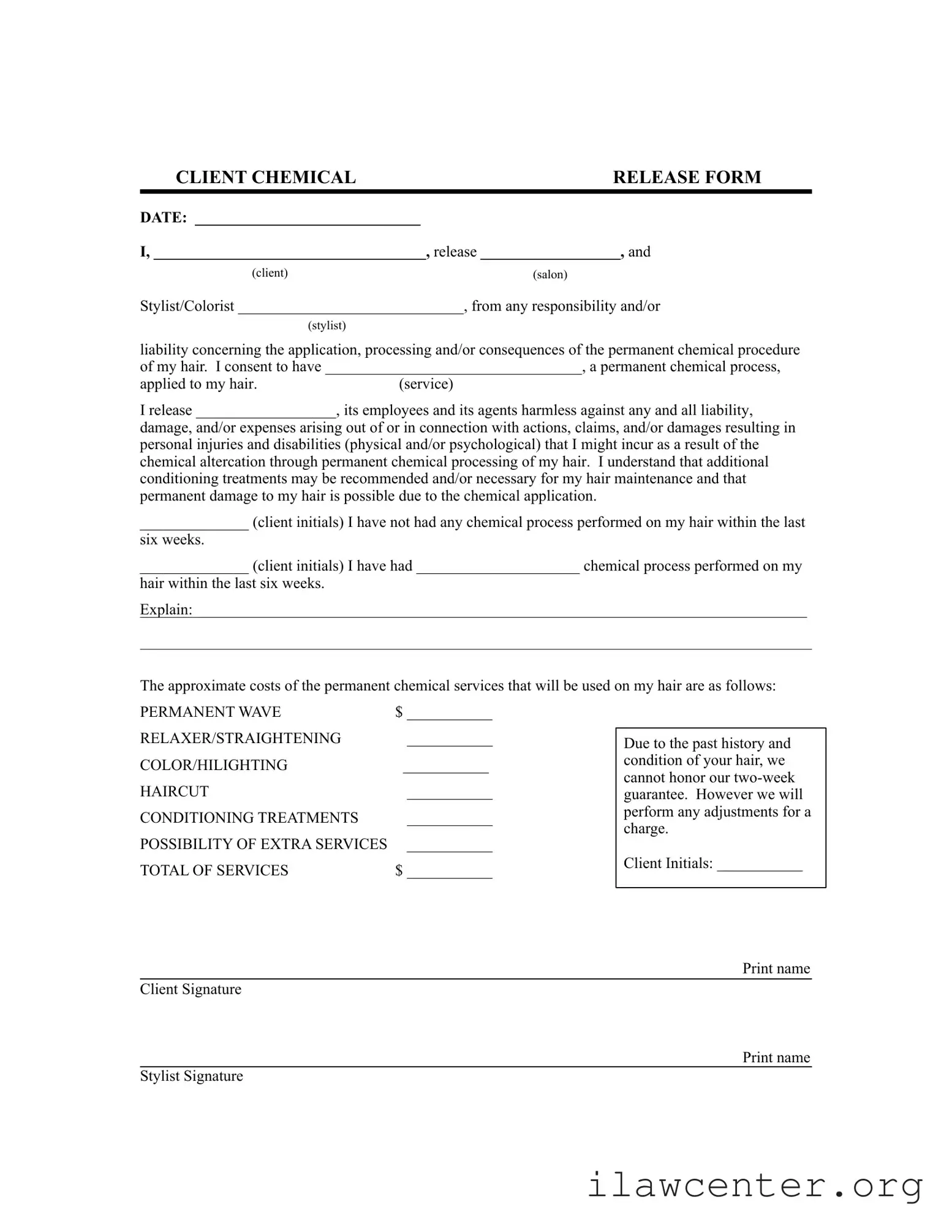
The Salon Chemical Waiver form is an essential document for clients undergoing permanent chemical procedures on their hair. This form serves to protect both the client and the salon by outlining the responsibilities and potential risks associated with such treatments. Clients must provide their name, date, and details about the specific chemical service they are consenting to, whether it be a permanent wave, relaxer, or coloring. By signing, clients release the salon and its staff from liability concerning any injuries or damages that may arise from the chemical process. It’s crucial for clients to disclose any recent chemical treatments, as this information can impact the outcome and safety of the service. Additionally, the form includes a section detailing the estimated costs of the services provided, emphasizing transparency in pricing. Clients are also informed about the possibility of needing extra conditioning treatments and the limitations of the salon's guarantee based on the condition of their hair. Overall, this waiver ensures that clients are fully aware of the implications of their choices while receiving the desired results from their salon experience.

Salon Chemical Waiver Preview

CLIENT CHEMICAL RELEASE FORM
DATE: _____________________________
I, ___________________________________, release __________________, and
(client)
(salon)
Stylist/Colorist _____________________________, from any responsibility and/or
(stylist)
liability concerning the application, processing and/or consequences of the permanent chemical procedure
of my hair. I consent to have _________________________________, a permanent chemical process,
applied to my hair. (service)
I release __________________, its employees and its agents harmless against any and all liability,
damage, and/or expenses arising out of or in connection with actions, claims, and/or damages resulting in
personal injuries and disabilities (physical and/or psychological) that I might incur as a result of the
chemical altercation through permanent chemical processing of my hair. I understand that additional
conditioning treatments may be recommended and/or necessary for my hair maintenance and that
permanent damage to my hair is possible due to the chemical application.
______________ (client initials) I have not had any chemical process performed on my hair within the last
six weeks.
______________ (client initials) I have had _____________________ chemical process performed on my
hair within the last six weeks.
Explain: ______________________________________________________________________________
The approximate costs of the permanent chemical services that will be used on my hair are as follows:
PERMANENT WAVE $ ___________
RELAXER/STRAIGHTENING ___________
Due to the past history and
COLOR/HILIGHTING ___________
condition of your hair, we
cannot honor our two-week
HAIRCUT ___________
guarantee. However we will
CONDITIONING TREATMENTS ___________
perform any adjustments for a
charge.
POSSIBILITY OF EXTRA SERVICES ___________
Client Initials: ___________
TOTAL OF SERVICES $ ___________
Print name
Client Signature
Print name
Stylist Signature

File Properties

Fact Name Description
Purpose The Salon Chemical Waiver form is designed to protect the salon and its employees from liability related to chemical hair treatments.
Client Release Clients release the salon and stylist from responsibility for any adverse effects resulting from the chemical process.
Informed Consent Clients must consent to the specific chemical process being applied to their hair, ensuring they are aware of the treatment.
Health History Clients are required to disclose any previous chemical processes performed on their hair within the last six weeks.
Potential Risks The form informs clients of the risks involved, including possible permanent damage and the need for additional conditioning treatments.
Cost Disclosure Clients are provided with an estimate of costs for the services, allowing for transparency in pricing.
State-Specific Laws In some states, such as California, specific consumer protection laws govern the use of waivers in salons.
Initials Requirement Clients must initial certain sections of the form, indicating their understanding and agreement to the terms outlined.

Instructions on Utilizing Salon Chemical Waiver

Filling out the Salon Chemical Waiver form is an important step in ensuring that both you and the salon understand the terms and conditions surrounding the chemical treatment of your hair. Please follow the steps below to complete the form accurately.

  1. Write the date at the top of the form.
  2. In the first blank, enter your full name as the client.
  3. In the next blank, write the name of the salon.
  4. In the following blank, provide the name of your stylist or colorist.
  5. In the next section, specify the permanent chemical process you wish to have applied to your hair.
  6. Read the release statement carefully. You will need to initial next to the statement acknowledging your understanding of the potential risks involved.
  7. If you have not had any chemical process performed on your hair within the last six weeks, initial in the provided space. If you have had a chemical process, initial in the designated space and explain what it was in the area provided.
  8. Fill in the approximate costs for the services you are receiving, including Permanent Wave, Relaxer/Straightening, Color/Highlighting, Haircut, and Conditioning Treatments.
  9. Initial next to the statement regarding the possibility of extra services and any adjustments that may incur a charge.
  10. Calculate the total of the services and write it in the designated space.
  11. Print your name in the client signature area and sign the form.
  12. Have your stylist print their name and sign in the appropriate section.

Important Facts about Salon Chemical Waiver

What is a Salon Chemical Waiver form?

The Salon Chemical Waiver form is a document that clients sign before undergoing any permanent chemical procedures on their hair. It releases the salon and the stylist from liability concerning the application and potential consequences of the chemical treatment. This form is essential for ensuring that clients are informed about the risks involved in such procedures.

Why do I need to sign this waiver?

Signing the waiver is a way to acknowledge that you understand the potential risks associated with chemical hair treatments. It protects both you and the salon by ensuring that you are aware of any possible adverse effects that may arise from the procedure. This includes physical or psychological injuries that could occur as a result of the treatment.

What types of chemical processes does the waiver cover?

The waiver covers various permanent chemical processes, including permanent waves, relaxers, straightening treatments, and coloring or highlighting services. Each of these treatments involves the use of chemicals that can alter the structure and appearance of your hair.

What should I do if I have had a chemical treatment recently?

If you have had any chemical treatment within the last six weeks, you are required to disclose this on the waiver form. This information is crucial, as it helps the stylist assess the condition of your hair and determine the safest approach for your upcoming treatment.

What are the potential risks associated with chemical treatments?

Potential risks include damage to your hair, which may be permanent, and possible allergic reactions to the chemicals used. There is also a chance of physical discomfort during the procedure. Understanding these risks is vital for making an informed decision about your hair treatment.

Will the salon provide any follow-up care?

Yes, the salon may recommend additional conditioning treatments to help maintain the health of your hair after the chemical process. It is important to follow these recommendations to minimize the risk of damage and ensure the best results from your treatment.

What if I am unhappy with the results of my treatment?

If you are dissatisfied with the results, the salon may offer adjustments for a fee. However, it is important to note that the waiver states that the salon may not honor a two-week guarantee due to the history and condition of your hair. Communication with your stylist about your expectations can help mitigate any issues.

How much will the chemical services cost?

The waiver form includes a section for detailing the costs associated with the chemical services you will receive. Prices may vary based on the type of service, and it is essential to review these costs before proceeding with the treatment.

What should I do if I have questions about the waiver?

If you have any questions or concerns regarding the waiver, it is advisable to discuss them with your stylist or salon management before signing. They can provide clarification and ensure you feel comfortable with the process and the decisions you are making about your hair.

Common mistakes

When filling out the Salon Chemical Waiver form, individuals often make several common mistakes that can lead to misunderstandings or complications later on. One of the most frequent errors is failing to provide complete information. Clients sometimes leave blank spaces where their name or the date should be filled in. This can create confusion about who is responsible for the waiver and when the service was agreed upon.

Another mistake involves not reading the form carefully before signing. Many clients overlook important details, such as the potential risks associated with chemical treatments. By not fully understanding the implications of the waiver, clients may inadvertently agree to terms they are uncomfortable with. It is crucial to comprehend what is being consented to before putting pen to paper.

Clients also frequently neglect to disclose their hair history accurately. For instance, the form asks if any chemical processes were performed within the last six weeks. Failing to provide this information can lead to adverse reactions or results during the treatment. It is essential to be honest about previous services to ensure the stylist can make informed decisions regarding the current treatment.

Another common oversight is not initialing the required sections. The waiver includes specific areas where clients must initial to confirm understanding of certain conditions, such as the possibility of permanent damage to their hair. Skipping these initials can imply a lack of acknowledgment of these critical points, which could affect liability later on.

Furthermore, clients sometimes miscalculate the total cost of services. The form outlines various chemical services and their approximate costs. If clients do not accurately fill in these amounts, they may be surprised by the final bill. It is advisable to double-check all entries to avoid financial misunderstandings.

Additionally, individuals may forget to sign the waiver entirely. A signature is necessary to validate the agreement. Without it, the waiver holds no legal weight, which could lead to complications if issues arise after the service is performed.

Lastly, clients might overlook the importance of discussing their hair condition with the stylist. The waiver mentions that due to the history and condition of the hair, certain guarantees may not be honored. Failing to have an open conversation about hair health can lead to dissatisfaction with the results. Clients should feel empowered to ask questions and express concerns before proceeding with any chemical treatment.

Documents used along the form

When visiting a salon for chemical treatments, several important documents may accompany the Salon Chemical Waiver form. These forms help ensure that both the client and the salon understand the risks involved and the responsibilities of each party. Below are five key documents commonly used in conjunction with the waiver.

  • Client Intake Form: This document collects essential information about the client, including contact details, medical history, and any previous hair treatments. It helps the stylist assess the client's suitability for specific chemical processes.
  • Consent for Treatment Form: This form explicitly states that the client agrees to undergo the proposed chemical treatment. It outlines the procedure, potential risks, and expected outcomes, ensuring that the client is fully informed before proceeding.
  • Aftercare Instructions: After a chemical treatment, clients receive this document detailing how to care for their hair. It includes recommendations on products to use, maintenance tips, and any restrictions to follow to ensure optimal results.
  • Patch Test Consent Form: For certain chemical services, a patch test may be required to check for allergic reactions. This form documents the client’s consent to perform the test and acknowledges the potential risks involved.
  • Service Agreement: This agreement outlines the services to be provided, including costs and any guarantees. It serves as a contract between the client and the salon, detailing what to expect during the appointment.

These documents play a crucial role in the salon experience, ensuring that clients are informed and protected. Understanding each form helps clients make educated decisions about their hair care and the services they choose to receive.

Similar forms

The Salon Chemical Waiver form is an important document for both clients and salons. It ensures that everyone is on the same page regarding the risks associated with chemical hair treatments. Here are eight other documents that share similarities with the Salon Chemical Waiver form:

  • Release of Liability Form: This document releases a party from liability for any injuries or damages that may occur during an activity. Like the Salon Chemical Waiver, it emphasizes the client's understanding of potential risks.
  • Informed Consent Form: Often used in medical settings, this form ensures that patients understand the procedures and risks involved. It parallels the Salon Chemical Waiver in that both require clients to acknowledge their awareness of possible adverse effects.
  • Service Agreement: This document outlines the terms of service between a client and a provider. Similar to the waiver, it sets expectations and clarifies responsibilities for both parties.
  • Health History Questionnaire: This form collects information about a client's medical history, which can impact treatment outcomes. It complements the waiver by ensuring that clients disclose relevant information before undergoing chemical processes.
  • Photography Release Form: Used in various industries, this document allows a business to use images of clients for promotional purposes. It shares the theme of consent, as clients must agree to the use of their images, just as they agree to the risks of chemical treatments.
  • Client Intake Form: This form gathers essential information about clients before services are rendered. It serves a similar purpose to the Salon Chemical Waiver by ensuring that the salon has all necessary details to provide safe and effective services.
  • Cancellation Policy Agreement: This document outlines the salon's policies regarding cancellations and no-shows. While it focuses on scheduling, it shares the same goal of setting clear expectations and protecting the business.
  • Cosmetic Procedure Consent Form: Common in aesthetic practices, this form ensures clients understand the risks and benefits of cosmetic treatments. It aligns with the Salon Chemical Waiver by emphasizing informed consent and the importance of client awareness.

Each of these documents plays a vital role in ensuring that clients are informed and protected, just like the Salon Chemical Waiver form does in the context of hair treatments.

Dos and Don'ts

When filling out the Salon Chemical Waiver form, it’s important to be thorough and accurate. Here’s a list of things you should and shouldn’t do:

  • Do read the entire form carefully before signing.
  • Do provide your full name as it appears on your identification.
  • Do disclose any recent chemical processes you’ve had on your hair.
  • Do initial the sections that require your acknowledgment.
  • Do ask questions if you’re unclear about any part of the waiver.
  • Don’t rush through the form; take your time to ensure accuracy.
  • Don’t leave any required fields blank, as this may delay your service.
  • Don’t ignore the potential risks associated with chemical treatments.
  • Don’t forget to sign and date the form before your appointment.

Misconceptions

When it comes to the Salon Chemical Waiver form, several misconceptions can lead to misunderstandings about its purpose and implications. Here are four common misconceptions:

  • Misconception 1: The waiver means I cannot hold the salon responsible for any damage.
  • Many people believe that signing the waiver completely absolves the salon of any responsibility. While the form does release the salon from certain liabilities, it does not mean that they are free from all accountability. If the salon acts negligently or fails to follow proper procedures, they may still be held liable.

  • Misconception 2: I don’t need to disclose previous chemical treatments.
  • Some clients think that their past hair treatments are irrelevant. However, it is crucial to inform the stylist about any chemical processes performed within the last six weeks. This information helps the stylist assess the condition of your hair and determine the best approach for your treatment.

  • Misconception 3: The waiver is just a formality and doesn’t require careful consideration.
  • People often view the waiver as a simple formality. In reality, it is a legal document that outlines important information regarding potential risks and responsibilities. Clients should read it thoroughly and understand its implications before signing.

  • Misconception 4: Signing the waiver means I am not entitled to any follow-up services.
  • Some believe that once they sign the waiver, they cannot seek any adjustments or follow-up treatments. This is not true. While the waiver outlines certain limitations, salons typically offer adjustments or additional services for a fee, especially if the hair condition warrants them.

Key takeaways

When filling out and using the Salon Chemical Waiver form, it is essential to pay attention to several key aspects to ensure a smooth process. Here are some important takeaways:

  • Complete All Sections: Ensure that every section of the form is filled out completely, including your name, the salon's name, and the stylist's name. Incomplete forms may lead to misunderstandings.
  • Understand the Risks: Acknowledge that the waiver releases the salon and stylist from liability related to the chemical procedures. It is crucial to understand the potential risks involved with chemical treatments.
  • Initial Where Required: Pay attention to the areas requiring your initials, particularly regarding your hair's treatment history. This information is vital for the stylist to assess your hair's condition accurately.
  • Review Cost Estimates: Before signing, review the approximate costs of the services listed. This transparency helps avoid unexpected charges and ensures you are prepared for the financial aspect of the treatment.
  • Consider Additional Treatments: Be aware that additional conditioning treatments may be recommended. Understanding this can help maintain the health of your hair post-treatment.

By keeping these points in mind, clients can navigate the Salon Chemical Waiver form with confidence and clarity.