Instructions on Utilizing Sample Ocean Bill Of Lading
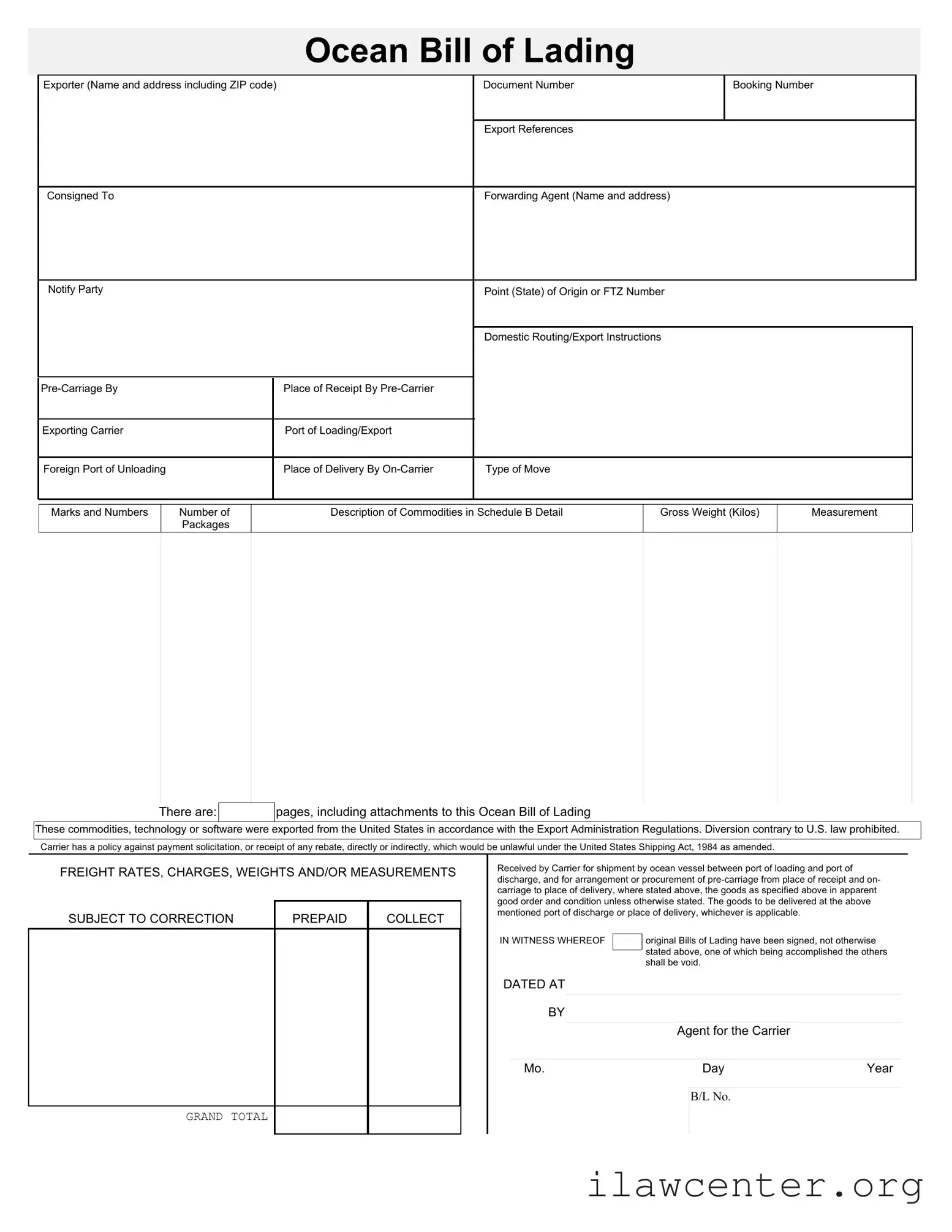
Filling out the Sample Ocean Bill of Lading form requires attention to detail and accurate information. This document is essential for shipping goods internationally by sea. Each section must be completed thoughtfully to ensure compliance with shipping regulations and to facilitate the smooth transport of goods. Below are the steps to guide you through the process of filling out this form.
- Exporter Information: Enter the name and address of the exporter, including the ZIP code.
- Document Number: Fill in the unique document number assigned to this Bill of Lading.
- Booking Number: Provide the booking number associated with the shipment.
- Export References: Include any relevant export reference numbers that may apply.
- Consigned To: Write the name and address of the person or entity to whom the goods are being sent.
- Forwarding Agent: Fill in the name and address of the forwarding agent, if applicable.
- Notify Party: Specify the name and address of the party to be notified upon arrival of the goods.
- Point of Origin: Indicate the state of origin or Foreign Trade Zone (FTZ) number.
- Domestic Routing/Export Instructions: Provide any specific routing or export instructions for the shipment.
- Pre-Carriage By: Enter the mode of transport used before the ocean shipment.
- Place of Receipt By: State where the goods were received for shipment.
- Pre-Carrier: Name the carrier responsible for the pre-carriage of the goods.
- Exporting Carrier: Identify the carrier that will transport the goods by ocean.
- Port of Loading/Export: Specify the port where the goods will be loaded onto the vessel.
- Foreign Port of Unloading: Indicate the foreign port where the goods will be unloaded.
- Place of Delivery By: Fill in the delivery location for the goods.
- On-Carrier: Name the carrier responsible for transporting the goods after unloading.
- Type of Move: Specify whether the move is domestic or international.
- Marks and Numbers: List any identifying marks or numbers on the packages.
- Number of Packages: State the total number of packages being shipped.
- Description of Commodities: Provide a detailed description of the commodities being shipped, including the Schedule B number.
- Gross Weight: Indicate the total weight of the shipment in kilos.
- Measurement: Fill in the total measurement of the shipment.
Finally, ensure that the form is signed and dated by the agent for the carrier. This confirms that the goods have been received in good order, unless otherwise noted. It is crucial to keep a copy of the completed Bill of Lading for your records, as it serves as a contract between the shipper and the carrier.