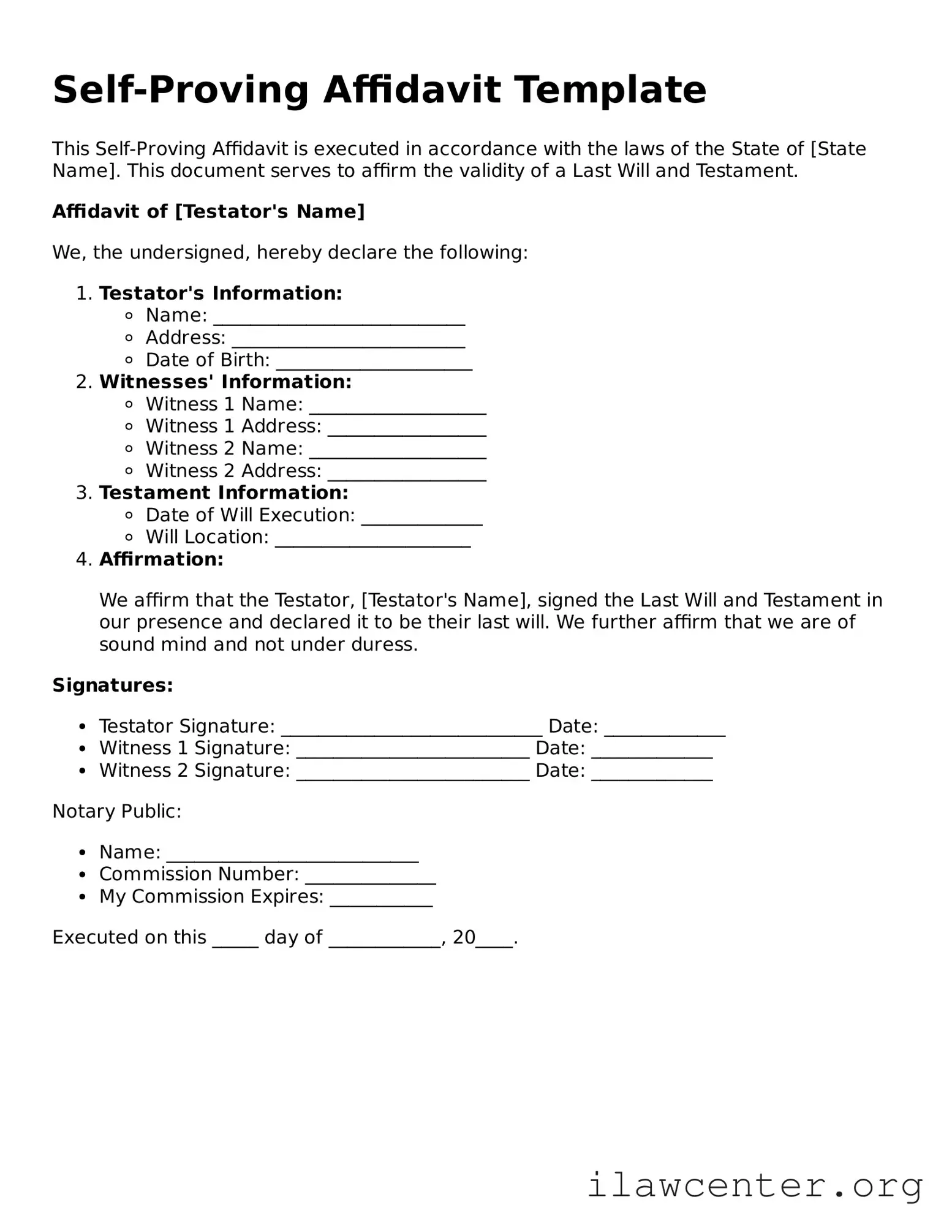
What is a Self-Proving Affidavit?
A Self-Proving Affidavit is a legal document that accompanies a will. It serves to validate the will and streamline the probate process. By signing this affidavit, witnesses affirm that they observed the testator sign the will, which can eliminate the need for them to testify in court later.
Why should I use a Self-Proving Affidavit?
Using a Self-Proving Affidavit can simplify the probate process. It provides evidence that the will was executed properly, making it less likely for the will to be contested. This can save time and reduce stress for your loved ones during an already difficult time.
Who can sign a Self-Proving Affidavit?
The testator, or the person making the will, must sign the Self-Proving Affidavit in the presence of witnesses. Typically, at least two witnesses are required to sign the affidavit as well. These witnesses should be individuals who are not beneficiaries of the will to avoid any conflicts of interest.
How does the Self-Proving Affidavit work?
Once the Self-Proving Affidavit is signed by the testator and the witnesses, it becomes part of the will. When the will is submitted for probate, the affidavit can be presented to the court to confirm that the will was executed in accordance with state laws. This can expedite the probate process significantly.
Can I create a Self-Proving Affidavit on my own?
While it is possible to create a Self-Proving Affidavit without legal assistance, it is advisable to seek guidance. Ensuring that the affidavit meets all legal requirements specific to your state can prevent complications later on. Consulting with an attorney can provide peace of mind and help avoid potential pitfalls.
Is a Self-Proving Affidavit legally binding?
Yes, a Self-Proving Affidavit is legally binding as long as it is executed properly according to state laws. It is important to follow the correct procedures for signing and witnessing the affidavit to ensure its validity.
How does a Self-Proving Affidavit differ from a regular affidavit?
A regular affidavit is a sworn statement made under oath, often used in various legal contexts. In contrast, a Self-Proving Affidavit specifically pertains to wills and serves to affirm the execution of the will. Its primary purpose is to facilitate the probate process by providing evidence of the will's validity.
Can I revoke a Self-Proving Affidavit?
Yes, a Self-Proving Affidavit can be revoked if you decide to change your will. When you create a new will, it should include a new Self-Proving Affidavit, which will replace the previous one. Always ensure that any changes to your will are documented correctly to avoid confusion in the future.
What happens if I don’t use a Self-Proving Affidavit?
If you choose not to use a Self-Proving Affidavit, witnesses may need to testify in court during the probate process to confirm the validity of the will. This can lead to delays and additional complications. It is often more efficient to include a Self-Proving Affidavit to streamline the process for your heirs.