Fillable Self-Storage Rental Agreement Document

Fillable Self-Storage Rental Agreement Document

A Self-Storage Rental Agreement is a legal document that outlines the terms and conditions between a storage facility and a renter. This agreement details important aspects such as rental fees, duration of the lease, and the responsibilities of both parties. To ensure a smooth rental experience, consider filling out the form by clicking the button below.

Article Guide

When considering the use of a self-storage facility, understanding the Self-Storage Rental Agreement form is essential for both tenants and facility owners. This document outlines the terms and conditions under which a storage unit is rented, ensuring that both parties are clear about their rights and responsibilities. Key aspects of the agreement typically include the rental duration, payment terms, and fees associated with the storage unit. Additionally, it often specifies the rules regarding access to the unit, security measures in place, and the liability of the storage facility for any loss or damage to the stored items. Tenants should also pay attention to clauses related to termination of the agreement, renewal options, and any penalties for late payments. By carefully reviewing this form, individuals can safeguard their belongings while also ensuring a smooth rental experience.

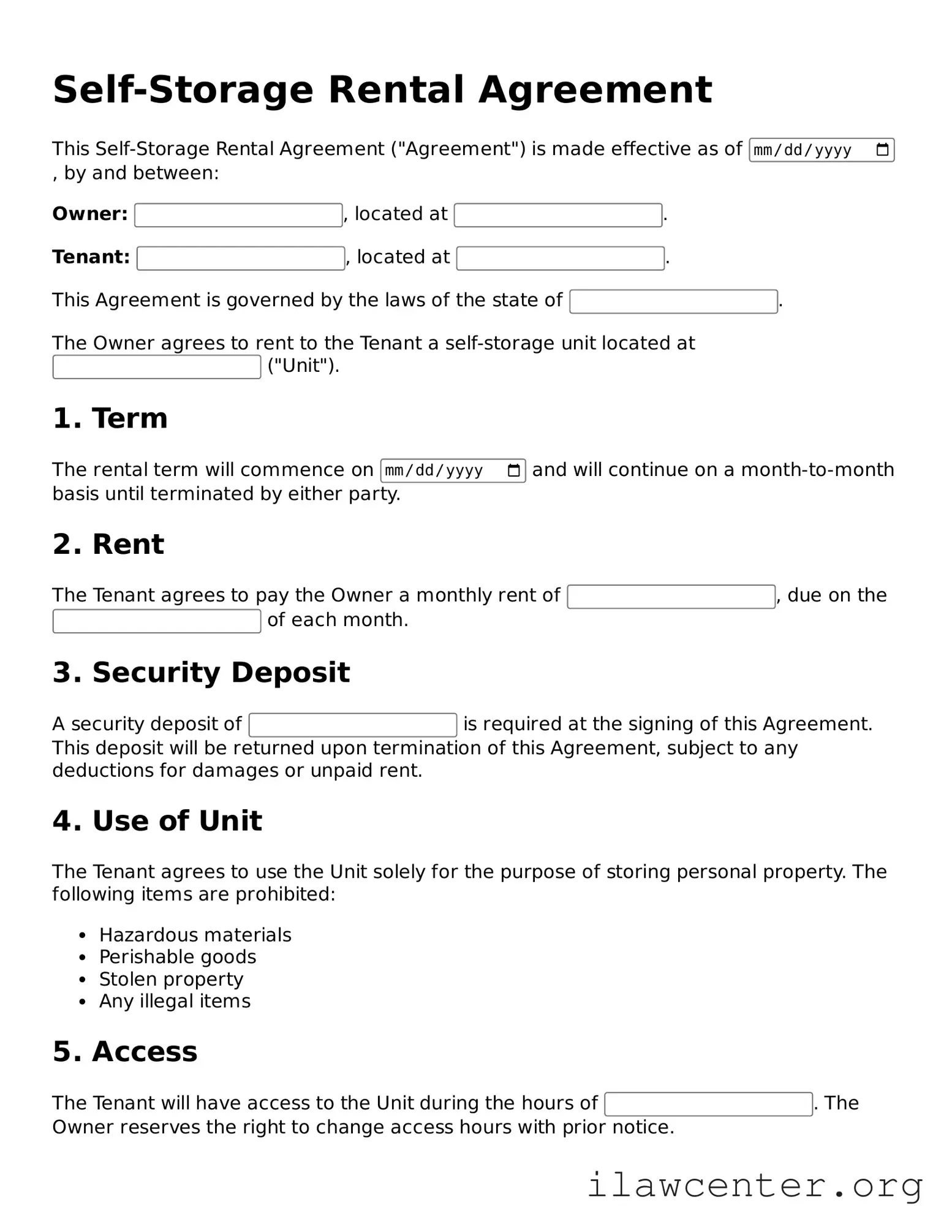
Self-Storage Rental Agreement Preview

Self-Storage Rental Agreement

This Self-Storage Rental Agreement ("Agreement") is made effective as of , by and between:

Owner: , located at .

Tenant: , located at .

This Agreement is governed by the laws of the state of .

The Owner agrees to rent to the Tenant a self-storage unit located at ("Unit").

1. Term

The rental term will commence on and will continue on a month-to-month basis until terminated by either party.

2. Rent

The Tenant agrees to pay the Owner a monthly rent of , due on the of each month.

3. Security Deposit

A security deposit of is required at the signing of this Agreement. This deposit will be returned upon termination of this Agreement, subject to any deductions for damages or unpaid rent.

4. Use of Unit

The Tenant agrees to use the Unit solely for the purpose of storing personal property. The following items are prohibited:

  • Hazardous materials
  • Perishable goods
  • Stolen property
  • Any illegal items

5. Access

The Tenant will have access to the Unit during the hours of . The Owner reserves the right to change access hours with prior notice.

6. Termination

Either party may terminate this Agreement by providing written notice at least days in advance.

7. Liability

The Owner is not liable for any loss or damage to the Tenant's property stored in the Unit. The Tenant is encouraged to obtain insurance for their belongings.

8. Governing Law

This Agreement shall be governed by and construed in accordance with the laws of the state of .

By signing below, both parties agree to the terms outlined in this Self-Storage Rental Agreement.

Owner Signature: ___________________________ Date: ________________

Tenant Signature: ___________________________ Date: ________________

PDF Form Characteristics

Fact Name Description
Purpose The Self-Storage Rental Agreement form outlines the terms and conditions between the storage facility and the renter for the use of a storage unit.
Key Components This agreement typically includes details such as rental fees, payment terms, duration of the rental, and responsibilities of both parties.
State-Specific Forms Each state may have its own version of the Self-Storage Rental Agreement, which must comply with local laws governing rental agreements.
Governing Laws In many states, the governing laws for self-storage agreements include the Uniform Commercial Code (UCC) and specific state statutes related to storage facilities.

Instructions on Utilizing Self-Storage Rental Agreement

Completing the Self-Storage Rental Agreement form is an important step in securing your storage unit. Following these steps will ensure that all necessary information is accurately provided, facilitating a smooth rental process.

  1. Read the entire form carefully. Familiarize yourself with the terms and conditions before filling it out.
  2. Provide your personal information. Fill in your full name, address, phone number, and email address in the designated sections.
  3. Enter the rental period. Specify the start and end dates for your rental agreement.
  4. Select your storage unit size. Indicate the size of the unit you wish to rent, based on your storage needs.
  5. Review payment details. Fill in the payment method, including credit card information or other payment options, as required.
  6. Sign and date the form. Ensure you provide your signature and the date to validate the agreement.

Once you have completed the form, review it for accuracy and completeness. This will help avoid any delays in processing your rental agreement. After ensuring everything is correct, submit the form as instructed by the storage facility.

Important Facts about Self-Storage Rental Agreement

What is a Self-Storage Rental Agreement?

A Self-Storage Rental Agreement is a legal document that outlines the terms and conditions under which a storage facility rents space to a customer. This agreement typically includes details such as the rental period, payment terms, access rights, and the responsibilities of both the renter and the storage facility. It serves to protect both parties by clearly defining their rights and obligations.

What should I look for in a Self-Storage Rental Agreement?

When reviewing a Self-Storage Rental Agreement, it is important to pay attention to several key elements. First, check the duration of the rental period and whether it can be renewed. Next, examine the payment terms, including the rental fee, due dates, and any late fees. Additionally, look for clauses regarding access to your unit, security measures in place, and what happens if you default on payment. Understanding these aspects can help prevent misunderstandings later.

Can I make changes to the Self-Storage Rental Agreement?

Changes to a Self-Storage Rental Agreement are generally not permitted unless both parties agree. If you feel that modifications are necessary, it is best to discuss them with the storage facility management. Any agreed-upon changes should be documented in writing and signed by both parties to ensure clarity and enforceability.

What happens if I fail to pay my storage rent on time?

If you fail to pay your storage rent on time, the storage facility may impose late fees as specified in the agreement. Continued non-payment can lead to additional consequences, such as the facility placing a lien on your belongings or ultimately evicting you from the unit. It is crucial to understand the specific policies regarding late payments as outlined in your rental agreement.

Is my property insured while in storage?

Insurance coverage for your belongings in a storage unit varies by facility. Many storage companies do not provide insurance for your items, making it your responsibility to obtain coverage. Some facilities may offer insurance options for an additional fee. Always inquire about insurance policies and consider your own coverage needs to protect your belongings.

What are my rights as a renter in a Self-Storage Rental Agreement?

As a renter, you have the right to access your unit during the hours specified in the agreement. You are also entitled to a safe and secure storage environment. Additionally, you have the right to be informed of any changes to the terms of the agreement, including rental rates or facility policies. Understanding these rights can empower you as a consumer.

What should I do if I have a dispute with the storage facility?

If a dispute arises with the storage facility, it is advisable to first attempt to resolve the issue directly with management. Open communication can often lead to a satisfactory resolution. If direct negotiation fails, consider reviewing the terms of your rental agreement for any dispute resolution procedures outlined. In some cases, mediation or legal action may be necessary to resolve the matter.
Common mistakes

Filling out a Self-Storage Rental Agreement can seem straightforward, but many people make common mistakes that can lead to misunderstandings or complications later on. One frequent error is not reading the entire agreement before signing. This document contains important terms and conditions that could affect your rental experience. Skimming through it may cause you to miss crucial information.

Another mistake is failing to provide accurate personal information. When you enter your name, address, and contact details, double-check for typos or errors. Incorrect information can lead to issues with communication or billing. It’s essential to ensure that everything is correct and up to date.

People often overlook the importance of understanding the payment terms. Not paying attention to the rental rate, due dates, and acceptable payment methods can create unnecessary stress. Make sure you know when payments are due and how they can be made.

Additionally, some individuals forget to clarify the terms regarding access to their storage unit. The agreement should specify when you can access your belongings. If you need access at unusual hours, confirm that the facility accommodates your needs.

Another common mistake is not asking questions. If any part of the agreement is unclear, don’t hesitate to seek clarification. Ignoring uncertainties can lead to assumptions that may not align with the facility's policies.

Many renters also neglect to review the insurance requirements. Some storage facilities require you to have insurance for your stored items. Failing to understand these requirements could leave you unprotected in case of damage or theft.

Moreover, people sometimes forget to document the condition of their storage unit before moving in. Taking photos or making notes can be beneficial if disputes arise later regarding damages or cleanliness.

Another mistake is not keeping a copy of the signed agreement. Always retain a copy for your records. This will help you reference the terms if any issues come up during your rental period.

Finally, failing to understand the termination policy can lead to unexpected fees or complications. Be sure to know how to properly terminate your rental agreement and what notice is required. Understanding these details can save you time and money in the long run.

Documents used along the form

When renting a self-storage unit, several forms and documents may accompany the Self-Storage Rental Agreement. These documents help clarify the terms of the rental and protect both the renter and the storage facility. Below is a list of common documents that are often used in conjunction with the rental agreement.

  • Inventory List: This document details the items stored in the unit. It helps both parties keep track of what is being stored and can be useful in case of disputes or claims.
  • Access Authorization Form: This form allows the renter to designate additional individuals who may access the storage unit. It ensures that only authorized persons can enter the unit.
  • Insurance Waiver: Many storage facilities require renters to either purchase insurance or sign a waiver. This document clarifies the renter's responsibility for their belongings in case of damage or theft.
  • Payment Agreement: This document outlines the payment terms, including the due date, acceptable payment methods, and any late fees. It helps avoid misunderstandings regarding financial obligations.
  • Rules and Regulations: This document lists the policies governing the use of the storage facility. It includes guidelines on access hours, prohibited items, and maintenance responsibilities.
  • Termination Notice: If a renter decides to end the rental agreement, this document serves as formal notice. It specifies the intended termination date and ensures compliance with any notice periods outlined in the rental agreement.

Understanding these documents can help renters navigate the self-storage process more effectively. Being informed about each form's purpose enhances communication between the renter and the storage facility, fostering a smoother rental experience.

Similar forms

  • Lease Agreement: Similar to a self-storage rental agreement, a lease agreement outlines the terms under which one party rents property from another. Both documents specify duration, payment terms, and responsibilities of each party.
  • Rental Agreement: This document governs the rental of residential or commercial properties. Like the self-storage rental agreement, it details rental amounts, security deposits, and maintenance obligations.
  • Service Agreement: A service agreement outlines the terms under which services are provided. Both agreements require clear terms regarding payment and service expectations, ensuring both parties understand their obligations.
  • Commercial Lease: A commercial lease is specific to business properties. Similar to a self-storage rental agreement, it includes provisions for rent, duration, and use of the space, tailored for business needs.
  • Equipment Rental Agreement: This document governs the rental of equipment. Like the self-storage rental agreement, it specifies rental duration, payment terms, and the condition in which the equipment must be returned.
  • Parking Space Rental Agreement: This agreement covers the rental of parking spaces. Similar to the self-storage rental agreement, it includes terms for payment, duration, and use of the space.
  • Vehicle Storage Agreement: This document is specific to the storage of vehicles. It shares similarities with the self-storage rental agreement, detailing terms of storage, fees, and the responsibilities of both parties.
  • House Sitting Agreement: A house sitting agreement outlines the responsibilities of a house sitter. Like the self-storage rental agreement, it specifies the duration and expectations for care and maintenance of the property.
  • Sublease Agreement: A sublease agreement allows a tenant to rent out their leased space. Similar to a self-storage rental agreement, it includes terms for rent and responsibilities, ensuring clarity for all parties involved.
  • Tenancy Agreement: This document governs the rental of residential properties. Like the self-storage rental agreement, it specifies rental terms, duration, and responsibilities, providing a clear framework for both parties.

Dos and Don'ts

When filling out a Self-Storage Rental Agreement form, it's important to ensure accuracy and clarity. Here are some dos and don'ts to keep in mind:

  • Do read the entire agreement before signing to understand all terms and conditions.
  • Do provide accurate personal information, including your name, address, and contact details.
  • Do specify the type of items you will store to ensure compliance with storage policies.
  • Do ask questions if any part of the agreement is unclear to you.
  • Don't rush through the form; take your time to ensure everything is filled out correctly.
  • Don't omit any required signatures or dates, as this could invalidate the agreement.

Misconceptions

When it comes to self-storage rental agreements, many misconceptions can lead to confusion for renters. Understanding these misconceptions can help individuals make informed decisions. Here are eight common misunderstandings:

  • All self-storage facilities have the same rental agreements. Each facility may have its own unique terms and conditions. It's important to read and understand the specific agreement for the facility you choose.
  • Once signed, the rental agreement cannot be changed. While agreements are binding, some terms may be negotiable. Communication with the facility manager can clarify any concerns.
  • Insurance is included in the rental agreement. Many facilities do not provide insurance coverage. Renters should check whether they need to purchase insurance separately.
  • Self-storage rental agreements are only for long-term rentals. Many facilities offer flexible options, including short-term rentals. It’s wise to ask about the available rental periods.
  • Access to the storage unit is unrestricted. Most facilities have specific access hours. Renters should confirm these hours to avoid inconvenience.
  • The facility is responsible for the security of my belongings. While facilities often have security measures, renters should take precautions and understand their own responsibilities regarding their items.
  • Late fees are not a concern if I communicate with the facility. Communication may help, but most facilities have strict policies regarding late fees. It's best to pay on time to avoid additional charges.
  • All self-storage agreements are the same across states. Laws and regulations can vary by state. Renters should be aware of the specific laws that apply in their location.

By addressing these misconceptions, individuals can better navigate the self-storage rental process and protect their interests.

Key takeaways

When filling out and using the Self-Storage Rental Agreement form, keep these key takeaways in mind:

  1. Read Carefully: Always read the entire agreement before signing. Understanding the terms is crucial.
  2. Provide Accurate Information: Ensure that all personal and payment information is correct to avoid issues later.
  3. Understand Your Responsibilities: Know what is expected of you as a renter, including payment schedules and maintenance of the unit.
  4. Check for Fees: Be aware of any additional fees, such as late payment charges or administrative costs.
  5. Review the Termination Policy: Familiarize yourself with how to terminate the agreement and any notice requirements.
  6. Keep a Copy: After signing, make sure to keep a copy of the agreement for your records.

Following these guidelines will help ensure a smooth renting experience.