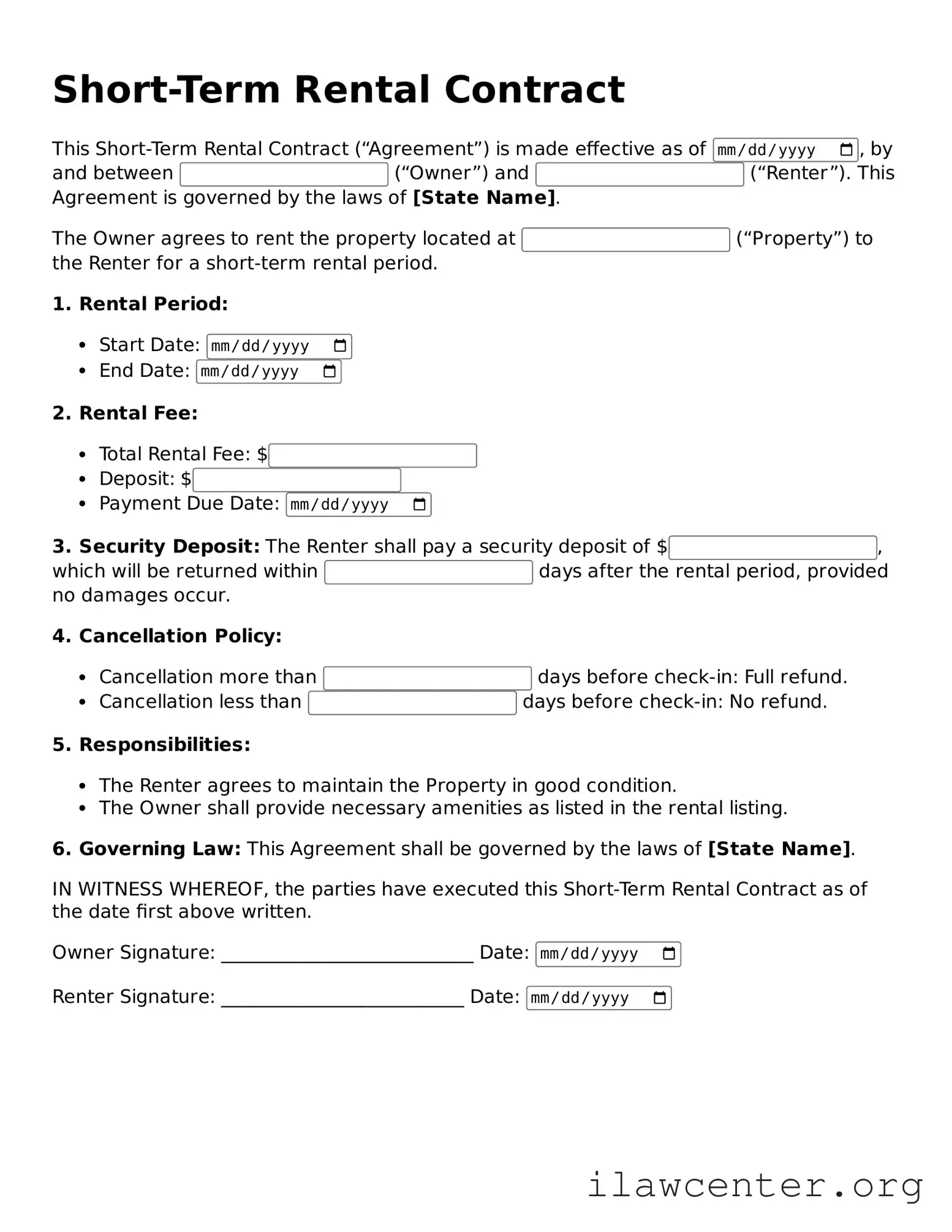
What is a Short-Term Rental Contract?
A Short-Term Rental Contract is a legal agreement between a property owner (or manager) and a guest who wishes to rent the property for a brief period, typically less than 30 days. This contract outlines the terms and conditions of the rental, including payment details, check-in and check-out times, and rules regarding the use of the property. It is designed to protect both parties by clearly stating their rights and responsibilities.
Why is a Short-Term Rental Contract important?
This contract is crucial for several reasons. Firstly, it provides legal protection for both the property owner and the guest. It ensures that both parties understand their obligations and can refer back to the contract if any disputes arise. Additionally, it helps establish trust, as both parties agree to the terms laid out in the document, fostering a positive rental experience.
What should be included in a Short-Term Rental Contract?
A comprehensive Short-Term Rental Contract should include the following key elements: the names and contact information of both parties, the rental property address, the rental period, payment details (including deposits and total fees), cancellation policies, rules for property use, and any additional fees (such as cleaning or security deposits). Including a section on liability can also be beneficial to clarify responsibilities in case of damages or accidents.
How can I modify a Short-Term Rental Contract?
Modifying a Short-Term Rental Contract is possible, but it requires mutual consent from both parties. Any changes should be documented in writing, and both the property owner and guest should sign the revised contract. This ensures that everyone is aware of the changes and agrees to the new terms. It is advisable to keep a copy of the original contract for reference.
What happens if a guest violates the terms of the contract?
If a guest violates the terms of the Short-Term Rental Contract, the property owner has several options. Depending on the severity of the violation, the owner may choose to issue a warning, charge additional fees, or even terminate the rental agreement. It is essential to have clear consequences outlined in the contract to guide actions in such situations. Communication is key; discussing the issue with the guest may lead to a resolution without further escalation.
Is a Short-Term Rental Contract legally binding?
Yes, a Short-Term Rental Contract is considered a legally binding document, provided that it meets certain criteria. Both parties must willingly enter into the agreement, and the terms must be clear and lawful. However, the enforceability of specific clauses may vary based on local laws and regulations. It is advisable to consult local regulations to ensure compliance.
Can a Short-Term Rental Contract be canceled?
Yes, a Short-Term Rental Contract can be canceled, but the process depends on the cancellation policy outlined in the agreement. Typically, the property owner will specify the conditions under which cancellations are allowed and any associated penalties. Guests should review these terms carefully before signing the contract to understand their rights regarding cancellations.
What should I do if I have questions about the Short-Term Rental Contract?
If you have questions about the Short-Term Rental Contract, it is best to discuss them directly with the property owner or manager. They can provide clarification on specific terms and conditions. If further assistance is needed, consulting with a legal professional who specializes in rental agreements can offer additional guidance and ensure that your rights are protected.