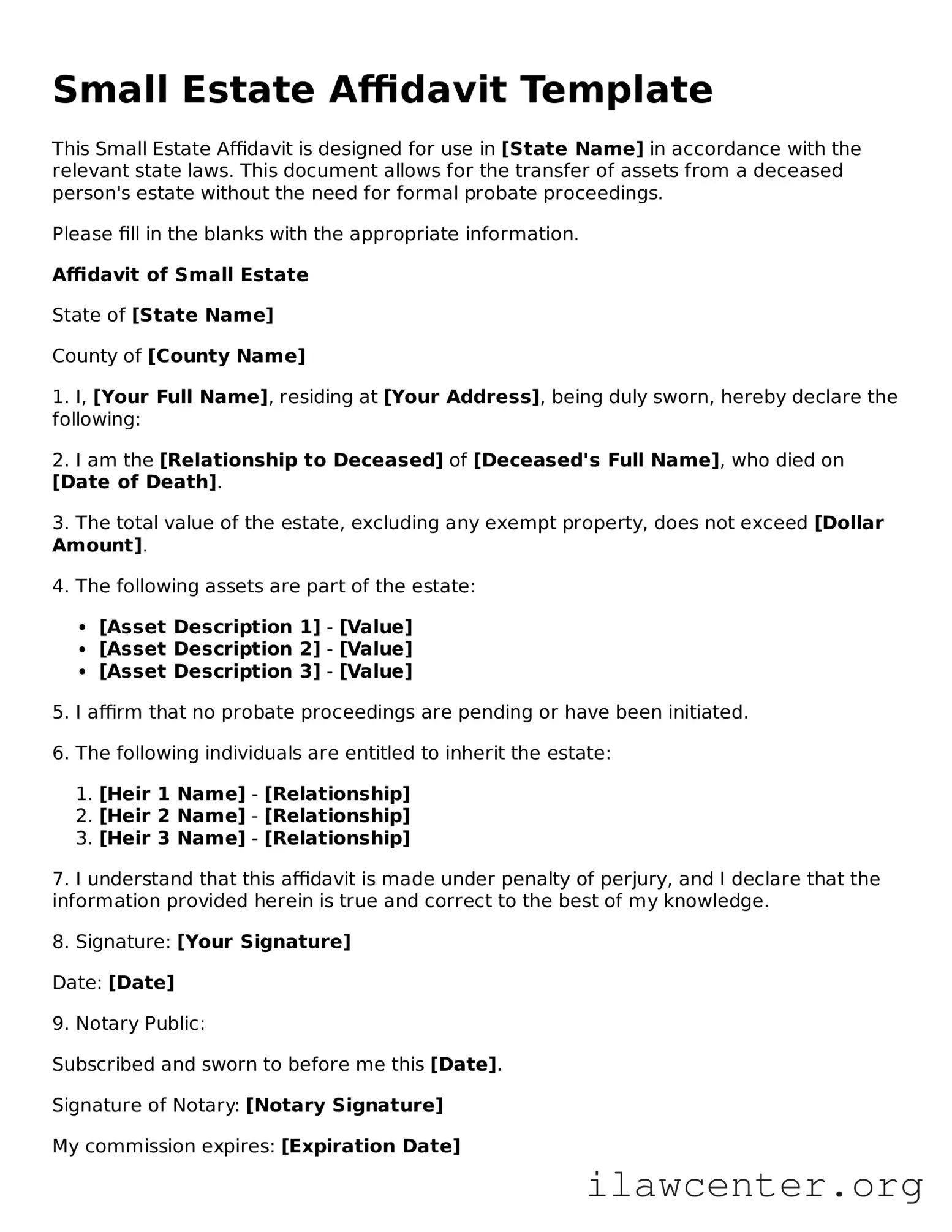
Filling out a Small Estate Affidavit can be a straightforward process, but mistakes often occur that can lead to complications. One common error is failing to include all necessary information. When completing the form, it is crucial to provide accurate details about the deceased, including their full name, date of death, and last known address. Omitting any of this information can delay the process and create confusion.
Another mistake involves not properly identifying the heirs. Each person who is entitled to a share of the estate should be clearly listed. If an heir is overlooked or incorrectly named, it can result in disputes among family members or even legal challenges down the line.
Some individuals forget to sign the affidavit. This may seem minor, but without a signature, the document is not valid. It is essential to ensure that the affidavit is signed in the appropriate section, as this confirms that the information provided is true and accurate.
Additionally, people often neglect to have the affidavit notarized. Many states require that the Small Estate Affidavit be notarized to be legally binding. Without this step, the affidavit may not be accepted by financial institutions or courts, leading to further delays in accessing the estate.
Misunderstanding the limits of a small estate can also lead to errors. Each state has specific thresholds for what qualifies as a small estate. Failing to check these limits can result in filing the affidavit when the estate exceeds the allowable amount, complicating the process.
Another common oversight is not including all required documentation. Supporting documents, such as a death certificate or proof of ownership of assets, may be necessary to validate the claims made in the affidavit. Missing these documents can hinder the processing of the estate.
Some individuals may also misinterpret the role of the Small Estate Affidavit. It is intended to simplify the transfer of assets without going through probate, but it cannot be used for all types of property. Understanding the limitations of the affidavit is essential to avoid using it inappropriately.
In some cases, people may fail to update the affidavit if circumstances change. For instance, if new heirs are discovered or if the estate's assets change, the affidavit should be amended accordingly. Neglecting to do so can create legal complications later.
Finally, individuals sometimes underestimate the importance of consulting with a legal professional. While it is possible to fill out the Small Estate Affidavit independently, seeking guidance can help avoid many of these common pitfalls. A professional can provide valuable insights and ensure that the process is completed correctly and efficiently.