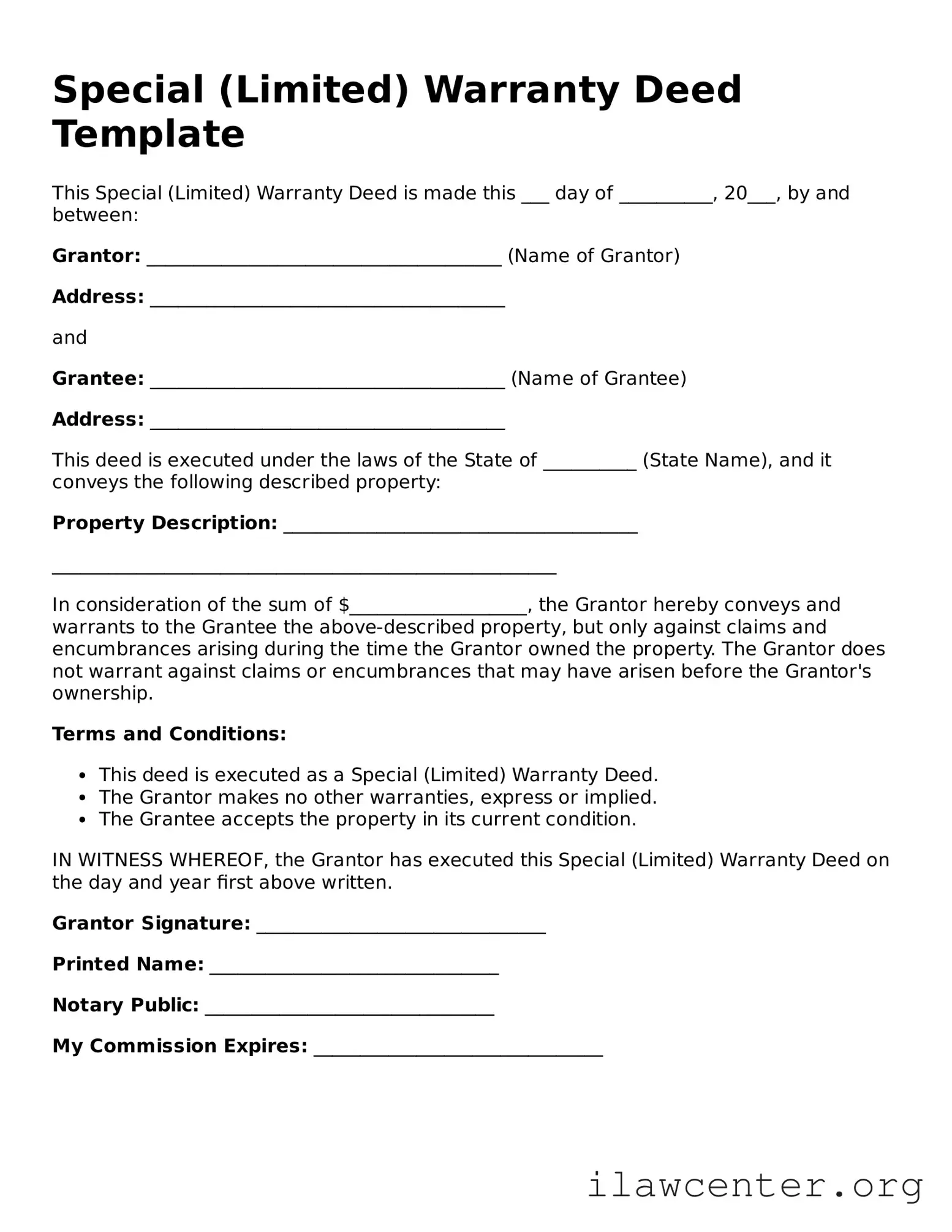
What is a Special (Limited) Warranty Deed?
A Special (Limited) Warranty Deed is a legal document used in real estate transactions. It transfers ownership of property from one party to another while providing limited guarantees about the title. Unlike a general warranty deed, which covers the entire history of the property, a special warranty deed only guarantees that the seller has not caused any title issues during their ownership. This means that the seller is not responsible for any problems that may have occurred before they acquired the property.
When should I use a Special (Limited) Warranty Deed?
This type of deed is often used in specific situations, such as when a property is sold as part of an estate or when a bank forecloses on a property. It can also be appropriate for transactions between family members or when the seller wants to limit their liability. Buyers should consider this deed when they are comfortable accepting the risks associated with potential title issues that may have existed prior to the seller's ownership.
What are the key components of a Special (Limited) Warranty Deed?
A Special Warranty Deed typically includes several important components. First, it identifies the parties involved, including the seller (grantor) and the buyer (grantee). It will also describe the property being transferred, including its legal description. Additionally, the deed will contain the limited warranty clause, which specifies the extent of the seller's guarantees regarding the title. Finally, the document must be signed by the seller and may need to be notarized to be legally valid.
What are the advantages of using a Special (Limited) Warranty Deed?
One of the main advantages is the limited liability for the seller. They are only responsible for title issues that arose during their ownership, not before. This can make it easier for sellers to transfer property without taking on additional risk. For buyers, a Special Warranty Deed can be a quicker and less expensive option than a general warranty deed, especially in situations where title insurance is available to cover potential issues.
Are there any disadvantages to using a Special (Limited) Warranty Deed?
Yes, there are some disadvantages to consider. Buyers may face more risk since the seller is not responsible for any title issues that existed before their ownership. This means that if a problem arises, the buyer may need to resolve it on their own. Additionally, some buyers may find it harder to secure financing or insurance for properties transferred via a Special Warranty Deed, as lenders may prefer a more comprehensive guarantee of title.
How does a Special (Limited) Warranty Deed differ from a Quitclaim Deed?
A Quitclaim Deed transfers ownership without any guarantees about the title. In contrast, a Special Warranty Deed offers limited protections for the buyer, specifically regarding the seller's period of ownership. While a Quitclaim Deed may be used in informal transactions or to clear up title issues, a Special Warranty Deed is more formal and provides some assurance about the property's title during the seller's ownership.
Is it necessary to have a lawyer review a Special (Limited) Warranty Deed?
While it is not legally required, having a lawyer review the deed is highly recommended. A legal professional can help ensure that the document is properly prepared and that all necessary information is included. They can also provide guidance on any potential risks associated with the transaction and help the buyer understand their rights and responsibilities. This can be particularly important in complex transactions or when significant amounts of money are involved.