

Sports Physical PDF Template

Sports Physical PDF Template

The Sports Physical Form is a crucial document that ensures athletes are medically fit to participate in sports activities. It collects essential information about the athlete's health history, emergency contacts, and any medical alerts. Completing this form is vital for the safety and well-being of young athletes, so be sure to fill it out by clicking the button below.

Article Guide

Participating in sports can be an exhilarating experience for young athletes, but ensuring their health and safety is paramount. The Sports Physical form serves as a crucial tool in this process, gathering essential information about an athlete's medical history and current health status. This form includes details such as the athlete's name, date of birth, and contact information for parents or guardians, ensuring that emergency contacts are readily available. It also prompts families to disclose any medical alerts, like allergies or chronic conditions, that could affect athletic performance. A series of health history questions addresses potential risks, such as previous injuries, family medical history, and any ongoing health concerns. Finally, a physician conducts a thorough physical examination, assessing vital signs and various body systems to determine the athlete's readiness for competition. Completing the Sports Physical form not only helps identify any health issues but also fosters a proactive approach to the athlete's well-being, paving the way for a safe and enjoyable sports experience.

Sports Physical Preview

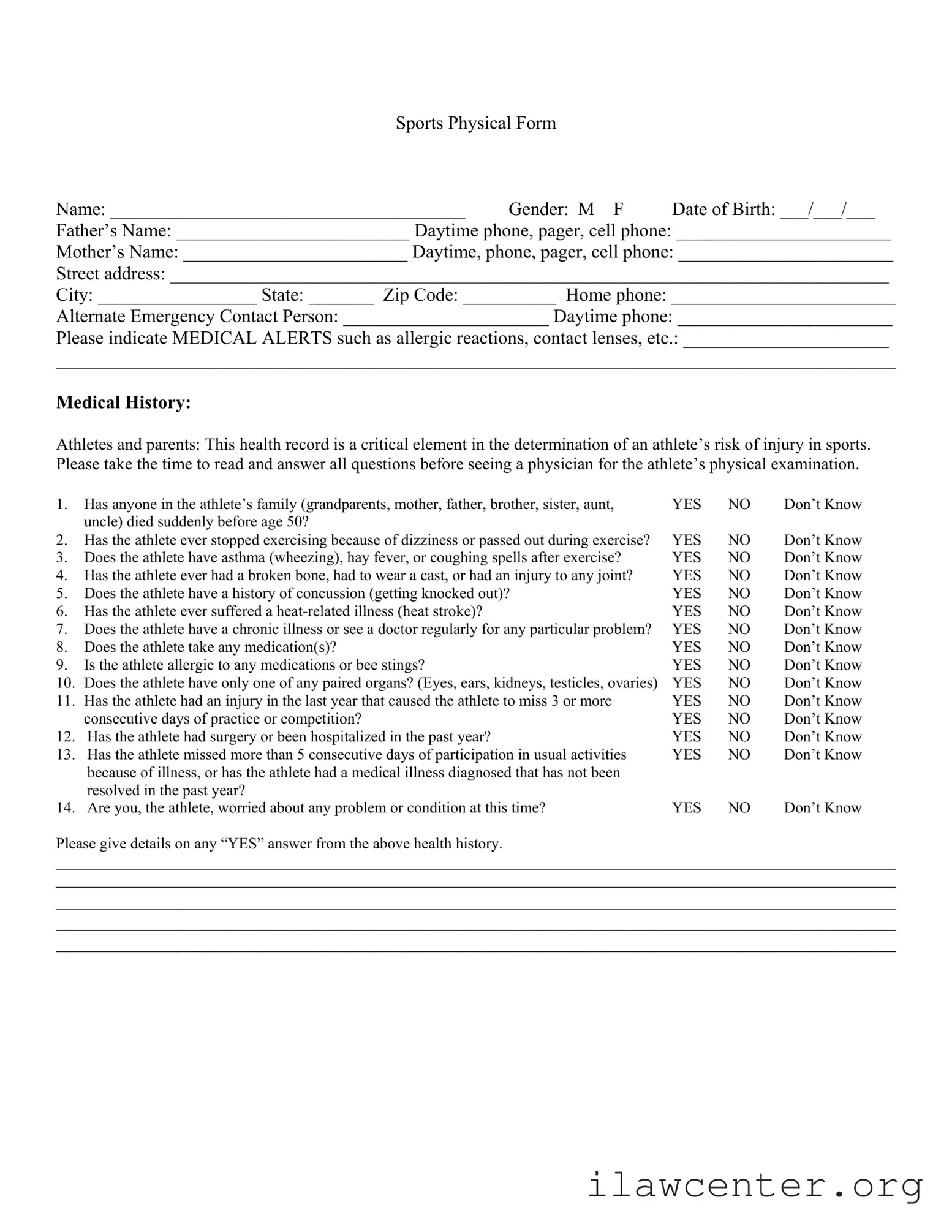
Sports Physical Form
Name: ______________________________________ Gender: M F Date of Birth: ___/___/___
Father’s Name: _________________________ Daytime phone, pager, cell phone: _______________________
Mother’s Name: ________________________ Daytime, phone, pager, cell phone: _______________________
Street address: _____________________________________________________________________________
City: _________________ State: _______ Zip Code: __________ Home phone: ________________________
Alternate Emergency Contact Person: ______________________ Daytime phone: _______________________
Please indicate MEDICAL ALERTS such as allergic reactions, contact lenses, etc.: ______________________
__________________________________________________________________________________________
Medical History:
Athletes and parents: This health record is a critical element in the determination of an athlete’s risk of injury in sports.
Please take the time to read and answer all questions before seeing a physician for the athlete’s physical examination.
1. Has anyone in the athlete’s family (grandparents, mother, father, brother, sister, aunt, YES NO Don’t Know
uncle) died suddenly before age 50?
2. Has the athlete ever stopped exercising because of dizziness or passed out during exercise? YES NO Don’t Know
3. Does the athlete have asthma (wheezing), hay fever, or coughing spells after exercise? YES NO Don’t Know
4. Has the athlete ever had a broken bone, had to wear a cast, or had an injury to any joint? YES NO Don’t Know
5. Does the athlete have a history of concussion (getting knocked out)? YES NO Don’t Know
6. Has the athlete ever suffered a heat-related illness (heat stroke)? YES NO Don’t Know
7. Does the athlete have a chronic illness or see a doctor regularly for any particular problem? YES NO Don’t Know
8. Does the athlete take any medication(s)? YES NO Don’t Know
9. Is the athlete allergic to any medications or bee stings? YES NO Don’t Know
10. Does the athlete have only one of any paired organs? (Eyes, ears, kidneys, testicles, ovaries) YES NO Don’t Know
11. Has the athlete had an injury in the last year that caused the athlete to miss 3 or more YES NO Don’t Know
consecutive days of practice or competition? YES NO Don’t Know
12. Has the athlete had surgery or been hospitalized in the past year? YES NO Don’t Know
13. Has the athlete missed more than 5 consecutive days of participation in usual activities YES NO Don’t Know
because of illness, or has the athlete had a medical illness diagnosed that has not been
resolved in the past year?
14. Are you, the athlete, worried about any problem or condition at this time? YES NO Don’t Know
Please give details on any “YES” answer from the above health history.
____________________________________________________________________________________________________________
____________________________________________________________________________________________________________
__________________________________________________________________________________________
__________________________________________________________________________________________
__________________________________________________________________________________________
PHYSICAL EXAM – TO BE COMPLETED BY PHYSICIAN
Height __________ Weight __________ Pulse __________ Blood Pressure __________
Vision: R _____ / _____ uncorrected R _____ / _____ corrected L _____ / _____ uncorrected L _____ / _____ corrected
Normal Abnormal Findings Initials
1. Eyes
2. Ears, Nose, Throat
3. Mouth & Teeth
4. Neck
5. Cardiovascular
6. Chest & Lungs
7. Abdomen
8. Skin
9. Genitalia-Hernia (male)
10. Muskuloskeletal: ROM, strength, etc.
a. neck
b. spine
c. shoulders
d. arms/ hands
e. hips
f. thighs
g. knees
h. ankles
i. feet
11. Neuromuscular
Please Print/ Stamp
Physician’s Name ___________________________________________________________________________________
Street Address _____________________________________________________________________________________
City, State, Zip Code ________________________________________________________________________________
Telephone _________________________________________________________________________________________
I certify that I have examined this athlete and found him/her medically qualified to participate in sports. I also certify that
I am a licensed medical physician, physician’s assistant, or family nurse practitioner. (Doctor of Chiropractic Medicine is
not satisfactory.)
Physician Signature __________________________________________________________ Date __________________
PARTICIPATION RESTRICTIONS: _________________________________________________________________
__________________________________________________________________________________________________
__________________________________________________________________________________________________

File Properties

Fact Name Description
Purpose The Sports Physical Form is designed to assess an athlete's health and fitness level before participating in sports activities. It aims to identify any potential health risks that could lead to injuries.
Required Information The form requires personal details such as the athlete's name, gender, date of birth, and contact information for parents or guardians. This information is crucial for emergency situations.
Medical History A comprehensive medical history section includes questions about family health issues, past injuries, and current medications. This helps physicians evaluate the athlete's readiness for sports.
Physical Examination A licensed medical professional must complete a physical examination section, which includes measurements like height, weight, and blood pressure, along with assessments of various body systems.
State-Specific Requirements Many states have specific laws governing the completion of sports physical forms. For example, in California, Education Code Section 49475 mandates that students must have a physical examination before participating in school sports.
Signature Requirement The form must be signed by a licensed physician, physician’s assistant, or family nurse practitioner, certifying that the athlete is medically qualified to participate in sports activities.

Instructions on Utilizing Sports Physical

Completing the Sports Physical form is an essential step in ensuring that an athlete is ready to participate in sports safely. The information provided will be reviewed by a physician during the examination. Follow the steps below carefully to fill out the form accurately.

  1. Begin with the athlete's personal information: Write the athlete's full name, gender, and date of birth in the designated spaces.
  2. Enter parent or guardian details: Fill in the names and contact numbers for both the father and mother, including daytime phone, pager, or cell phone.
  3. Provide the athlete's address: Clearly write the street address, city, state, and zip code.
  4. List emergency contact: Name an alternate emergency contact person and provide their daytime phone number.
  5. Indicate any medical alerts: Note any allergies, reactions, or special medical conditions that the physician should be aware of.
  6. Complete the medical history section: Answer each question truthfully by marking "YES," "NO," or "Don’t Know." Be thorough, as this information is crucial for the physician.
  7. Provide details for any "YES" answers: If applicable, elaborate on any affirmative responses to the medical history questions.
  8. Leave the physical exam section blank: This part will be filled out by the physician during the examination.
  9. Physician's information: The physician will print or stamp their name, address, and telephone number in the appropriate spaces.
  10. Sign and date: The physician must sign and date the form, certifying that the athlete is medically qualified to participate in sports.
  11. Participation restrictions: If there are any restrictions or recommendations, the physician will note them in the designated area.

Once the form is completed, it is important to schedule an appointment with a physician for the physical examination. Ensure that all sections are filled out accurately to facilitate a smooth process. Bring the form to the appointment and discuss any concerns with the physician.

Important Facts about Sports Physical

What is the purpose of the Sports Physical form?

The Sports Physical form is designed to assess an athlete's health and fitness level before participating in sports. It helps identify any potential health risks or medical conditions that could affect performance or safety during physical activities. By collecting information about the athlete's medical history and conducting a physical examination, the form ensures that the athlete is cleared to compete safely.

Who needs to fill out the Sports Physical form?

Typically, the Sports Physical form must be completed by all student-athletes participating in school sports. This includes children and teenagers involved in organized sports at schools, clubs, or recreational leagues. Parents or guardians usually assist younger athletes in filling out the form, providing necessary medical history and emergency contact information.

What information is required on the Sports Physical form?

The form requires basic personal information such as the athlete's name, date of birth, and contact details for parents or guardians. It also includes questions about the athlete's medical history, such as any previous injuries, chronic illnesses, or allergies. Additionally, a licensed medical professional must conduct a physical examination and provide their findings on the form. This thorough documentation helps ensure the athlete's well-being.

How often should the Sports Physical form be completed?

Most schools and sports organizations require the Sports Physical form to be completed annually. This ensures that any changes in the athlete's health are documented and assessed before each sports season. Keeping the form up-to-date is crucial, as it helps protect the athlete and ensures they are fit to participate in physical activities safely.

Common mistakes

Filling out a Sports Physical form is a crucial step for athletes, ensuring their safety and readiness for sports participation. However, many people make mistakes that can lead to complications. One common error is providing incomplete or inaccurate personal information. For instance, omitting a parent's contact number or failing to list an emergency contact can hinder timely communication in case of an incident. Always double-check that all fields are filled out completely and accurately.

Another frequent mistake involves neglecting to disclose relevant medical history. Athletes or their guardians might overlook answering questions about previous injuries or conditions. This can be particularly problematic if the athlete has a history of concussions or asthma, as these conditions can significantly impact their ability to participate safely. It's essential to provide honest and thorough answers to all medical questions.

Some individuals also misinterpret the medical alert section. This section is designed to highlight any allergies or medical conditions that could affect the athlete during physical activities. Failing to include vital information, such as medication allergies or chronic illnesses, can pose serious risks. Parents and athletes should take the time to discuss and document any medical alerts clearly.

Lastly, many people underestimate the importance of the physical examination section. After completing the form, it is essential to ensure that a licensed physician conducts the physical exam. Some may skip this step or rely on outdated information, which can jeopardize the athlete's health and safety. Athletes should schedule their physicals well in advance and ensure that all results are documented properly.

Documents used along the form

The Sports Physical form is an essential document for athletes, ensuring their health and readiness for participation in sports. However, several other forms and documents often accompany it, providing additional information and support for the athlete's health and safety. Below is a list of commonly used documents.

  • Medical History Questionnaire: This form collects detailed information about the athlete's past medical conditions, surgeries, and family health history. It aids physicians in assessing potential risks.
  • Consent to Treat Form: This document grants permission for medical professionals to provide treatment to the athlete in case of an emergency. It typically requires a parent or guardian's signature for minors.
  • Immunization Records: This record lists the vaccinations the athlete has received. Many sports programs require proof of certain immunizations to protect the health of all participants.
  • Emergency Contact Information: This form provides vital contact details for individuals who should be reached in case of an emergency during practice or competition.
  • Release of Liability Waiver: Athletes or their guardians sign this document to acknowledge the risks associated with sports participation. It typically releases the organization from legal claims in the event of injury.
  • Insurance Information Form: This document collects details about the athlete's health insurance coverage. It is important for managing medical expenses in case of injury.
  • Parental Consent Form: This form is required for minors, allowing them to participate in sports activities. It usually includes acknowledgment of the risks involved.
  • Return to Play Form: If an athlete has been injured, this document is necessary to confirm that they are medically cleared to resume participation in sports activities.

These forms work together to ensure that athletes are healthy, safe, and legally protected while participating in sports. Proper completion and submission of these documents are crucial for a smooth and secure athletic experience.

Similar forms

  • Pre-Participation Physical Evaluation (PPE): Like the Sports Physical form, the PPE assesses an athlete's health before they engage in sports. It includes a medical history review and a physical examination to identify any potential health issues that could affect performance or safety.
  • Medical History Questionnaire: This document collects detailed information about an athlete's past health issues, family medical history, and current health status. It serves a similar purpose to the Sports Physical form by identifying risks and ensuring the athlete is fit for participation.
  • Emergency Contact Form: This form provides essential contact information for emergencies, similar to the Sports Physical form's section for emergency contacts. It ensures that appropriate individuals can be reached if an athlete experiences a medical issue during sports activities.
  • Informed Consent for Sports Participation: This document outlines the risks associated with sports participation and requires the athlete and their guardians to acknowledge these risks. It parallels the Sports Physical form by ensuring that athletes and their families are informed and consenting to participate in sports.

Dos and Don'ts

When filling out the Sports Physical form, attention to detail is crucial. Here are four important things to consider:

  • Do ensure all personal information is accurate and complete. This includes names, contact numbers, and addresses.
  • Do provide detailed answers to the medical history questions. This information is essential for assessing the athlete's health risks.
  • Don't leave any sections blank. Every part of the form must be filled out to avoid delays in processing.
  • Don't withhold any relevant medical information. Transparency is key to ensuring the athlete's safety.

Misconceptions

Misconceptions about the Sports Physical form can lead to confusion for athletes and their families. Here are ten common misunderstandings:

  • The Sports Physical form is optional. Many people believe that the form is not necessary, but it is often required by schools and sports organizations to ensure the athlete's safety.
  • Only athletes with existing conditions need a Sports Physical. This is incorrect. All athletes should complete the form to assess their overall health and readiness for sports.
  • The form is only about medical history. While medical history is important, the form also includes a physical examination by a physician to evaluate the athlete's current health.
  • A parent can fill out the form without consulting a physician. This is a misconception. The form must be completed by a physician after a thorough examination of the athlete.
  • Once the form is submitted, it never needs to be updated. In reality, the form should be updated annually or whenever there are significant changes in the athlete’s health.
  • All physicians can sign the Sports Physical form. Only licensed medical physicians, physician assistants, or family nurse practitioners can complete and sign the form.
  • It’s enough to just check "no" on all health questions. Athletes and parents should provide honest answers, as any "yes" responses need further explanation for safety.
  • The physical exam is a quick process. The exam can take time, as it involves a detailed assessment of various health aspects, not just a brief check-up.
  • Vision tests are not important. Vision assessments are crucial, as they can impact an athlete's performance and safety during sports activities.
  • The Sports Physical form guarantees the athlete will be injury-free. This is a myth. The form helps identify risks but cannot guarantee that injuries will not occur.

Key takeaways

Completing the Sports Physical form is an essential step in ensuring the safety and well-being of young athletes. Here are some key takeaways to consider:

  • Accurate Information: Ensure that all personal details, including name, date of birth, and contact information, are filled out accurately. This information is crucial for emergency situations.
  • Medical Alerts: Clearly indicate any medical alerts, such as allergies or existing conditions, to inform healthcare providers and coaches.
  • Thorough Medical History: Carefully review and answer all medical history questions. This helps identify any potential risks that could affect the athlete's participation in sports.
  • Consultation with a Physician: Schedule an appointment with a qualified physician to complete the physical examination section. The physician will assess the athlete's health and fitness for sports.
  • Documentation of Findings: The physician must document their findings, including height, weight, and any abnormalities observed during the examination.
  • Participation Restrictions: If there are any restrictions on the athlete’s participation, these should be clearly noted by the physician to ensure proper adherence to safety protocols.
  • Review Before Submission: Before submitting the form, review it thoroughly to ensure that all sections are complete and accurate. This will help avoid delays in participation.

By following these guidelines, parents and athletes can work together to ensure a safe and successful sports experience.