
Swimming Pool Inspection PDF Template

Swimming Pool Inspection PDF Template

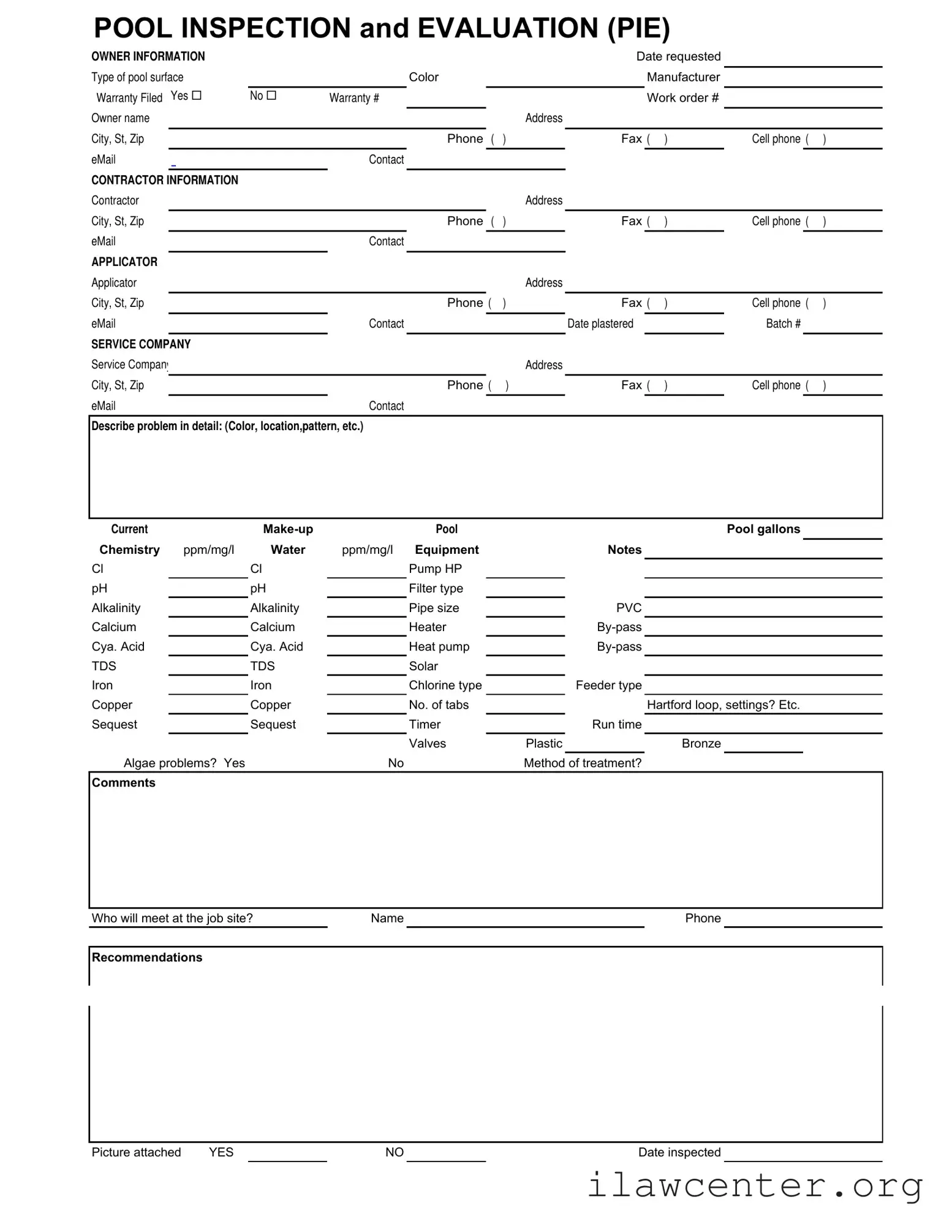
The Swimming Pool Inspection form is a vital tool designed to assess the condition and safety of your swimming pool. It gathers essential information about the pool's surface, equipment, and any existing issues to ensure proper maintenance and compliance with safety standards. For a thorough evaluation, please fill out the form by clicking the button below.

Article Guide

When it comes to maintaining the safety and functionality of swimming pools, the Swimming Pool Inspection form serves as an essential tool for both pool owners and contractors. This comprehensive document gathers vital information about the pool, including the owner's details, such as name, address, and contact information, ensuring that communication remains clear and effective. It also captures specifics about the pool itself, like its surface type, color, and manufacturer, along with any existing warranties. The form prompts contractors to provide their contact information, ensuring that all parties involved are well-informed. Additionally, it includes sections for describing any problems in detail, allowing for a thorough evaluation of the pool's condition. Key technical data, such as pool gallons, water chemistry, equipment specifications, and treatment methods, are meticulously documented. This attention to detail not only aids in diagnosing issues but also facilitates effective communication between the owner and service professionals. Ultimately, the Swimming Pool Inspection form is designed to ensure that every aspect of pool care is addressed, promoting a safe and enjoyable swimming environment for all.

Swimming Pool Inspection Preview

Color Manufacturer
Warranty Filed
Yes No
Warranty # Work order #
Owner name Address
City, St, Zip Phone ( ) Fax ( ) Cell phone ( )
eMail Contact
Contractor Address
City, St, Zip Phone ( ) Fax ( ) Cell phone ( )
eMail Contact
Applicator Address
City, St, Zip Phone ( ) Fax ( ) Cell phone ( )
eMail Contact Date plastered Batch #
Service Compan
y
Address
City, St, Zip Phone ( ) Fax ( ) Cell phone ( )
eMail Contact
Current Make-up Pool
Chemistry ppm/mg/l Water ppm/mg/l Equipment Notes
Cl Cl Pump HP
pH pH Filter type
Alkalinity Alkalinity Pipe size PVC
Calcium Calcium Heater By-pass
Cya. Acid Cya. Acid Heat pump By-pass
TDS TDS Solar
Iron Iron Chlorine type Feeder type
Copper Copper No. of tabs
Sequest Sequest Timer Run time
Valves Plastic Bronze
No
Who will meet at the job site? Name Phone
Picture attached YES NO
Describe problem in detail: (Color, location,pattern, etc.)
Pool gallons
Date inspected
Date requestedOWNER INFORMATION
POOL INSPECTION and EVALUATION (PIE)
Comments
Recommendations
Algae problems? Yes Method of treatment?
Type of pool surface
CONTRACTOR INFORMATION
APPLICATOR
SERVICE COMPANY
Hartford loop, settings? Etc.

File Properties

Fact Name Details
Purpose of the Form The Swimming Pool Inspection form is designed to evaluate the condition and safety of swimming pools. It helps identify any issues that need addressing to ensure compliance with health and safety standards.
Owner Information Essential details about the pool owner are collected, including name, address, and contact information. This information is crucial for follow-up and communication regarding the inspection results.
Contractor and Applicator Details The form requires information about the contractor and applicator involved. This includes their contact details, which allows for accountability and traceability of work performed.
State-Specific Regulations Each state may have specific laws governing swimming pool inspections. For example, California's Health and Safety Code Section 116025 outlines the requirements for pool safety inspections.
Problem Description Section A section is dedicated to describing any problems with the pool. This allows for a thorough assessment and ensures that all concerns are documented for future reference.

Instructions on Utilizing Swimming Pool Inspection

Filling out the Swimming Pool Inspection form is essential for ensuring that all necessary information is collected accurately. This form helps streamline the inspection process and ensures that the pool meets safety and maintenance standards. Follow the steps below to complete the form effectively.

  1. Owner Information: Fill in the date requested, type of pool surface, color, manufacturer, and warranty details. Indicate if the warranty has been filed and provide the warranty number and work order number.
  2. Owner Details: Enter the owner's name, address, city, state, zip code, phone number, fax number, cell phone number, and email address.
  3. Contractor Information: Provide the contractor's name, address, city, state, zip code, phone number, fax number, cell phone number, and email address.
  4. Applicator Information: Fill in the applicator's name, address, city, state, zip code, phone number, fax number, cell phone number, and email address.
  5. Date Plastered: Enter the date the pool was plastered and the batch number.
  6. Service Company Information: Include the service company's name, address, city, state, zip code, phone number, fax number, cell phone number, and email address.
  7. Problem Description: Describe the problem in detail, including color, location, and pattern.
  8. Current Pool Information: Fill in the pool's gallon capacity, chemistry levels (ppm/mg/l), and equipment notes.
  9. Equipment Details: Provide information on chlorine levels, pump horsepower, pH levels, filter type, alkalinity, pipe size, calcium levels, heater details, and any by-pass systems.
  10. TDS and Chemical Levels: Enter TDS readings, and provide details on iron and copper levels, including feeder types and the number of tabs used.
  11. Algae Issues: Indicate if there are any algae problems and the method of treatment used.
  12. Job Site Meeting: Specify who will meet at the job site, including their name and phone number.
  13. Recommendations: Provide any recommendations and check if a picture is attached.
  14. Date Inspected: Finally, fill in the date when the inspection took place.

Important Facts about Swimming Pool Inspection

What is the purpose of the Swimming Pool Inspection form?

The Swimming Pool Inspection form is designed to gather essential information about a pool's condition, maintenance, and any issues that may need addressing. It serves as a comprehensive record for both the pool owner and the contractor involved in the inspection process.

What information is required from the pool owner?

The pool owner must provide their name, address, phone numbers, and email address. Additionally, details about the pool, such as its surface type, color, manufacturer, warranty status, and work order number, are necessary for a complete assessment.

What details should the contractor include in the form?

The contractor needs to fill out their contact information, including address, phone numbers, and email. This allows for clear communication between the contractor and the pool owner regarding inspection findings and recommendations.

What specific information about the pool's condition is requested?

The form asks for a detailed description of any problems, including color, location, and pattern of issues observed. It also requests current water chemistry readings, equipment details, and any algae problems, which are crucial for assessing the pool's health.

How is water chemistry evaluated in the form?

Water chemistry is evaluated through various parameters, including chlorine levels, pH, alkalinity, calcium hardness, and total dissolved solids (TDS). These readings help determine the pool's balance and overall water quality.

What role does the service company play in the inspection?

The service company is responsible for conducting the inspection and providing their contact details in the form. Their expertise is vital in diagnosing issues and recommending necessary repairs or maintenance actions.

What happens if algae problems are identified?

If algae problems are identified, the form allows the inspector to note the treatment method used. This information helps in tracking the effectiveness of treatments and ensuring proper follow-up actions are taken.

How can the inspection findings be documented?

Inspection findings can be documented through comments and recommendations included in the form. Additionally, attaching pictures can provide visual evidence of the pool's condition, aiding in future assessments.

Who should be present at the job site during the inspection?

The form allows for the designation of a person who will meet at the job site. This ensures that communication is streamlined and any questions or concerns can be addressed on-site during the inspection process.

Common mistakes

Filling out the Swimming Pool Inspection form accurately is crucial for ensuring proper evaluation and service. However, many individuals make common mistakes that can lead to confusion or delays. Here are eight mistakes to avoid when completing this important document.

One frequent error is failing to provide complete owner information. Missing details such as the owner's name, address, or contact information can hinder communication and delay service. Always double-check that all fields are filled out accurately before submitting the form.

Another mistake involves neglecting to specify the type of pool surface. This information is essential for the contractor to understand the specific requirements for inspection. Without this detail, the inspection may not be thorough, leading to potential issues being overlooked.

People often forget to indicate whether the warranty has been filed. This checkbox is important because it informs the inspector about any existing coverage that may affect the service needed. Omitting this information can result in unnecessary costs or complications during repairs.

Additionally, failing to describe the problem in detail is a common oversight. Providing a clear and thorough description, including color, location, and pattern of any issues, allows the inspector to better understand the situation. Vague descriptions can lead to misunderstandings and inadequate inspections.

Many individuals also overlook the importance of including current chemistry readings. Accurate data on pool chemistry, such as chlorine and pH levels, is vital for assessing the pool's condition. Missing this information can prevent the inspector from making informed recommendations.

Another mistake is not listing the equipment details properly. Information about the pump, filter type, and heater is crucial for a comprehensive evaluation. If these details are incomplete or incorrect, it may lead to improper service or equipment recommendations.

People sometimes fail to answer the question regarding algae problems. Indicating whether there are algae issues, along with the method of treatment, is important for the inspector to provide the right solutions. Ignoring this question can result in ineffective treatments being recommended.

Finally, forgetting to include who will meet at the job site can create logistical challenges. Providing a contact name and phone number ensures that the inspector knows who to reach out to upon arrival. This small detail can significantly improve the efficiency of the inspection process.

Documents used along the form

When conducting a swimming pool inspection, several additional forms and documents are often utilized to ensure a thorough evaluation and compliance with safety regulations. Each document serves a specific purpose, contributing to the overall understanding of the pool's condition and maintenance needs. Below is a list of commonly used forms that accompany the Swimming Pool Inspection form.

  • Pool Maintenance Log: This document tracks the routine maintenance performed on the pool, including cleaning schedules, chemical treatments, and repairs. It helps identify patterns in pool care and can highlight recurring issues.
  • Water Quality Test Results: This form records the results of water quality tests, including pH levels, chlorine concentration, and alkalinity. Regular testing is crucial for maintaining safe swimming conditions and can guide necessary adjustments.
  • Service Agreement: This contract outlines the terms between the pool owner and the service company. It details the scope of work, payment terms, and responsibilities of each party, ensuring clarity and accountability.
  • Warranty Documentation: This includes information regarding warranties for pool equipment and surfaces. It specifies coverage details, expiration dates, and any conditions that must be met for claims, providing peace of mind for the owner.
  • Incident Report Form: If any accidents or injuries occur at the pool, this form documents the details of the incident. It is essential for liability purposes and can assist in future safety measures.
  • Equipment Inventory List: This document catalogs all pool equipment, such as pumps, filters, and heaters. It helps in tracking the condition and maintenance history of each item, which is vital for effective management.
  • Permit Application: If renovations or major repairs are planned, a permit application may be required. This form ensures compliance with local regulations and safety standards before work begins.
  • Inspection Checklist: This checklist serves as a guide during the inspection process. It outlines specific areas to evaluate, ensuring that no critical aspect is overlooked during the assessment.
  • Customer Feedback Form: After service completion, this form gathers feedback from the pool owner about their experience. It can provide valuable insights for improving service quality and customer satisfaction.

Utilizing these forms alongside the Swimming Pool Inspection form creates a comprehensive approach to pool management. Each document plays a vital role in ensuring that the pool remains safe, functional, and enjoyable for all users.

Similar forms

  • Home Inspection Report: Like the Swimming Pool Inspection form, this document assesses the condition of a property. It includes details about various systems, such as plumbing and electrical, and identifies any issues that may need attention.
  • Building Inspection Checklist: This checklist serves a similar purpose by evaluating the structural integrity and safety of a building. It often includes information on materials used, potential hazards, and compliance with local codes.
  • Environmental Assessment Report: This document evaluates environmental conditions related to a property. It may cover aspects such as soil quality and water contamination, paralleling the Swimming Pool Inspection's focus on water quality and safety.
  • HVAC Inspection Report: This report assesses heating, ventilation, and air conditioning systems. It shares similarities in format and detail, focusing on the operational status and maintenance needs of the HVAC system.
  • Electrical Inspection Report: This document reviews the electrical systems in a building, ensuring safety and compliance. It often includes similar owner and contractor information, along with detailed findings and recommendations.
  • Fire Safety Inspection Report: This report evaluates fire safety measures in a building. It includes checks for alarms, extinguishers, and escape routes, akin to the safety assessments found in the Swimming Pool Inspection form.
  • Roof Inspection Report: Like the Swimming Pool Inspection, this document assesses the condition of a specific area of a property. It details any damage, necessary repairs, and overall maintenance recommendations.

Dos and Don'ts

When filling out the Swimming Pool Inspection form, attention to detail is crucial. Here are some guidelines to help ensure the process goes smoothly.

  • Do provide accurate and complete owner information. This includes the owner's name, address, and contact details. Incomplete information can lead to delays in processing.
  • Do describe any problems in detail. Be specific about the color, location, and pattern of issues. This helps inspectors understand the situation better.
  • Don't leave any sections blank. Each part of the form serves a purpose. Omitting information can result in miscommunication and further complications.
  • Don't use vague language when describing issues. Phrases like "something is wrong" do not provide enough information. Clear and specific descriptions are essential.

Following these guidelines will help ensure that the inspection process is efficient and effective. A well-completed form can lead to faster resolutions and better service.

Misconceptions

Understanding the Swimming Pool Inspection form is crucial for both pool owners and contractors. However, several misconceptions can lead to confusion. Here are nine common misunderstandings:

  1. It is only for new pools. Many believe the inspection form is only necessary for new installations. In reality, it is also important for existing pools to ensure safety and compliance with regulations.
  2. Only contractors can fill it out. While contractors often complete the form, pool owners are encouraged to provide input, especially regarding any issues they have noticed.
  3. It guarantees a problem-free pool. Completing the inspection form does not guarantee that a pool will be free of issues. It is a tool to identify potential problems, but ongoing maintenance is still essential.
  4. All pools require the same information. Different types of pools may need specific details. For instance, a vinyl-lined pool will have different requirements compared to a concrete pool.
  5. It is a one-time process. Many people think that once the inspection form is filled out, no further inspections are needed. Regular inspections are vital for maintaining pool safety and functionality.
  6. Only visible issues need to be reported. Some pool problems may not be immediately visible. It is important to report any unusual changes in water chemistry or equipment performance, even if they are not obvious.
  7. It is not necessary if the pool is covered. Even if a pool is covered, it can still develop issues. Regular inspections help prevent problems from escalating, regardless of whether the pool is in use.
  8. All inspectors are the same. The qualifications and expertise of inspectors can vary significantly. It is important to choose someone with experience and knowledge specific to the type of pool being inspected.
  9. Once signed, the inspection is final. The inspection form can be updated or amended if new issues arise or if further evaluations are needed. Communication is key in maintaining pool safety.

Addressing these misconceptions can lead to better understanding and management of swimming pool safety and maintenance.

Key takeaways

When filling out and using the Swimming Pool Inspection form, several key points should be kept in mind to ensure a thorough and effective evaluation. Here are five important takeaways:

  • Complete Owner and Contractor Information: Ensure that all sections for owner and contractor information are filled out accurately. This includes names, addresses, and contact numbers. Clear communication is essential for follow-up and accountability.
  • Detail the Problem: When describing the issue, be as specific as possible. Include details about color, location, and pattern of any problems. This helps inspectors understand the situation better and recommend appropriate solutions.
  • Document Water Chemistry: Record the pool's current water chemistry, including levels of chlorine, pH, and alkalinity. Accurate chemistry readings are crucial for diagnosing issues and maintaining a safe swimming environment.
  • Include Equipment Information: Provide comprehensive details about the pool equipment, such as pump horsepower, filter type, and heater specifications. This information can be vital in determining the root cause of any problems.
  • Attach Relevant Documentation: If there are any pictures or additional documents related to the inspection, make sure to attach them. Visual evidence can significantly enhance the understanding of the issues at hand.

By following these guidelines, the Swimming Pool Inspection form can be a powerful tool in maintaining the safety and functionality of swimming pools.