Fillable Tattoo Release Document

Fillable Tattoo Release Document

A Tattoo Release Form is a legal document that protects tattoo artists and studios by obtaining consent from clients before proceeding with a tattoo. This form ensures that clients understand the potential risks involved and agree to the terms set forth by the artist. If you’re ready to get inked, make sure to fill out the form by clicking the button below.

Article Guide

Tattooing is an art form that carries deep personal significance for many individuals, and with that comes the need for clear communication between the artist and the client. A Tattoo Release form serves as a crucial document in this relationship, outlining the rights and responsibilities of both parties. It typically includes essential details such as the client's consent to receive the tattoo, an acknowledgment of the potential risks involved, and a waiver of liability for the tattoo artist. By signing this form, clients affirm that they understand the procedures and care required for their new tattoo. Additionally, the form often addresses the artist's right to use images of the tattoo for promotional purposes, ensuring that both the artist's creative work and the client's identity are respected. Overall, the Tattoo Release form is designed to protect both the artist and the client, fostering a professional and trusting environment for the tattooing experience.

Tattoo Release Preview

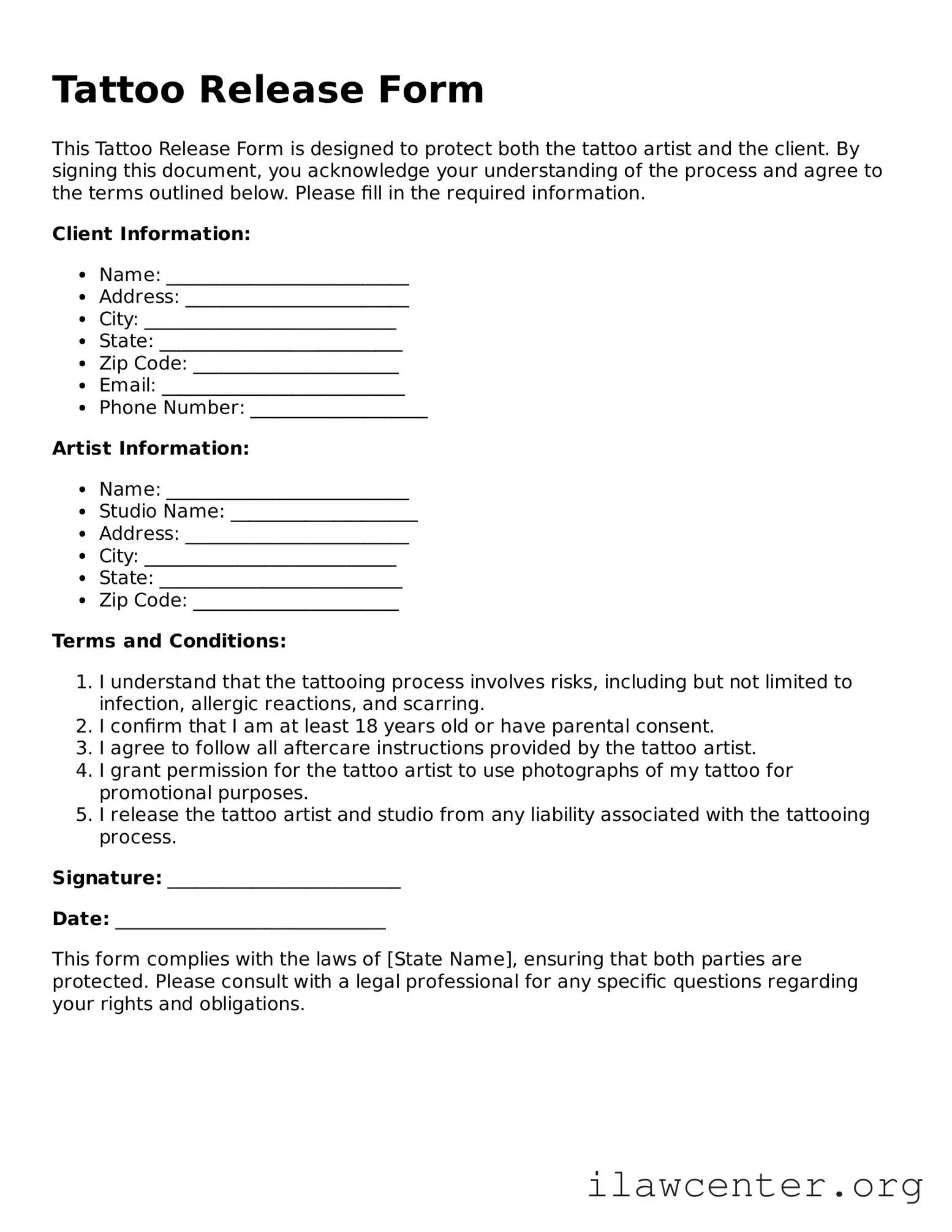
Tattoo Release Form

This Tattoo Release Form is designed to protect both the tattoo artist and the client. By signing this document, you acknowledge your understanding of the process and agree to the terms outlined below. Please fill in the required information.

Client Information:

  • Name: __________________________
  • Address: ________________________
  • City: ___________________________
  • State: __________________________
  • Zip Code: ______________________
  • Email: __________________________
  • Phone Number: ___________________

Artist Information:

  • Name: __________________________
  • Studio Name: ____________________
  • Address: ________________________
  • City: ___________________________
  • State: __________________________
  • Zip Code: ______________________

Terms and Conditions:

  1. I understand that the tattooing process involves risks, including but not limited to infection, allergic reactions, and scarring.
  2. I confirm that I am at least 18 years old or have parental consent.
  3. I agree to follow all aftercare instructions provided by the tattoo artist.
  4. I grant permission for the tattoo artist to use photographs of my tattoo for promotional purposes.
  5. I release the tattoo artist and studio from any liability associated with the tattooing process.

Signature: _________________________

Date: _____________________________

This form complies with the laws of [State Name], ensuring that both parties are protected. Please consult with a legal professional for any specific questions regarding your rights and obligations.

PDF Form Characteristics

Fact Name Description
Purpose A Tattoo Release Form protects both the tattoo artist and the client by documenting consent for the tattoo procedure.
Client Consent The form ensures that the client understands the risks involved and agrees to proceed with the tattoo.
State-Specific Laws Each state may have specific regulations governing tattooing, which can affect the content of the release form.
Liability Waiver This form often includes a liability waiver, limiting the artist's responsibility for any adverse effects.
Record Keeping Artists are encouraged to keep signed forms on file for legal and business purposes.

Instructions on Utilizing Tattoo Release

Filling out the Tattoo Release form is a straightforward process that ensures all necessary information is provided. After completing the form, it will be submitted for processing. Following these steps will help ensure that the form is filled out correctly and efficiently.

  1. Begin by writing your full name at the top of the form.
  2. Provide your contact information, including your phone number and email address.
  3. Clearly state the date of the tattoo session.
  4. Indicate the location where the tattoo will be applied on your body.
  5. Describe the design of the tattoo in detail.
  6. Sign the form to confirm your consent.
  7. Date your signature to indicate when you completed the form.

Important Facts about Tattoo Release

What is a Tattoo Release form?

A Tattoo Release form is a legal document that allows a tattoo artist to obtain permission from a client to create a tattoo on their body. This form typically outlines the rights of both the artist and the client, ensuring that the client understands the process and any potential risks involved. It serves to protect the artist from liability and confirms that the client is aware of the nature of the tattooing process.

Why is it important to sign a Tattoo Release form?

Signing a Tattoo Release form is crucial for several reasons. First, it provides clear documentation that the client has consented to the tattoo, which can be important in case of disputes. Second, it informs the client about the possible risks associated with getting a tattoo, such as allergic reactions or infections. Lastly, it protects the tattoo artist legally, ensuring that they are not held responsible for any adverse effects that may occur after the tattoo is applied.

What information is typically included in a Tattoo Release form?

A Tattoo Release form usually includes the client's personal information, such as their name and contact details, as well as a description of the tattoo to be applied. Additionally, it may outline the potential risks and aftercare instructions. The form often contains sections where the client acknowledges that they are in good health and not under the influence of drugs or alcohol. Finally, it will require the client’s signature and date to confirm their consent.

Can a client revoke their consent after signing the Tattoo Release form?

Once a client signs the Tattoo Release form, they are providing their consent for the tattoo process to begin. However, if a client feels uncomfortable or changes their mind before the tattooing starts, they can still communicate their wishes to the artist. It’s essential for clients to express any concerns they may have at any point in the process, as their comfort and safety should always be a priority.

Is a Tattoo Release form legally binding?

Yes, a Tattoo Release form is generally considered a legally binding document, provided it meets certain criteria. For it to be enforceable, the form must be clear, voluntary, and signed by the client. However, the enforceability can vary based on state laws and specific circumstances. It is advisable for tattoo artists to consult with legal professionals to ensure their forms comply with local regulations.

What should a client do if they have questions about the Tattoo Release form?

If a client has questions or concerns about the Tattoo Release form, they should not hesitate to ask the tattoo artist for clarification. Open communication is essential. Clients may also consider seeking legal advice if they feel uncertain about the implications of signing the form. Understanding the document fully will help clients make informed decisions about their tattoo experience.
Common mistakes

When it comes to getting a tattoo, signing a Tattoo Release form is a crucial step. However, many people make mistakes while filling it out, which can lead to complications later on. Here are five common mistakes to avoid.

First, one of the most frequent errors is not providing accurate personal information. This includes your full name, contact details, and date of birth. If any of this information is incorrect, it could create issues regarding consent and liability. Always double-check that your details are correct before submitting the form.

Another common mistake is failing to read the entire form thoroughly. Many individuals skim through the document, missing important clauses or conditions. Understanding what you are signing is essential. Take the time to read each section carefully, ensuring that you comprehend the implications of your consent.

Additionally, some people neglect to ask questions if they find something unclear. A Tattoo Release form often contains legal language that can be confusing. If you don’t understand a term or condition, don’t hesitate to seek clarification from the tattoo artist or studio. This proactive approach can prevent misunderstandings down the line.

Moreover, individuals sometimes forget to check for the signature requirements. Some forms may require a witness signature or a specific date. Missing these details can render the form invalid. Always ensure that you have completed every section as required.

Lastly, many people overlook the importance of keeping a copy of the signed form. After filling out the Tattoo Release form, it’s wise to ask for a copy for your records. This documentation can be vital if any disputes arise in the future regarding your tattoo or the consent you provided.

Documents used along the form

When engaging in tattoo artistry, several documents may accompany the Tattoo Release form to ensure clarity and protect the rights of all parties involved. These forms help outline expectations, consent, and legal protections for both the tattoo artist and the client. Below is a list of other commonly used forms and documents in this context.

  • Client Consent Form: This document is signed by the client to confirm their understanding of the tattoo process, including any risks involved. It serves as a record that the client has been informed and agrees to proceed.
  • Health Questionnaire: Before getting a tattoo, clients often complete a health questionnaire. This form collects important medical history and information that may affect the tattooing process, ensuring the artist can provide safe service.
  • Aftercare Instructions: This document outlines the necessary steps for clients to take care of their new tattoo. Proper aftercare helps prevent infection and ensures the tattoo heals correctly.
  • Artist Portfolio Release: If an artist wishes to use images of the tattoo for promotional purposes, they may require a portfolio release. This form grants permission for the artist to display the client’s tattoo in their marketing materials.
  • Design Agreement: This agreement details the design process and expectations between the artist and client. It may include aspects such as design modifications, timelines, and payment terms.
  • Payment Agreement: To clarify the financial aspects of the tattoo service, a payment agreement may be used. This document specifies the total cost, payment methods, and any deposits required.
  • Age Verification Form: For legal reasons, tattoo artists often require proof of age. This form helps verify that clients meet the minimum age requirement for receiving a tattoo.
  • Liability Waiver: A liability waiver protects the artist from potential legal claims related to the tattoo process. Clients acknowledge the risks and agree not to hold the artist responsible for certain outcomes.

These documents work together to create a comprehensive framework for the tattooing process. By utilizing these forms, both the artist and client can engage in a clear and respectful manner, fostering a positive experience for everyone involved.

Similar forms

The Tattoo Release form is similar to several other documents that serve the purpose of obtaining consent and protecting the rights of individuals involved in various activities. Here are six documents that share similarities with the Tattoo Release form:

  • Photo Release Form: This document allows a photographer or videographer to use images of individuals for promotional or commercial purposes. Like the Tattoo Release form, it ensures that consent is obtained from the individual before their likeness is used.
  • Waiver of Liability: Often used in sports or recreational activities, this document protects organizations from legal claims if an individual is injured while participating. It, too, requires the individual to acknowledge the risks involved, similar to how a Tattoo Release form addresses the risks of getting a tattoo.
  • Informed Consent Form: Commonly used in medical and research settings, this form ensures that individuals understand the procedures and potential risks before participating. Both documents emphasize the importance of informed decision-making.
  • Service Agreement: This document outlines the terms of service between a provider and a client. While it may not focus on consent, it establishes expectations and responsibilities, akin to how a Tattoo Release form clarifies the relationship between the tattoo artist and the client.
  • Event Participation Agreement: This document is used for events and activities where participants agree to certain terms and conditions. Like the Tattoo Release form, it seeks to protect the organizing party from potential liabilities.
  • Model Release Form: Similar to the Photo Release Form, this document grants permission for the use of a model's image in various media. It ensures that the model is aware of how their image will be used, paralleling the consent aspect of the Tattoo Release form.

Dos and Don'ts

When filling out a Tattoo Release form, it is essential to approach the process with care and attention. Below is a list of things to do and things to avoid.

Things You Should Do:

  • Read the entire form thoroughly before signing.
  • Provide accurate personal information, including your full name and contact details.
  • Ensure that you understand the implications of the release, particularly regarding the use of your image.
  • Ask questions if any part of the form is unclear.
  • Sign and date the form in the designated areas.

Things You Shouldn't Do:

  • Do not rush through the form; take your time to understand each section.
  • Avoid providing false or misleading information.
  • Do not sign the form if you feel uncomfortable with any of the terms.
  • Refrain from leaving any required fields blank.
  • Do not forget to keep a copy of the signed form for your records.

Misconceptions

  • Misconception 1: A Tattoo Release Form is only necessary for large tattoo studios.

    This is not true. Whether you are a solo artist or part of a larger studio, having a Tattoo Release Form is essential. It protects both the artist and the client, ensuring everyone understands their rights and responsibilities.

  • Misconception 2: Signing a Tattoo Release Form means I waive all my rights.

    Many people believe that signing this form means they give up all their rights. In reality, it typically outlines specific rights and responsibilities, not a blanket waiver of all rights.

  • Misconception 3: The form is only about consent for the tattoo.

    While consent is a major part, the Tattoo Release Form often includes clauses about the use of images for promotional purposes. This ensures that clients understand how their tattoo may be used in marketing materials.

  • Misconception 4: I can’t change my mind after signing.

    Many people think that once they sign, they are locked in. However, most forms include a provision for clients to revoke consent under certain circumstances, especially regarding the use of images.

  • Misconception 5: Only the tattoo artist needs to keep a copy of the form.

    Clients should also retain a copy of the Tattoo Release Form. This ensures both parties have access to the same information and can refer back to it if needed.

  • Misconception 6: The form is not legally binding.

    Many assume that a Tattoo Release Form is just a piece of paper with no legal weight. In fact, when properly drafted, it can be legally binding and enforceable in court.

  • Misconception 7: I don’t need a form if I’m getting a small tattoo.

    Size doesn’t matter when it comes to tattoos. Even small tattoos can lead to disputes or misunderstandings. A Tattoo Release Form provides clarity and protection for both the artist and the client, regardless of the tattoo's size.

Key takeaways

When it comes to getting a tattoo, understanding the Tattoo Release form is essential. Here are some key takeaways to keep in mind:

  1. Purpose of the Form: The Tattoo Release form serves to protect both the tattoo artist and the client. It outlines consent and acknowledges the risks involved.
  2. Personal Information: Fill out your personal details accurately. This includes your name, contact information, and any relevant medical history.
  3. Understanding Risks: The form typically includes a section that explains potential risks associated with getting a tattoo. Make sure to read and understand these risks before signing.
  4. Consent: By signing the form, you are giving your consent for the tattoo artist to proceed with the tattooing process. This means you accept responsibility for any decisions made.
  5. Age Requirements: Most studios require clients to be at least 18 years old to sign the form. If you are underage, parental consent may be needed.
  6. Withdrawal of Consent: You have the right to withdraw your consent at any time before the tattooing begins. Communicate any concerns with your artist.
  7. Aftercare Instructions: The form may include aftercare guidelines. Follow these instructions carefully to ensure proper healing of your tattoo.
  8. Record Keeping: The tattoo studio will keep a copy of the signed form for their records. This helps protect both parties in case of any disputes.
  9. Legal Implications: Signing the form can limit your ability to sue the artist for certain issues related to the tattoo. Understand what you are agreeing to.

Being informed about the Tattoo Release form can help ensure a positive tattoo experience. Always ask questions if something is unclear.