Attorney-Verified  Deed in Lieu of Foreclosure Document for Texas

Attorney-Verified Deed in Lieu of Foreclosure Document for Texas

A Texas Deed in Lieu of Foreclosure is a legal document that allows a homeowner to transfer their property title back to the lender to avoid foreclosure. This process can provide a smoother exit from financial difficulties, potentially saving both parties time and resources. If you're considering this option, take the first step by filling out the form below.

Click the button below to get started!

Article Guide

In the heart of Texas, homeowners facing the daunting prospect of foreclosure often seek alternatives that can ease their financial burden and provide a smoother transition. One such option is the Deed in Lieu of Foreclosure form, a powerful tool that allows property owners to voluntarily transfer ownership of their home back to the lender. This process not only helps avoid the lengthy and stressful foreclosure proceedings but also can mitigate the negative impact on credit scores. By signing this form, homeowners can settle their mortgage obligations without the need for a court intervention, making it a more amicable solution. The Deed in Lieu of Foreclosure typically includes essential details such as the property description, the parties involved, and any existing liens or encumbrances. Understanding the nuances of this form can empower homeowners to make informed decisions about their financial futures while navigating the complexities of real estate law in Texas.

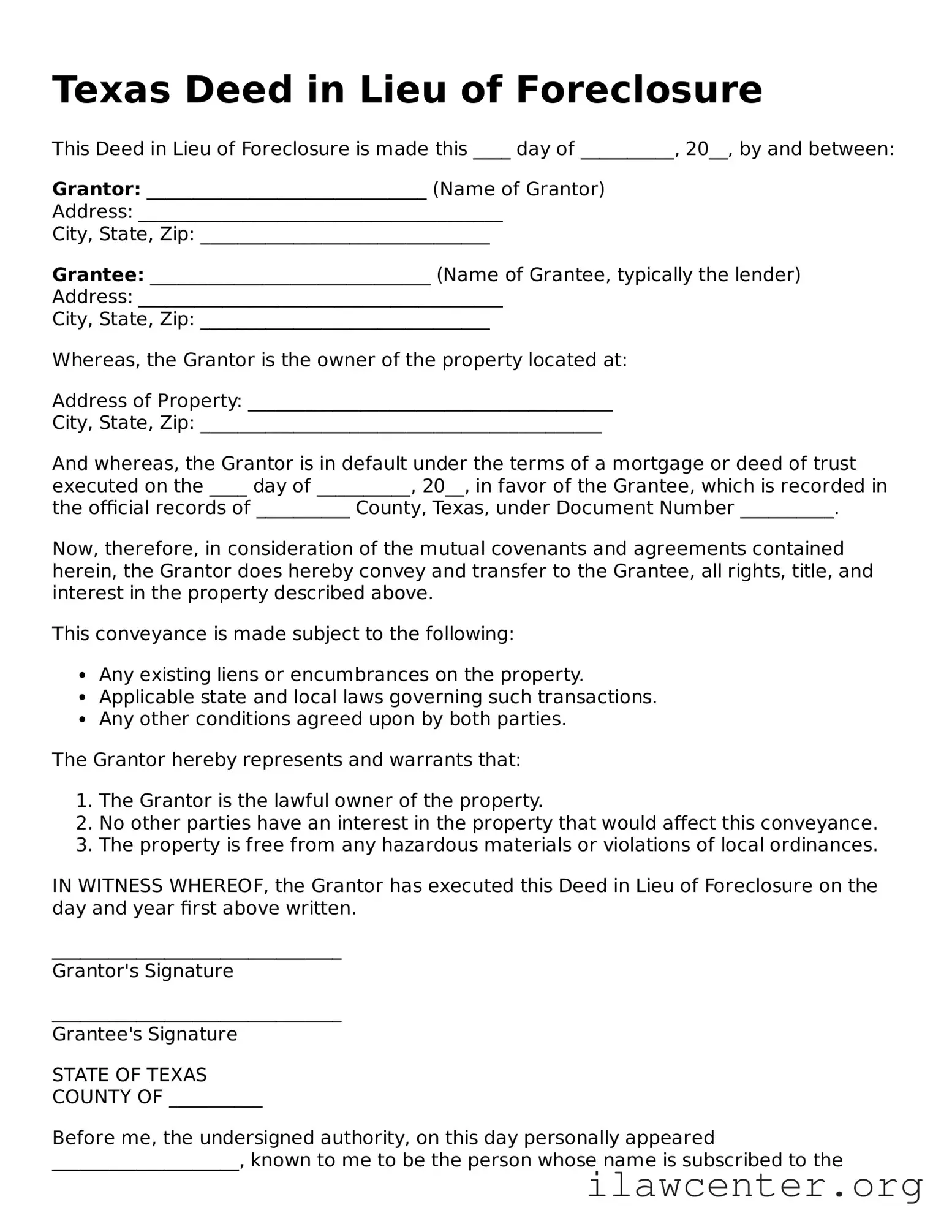
Texas Deed in Lieu of Foreclosure Preview

Texas Deed in Lieu of Foreclosure

This Deed in Lieu of Foreclosure is made this ____ day of __________, 20__, by and between:

Grantor: ______________________________ (Name of Grantor)
Address: _______________________________________
City, State, Zip: _______________________________

Grantee: ______________________________ (Name of Grantee, typically the lender)
Address: _______________________________________
City, State, Zip: _______________________________

Whereas, the Grantor is the owner of the property located at:

Address of Property: _______________________________________
City, State, Zip: ___________________________________________

And whereas, the Grantor is in default under the terms of a mortgage or deed of trust executed on the ____ day of __________, 20__, in favor of the Grantee, which is recorded in the official records of __________ County, Texas, under Document Number __________.

Now, therefore, in consideration of the mutual covenants and agreements contained herein, the Grantor does hereby convey and transfer to the Grantee, all rights, title, and interest in the property described above.

This conveyance is made subject to the following:

  • Any existing liens or encumbrances on the property.
  • Applicable state and local laws governing such transactions.
  • Any other conditions agreed upon by both parties.

The Grantor hereby represents and warrants that:

  1. The Grantor is the lawful owner of the property.
  2. No other parties have an interest in the property that would affect this conveyance.
  3. The property is free from any hazardous materials or violations of local ordinances.

IN WITNESS WHEREOF, the Grantor has executed this Deed in Lieu of Foreclosure on the day and year first above written.

_______________________________
Grantor's Signature

_______________________________
Grantee's Signature

STATE OF TEXAS
COUNTY OF __________

Before me, the undersigned authority, on this day personally appeared ____________________, known to me to be the person whose name is subscribed to the foregoing instrument, and acknowledged to me that he/she executed the same for the purposes and consideration therein expressed.

Given under my hand and seal of office this ____ day of __________, 20__.

_______________________________
Notary Public in and for the State of Texas

PDF Form Characteristics

Fact Name Description
Purpose The Texas Deed in Lieu of Foreclosure form allows a borrower to transfer property ownership to the lender to avoid foreclosure.
Governing Law This form is governed by Texas property law, specifically under the Texas Property Code.
Eligibility Typically, borrowers must be in default on their mortgage payments to qualify for this option.
Mutual Agreement Both the borrower and the lender must agree to the terms outlined in the deed.
Release of Liability Upon acceptance, the borrower may be released from further liability for the mortgage debt.
Property Condition The property must be in good condition, as lenders often require it to be maintained before acceptance.
Impact on Credit A deed in lieu of foreclosure can negatively impact the borrower’s credit score, but it may be less damaging than a foreclosure.
Timing The process can be quicker than foreclosure, allowing borrowers to resolve their situation more swiftly.
Legal Advice It is advisable for borrowers to seek legal counsel before proceeding with a deed in lieu of foreclosure.

Instructions on Utilizing Texas Deed in Lieu of Foreclosure

After you complete the Texas Deed in Lieu of Foreclosure form, it will need to be signed and submitted to the lender. This process can help resolve a mortgage default without going through a lengthy foreclosure process. Be sure to keep copies of all documents for your records.

  1. Start by downloading the Texas Deed in Lieu of Foreclosure form from a reliable source or your lender.
  2. At the top of the form, fill in the date when you are completing the document.
  3. Provide the name of the borrower(s) as they appear on the mortgage documents.
  4. Next, enter the address of the property that is subject to the deed.
  5. Indicate the name of the lender or the entity that holds the mortgage.
  6. In the designated section, describe the reason for the deed in lieu of foreclosure.
  7. Sign the form in the appropriate area, ensuring your signature matches the one on the original mortgage documents.
  8. Have the form notarized. This step is crucial for validating the document.
  9. Make copies of the completed form for your records.
  10. Submit the original signed and notarized form to your lender.

Important Facts about Texas Deed in Lieu of Foreclosure

What is a Deed in Lieu of Foreclosure?

A Deed in Lieu of Foreclosure is a legal document that allows a homeowner to voluntarily transfer the ownership of their property to the lender. This usually happens when the homeowner is unable to keep up with mortgage payments and wants to avoid the lengthy foreclosure process.

Who can use a Deed in Lieu of Foreclosure?

Homeowners facing financial difficulties and unable to make their mortgage payments may qualify for a Deed in Lieu of Foreclosure. It is important to note that the lender must agree to this option. Not all lenders accept a Deed in Lieu, so homeowners should check with their lender first.

What are the benefits of a Deed in Lieu of Foreclosure?

One of the main benefits is that it can help homeowners avoid the lengthy and stressful foreclosure process. It may also have less impact on the homeowner's credit score compared to a foreclosure. Additionally, the homeowner may be able to walk away from the property without owing any further debt on the mortgage.

What are the risks associated with a Deed in Lieu of Foreclosure?

While there are benefits, there are also risks. The homeowner may still be responsible for any outstanding debts related to the property, such as taxes or homeowners association fees. Additionally, the lender may require the homeowner to provide financial documentation, which could be invasive or uncomfortable.

How does the process work?

The process typically begins with the homeowner contacting their lender to express interest in a Deed in Lieu of Foreclosure. The lender will review the homeowner’s financial situation and determine eligibility. If approved, both parties will sign the deed, and the lender will take ownership of the property.

Do I need a lawyer to complete a Deed in Lieu of Foreclosure?

While it is not legally required to have a lawyer, it is highly recommended. A lawyer can help navigate the process, ensure that all documents are completed correctly, and protect the homeowner's interests. Legal advice can be particularly valuable if there are complications or disputes.

Will a Deed in Lieu of Foreclosure affect my credit score?

Yes, a Deed in Lieu of Foreclosure will likely impact your credit score, but generally less severely than a foreclosure. The exact effect can vary based on individual circumstances and credit history. It is advisable to check your credit report after the process is complete.

Can I still apply for a mortgage after a Deed in Lieu of Foreclosure?

Yes, you can apply for a mortgage after a Deed in Lieu of Foreclosure, but it may be more challenging. Lenders typically have waiting periods before you can qualify for a new mortgage. This period can vary based on the lender's policies and your credit situation.

Are there alternatives to a Deed in Lieu of Foreclosure?

Yes, there are alternatives. Homeowners may consider a short sale, where the property is sold for less than the mortgage balance, or loan modification, which involves changing the terms of the existing loan to make payments more manageable. Each option has its own pros and cons, so it is important to explore all possibilities.
Common mistakes

Filling out a Texas Deed in Lieu of Foreclosure form can be a daunting task, and many people make common mistakes that could lead to complications down the line. One frequent error is failing to provide accurate property information. It's essential to ensure that the legal description of the property is correct. Any discrepancies can create confusion and potentially delay the process.

Another mistake often made is not including all necessary parties. If multiple individuals are involved in the ownership of the property, all owners must sign the document. Omitting a co-owner can result in legal challenges later, as the lender may not accept the deed without full consent from all parties.

Many individuals also overlook the importance of understanding the implications of signing the deed. A Deed in Lieu of Foreclosure transfers ownership of the property to the lender, and this action can have significant effects on one’s credit score and future borrowing capabilities. It is vital to consider these consequences before proceeding.

People sometimes forget to consult with a legal advisor or real estate professional. Seeking guidance can provide clarity on the process and help avoid pitfalls. It is a good idea to have someone knowledgeable review the document to ensure everything is in order.

Another common oversight is neglecting to check for outstanding liens or judgments against the property. These can complicate the transfer process. Before signing the deed, it is wise to conduct a thorough title search to identify any issues that may need resolution.

Some individuals may also fail to notify their lender of their intent to pursue a Deed in Lieu of Foreclosure. Open communication with the lender can facilitate a smoother process. Lenders may have specific requirements or forms that need to be completed, and being proactive can help prevent misunderstandings.

Additionally, people often rush through the signing process without reading the entire document. It is crucial to understand what you are signing. Take the time to read through the terms and conditions carefully, as they outline your rights and obligations.

Another mistake is not keeping copies of the completed form and any related correspondence. Documentation is key in any legal process. Having a record of everything can be beneficial if questions arise later.

Finally, many individuals do not consider the timeline involved in the Deed in Lieu of Foreclosure process. Understanding how long it may take for the lender to accept the deed and process the paperwork is essential. Patience is necessary, as rushing can lead to errors and miscommunication.

Documents used along the form

When navigating the process of a deed in lieu of foreclosure in Texas, several other forms and documents often accompany this transaction. Each of these plays a critical role in ensuring that all parties involved are protected and that the process proceeds smoothly. Understanding these documents can help homeowners and lenders alike make informed decisions.

  • Notice of Default: This document notifies the borrower that they are in default on their mortgage payments. It typically outlines the amount owed and the consequences of failing to rectify the situation.
  • Loan Modification Agreement: This agreement may be presented to modify the terms of the original loan. It can provide relief to the borrower by adjusting the interest rate or extending the loan term.
  • Property Inspection Report: Conducted by a third party, this report assesses the condition of the property. It helps both the lender and borrower understand the property's value and any necessary repairs.
  • Release of Liability: This document releases the borrower from any further obligation on the mortgage once the deed in lieu is executed. It ensures that the borrower is no longer responsible for the debt.
  • Affidavit of Title: This sworn statement confirms the ownership of the property and that there are no undisclosed liens or claims against it. It is crucial for the lender to ensure clear title transfer.
  • Settlement Statement: This document outlines all financial transactions involved in the deed in lieu process. It provides transparency regarding fees, credits, and any outstanding amounts.
  • Deed of Trust: If applicable, this document secures the loan by placing a lien on the property. It provides the lender with the right to foreclose if the borrower defaults.
  • Borrower’s Financial Statement: This statement provides a comprehensive overview of the borrower’s financial situation. It is often required to assess eligibility for a deed in lieu or any loan modifications.
  • Release of Mortgage: Once the deed in lieu is completed, this document formally releases the lender's claim on the property. It ensures that the borrower is no longer tied to the mortgage.

Being familiar with these accompanying documents can greatly aid in the understanding of the deed in lieu of foreclosure process. Each form serves a unique purpose, contributing to a clearer and more organized transaction for both borrowers and lenders. As always, consulting with a legal professional is advisable to ensure that all necessary steps are taken correctly.

Similar forms

The Deed in Lieu of Foreclosure form shares similarities with several other documents related to property and debt resolution. Below is a list of these documents, highlighting their connections.

  • Mortgage Release: This document officially releases the borrower from their mortgage obligations, similar to how a Deed in Lieu transfers property ownership to the lender, relieving the borrower of their debt.
  • Short Sale Agreement: A short sale allows a homeowner to sell their property for less than the mortgage owed. Like a Deed in Lieu, it aims to avoid foreclosure and mitigate financial loss for both parties.
  • Loan Modification Agreement: This document alters the terms of an existing loan to make payments more manageable. Both a loan modification and a Deed in Lieu can help borrowers avoid foreclosure.
  • Foreclosure Notice: While a foreclosure notice initiates the legal process to reclaim a property, a Deed in Lieu proactively resolves the situation before legal action is necessary.
  • Settlement Agreement: This document outlines the terms agreed upon between a borrower and lender to settle a debt. A Deed in Lieu serves as a type of settlement, where the property is surrendered to satisfy the debt.
  • Power of Attorney: This document allows one person to act on behalf of another in legal matters. In some cases, a borrower may grant power of attorney to facilitate the Deed in Lieu process.
  • Quitclaim Deed: A quitclaim deed transfers ownership of property without any warranties. Similar to a Deed in Lieu, it transfers property rights but typically does not involve debt resolution.

Dos and Don'ts

When filling out the Texas Deed in Lieu of Foreclosure form, there are important steps to follow to ensure the process goes smoothly. Here are ten things to keep in mind:

  • Do ensure that you understand the implications of signing a deed in lieu of foreclosure.
  • Do consult with a real estate attorney or a financial advisor before proceeding.
  • Do provide accurate information about the property, including the legal description.
  • Do sign the form in the presence of a notary public.
  • Do keep copies of all documents for your records.
  • Don't rush through the process without reading the entire form carefully.
  • Don't forget to check for any outstanding liens or claims against the property.
  • Don't assume that the lender will forgive any remaining debt without a written agreement.
  • Don't neglect to inform any co-owners or interested parties about the deed in lieu of foreclosure.
  • Don't sign the document if you feel pressured or uncertain about your decision.

Following these guidelines can help you navigate the complexities of the deed in lieu of foreclosure process in Texas.

Misconceptions

The Texas Deed in Lieu of Foreclosure is often misunderstood. Here are five common misconceptions about this legal process.

  • It eliminates all debts immediately. Many believe that signing a deed in lieu of foreclosure wipes out all mortgage-related debts. In reality, it may not absolve you of other liabilities, such as second mortgages or liens.
  • It is a simple and quick process. While a deed in lieu can be faster than foreclosure, it still requires negotiation with the lender and can involve a lengthy review process.
  • You can choose to keep some property. Some homeowners think they can retain certain assets while transferring the property. However, a deed in lieu typically involves transferring full ownership to the lender.
  • It has no impact on your credit score. Many assume that a deed in lieu will not affect their credit. In fact, it can negatively impact your credit score, similar to a foreclosure.
  • It is available to everyone. Some people think that anyone facing foreclosure can opt for a deed in lieu. However, lenders often have specific criteria that must be met before they will accept this option.

Understanding these misconceptions can help individuals make informed decisions when facing financial difficulties.

Key takeaways

Filling out and using the Texas Deed in Lieu of Foreclosure form requires careful consideration. Here are some key takeaways to keep in mind:

  • The deed in lieu of foreclosure is an agreement between a borrower and lender, allowing the borrower to transfer property ownership to the lender to avoid foreclosure.
  • This option can help borrowers mitigate the negative impact of foreclosure on their credit score.
  • Before proceeding, borrowers should ensure they understand their mortgage obligations and the implications of the deed in lieu.
  • Consulting with a legal professional is advisable to navigate the complexities of the process.
  • Borrowers must be current on their mortgage payments or have the lender's consent to qualify for this option.
  • The property must be free of any liens or encumbrances to facilitate a smooth transfer.
  • After completing the form, it should be filed with the county clerk's office to ensure public record of the transfer.
  • Borrowers should obtain a copy of the executed deed for their records and future reference.

Understanding these points can help borrowers make informed decisions regarding their property and financial future.