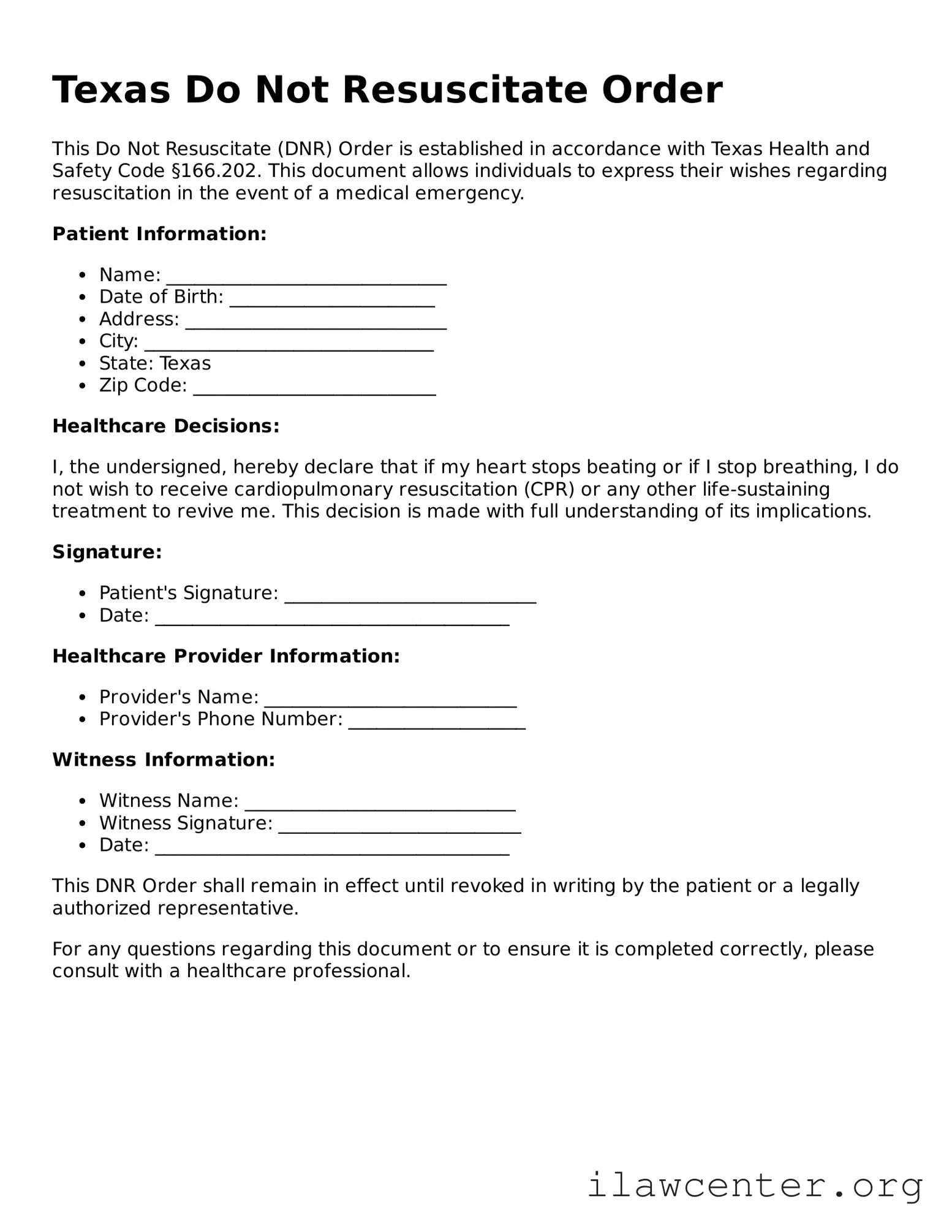
What is a Texas Do Not Resuscitate Order (DNR) form?
A Texas Do Not Resuscitate Order (DNR) form is a legal document that allows individuals to refuse certain life-sustaining treatments, specifically cardiopulmonary resuscitation (CPR), in the event of a medical emergency. This form is typically used by individuals with serious medical conditions who wish to avoid aggressive resuscitation efforts that may not align with their personal wishes or quality of life considerations.
Who can complete a DNR form in Texas?
In Texas, a DNR form can be completed by an adult who is capable of making their own medical decisions. If the individual is unable to make decisions, a legally authorized representative, such as a family member or a designated healthcare proxy, can fill out the form on their behalf. It's important that the person completing the form understands the implications of a DNR order.
How do I obtain a DNR form in Texas?
You can obtain a Texas DNR form from various sources, including healthcare providers, hospitals, and online resources. The Texas Department of State Health Services also provides downloadable versions of the form. It is advisable to ensure that the form is the official version recognized by Texas law.
What information is required on the DNR form?
The DNR form requires specific information, including the patient's name, date of birth, and a statement indicating the patient's desire not to receive CPR. Additionally, the form must be signed by the patient or their authorized representative and a physician. The physician's signature confirms that the patient has been informed about the consequences of the DNR order.
Does a DNR order apply outside of a hospital setting?
Yes, a DNR order can apply in both hospital and out-of-hospital settings. However, it is essential to ensure that the DNR form is properly completed and readily available. In non-hospital settings, such as at home or in a nursing facility, having the DNR form visible and accessible to emergency responders is crucial for it to be honored.
Can a DNR order be revoked?
Yes, a DNR order can be revoked at any time. The patient or their authorized representative can verbally communicate their wish to revoke the order or destroy the DNR form. It is important to inform healthcare providers of any changes to ensure that the patient's current wishes are respected.
What should I do if I have questions about the DNR process?
If you have questions about the DNR process or how it may apply to your situation, it is best to consult with a healthcare professional or an attorney who specializes in medical or elder law. They can provide personalized guidance based on your circumstances and help clarify any concerns you may have.
Are there any alternatives to a DNR order?
Yes, there are alternatives to a DNR order, such as advance directives or living wills. These documents allow individuals to express their healthcare preferences in a broader context, including decisions about other types of medical treatments. Discussing these options with a healthcare provider can help ensure that your wishes are clearly communicated and documented.