Attorney-Verified  Dog Bill of Sale Document for Texas

Attorney-Verified Dog Bill of Sale Document for Texas

A Texas Dog Bill of Sale form is a legal document used to transfer ownership of a dog from one party to another. This form helps protect both the seller and the buyer by clearly outlining the terms of the sale, including the dog's details and any agreements made. If you're ready to complete your transaction, fill out the form by clicking the button below.

Article Guide

The Texas Dog Bill of Sale form serves as an important document for individuals involved in the buying or selling of dogs within the state. This form outlines essential details such as the seller's and buyer's information, the dog's description, and the agreed-upon sale price. It also includes provisions regarding the health and vaccination status of the dog, ensuring that both parties are informed about the pet's condition at the time of sale. By providing a clear record of the transaction, this form helps protect the rights of both the seller and the buyer. Furthermore, it can serve as a reference in case of future disputes or misunderstandings. The Texas Dog Bill of Sale is not just a legal requirement; it also emphasizes the importance of responsible pet ownership and transparency in transactions involving animals.

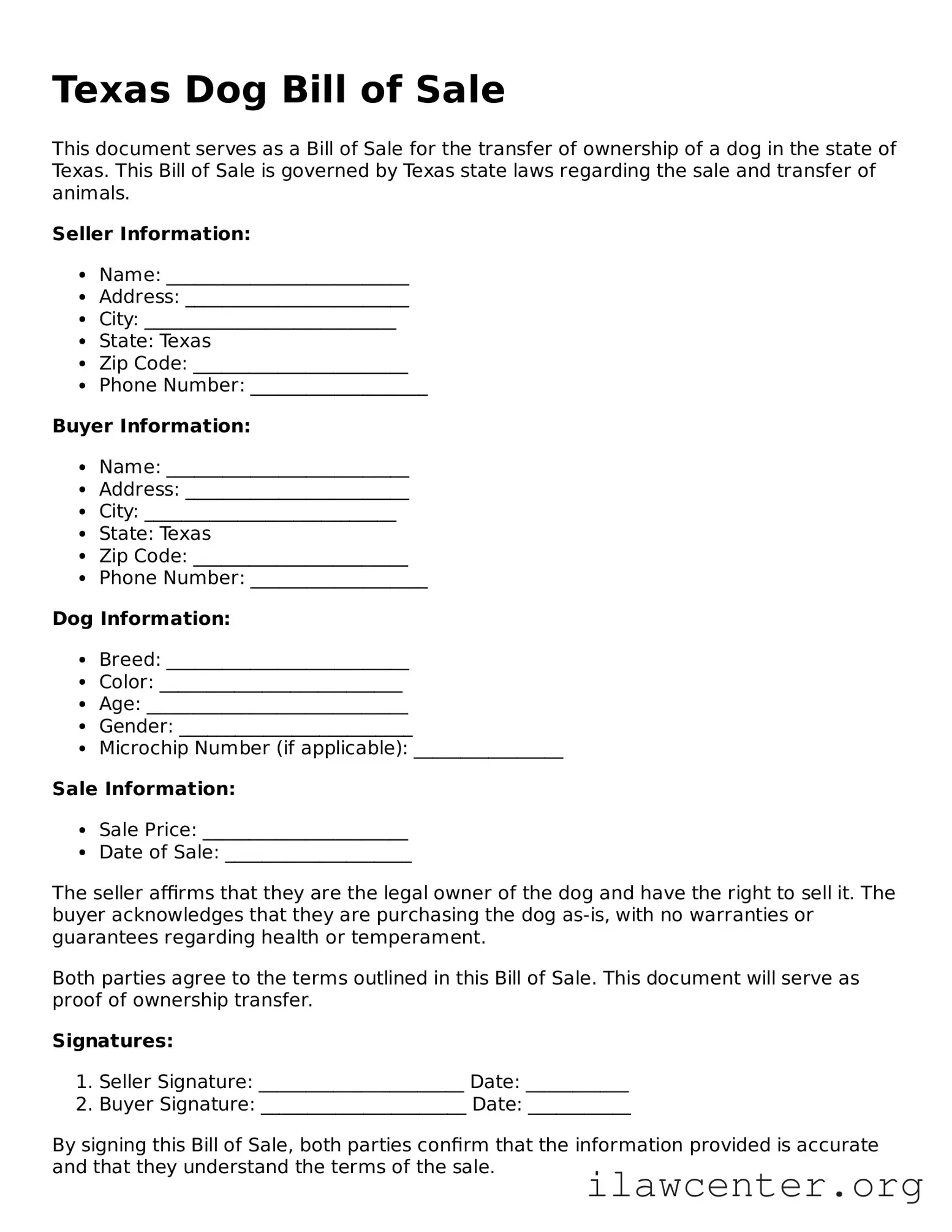
Texas Dog Bill of Sale Preview

Texas Dog Bill of Sale

This document serves as a Bill of Sale for the transfer of ownership of a dog in the state of Texas. This Bill of Sale is governed by Texas state laws regarding the sale and transfer of animals.

Seller Information:

  • Name: __________________________
  • Address: ________________________
  • City: ___________________________
  • State: Texas
  • Zip Code: _______________________
  • Phone Number: ___________________

Buyer Information:

  • Name: __________________________
  • Address: ________________________
  • City: ___________________________
  • State: Texas
  • Zip Code: _______________________
  • Phone Number: ___________________

Dog Information:

  • Breed: __________________________
  • Color: __________________________
  • Age: ____________________________
  • Gender: _________________________
  • Microchip Number (if applicable): ________________

Sale Information:

  • Sale Price: ______________________
  • Date of Sale: ____________________

The seller affirms that they are the legal owner of the dog and have the right to sell it. The buyer acknowledges that they are purchasing the dog as-is, with no warranties or guarantees regarding health or temperament.

Both parties agree to the terms outlined in this Bill of Sale. This document will serve as proof of ownership transfer.

Signatures:

  1. Seller Signature: ______________________ Date: ___________
  2. Buyer Signature: ______________________ Date: ___________

By signing this Bill of Sale, both parties confirm that the information provided is accurate and that they understand the terms of the sale.

PDF Form Characteristics

Fact Name Description
Purpose The Texas Dog Bill of Sale form is used to document the sale of a dog between a seller and a buyer.
Legal Requirement While not legally required, having a bill of sale helps protect both the buyer and seller in the transaction.
Governing Laws The sale of animals in Texas is generally governed by Texas Property Code and Texas Business and Commerce Code.
Information Included The form typically includes details such as the dog's breed, age, and any health records.
Signatures Both the seller and buyer must sign the document to make it valid.
Transfer of Ownership Once signed, the bill of sale serves as proof of ownership transfer from the seller to the buyer.
Use in Disputes This document can be useful in resolving disputes regarding the sale or condition of the dog.
Record Keeping Both parties should keep a copy of the bill of sale for their records.

Instructions on Utilizing Texas Dog Bill of Sale

After obtaining the Texas Dog Bill of Sale form, you will need to fill it out carefully to ensure all necessary information is included. This document serves as proof of the transfer of ownership of a dog from one party to another. Following these steps will help you complete the form accurately.

  1. Begin by entering the date of the sale at the top of the form. This should be the date on which the transaction takes place.
  2. Next, provide the seller's full name and address. This information identifies the person selling the dog.
  3. Then, fill in the buyer's full name and address. This identifies the new owner of the dog.
  4. Include a detailed description of the dog. This should encompass the dog's breed, age, color, and any distinctive markings.
  5. State the sale price of the dog. This is the amount agreed upon by both parties for the transfer of ownership.
  6. Indicate the method of payment. This could be cash, check, or another form agreed upon by both parties.
  7. Both the seller and buyer should sign and date the form at the designated areas. This signifies that both parties agree to the terms outlined in the document.
  8. Finally, make a copy of the completed form for your records. This ensures you have proof of the transaction.

Important Facts about Texas Dog Bill of Sale

What is a Texas Dog Bill of Sale form?

A Texas Dog Bill of Sale form is a document that records the transfer of ownership of a dog from one person to another. This form provides important information about the dog, such as its breed, age, and any identifying features. It serves as proof of the transaction and can be helpful for both the seller and the buyer.

Why is a Dog Bill of Sale important?

The Dog Bill of Sale is important for several reasons. It protects the rights of both the seller and the buyer. For the seller, it provides evidence that the dog was sold and not stolen. For the buyer, it confirms ownership and can be useful for registration purposes or when seeking veterinary care.

What information is typically included in the form?

Typically, the form includes details such as the names and addresses of both the seller and the buyer, a description of the dog (including breed, age, color, and any identifying marks), and the sale price. It may also contain information about any warranties or guarantees regarding the dog's health.

Do I need a notary for the Dog Bill of Sale?

No, a notary is not required for the Dog Bill of Sale in Texas. However, having the document notarized can add an extra layer of protection and authenticity to the transaction. It may be beneficial if either party wants to ensure that the agreement is legally binding.

Can I use a Dog Bill of Sale for any breed of dog?

Yes, the Dog Bill of Sale can be used for any breed of dog. It is a versatile document that applies to all types of dogs, whether purebred or mixed breed. The key is to provide accurate information about the specific dog being sold.

Is the Dog Bill of Sale legally binding?

Yes, the Dog Bill of Sale is legally binding as long as both parties agree to the terms outlined in the document. It serves as a written record of the sale and can be used in case of disputes. Both the seller and the buyer should keep a copy for their records.

What if the dog has health issues?

If the dog has known health issues, it is important to disclose this information in the Dog Bill of Sale. Transparency helps protect both parties. The seller should provide details about any health concerns, and the buyer should acknowledge them before completing the sale.

How can I ensure a smooth transaction?

To ensure a smooth transaction, both the seller and buyer should communicate openly. Discuss any questions or concerns before completing the sale. It is also advisable to complete the Dog Bill of Sale in a quiet place where both parties can review the details together.

Where can I obtain a Texas Dog Bill of Sale form?

You can obtain a Texas Dog Bill of Sale form from various online sources, including legal websites and pet adoption organizations. Many templates are available for free or for purchase. Ensure that the form you choose is compliant with Texas laws and meets your specific needs.
Common mistakes

When it comes to completing the Texas Dog Bill of Sale form, many individuals overlook crucial details. One common mistake is failing to provide accurate information about the dog. This includes the dog's breed, age, and any identifying characteristics. Inaccuracies can lead to confusion and potential disputes later on.

Another frequent error is neglecting to include the seller's and buyer's full names and contact information. This information is vital for ensuring that both parties can be reached if any issues arise after the sale. Omitting these details can complicate future communications.

People often forget to specify the purchase price of the dog. This figure should be clearly stated to avoid misunderstandings. Without a documented price, the transaction may be questioned, especially if there are any disputes regarding the sale.

Additionally, many individuals skip the section regarding the dog's health status. It’s important to note any vaccinations or health issues. Providing this information helps the buyer make an informed decision and can protect the seller from liability.

Another mistake is not signing the form. Both the seller and the buyer must sign the document for it to be legally binding. A missing signature can render the entire sale invalid, leading to complications down the line.

Some people overlook the importance of including the date of the sale. This detail is essential for record-keeping and can help resolve any disputes regarding when the ownership of the dog changed hands.

Moreover, individuals may forget to keep a copy of the completed Bill of Sale for their records. Retaining a copy is crucial for both parties, as it serves as proof of the transaction and can be referenced in case of future issues.

Another common oversight is not providing any additional terms or conditions related to the sale. If there are specific agreements between the buyer and seller, such as a return policy or conditions for care, they should be documented in the Bill of Sale.

Furthermore, failing to verify the buyer's identity can lead to problems. It’s wise to ensure that the buyer is legitimate and can be contacted later if necessary. Taking this step can prevent potential scams or misunderstandings.

Finally, some individuals forget to check for any local regulations regarding dog sales. Different areas may have specific laws that must be followed. Ignoring these regulations can result in fines or legal issues that could have easily been avoided.

Documents used along the form

When buying or selling a dog in Texas, several documents can complement the Dog Bill of Sale form. These documents help ensure a smooth transaction and provide important information for both parties involved. Below is a list of common forms and documents that may be used alongside the Dog Bill of Sale.

  • Health Certificate: This document verifies that the dog has been examined by a veterinarian and is free from contagious diseases. It often includes vaccination records and is crucial for ensuring the dog's health at the time of sale.
  • Registration Papers: If the dog is purebred, registration papers from a recognized breed registry can confirm the dog's lineage. This can be important for buyers interested in breeding or showing the dog.
  • Microchip Registration: If the dog is microchipped, the microchip registration details should be transferred to the new owner. This helps in identifying the dog if it gets lost.
  • Transfer of Ownership Form: This form officially documents the change of ownership from the seller to the buyer. It may be required by breed registries or local authorities.
  • Purchase Agreement: A more detailed contract that outlines the terms of the sale, including payment details and any warranties or guarantees regarding the dog's health or behavior.
  • Pet Care Guide: While not a legal document, providing a guide on the dog's care, feeding, and training can be beneficial for the new owner, especially if they are a first-time pet owner.
  • Return Policy: Some sellers may offer a return policy, which outlines the conditions under which the buyer can return the dog. This can provide peace of mind for both parties.

Using these documents in conjunction with the Dog Bill of Sale can help clarify responsibilities and ensure a successful transition for both the dog and its new owner. It is always advisable to keep copies of all documents for your records.

Similar forms

The Dog Bill of Sale form serves a specific purpose in the transfer of ownership of a dog. However, several other documents share similar functions in the realm of personal property transactions. Here are four documents that are comparable to the Dog Bill of Sale form:

  • Vehicle Bill of Sale: This document is used to transfer ownership of a vehicle from one person to another. Like the Dog Bill of Sale, it includes details about the buyer, seller, and the vehicle, ensuring a clear record of the transaction.
  • Boat Bill of Sale: Similar to the Vehicle Bill of Sale, this form is specifically for transferring ownership of a boat. It includes information about the buyer, seller, and the boat, providing legal proof of the sale and protecting both parties.
  • Equipment Bill of Sale: This document is utilized when selling or buying equipment, such as tools or machinery. It outlines the terms of the sale and details about the equipment, similar to how the Dog Bill of Sale outlines the specifics of the dog being sold.
  • Personal Property Bill of Sale: This general document is used for the sale of various personal items. It serves the same purpose as the Dog Bill of Sale by documenting the transfer of ownership and protecting the interests of both the buyer and the seller.

Dos and Don'ts

When filling out the Texas Dog Bill of Sale form, it’s essential to ensure that all necessary details are accurately provided. Here are some important do's and don'ts to keep in mind:

  • Do include the complete name and contact information of both the buyer and the seller.
  • Do provide a detailed description of the dog, including breed, age, color, and any identifying features.
  • Do specify the sale price clearly to avoid any misunderstandings later.
  • Do ensure both parties sign and date the form to make it legally binding.
  • Don't leave any sections of the form blank, as this can lead to confusion or disputes.
  • Don't forget to mention any health guarantees or warranties related to the dog.
  • Don't use vague language; be as specific as possible in your descriptions.
  • Don't overlook keeping a copy of the completed form for your records.

Misconceptions

The Texas Dog Bill of Sale form is a crucial document for anyone involved in the sale or transfer of a dog in Texas. However, several misconceptions surround this form that can lead to confusion. Here are six common misconceptions:

  • 1. The Bill of Sale is not legally required. Many people believe that a bill of sale is optional when transferring ownership of a dog. In Texas, while it is not mandatory, having a bill of sale provides legal protection for both the seller and the buyer.
  • 2. A verbal agreement suffices. Some individuals think that a simple verbal agreement is enough for the sale of a dog. However, without written documentation, disputes may arise over ownership or terms of sale.
  • 3. The form only protects the seller. There is a misconception that the bill of sale only serves the seller's interests. In reality, it also protects the buyer by documenting the transaction and any warranties or guarantees made by the seller.
  • 4. The form does not need to be notarized. Some people assume that notarization is unnecessary for a dog bill of sale. While notarization is not required, it can add an extra layer of legitimacy to the document, which may be beneficial in case of disputes.
  • 5. The form is only for purebred dogs. Many believe that the bill of sale is only relevant for purebred dogs. In truth, it can be used for any dog, regardless of breed, to ensure a clear transfer of ownership.
  • 6. Once signed, the document cannot be changed. Some individuals think that a bill of sale is final and unchangeable once signed. However, if both parties agree, amendments can be made, and a new document can be created to reflect any changes.

Understanding these misconceptions can help ensure a smoother transaction when buying or selling a dog in Texas. Clear communication and proper documentation are essential for both parties involved.

Key takeaways

When filling out and using the Texas Dog Bill of Sale form, there are several important points to keep in mind. Here are key takeaways to ensure a smooth transaction:

  1. Complete Information: Provide all necessary details about the dog, including breed, age, color, and any identifying marks. This helps confirm the identity of the animal being sold.
  2. Seller and Buyer Details: Clearly include the names and contact information of both the seller and the buyer. This establishes accountability for both parties.
  3. Purchase Price: Clearly state the agreed-upon purchase price. This protects both parties by documenting the financial aspect of the transaction.
  4. Health and Vaccination Records: Attach any relevant health records or vaccination certificates. This provides assurance to the buyer about the dog’s health status.
  5. As-Is Clause: Consider including an "as-is" clause, indicating that the buyer accepts the dog in its current condition. This can help prevent disputes later on.
  6. Signatures: Both parties should sign and date the bill of sale. This formalizes the agreement and serves as proof of the transaction.
  7. Keep Copies: Each party should retain a copy of the signed bill of sale. This ensures that both the seller and buyer have a record of the transaction for future reference.

By following these guidelines, you can navigate the process of buying or selling a dog in Texas with greater confidence.