Attorney-Verified  Employee Handbook Document for Texas

Attorney-Verified Employee Handbook Document for Texas

The Texas Employee Handbook form is a crucial document that outlines the policies, procedures, and expectations for employees within a Texas-based organization. This form serves as a guide to help employees understand their rights and responsibilities at work. To ensure compliance and clarity, it is essential to fill out the form accurately and completely.

Ready to get started? Fill out the form by clicking the button below.

Article Guide

In the state of Texas, an Employee Handbook serves as a crucial document that outlines the rights and responsibilities of both employers and employees. This handbook is not merely a collection of policies; it is a foundational tool that establishes the framework for workplace conduct, expectations, and benefits. It typically includes sections on company culture, workplace policies, employee benefits, attendance requirements, and procedures for addressing grievances. Additionally, the handbook often covers legal compliance issues, such as anti-discrimination policies and workplace safety regulations, ensuring that both parties are aware of their rights and obligations. By providing clear guidelines, the Employee Handbook helps foster a positive work environment, minimizes misunderstandings, and protects the interests of the organization while promoting employee satisfaction and engagement.

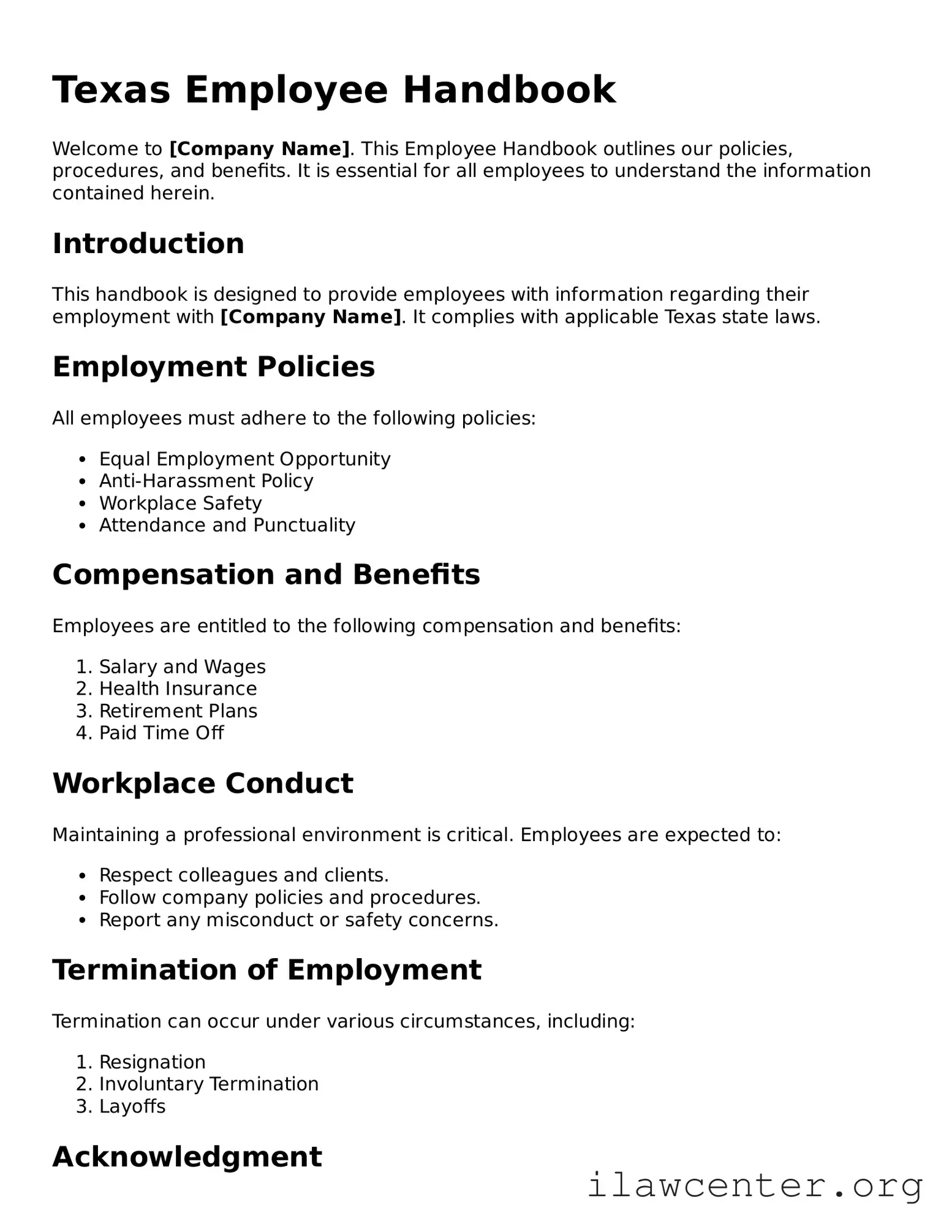
Texas Employee Handbook Preview

Texas Employee Handbook

Welcome to [Company Name]. This Employee Handbook outlines our policies, procedures, and benefits. It is essential for all employees to understand the information contained herein.

Introduction

This handbook is designed to provide employees with information regarding their employment with [Company Name]. It complies with applicable Texas state laws.

Employment Policies

All employees must adhere to the following policies:

  • Equal Employment Opportunity
  • Anti-Harassment Policy
  • Workplace Safety
  • Attendance and Punctuality

Compensation and Benefits

Employees are entitled to the following compensation and benefits:

  1. Salary and Wages
  2. Health Insurance
  3. Retirement Plans
  4. Paid Time Off

Workplace Conduct

Maintaining a professional environment is critical. Employees are expected to:

  • Respect colleagues and clients.
  • Follow company policies and procedures.
  • Report any misconduct or safety concerns.

Termination of Employment

Termination can occur under various circumstances, including:

  1. Resignation
  2. Involuntary Termination
  3. Layoffs

Acknowledgment

All employees must sign an acknowledgment form indicating they have read and understood the Employee Handbook.

For questions regarding this handbook or any policies, please contact [HR Contact Name] at [HR Contact Email].

PDF Form Characteristics

Fact Name Details
Purpose The Texas Employee Handbook serves as a guide for employees, outlining company policies, procedures, and expectations.
Governing Law The handbook is governed by Texas labor laws, including the Texas Labor Code and various federal employment regulations.
Customization Employers can tailor the handbook to reflect their unique workplace culture and specific policies.
Legal Protection A well-crafted handbook can provide legal protection for employers by clearly communicating policies and reducing misunderstandings.

Instructions on Utilizing Texas Employee Handbook

Completing the Texas Employee Handbook form is an important step in ensuring that you understand the policies and procedures of your workplace. After filling out the form, it will be submitted to your HR department for review. This process helps maintain clear communication and sets expectations for your employment.

  1. Begin by gathering necessary personal information, including your full name, address, and contact details.
  2. Locate the section that asks for your job title and department. Fill in this information accurately.
  3. Review the handbook thoroughly before proceeding. Make sure to note any specific policies that are relevant to your position.
  4. In the designated area, indicate your acknowledgment of having read and understood the handbook. This may involve signing your name and dating the form.
  5. Double-check all entries for accuracy and completeness.
  6. Submit the completed form to your HR representative, either electronically or in person, as instructed.

Important Facts about Texas Employee Handbook

What is the Texas Employee Handbook form?

The Texas Employee Handbook form is a document that outlines the policies, procedures, and expectations for employees within a Texas-based organization. It serves as a guide to help employees understand their rights and responsibilities, as well as the company's rules and regulations. This handbook can cover various topics, including workplace conduct, benefits, and safety protocols.

Why is it important to have an Employee Handbook?

An Employee Handbook is crucial for establishing clear communication between employers and employees. It helps ensure that everyone is on the same page regarding company policies. Additionally, having a well-drafted handbook can protect the organization from potential legal issues by demonstrating that employees have been informed about company policies and procedures.

Who should receive a copy of the Employee Handbook?

Every employee should receive a copy of the Employee Handbook, including new hires and existing staff. It is important that all employees have access to this information to understand the company's expectations and their rights. Employers may choose to provide physical copies, digital versions, or both, depending on their preferences and resources.

How often should the Employee Handbook be updated?

Regular updates to the Employee Handbook are essential to keep it relevant and compliant with current laws and regulations. It is advisable to review the handbook at least once a year or whenever there are significant changes in company policies or applicable laws. This ensures that employees are always informed of the latest information.

What should be included in the Employee Handbook?

An effective Employee Handbook should include a variety of topics. Common sections might cover company history, mission and values, employment policies, workplace conduct, benefits, leave policies, and procedures for reporting grievances. It is also beneficial to include a disclaimer stating that the handbook is not a contract of employment, which helps clarify the relationship between the employer and employees.
Common mistakes

Filling out the Texas Employee Handbook form can seem straightforward, but many individuals make common mistakes that can lead to confusion or delays. One frequent error is not reading the instructions carefully. Each section of the form has specific requirements, and overlooking these can result in incomplete submissions.

Another common mistake is providing inaccurate personal information. It's essential to double-check your name, address, and contact details. Even a small typo can lead to issues with communication or payroll. Similarly, failing to update this information when changes occur can create unnecessary complications.

Many people also neglect to sign and date the form. This step may seem minor, but without a signature, the form may be considered invalid. Ensure that you not only sign but also date the form accurately to confirm when it was completed.

Additionally, some individuals fail to review the entire handbook before signing. Understanding the policies and procedures outlined in the handbook is crucial. By skipping this step, employees may inadvertently agree to terms they do not fully comprehend.

Another mistake is overlooking the section on acknowledgments. This part often requires employees to confirm their understanding of specific policies. Ignoring this section can lead to misunderstandings later on regarding workplace expectations.

Some individuals may also rush through the form, leading to incomplete answers. Take your time to ensure that every question is answered thoroughly. Incomplete forms can delay processing and may require additional follow-up.

Moreover, misunderstanding the confidentiality agreement can be problematic. Employees must recognize what information is considered confidential and the importance of maintaining that confidentiality. Failing to do so can have serious implications for both the employee and the employer.

Another mistake is not keeping a copy of the completed form. After submission, it's wise to retain a copy for personal records. This can be helpful for future reference or if any questions arise regarding the information provided.

Finally, failing to ask questions when uncertain is a significant oversight. If any part of the form or handbook is unclear, employees should seek clarification. Open communication can prevent misunderstandings and ensure that all parties are on the same page.

Documents used along the form

When creating a comprehensive employee handbook in Texas, several other forms and documents often accompany it. These documents help clarify policies, ensure compliance with labor laws, and foster a positive workplace environment. Below are some commonly used forms that complement the Texas Employee Handbook.

  • Job Description Form: This document outlines the specific duties, responsibilities, and qualifications for each position within the organization. It serves as a reference for both employees and management, ensuring everyone understands what is expected in their roles.
  • Employment Application: This form collects essential information from job applicants, including their work history, education, and references. It helps employers assess candidates and make informed hiring decisions.
  • Employee Acknowledgment Form: After reviewing the employee handbook, this form requires employees to acknowledge that they have read and understood the policies outlined. This documentation can be crucial in case of disputes regarding policy enforcement.
  • Performance Evaluation Form: This document is used to assess an employee’s job performance over a specific period. It provides a structured way to give feedback, set goals, and discuss career development with employees.
  • Leave of Absence Request Form: Employees use this form to formally request time off for various reasons, such as medical leave or personal matters. It ensures that leave requests are documented and processed according to company policy.

Utilizing these forms in conjunction with the Texas Employee Handbook can enhance communication, clarify expectations, and promote a healthy workplace culture. It is beneficial for both employers and employees to have clear documentation that supports the overall objectives of the organization.

Similar forms

The Employee Handbook serves as a key resource for employees and can be compared to several other documents. Each of these documents provides important information regarding workplace policies and procedures. Below are five documents that are similar to the Employee Handbook:

  • Onboarding Manual: This document outlines the initial steps new employees must take when joining the company. It includes information on training, orientation, and company culture, much like the Employee Handbook.
  • Policy Manual: A policy manual details specific company policies and procedures. It serves a similar purpose by clarifying expectations and guidelines for employee behavior and performance.
  • Code of Conduct: The Code of Conduct specifies the ethical standards and behavioral expectations for employees. It aligns with the Employee Handbook by promoting a respectful and professional workplace environment.
  • Benefits Guide: This guide explains the various employee benefits offered by the company. It complements the Employee Handbook by providing detailed information on health insurance, retirement plans, and other perks.
  • Safety Manual: The Safety Manual outlines procedures and protocols for maintaining a safe work environment. Similar to the Employee Handbook, it emphasizes the importance of safety and compliance with regulations.

Dos and Don'ts

When filling out the Texas Employee Handbook form, it’s important to follow certain guidelines to ensure accuracy and compliance. Here’s a list of things you should and shouldn’t do:

  • Do: Read the entire form carefully before starting.
  • Do: Provide accurate and complete information.
  • Do: Ask questions if you’re unsure about any part of the form.
  • Do: Keep a copy of the completed form for your records.
  • Don't: Rush through the form; take your time to avoid mistakes.
  • Don't: Leave any required fields blank.
  • Don't: Use abbreviations or shorthand that may cause confusion.
  • Don't: Ignore the instructions provided with the form.

Misconceptions

When it comes to the Texas Employee Handbook form, several misconceptions can lead to confusion among employers and employees alike. Here are four common misunderstandings:

  1. All Employee Handbooks are the Same:

    Many believe that employee handbooks are interchangeable across different companies. In reality, each handbook should reflect the specific policies, culture, and legal requirements of the organization.

  2. Employee Handbooks are Not Legally Binding:

    Some assume that handbooks are merely guidelines and hold no legal weight. However, if a handbook outlines specific policies and procedures, it can be considered a binding document, potentially influencing employment disputes.

  3. Updating the Handbook is Optional:

    There is a misconception that once an employee handbook is created, it does not need regular updates. In fact, laws and workplace policies change frequently, making it essential to review and revise the handbook regularly.

  4. Only HR Needs to Understand the Handbook:

    Some people think that only human resources personnel need to be familiar with the employee handbook. In truth, all employees should understand the handbook to know their rights and responsibilities within the organization.

Key takeaways

When filling out and using the Texas Employee Handbook form, there are several important points to keep in mind. These takeaways can help ensure that the handbook is effective and compliant with relevant laws.

  • Understand the Purpose: The employee handbook serves as a guide for employees, outlining company policies, procedures, and expectations.
  • Customization is Key: Tailor the handbook to reflect the specific culture and practices of your organization. Generic templates may not address unique needs.
  • Legal Compliance: Ensure that the handbook complies with federal, state, and local laws. This includes labor laws, anti-discrimination policies, and workplace safety regulations.
  • Clear Language: Use straightforward language to make the handbook accessible to all employees. Avoid complex legal terms that may confuse readers.
  • Regular Updates: Review and update the handbook regularly to reflect changes in laws, policies, or organizational structure. An outdated handbook can lead to misunderstandings.
  • Employee Acknowledgment: Include a section for employees to sign, acknowledging that they have received and understood the handbook. This can be crucial in legal situations.
  • Dissemination: Distribute the handbook to all employees, whether in print or digital format. Ensure that everyone has access to this important resource.
  • Training and Orientation: Incorporate the handbook into employee training and orientation programs. This helps reinforce policies and expectations from the start.

By keeping these key takeaways in mind, organizations can create an employee handbook that not only informs but also protects both the employer and the employees.