Texas Employment Verification PDF Template

Texas Employment Verification PDF Template

The Texas Employment Verification form is a document used by employers to confirm the employment status of individuals applying for state benefits. This form requires employers to provide specific details about the employee's job, including pay rates and employment duration. To ensure a smooth process, it is essential for employers to fill out and return this form promptly.

For assistance in completing the Texas Employment Verification form, click the button below.

Article Guide

The Texas Employment Verification form serves a critical role in the employment and benefits landscape for both employees and employers. This form is essential for verifying the employment status of individuals who are applying for state benefits. Employers must complete it accurately and return it promptly to ensure that employees receive the assistance they need. Key components of the form include the employee's name, address, and Social Security number, which the employer must confirm. The employer is also required to provide details about the employee's job type, rate of pay, and hours worked, among other specifics. This information helps the Texas Health and Human Services Commission assess eligibility for benefits. Additionally, the form outlines the process for employers, including how to submit the completed document, whether by mail, fax, or directly to the employee. Understanding the requirements and implications of this form is vital for both parties, as it not only impacts the employee's access to benefits but may also influence the employer's tax credits and refunds related to hiring individuals who receive state assistance.

Texas Employment Verification Preview

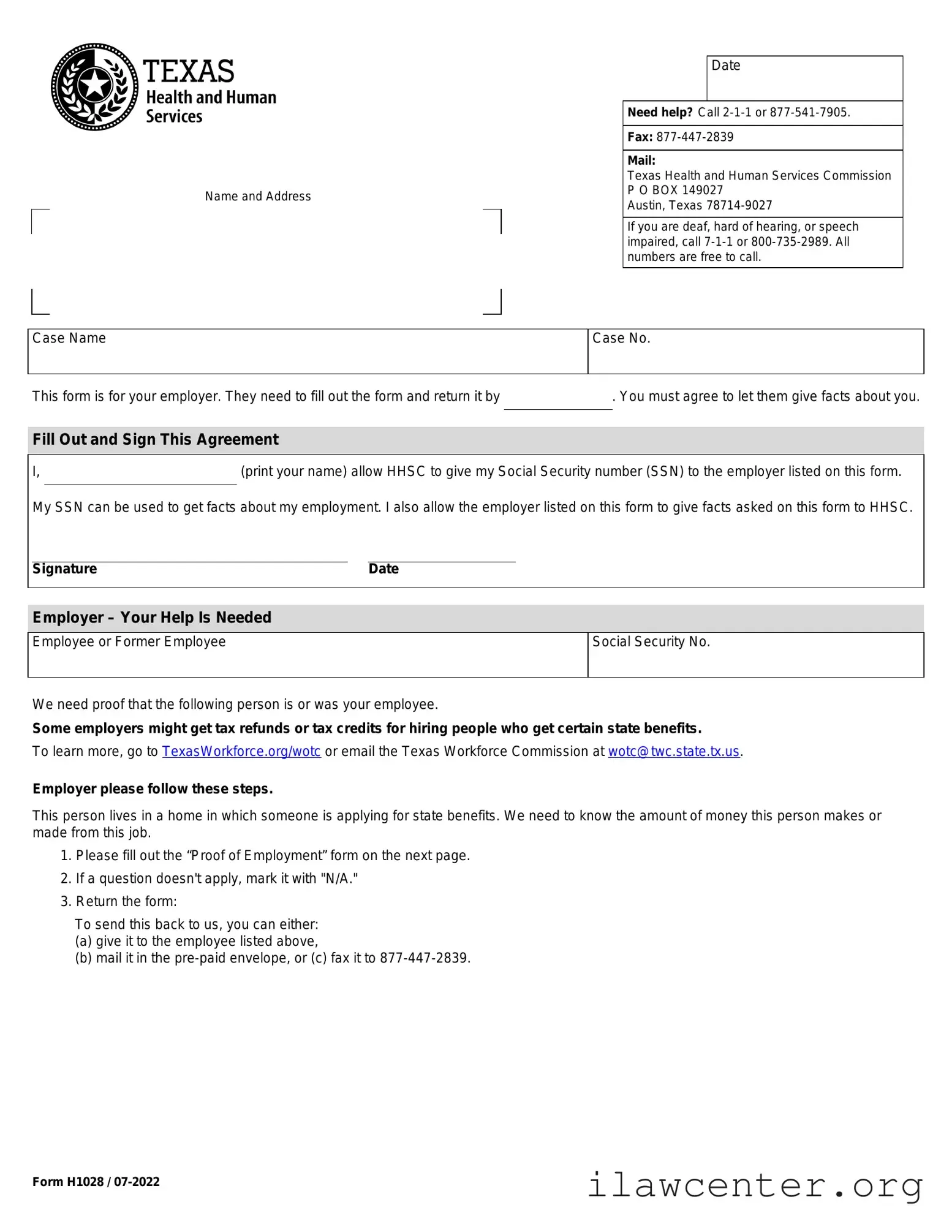
Name and Address
Form H1028 / 07-2022
Date
Need help? Call 2-1-1 or 877-541-7905.
Fax: 877-447-2839
Mail:
Texas Health and Human Services Commission
P O BOX 149027
Austin, Texas 78714-9027
If you are deaf, hard of hearing, or speech
impaired, call 7-1-1 or 800-735-2989. All
numbers are free to call.
Case Name Case No.
This form is for your employer. They need to fill out the form and return it by . You must agree to let them give facts about you.
Fill Out and Sign This Agreement
I,
(print your name) allow HHSC to give my Social Security number (SSN) to the employer listed on this form.
My SSN can be used to get facts about my employment. I also allow the employer listed on this form to give facts asked on this form to HHSC.
Signature Date
Employer – Your Help Is Needed
Employee or Former Employee Social Security No.
We need proof that the following person is or was your employee.
Some employers might get tax refunds or tax credits for hiring people who get certain state benefits.
To learn more, go to TexasWorkforce.org/wotc or email the Texas Workforce Commission at wotc@twc.state.tx.us
.
Employer please follow these steps.
This person lives in a home in which someone is applying for state benefits. We need to know the amount of money this person makes or
made from this job.
1. Please fill out the “Proof of Employment” form on the next page.
2. If a question doesn't apply, mark it with "N/A."
3. Return the form:
To send this back to us, you can either:
(a) give it to the employee listed above,
(b) mail it in the pre-paid envelope, or (c) fax it to 877-447-2839.
Employment Verification
Form H1028
Page 2 / 07-2022-E
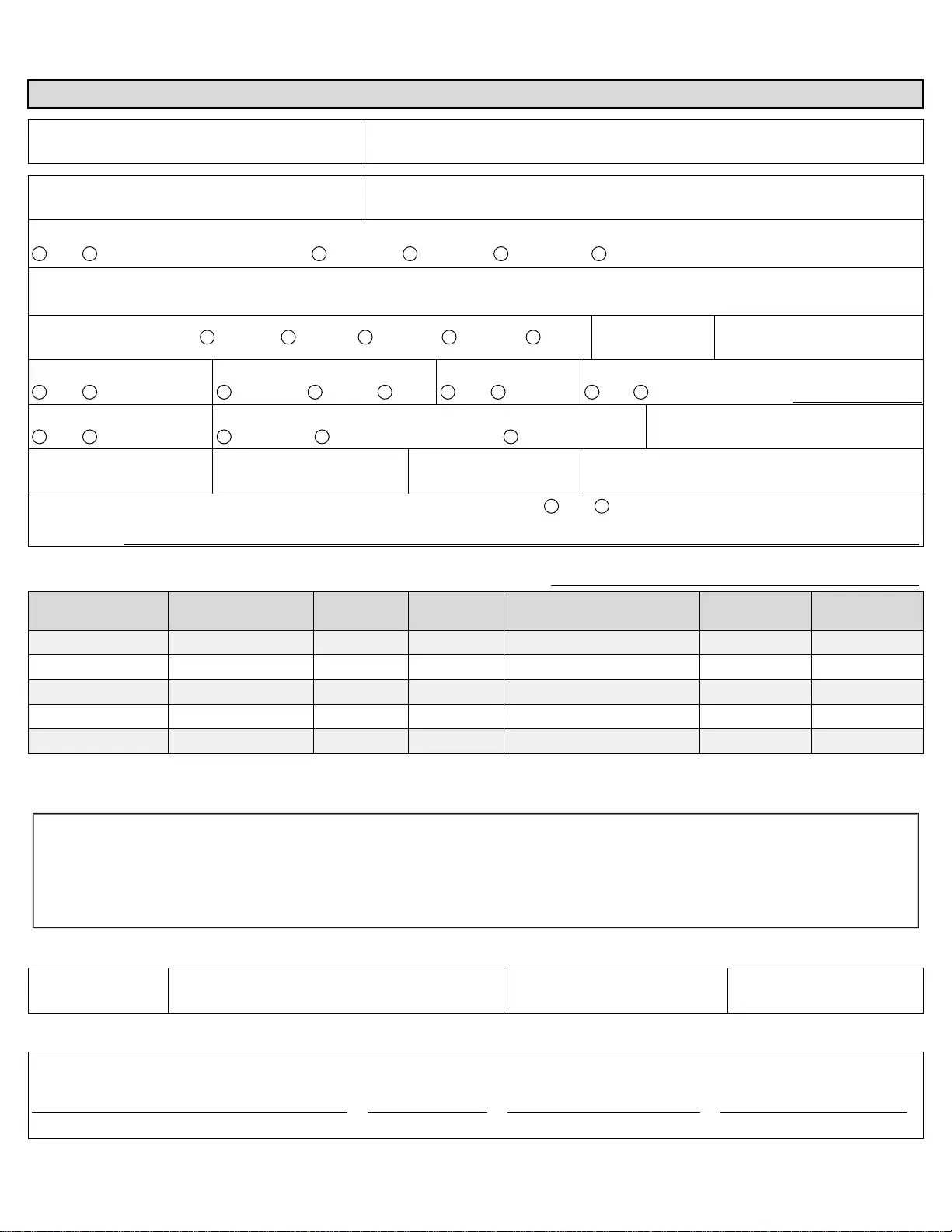
Proof of employment to be filled out by the employer.
Company or Employer
Address (Street, City, State, ZIP code)
Employee Name (as shown on your records) Employee Address (Street, City, State, ZIP Code – as shown on your records)
Is (or was) this person employed by you?
Yes No
If yes, what type of job?
Full Time Part Time Permanent Temporary
If no: Stop here – sign and date the bottom of this form and return it.
If yes: Answer all the questions below. If a question doesn’t apply, write “N/A".
Rate of Pay
Per Hour Per Day Per Week Per Month Per Job
How Often Paid? Average Hours Per Pay Period
Commissions Tips Bonuses
Yes No
Overtime Pay
Frequently Rarely Never
FICA or FIT Withheld
Yes No
Profit Sharing or Pension Plan
Yes No
If yes, current value?
Health insurance available?
Yes No
If yes, employee is:
Not Enrolled Enrolled with Family Member Enrolled for Self Only
Name of Insurance Company
Date Hired Date First Check Received Average Hours Per Week If Employee is or was on Leave Without Pay:
Start Date: End Date:
Do you expect any changes to the above information within the next few months?
Yes No
If yes, explain:
On the chart below, list all wages received by this employee during the month(s) of:
Date Pay
Period Ended
Date Employee
Received Paycheck
Actual
Hours
Gross
Pay
Other Pay*
(tips, commissions, bonuses)
EITC
Advance
Total Pretax
Contributions
* Please explain (in comments section below) when and how often tips, commissions, or bonuses are received.
Comments
If this person is no longer in your employ.
Date Separated Reason for Separation Date Final Check Received Gross Amount of Final Check
Employer – Read, Sign and Date
I confirm that this information is true and correct to the best of my knowledge:
Employer Signature Date Title Area Code and Phone No.

File Properties

Fact Name Details
Purpose The Texas Employment Verification form is used by employers to verify an employee's employment status for state benefits applications.
Governing Law This form is governed by Texas state law, specifically related to the administration of state benefits.
Who Fills It Out Employers are responsible for completing the form and returning it to the Texas Health and Human Services Commission.
Employee Consent Employees must agree to allow their employers to share their employment information with the state.
Contact Information If assistance is needed, individuals can call 2-1-1 or 877-541-7905 for help.
Submission Options The completed form can be mailed, faxed, or handed directly to the employee for submission.
Information Required Employers must provide details like employee's job type, rate of pay, and employment duration.
Leave Without Pay Employers must indicate if the employee was on leave without pay, including start and end dates.
Health Insurance The form includes questions about health insurance availability for the employee.
Final Check Details If the employee is no longer employed, the employer must provide details about the separation and final paycheck.

Instructions on Utilizing Texas Employment Verification

Filling out the Texas Employment Verification form is an important step in providing necessary information about an employee’s work history. This process involves both the employee and the employer, ensuring that all details are accurate and complete. Below are the steps to guide you through filling out the form effectively.

  1. Start with your personal information: Write your name and address at the top of the form.
  2. Provide the date: Enter the date on which you are completing the form.
  3. Employer details: The employer should fill in their company name and address, including street, city, state, and ZIP code.
  4. Employee information: Include the employee's name and address as it appears in your records.
  5. Employment status: Indicate whether the person is currently employed by checking “Yes” or “No.” If “Yes,” specify the type of job (Full Time, Part Time, Permanent, Temporary).
  6. Rate of pay: Fill in the employee's rate of pay (per hour, day, week, month, or job) and how often they are paid.
  7. Average hours: Record the average hours the employee works per pay period.
  8. Additional compensation: Note any commissions, tips, bonuses, or overtime pay the employee receives, as well as if FICA or FIT is withheld.
  9. Health insurance: Indicate if health insurance is available and the employee's enrollment status.
  10. Employment dates: Fill in the date hired and the date the first check was received.
  11. Leave information: If applicable, provide the start and end dates of any leave without pay.
  12. Future changes: Indicate if any changes to the employment information are expected in the coming months.
  13. Wage chart: Complete the chart with dates, pay periods, actual hours worked, gross pay, and any other pay received during the specified months.
  14. Separation details: If the employee is no longer with the company, provide the separation date, reason for separation, and the date and gross amount of the final check.
  15. Employer confirmation: The employer must sign and date the form, confirming the information is true and correct.

After completing the form, it’s essential to return it promptly. The employer can give it directly to the employee, mail it in the pre-paid envelope, or fax it to the designated number. Ensuring timely submission helps in processing the necessary benefits efficiently.

Important Facts about Texas Employment Verification

What is the purpose of the Texas Employment Verification form?

The Texas Employment Verification form is used to verify the employment status of an individual who is applying for state benefits. This form must be completed by the employer and returned to the Texas Health and Human Services Commission (HHSC). It helps HHSC determine the individual's eligibility for benefits based on their employment and income.

Who is required to fill out the Employment Verification form?

The employer of the individual applying for state benefits is responsible for completing the Employment Verification form. This includes providing details about the employee's job status, rate of pay, and other relevant employment information.

How should the employer submit the completed form?

The employer can submit the completed form in several ways. They can give it directly to the employee, mail it using the pre-paid envelope provided, or fax it to the designated number, which is 877-447-2839. All submission methods are free of charge.

What information is needed from the employer on the form?

The form requires the employer to provide various details, including the employee's name, job type, rate of pay, average hours worked, and whether the employee is enrolled in health insurance. Additionally, the employer must confirm the employment status and provide information regarding any wages received during specified pay periods.

What if the employer cannot provide certain information requested on the form?

If a specific question on the form does not apply to the employee, the employer should indicate this by marking "N/A" in the relevant section. This ensures that all required fields are addressed appropriately.

What should an employer do if the employee is no longer employed?

If the individual is no longer employed, the employer must indicate the date of separation and the reason for leaving on the form. They should also provide the date the final paycheck was issued and the gross amount of that check.

Is there a contact number for assistance with the Employment Verification form?

Yes, employers or employees needing assistance can call 2-1-1 or 877-541-7905 for help. Additionally, individuals who are deaf, hard of hearing, or speech impaired can reach out using 7-1-1 or 800-735-2989. All these numbers are free to call.

What happens if the employer does not complete the form?

If the employer fails to complete and return the Employment Verification form, it may delay the processing of the employee's application for state benefits. It is crucial for the employer to provide accurate and timely information to ensure the employee's eligibility is assessed correctly.

Common mistakes

Filling out the Texas Employment Verification form can be straightforward, but several common mistakes can lead to delays or complications. One frequent error is not providing complete and accurate information. Employers must ensure that all sections of the form are filled out, including the employee's name and address, as these details are crucial for verification.

Another mistake is failing to mark questions that do not apply. If a question does not pertain to the employee's situation, it should be marked with "N/A." Leaving these questions blank can create confusion and may result in the form being returned for clarification.

Many employers overlook the importance of signing and dating the form. This step is essential, as it confirms that the information provided is accurate to the best of their knowledge. Without a signature, the form may be considered incomplete.

Incorrectly reporting the employee's rate of pay is another common issue. Employers should ensure they provide the correct rate and specify whether it is per hour, day, week, or month. Misreporting this information can lead to misunderstandings regarding the employee's earnings.

Employers sometimes forget to include all forms of compensation. The form requests details about bonuses, commissions, and tips. If these are applicable, they should be clearly documented to give a complete picture of the employee’s earnings.

Inaccuracies in the dates can also cause problems. Employers must provide the correct date of hire, the date the first check was received, and any relevant leave dates. Errors in these dates can delay the verification process.

Employers should also be mindful of the need for clarity in the comments section. If there are specifics about how often tips, commissions, or bonuses are received, this should be explained clearly. Ambiguities can lead to further inquiries from the Texas Health and Human Services Commission.

Another mistake is not providing the employer’s contact information. Including a phone number and area code is essential for any follow-up questions or clarifications that may arise during the verification process.

Some employers might forget to check for expected changes in employment status. If there are anticipated changes in the employee's information, such as a change in pay rate or job status, this should be noted on the form.

Lastly, failing to return the form promptly can lead to delays in the employee's benefits. Employers should ensure that the completed form is returned via the preferred method—whether by mail, fax, or given directly to the employee—within the specified timeframe.

Documents used along the form

When completing the Texas Employment Verification form, several other documents may be required to provide a comprehensive overview of an employee's work history and benefits. These documents can help clarify the employment status and ensure that all necessary information is accurately reported. Below is a list of commonly used forms and documents that accompany the Texas Employment Verification form.

  • W-2 Form: This form reports an employee's annual wages and the taxes withheld from their paycheck. It is essential for verifying income and tax contributions.
  • Pay Stubs: These documents provide a detailed breakdown of an employee's earnings for each pay period, including deductions for taxes and benefits.
  • IRS Form 1099: Used for independent contractors, this form reports income earned outside of traditional employment, useful for verifying self-employment income.
  • Employment Offer Letter: This letter outlines the terms of employment, including job title, salary, and start date, serving as proof of employment agreement.
  • Job Description: A document detailing the responsibilities and expectations of a position, which can help clarify the nature of the employment.
  • Termination Letter: If applicable, this letter provides official notice of employment termination, including the reason and final pay details.
  • Reference Letters: Letters from previous employers or supervisors can support claims of employment and provide insight into the employee’s work ethic and skills.
  • Health Insurance Enrollment Forms: These documents show whether an employee is enrolled in health benefits, which can be relevant for verifying eligibility for state benefits.
  • Leave of Absence Documentation: If an employee has taken leave, this documentation details the duration and reason for the absence, which may impact employment verification.
  • Social Security Administration Verification: This document confirms an individual's earnings history and can be used to verify income for benefits purposes.

Collectively, these documents can provide a clearer picture of an individual's employment status and history. It is crucial to gather all relevant information to ensure compliance with state requirements and facilitate the verification process. Proper documentation not only supports the Texas Employment Verification form but also aids in the overall assessment of eligibility for various state benefits.

Similar forms

The Texas Employment Verification form is an essential document for employers and employees, particularly in the context of state benefits. Several other documents serve similar purposes in verifying employment and income. Here are eight documents that share similarities with the Texas Employment Verification form:

  • W-2 Form: This form is provided by employers to report annual wages and taxes withheld. Like the Texas Employment Verification form, it confirms employment status and income, making it crucial for tax purposes and financial assistance applications.
  • Pay Stubs: Pay stubs detail an employee's earnings for a specific pay period. They provide proof of income, similar to the Texas Employment Verification form, and are often required for loan applications and government assistance programs.
  • Employment Verification Letter: This letter is typically written by an employer to confirm an employee's job title, salary, and employment dates. It serves the same purpose as the Texas form in providing proof of employment for various applications.
  • Form I-9: Used to verify an employee's identity and eligibility to work in the U.S., the I-9 form is essential for employment verification. It complements the Texas Employment Verification form by confirming legal work status.
  • Social Security Administration (SSA) Verification: This document confirms an individual's earnings history as reported to the SSA. It is similar to the Texas form in that it verifies income and employment history for benefits and loans.
  • Unemployment Benefits Verification: This document is used to confirm an individual's eligibility for unemployment benefits. It parallels the Texas Employment Verification form by providing necessary employment information to state agencies.
  • Tax Return Documents: Personal tax returns often include income statements that verify employment and earnings. They serve a similar function as the Texas Employment Verification form when applying for loans or assistance.
  • Form 1099: For independent contractors, the 1099 form reports income earned outside of traditional employment. It provides proof of earnings, akin to the Texas Employment Verification form for those who are self-employed.

Each of these documents plays a vital role in establishing employment and income verification, ensuring that individuals receive the benefits and services they need.

Dos and Don'ts

When filling out the Texas Employment Verification form, it’s important to ensure accuracy and clarity. Here’s a helpful list of things to do and avoid during the process:

  • Do provide accurate information about the employee's job status.
  • Do fill out the “Proof of Employment” section completely.
  • Do mark any questions that do not apply with "N/A."
  • Do return the completed form promptly using the methods provided.
  • Do keep a copy of the completed form for your records.
  • Don't leave any sections blank unless they are not applicable.
  • Don't provide false or misleading information.
  • Don't forget to sign and date the form before submitting it.
  • Don't ignore the privacy consent regarding the employee's Social Security number.
  • Don't delay in sending the form back, as it may affect the employee's benefits.

Misconceptions

Here are seven common misconceptions about the Texas Employment Verification form:

  • This form is only for current employees. Many believe that the form is only needed for those currently employed. In reality, it can also be used for former employees to verify past employment.
  • Employers must provide personal information without consent. Some think employers can share employee details freely. However, employees must agree to let their information be shared before it can be disclosed.
  • The form is complicated and hard to fill out. While it may seem overwhelming, the form is designed to be straightforward. Employers can easily follow the instructions to complete it.
  • All employers are required to fill out this form. Not every employer is obligated to complete the form. It is specifically needed when an employee is applying for state benefits.
  • Only full-time employees need verification. This is not true. Part-time, temporary, and seasonal employees also require verification when applying for benefits.
  • There are fees associated with submitting the form. Many people think there are costs involved. In fact, all the numbers provided for assistance are free to call, and there are no fees for submitting the form.
  • Employers can ignore questions that do not apply. Some may believe they can skip questions. However, if a question does not apply, they should simply mark it with "N/A" instead of leaving it blank.

Key takeaways

  • The Texas Employment Verification form is essential for employers to provide proof of employment for individuals applying for state benefits.

  • Employers must fill out the form completely, including details about the employee's job type, pay rate, and hours worked.

  • When filling out the form, if a question does not apply, employers should indicate this by marking it as "N/A."

  • It’s crucial for the employee to consent to the release of their Social Security number, allowing the employer to share employment information with the Texas Health and Human Services Commission.

  • Employers can return the completed form in several ways: giving it directly to the employee, mailing it in a pre-paid envelope, or faxing it to the provided number.

  • Accuracy is vital. Employers must ensure that all information is true and correct to avoid complications, as they are required to sign and date the form.