Attorney-Verified  Firearm Bill of Sale Document for Texas

Attorney-Verified Firearm Bill of Sale Document for Texas

The Texas Firearm Bill of Sale form is a legal document used to record the sale or transfer of a firearm between individuals in Texas. This form ensures that both the buyer and seller have a clear understanding of the transaction and helps protect their rights. For a smooth and compliant transfer, consider filling out the form by clicking the button below.

Article Guide

The Texas Firearm Bill of Sale form serves as an essential document for anyone involved in the buying or selling of firearms within the state. This form provides a clear record of the transaction, capturing vital details such as the names and addresses of both the buyer and the seller, the date of the sale, and a description of the firearm being transferred. It also includes information about the serial number, which helps to establish the firearm's identity. By using this form, individuals can ensure that they are complying with Texas laws regarding firearm sales, making the process smoother and more transparent. Additionally, having a bill of sale can offer protection for both parties in case any disputes arise in the future. Overall, this form is not just a legal requirement; it promotes responsible firearm ownership and helps maintain accountability in the marketplace.

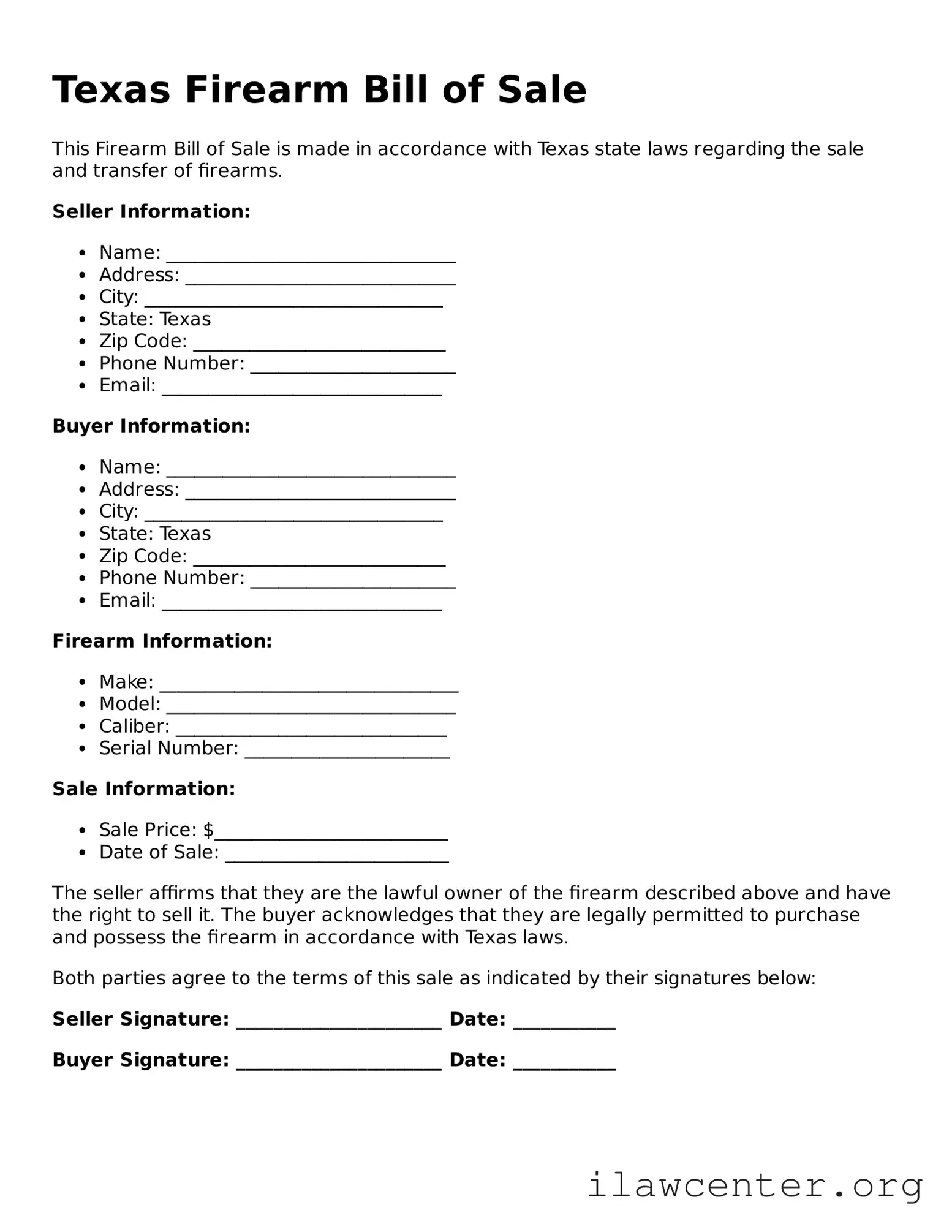
Texas Firearm Bill of Sale Preview

Texas Firearm Bill of Sale

This Firearm Bill of Sale is made in accordance with Texas state laws regarding the sale and transfer of firearms.

Seller Information:

  • Name: _______________________________
  • Address: _____________________________
  • City: ________________________________
  • State: Texas
  • Zip Code: ___________________________
  • Phone Number: ______________________
  • Email: ______________________________

Buyer Information:

  • Name: _______________________________
  • Address: _____________________________
  • City: ________________________________
  • State: Texas
  • Zip Code: ___________________________
  • Phone Number: ______________________
  • Email: ______________________________

Firearm Information:

  • Make: ________________________________
  • Model: _______________________________
  • Caliber: _____________________________
  • Serial Number: ______________________

Sale Information:

  • Sale Price: $_________________________
  • Date of Sale: ________________________

The seller affirms that they are the lawful owner of the firearm described above and have the right to sell it. The buyer acknowledges that they are legally permitted to purchase and possess the firearm in accordance with Texas laws.

Both parties agree to the terms of this sale as indicated by their signatures below:

Seller Signature: ______________________ Date: ___________

Buyer Signature: ______________________ Date: ___________

PDF Form Characteristics

Fact Name Description
Purpose The Texas Firearm Bill of Sale form is used to document the sale or transfer of a firearm between private parties.
Legal Requirement While not required by law, it is highly recommended to have a bill of sale for legal protection and clarity in transactions.
Governing Law The form is governed by Texas Penal Code Section 46.06, which outlines the regulations for firearm transfers.
Information Included The form typically includes details such as the names and addresses of both the buyer and seller, the firearm's description, and the sale date.
Record Keeping Both parties should keep a copy of the completed bill of sale for their records, which can be useful in case of future disputes.

Instructions on Utilizing Texas Firearm Bill of Sale

Once you have the Texas Firearm Bill of Sale form ready, you will need to complete it accurately to ensure a smooth transaction. This form is essential for documenting the sale of a firearm between a buyer and a seller in Texas. Follow these steps to fill it out properly.

  1. Obtain the Form: Make sure you have a copy of the Texas Firearm Bill of Sale form. You can find it online or request a physical copy.
  2. Seller Information: Fill in the seller's full name, address, and contact information. This information should be accurate and up to date.
  3. Buyer Information: Next, enter the buyer's full name, address, and contact information. Double-check for any typos.
  4. Firearm Description: Provide a detailed description of the firearm being sold. Include the make, model, caliber, and serial number. This ensures clarity about the item being transferred.
  5. Sale Price: Clearly state the sale price of the firearm. This amount should reflect the agreed-upon price between the buyer and seller.
  6. Date of Sale: Write the date when the transaction is taking place. This is important for record-keeping.
  7. Signatures: Both the buyer and seller must sign the form. Ensure that both parties have signed and dated it to validate the transaction.

After completing the form, keep a copy for your records. The buyer should also retain their copy. This documentation serves as proof of the transaction and can be important for future reference.

Important Facts about Texas Firearm Bill of Sale

What is a Texas Firearm Bill of Sale form?

A Texas Firearm Bill of Sale form is a document that records the sale or transfer of a firearm between two parties. It provides proof of the transaction and includes essential details such as the buyer's and seller's names, addresses, and the firearm's description, including its make, model, and serial number. This form helps protect both parties in case of future disputes regarding ownership.

Is a Bill of Sale required for firearm transactions in Texas?

While Texas law does not require a Bill of Sale for private firearm transactions, it is highly recommended. Having a Bill of Sale can provide legal protection and documentation of the transaction. It can also serve as evidence of ownership should any legal issues arise in the future.

What information should be included in the Texas Firearm Bill of Sale?

The Texas Firearm Bill of Sale should include the following information: the full names and addresses of both the buyer and seller, a detailed description of the firearm (including make, model, caliber, and serial number), the date of the transaction, and the purchase price. Both parties should sign and date the document to validate the transaction.

Do I need to have the Bill of Sale notarized?

No, notarization is not required for a Texas Firearm Bill of Sale. However, having the document notarized can add an extra layer of authenticity and may help in case of any disputes. It is advisable to keep a copy of the signed Bill of Sale for your records.

Can I use a generic Bill of Sale template for firearms?

Yes, you can use a generic Bill of Sale template, but it is important to ensure that it includes all necessary details specific to the firearm transaction. Using a template specifically designed for firearms can help ensure that all legal requirements are met and that both parties are adequately protected.

What should I do if I lose my Bill of Sale?

If you lose your Bill of Sale, it may be difficult to prove ownership of the firearm. It is advisable to keep multiple copies in different locations. If you need to recreate the Bill of Sale, you can ask the seller to provide a new one or draft a new document that includes all relevant details and is signed by both parties.

Are there any age restrictions for purchasing a firearm in Texas?

Yes, there are age restrictions in Texas. Generally, individuals must be at least 18 years old to purchase a firearm from a private seller. However, federal law requires that individuals be at least 21 years old to purchase a handgun from a licensed dealer. Always check both state and federal laws to ensure compliance.

Common mistakes

Filling out the Texas Firearm Bill of Sale form can seem straightforward, but many people make common mistakes that can lead to complications. One frequent error is providing inaccurate personal information. Buyers and sellers must ensure that names, addresses, and contact details are correct. A small typo can create confusion and may even affect the legality of the transaction.

Another mistake involves failing to include all necessary details about the firearm itself. The form requires specific information such as the make, model, and serial number of the firearm. Omitting any of these details can render the bill of sale incomplete, which could pose problems if the transaction is ever questioned.

People often overlook the importance of signatures. Both the buyer and seller must sign the form to validate the transaction. Without both signatures, the document may not hold up in legal situations. This oversight can lead to disputes or challenges regarding ownership in the future.

Lastly, some individuals neglect to keep a copy of the completed form. After the sale, it's essential for both parties to retain a copy for their records. This documentation serves as proof of the transaction and can be crucial if any issues arise later. Keeping a copy ensures that both the buyer and seller have access to the details of the sale, providing peace of mind.

Documents used along the form

The Texas Firearm Bill of Sale form is an important document for individuals engaging in the private sale or transfer of firearms. Alongside this form, several other documents may be utilized to ensure compliance with legal requirements and to facilitate a smooth transaction. Below is a list of these forms and documents, each serving a specific purpose in the process of firearm transfer.

  • Texas License to Carry (LTC): This document certifies that an individual has completed the necessary training and background checks to carry a handgun in public. It is important for verifying the legality of carrying a firearm.
  • Federal Firearms License (FFL): Issued by the Bureau of Alcohol, Tobacco, Firearms and Explosives (ATF), this license allows individuals or businesses to sell firearms legally. It is often used in transactions involving dealers.
  • Background Check Consent Form: This form is used to obtain permission from the buyer to conduct a background check. It helps ensure that the buyer is legally eligible to purchase a firearm.
  • Affidavit of Eligibility: A sworn statement by the buyer affirming their eligibility to own a firearm. This document can provide additional assurance to the seller regarding the buyer's legal status.
  • Firearm Transfer Record: This record documents the details of the firearm being transferred, including its make, model, and serial number. It serves as a formal record of the transaction.
  • Receipt for Firearm Sale: A simple receipt that confirms the sale of the firearm, including the date, price, and details of the firearm. This document can serve as proof of purchase for both parties.
  • Identification Verification: A copy of a government-issued ID may be requested to verify the identity of the buyer. This helps ensure that the transaction is conducted with a legitimate individual.
  • Seller's Statement of Condition: This document outlines the condition of the firearm at the time of sale. It can protect both the buyer and seller by clearly stating any known issues with the firearm.
  • Warranty or Guarantee Document: If applicable, this document outlines any warranties or guarantees provided by the seller regarding the firearm. It can help establish trust between the parties involved.

Utilizing these forms and documents alongside the Texas Firearm Bill of Sale can enhance the transparency and legality of firearm transactions. Each document plays a vital role in protecting the rights and responsibilities of both buyers and sellers, fostering a safer environment for firearm ownership and transfer.

Similar forms

  • Vehicle Bill of Sale: This document serves as proof of transfer for a vehicle. Similar to the Firearm Bill of Sale, it includes details about the buyer, seller, and the item being sold, ensuring both parties have a record of the transaction.
  • Boat Bill of Sale: Like the Firearm Bill of Sale, this form confirms the sale of a boat. It contains information about the boat, including its identification number, and provides legal protection for both the buyer and seller.
  • Personal Property Bill of Sale: This document is used for the sale of personal items, such as furniture or electronics. It outlines the specifics of the transaction, similar to the Firearm Bill of Sale, ensuring clarity and accountability.
  • Real Estate Purchase Agreement: While more complex, this document also outlines the terms of a sale, including buyer and seller information. It provides a detailed record of the transaction, akin to the Firearm Bill of Sale.
  • Lease Agreement: This document details the terms under which one party rents property from another. Like the Firearm Bill of Sale, it establishes a formal agreement between two parties regarding the use of an item.
  • Equipment Bill of Sale: Used for the sale of business equipment, this document shares similarities with the Firearm Bill of Sale by documenting the transfer of ownership and providing essential details about the equipment involved.

Dos and Don'ts

When filling out the Texas Firearm Bill of Sale form, it's essential to approach the process with care. Properly completing this document ensures that the transfer of ownership is legal and recognized. Here are some important dos and don’ts to keep in mind.

  • Do ensure that all information is accurate and complete.
  • Do include the full name and address of both the buyer and the seller.
  • Do specify the details of the firearm, including make, model, and serial number.
  • Do sign and date the form to validate the transaction.
  • Don't rush through the form; take your time to avoid mistakes.
  • Don't leave any sections blank; incomplete forms can cause issues.
  • Don't forget to keep a copy of the completed bill of sale for your records.
  • Don't attempt to sell or transfer a firearm without verifying the buyer's eligibility.

By following these guidelines, you can ensure that the transaction is handled smoothly and legally. Remember, thoroughness and attention to detail are key in this process.

Misconceptions

The Texas Firearm Bill of Sale form is often misunderstood. Misconceptions can lead to confusion about the legal requirements for buying or selling firearms in Texas. Below are seven common misconceptions about this form.

  1. The form is not legally required for private sales.

    While Texas law does not mandate a Bill of Sale for private firearm transactions, having one can provide proof of ownership and protect both parties in case of future disputes.

  2. Only licensed dealers need to use the form.

    In reality, both private individuals and licensed dealers can benefit from using a Bill of Sale. It serves as a record for any firearm transaction.

  3. The form is the same as a background check.

    This is incorrect. A Bill of Sale does not replace the need for a background check when required. It is merely a record of the transaction.

  4. All firearms must be registered in Texas.

    Texas does not require firearm registration. The Bill of Sale is simply a way to document the sale, not a registration tool.

  5. Using the form guarantees a legal sale.

    While the form can help document a sale, it does not ensure that the sale complies with all laws. Both parties must ensure they are legally allowed to buy or sell the firearm.

  6. The form is only for handguns.

    This misconception is false. The Bill of Sale can be used for any type of firearm, including rifles and shotguns.

  7. Once the form is signed, the transaction is complete.

    Signing the form does not absolve either party from future legal responsibilities. Both parties should retain copies of the form for their records.

Understanding these misconceptions is crucial for anyone involved in firearm transactions in Texas. Clear communication and proper documentation can help ensure compliance with state laws and protect the rights of all parties involved.

Key takeaways

When it comes to buying or selling a firearm in Texas, having a properly filled out Firearm Bill of Sale is essential. This document serves as a record of the transaction and can protect both the buyer and the seller. Here are some key takeaways to consider:

  • Identification Requirements: Both parties should provide valid identification. This helps ensure that the transaction is legitimate and that both the buyer and seller are of legal age to engage in such a sale.
  • Detailed Description of the Firearm: The bill of sale must include a clear description of the firearm being sold. This includes the make, model, caliber, and serial number. Such details help avoid any confusion regarding the item being transferred.
  • Transaction Date: It is important to include the date of the transaction on the bill of sale. This establishes a timeline for the sale and can be useful for both parties in the future.
  • Purchase Price: Clearly stating the purchase price on the bill of sale is necessary. This not only confirms the agreed-upon amount but also serves as a record for any potential future disputes.
  • Signatures: Both the buyer and seller must sign the bill of sale. This indicates that both parties agree to the terms outlined in the document and have completed the transaction.
  • Retention of Copies: After completing the bill of sale, each party should keep a copy for their records. This is important for legal purposes and can be referenced if any questions arise later.

By keeping these points in mind, individuals can navigate the process of filling out and using the Texas Firearm Bill of Sale more effectively. A well-prepared bill of sale not only facilitates a smooth transaction but also provides peace of mind for both the buyer and the seller.