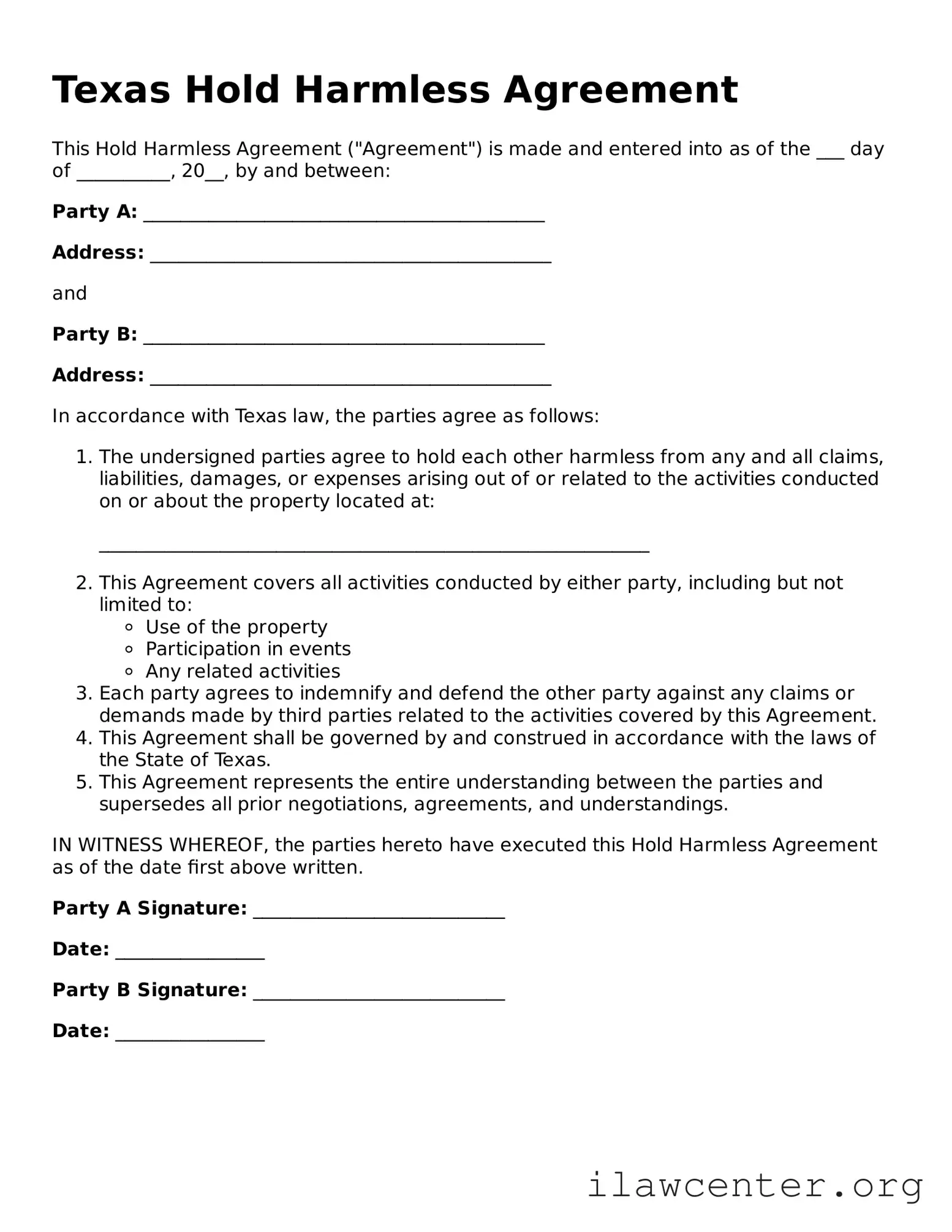
What is a Texas Hold Harmless Agreement?
A Texas Hold Harmless Agreement is a legal document that protects one party from liability for any injuries or damages that may occur during a specified activity or event. Essentially, it allows one party to agree not to hold the other party responsible for certain risks. This agreement is commonly used in various situations, such as construction projects, events, or recreational activities, where there is a potential for accidents or injuries. By signing this agreement, individuals acknowledge the risks involved and agree to waive their right to sue for damages.
Who typically uses a Hold Harmless Agreement in Texas?
This agreement is often utilized by businesses, event organizers, property owners, and contractors. For instance, a venue hosting an event might require vendors to sign a Hold Harmless Agreement to protect themselves from liability related to accidents or injuries that occur on their property. Similarly, contractors may ask subcontractors to sign this agreement to minimize their risk exposure during a construction project. It serves as a precautionary measure to ensure that all parties understand their responsibilities and liabilities.
What should be included in a Texas Hold Harmless Agreement?
A comprehensive Hold Harmless Agreement should include several key elements. First, it should clearly identify the parties involved, including their names and contact information. Next, it should outline the specific activities or events covered by the agreement. Additionally, it should detail the extent of the liability waiver, specifying what types of injuries or damages are included. It’s also important to include a statement indicating that the parties have read and understood the agreement before signing. Finally, the document should be signed and dated by all parties involved.
Is a Hold Harmless Agreement enforceable in Texas?
Generally, Hold Harmless Agreements are enforceable in Texas, provided they are drafted correctly and meet certain legal requirements. However, there are exceptions. For instance, an agreement cannot protect a party from liability for gross negligence or intentional misconduct. Courts may also scrutinize these agreements to ensure they are not overly broad or unfairly one-sided. Therefore, it is advisable to consult with a legal professional when drafting or signing such an agreement to ensure its enforceability.
Can a Hold Harmless Agreement be revoked?
Once signed, a Hold Harmless Agreement typically cannot be revoked unilaterally. However, both parties may agree to modify or terminate the agreement under certain conditions. If circumstances change significantly, such as the nature of the activity or the level of risk involved, it may be appropriate to revisit the agreement. Always ensure that any modifications or terminations are documented in writing and signed by both parties to avoid misunderstandings.
What are the potential risks of signing a Hold Harmless Agreement?
Signing a Hold Harmless Agreement carries certain risks. By signing, individuals may waive their right to seek compensation for injuries or damages that occur during the specified activity. This could include medical expenses, lost wages, or pain and suffering. It is crucial to fully understand the implications of the agreement before signing. Individuals should carefully review the terms and consider seeking legal advice if they have any concerns about their rights or the scope of the waiver.