Attorney-Verified  Motor Vehicle Bill of Sale Document for Texas

Attorney-Verified Motor Vehicle Bill of Sale Document for Texas

The Texas Motor Vehicle Bill of Sale form is a legal document that records the transfer of ownership of a vehicle from one party to another. This form is essential for both buyers and sellers, as it provides proof of the transaction and helps protect the rights of both parties involved. To ensure a smooth transfer, fill out the form by clicking the button below.

Article Guide

The Texas Motor Vehicle Bill of Sale form serves as a crucial document in the transfer of ownership for vehicles in the state of Texas. This form captures essential details such as the buyer's and seller's information, the vehicle's identification number (VIN), make, model, year, and odometer reading at the time of sale. It also includes the sale price, ensuring that both parties have a clear understanding of the transaction. Notably, the form requires signatures from both the buyer and seller, providing a legal acknowledgment of the sale. Additionally, it may include space for any disclosures regarding the vehicle's condition or any warranties, protecting both parties in the event of future disputes. By completing this form, individuals can facilitate a smooth transfer of ownership, ensuring compliance with state regulations and promoting transparency in the vehicle sale process.

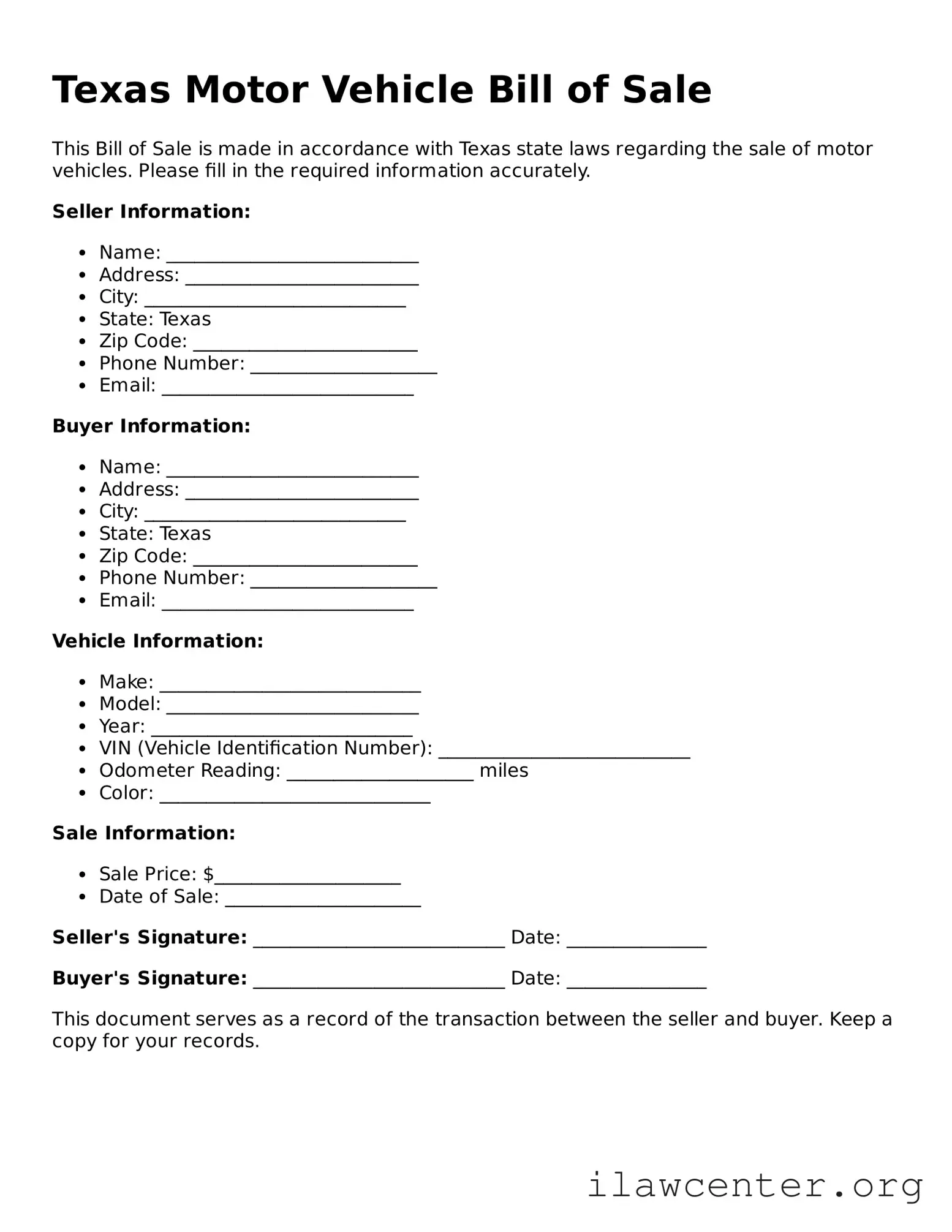
Texas Motor Vehicle Bill of Sale Preview

Texas Motor Vehicle Bill of Sale

This Bill of Sale is made in accordance with Texas state laws regarding the sale of motor vehicles. Please fill in the required information accurately.

Seller Information:

  • Name: ___________________________
  • Address: _________________________
  • City: ____________________________
  • State: Texas
  • Zip Code: ________________________
  • Phone Number: ____________________
  • Email: ___________________________

Buyer Information:

  • Name: ___________________________
  • Address: _________________________
  • City: ____________________________
  • State: Texas
  • Zip Code: ________________________
  • Phone Number: ____________________
  • Email: ___________________________

Vehicle Information:

  • Make: ____________________________
  • Model: ___________________________
  • Year: ____________________________
  • VIN (Vehicle Identification Number): ___________________________
  • Odometer Reading: ____________________ miles
  • Color: _____________________________

Sale Information:

  • Sale Price: $____________________
  • Date of Sale: _____________________

Seller's Signature: ___________________________ Date: _______________

Buyer's Signature: ___________________________ Date: _______________

This document serves as a record of the transaction between the seller and buyer. Keep a copy for your records.

PDF Form Characteristics

Fact Name Description
Purpose The Texas Motor Vehicle Bill of Sale form is used to document the sale of a vehicle between a buyer and a seller.
Governing Law This form is governed by the Texas Transportation Code, specifically Chapter 501.
Required Information It typically requires details such as the vehicle's make, model, year, VIN, and the sale price.
Signatures Both the buyer and seller must sign the form to validate the transaction.
Notarization While notarization is not mandatory, it is recommended for added security and legitimacy.
Transfer of Ownership The Bill of Sale serves as proof of ownership transfer, which is essential for the buyer's vehicle registration.
Tax Implications The sale price listed on the form is used to calculate sales tax owed to the state.
Record Keeping Both parties should keep a copy of the Bill of Sale for their records.
Vehicle Condition The form may include a section where the seller can disclose the vehicle's condition and any known defects.
Availability The Texas Motor Vehicle Bill of Sale form is available online through the Texas Department of Motor Vehicles website.

Instructions on Utilizing Texas Motor Vehicle Bill of Sale

Filling out the Texas Motor Vehicle Bill of Sale form is a straightforward process. Once completed, this document serves as proof of the sale and transfer of ownership of a vehicle. Ensure all details are accurate to avoid any issues during registration.

  1. Obtain the Texas Motor Vehicle Bill of Sale form. You can find it online or at your local Department of Motor Vehicles (DMV).
  2. Enter the date of the sale in the designated field.
  3. Provide the full name and address of the seller. Ensure that the information is correct and clearly written.
  4. Enter the buyer's full name and address in the appropriate section.
  5. Fill in the vehicle details, including the make, model, year, and Vehicle Identification Number (VIN).
  6. Specify the sale price of the vehicle. This amount should reflect the agreed-upon price.
  7. Indicate whether the vehicle is being sold "as is" or if any warranties are provided.
  8. Both the seller and buyer should sign and date the form at the bottom. This confirms the transaction.

After completing the form, both parties should keep a copy for their records. The buyer will need this document for vehicle registration with the Texas DMV.

Important Facts about Texas Motor Vehicle Bill of Sale

What is a Texas Motor Vehicle Bill of Sale?

A Texas Motor Vehicle Bill of Sale is a legal document that records the sale of a vehicle between a buyer and a seller. It provides proof of ownership transfer and details the terms of the sale. This document is essential for registering the vehicle in the new owner’s name and can help protect both parties in the transaction.

Is a Bill of Sale required in Texas?

While a Bill of Sale is not legally required in Texas, it is highly recommended. Having this document can clarify the terms of the sale and protect both the buyer and seller in case of disputes. It can also assist in the registration process with the Texas Department of Motor Vehicles (DMV).

What information is included in the Bill of Sale?

A typical Texas Motor Vehicle Bill of Sale includes important details such as the names and addresses of the buyer and seller, the vehicle identification number (VIN), make, model, year of the vehicle, sale price, and the date of the transaction. Some forms may also include information about any warranties or guarantees.

Do I need to have the Bill of Sale notarized?

No, notarization is not a requirement for a Texas Motor Vehicle Bill of Sale. However, having it notarized can add an extra layer of security and authenticity to the document. It may also be beneficial if you plan to use the Bill of Sale in any legal disputes.

Can I use a Bill of Sale from another state?

Using a Bill of Sale from another state is generally not advisable. Each state has its own requirements and forms. It is best to use the Texas-specific Bill of Sale to ensure compliance with local laws and regulations. This helps avoid any potential issues when registering the vehicle in Texas.

What should I do after completing the Bill of Sale?

After completing the Bill of Sale, both the buyer and seller should keep a copy for their records. The seller should also remove the license plates from the vehicle and submit a Vehicle Transfer Notification to the Texas DMV. The buyer will need the Bill of Sale to register the vehicle in their name.

Can a Bill of Sale be used as proof of ownership?

A Bill of Sale can serve as proof of ownership, but it is not the only document needed. To fully establish ownership, the buyer should also obtain the title of the vehicle. The Bill of Sale complements the title and provides additional evidence of the transaction.

What if the vehicle has a lien on it?

If the vehicle has a lien, it is crucial to address this before completing the sale. The seller should contact the lienholder to obtain a lien release. The Bill of Sale should indicate whether the lien has been cleared or if the buyer is assuming responsibility for it. Always ensure that all financial obligations are settled prior to transferring ownership.

Where can I find a Texas Motor Vehicle Bill of Sale form?

You can find a Texas Motor Vehicle Bill of Sale form online through various legal document websites or the Texas DMV's official website. Many local auto dealerships and county tax offices also provide these forms. Ensure you use a reputable source to obtain the most current version of the form.
Common mistakes

When filling out the Texas Motor Vehicle Bill of Sale form, many individuals inadvertently make mistakes that can lead to complications down the line. One common error is failing to provide complete information about the vehicle. This includes not specifying the Vehicle Identification Number (VIN) or neglecting to include the make, model, and year. Each detail is crucial for identifying the vehicle and ensuring the transaction is legitimate.

Another frequent mistake is not including the correct sale price. The amount listed should accurately reflect the agreed-upon price between the buyer and seller. If the price is omitted or incorrectly stated, it can create issues with registration and taxes later on. This may result in additional fees or even legal disputes.

People often overlook the importance of both parties signing the document. A Bill of Sale without signatures may not be considered valid. Ensure that both the buyer and seller sign the form, as this confirms that both parties agree to the terms of the sale.

Additionally, some individuals fail to provide the date of the transaction. This date is essential for record-keeping and can help clarify when the sale took place. Without it, there may be confusion regarding ownership and responsibilities.

Not including the correct contact information for both the buyer and seller is another mistake. Providing full names, addresses, and phone numbers helps to establish a clear line of communication should any issues arise after the sale.

Many people also forget to check for any liens on the vehicle before completing the sale. If a vehicle has an outstanding lien, the seller may not have the legal right to sell it. This can lead to complications for the buyer, who may find themselves responsible for the debt.

In some cases, individuals neglect to keep a copy of the Bill of Sale for their records. It’s important to retain a copy for future reference, especially for tax purposes or if any disputes arise. Having this document on hand can save time and stress later.

Some sellers mistakenly assume that the Bill of Sale is not necessary if they are transferring the title. However, having a Bill of Sale provides an additional layer of protection and serves as proof of the transaction. It is a good practice to complete this form regardless of the title transfer.

Lastly, failing to double-check the completed form for errors before submitting it can lead to significant issues. Simple typos or incorrect information can cause delays in the registration process and may require the form to be redone. Taking a moment to review the document can save a lot of time and trouble.

Documents used along the form

When buying or selling a vehicle in Texas, the Motor Vehicle Bill of Sale form is essential. However, several other documents may also be required to complete the transaction smoothly. Below is a list of commonly used forms that accompany the Bill of Sale.

  • Texas Title Application (Form 130-U): This document is necessary for transferring ownership of the vehicle. It provides the new owner with a legal title and must be submitted to the county tax office.
  • Vehicle Registration Application: To legally operate a vehicle on Texas roads, the new owner must register it. This application includes information about the vehicle and the owner.
  • Odometer Disclosure Statement: This form is required for most vehicle sales to ensure the accuracy of the odometer reading at the time of sale. It helps prevent fraud related to mileage discrepancies.
  • Proof of Insurance: Before registering a vehicle, the new owner must provide proof of insurance. This documentation confirms that the vehicle is insured as required by Texas law.
  • Sales Tax Receipt: When a vehicle is sold, sales tax is typically due. A receipt showing payment of this tax is important for the new owner’s records and may be needed for registration.

Gathering these documents can streamline the buying or selling process, ensuring that all legal requirements are met. It's always a good idea to verify that you have everything needed before finalizing the transaction.

Similar forms

  • Vehicle Title Transfer: This document officially transfers ownership of a vehicle from one party to another. It includes details like the vehicle identification number (VIN), the seller's and buyer's information, and must be signed by both parties.
  • Purchase Agreement: Similar to the Bill of Sale, this document outlines the terms of the sale, including the price and any conditions. It serves as a formal contract between the buyer and seller.
  • Odometer Disclosure Statement: This form is required to disclose the vehicle's mileage at the time of sale. It helps prevent odometer fraud and is often included with the Bill of Sale.
  • Release of Liability: This document protects the seller from future claims related to the vehicle after the sale. It confirms that the seller is no longer responsible for the vehicle once it has been sold.
  • Vehicle History Report: While not a legal document like the others, this report provides important information about the vehicle's past, including accidents and title issues. Buyers often request it to ensure they are making a sound purchase.

Dos and Don'ts

When filling out the Texas Motor Vehicle Bill of Sale form, it is important to follow specific guidelines to ensure accuracy and compliance. Below is a list of things you should and shouldn't do during this process.

  • Do provide accurate information about the vehicle, including the Vehicle Identification Number (VIN), make, model, and year.
  • Do include the names and addresses of both the buyer and seller to ensure clear identification.
  • Do sign and date the form. Both parties must acknowledge the transaction.
  • Do keep a copy of the completed form for your records. This serves as proof of the sale.
  • Don't leave any required fields blank. Incomplete information can lead to complications later on.
  • Don't use incorrect or outdated forms. Always obtain the most current version of the Bill of Sale.
  • Don't alter or make changes to the form after it has been signed. This can invalidate the document.
  • Don't forget to check local regulations. Some counties may have additional requirements for vehicle sales.

Misconceptions

The Texas Motor Vehicle Bill of Sale form is an important document for vehicle transactions. However, several misconceptions surround it. Below are eight common misunderstandings and clarifications regarding this form.

  1. The form is only necessary for used vehicles.

    This is incorrect. The Bill of Sale is required for both new and used vehicles to document the transfer of ownership.

  2. You do not need a Bill of Sale if you have a title.

    While the title is essential, the Bill of Sale serves as additional proof of the transaction and can be required for registration.

  3. The form must be notarized.

    Notarization is not a requirement for the Bill of Sale in Texas, although it may provide added security for both parties.

  4. Only the seller needs to sign the form.

    Both the buyer and seller should sign the Bill of Sale to ensure mutual agreement and acknowledgment of the transaction.

  5. The Bill of Sale is not legally binding.

    In fact, the Bill of Sale is a legal document that can be used in court to prove ownership and the terms of the sale.

  6. You can use any format for the Bill of Sale.

    While there is no official state form, using a standardized template ensures that all necessary information is included.

  7. The Bill of Sale is only for private sales.

    This is a misconception. Dealers also use the Bill of Sale for transactions, especially when transferring ownership to a buyer.

  8. The form is not necessary for gifts or trades.

    Even if a vehicle is given as a gift or traded, a Bill of Sale is still recommended to document the transaction and protect both parties.

Understanding these misconceptions can help ensure a smoother vehicle transaction process in Texas.

Key takeaways

When it comes to buying or selling a vehicle in Texas, completing a Motor Vehicle Bill of Sale is an essential step. This document serves as proof of the transaction and can be useful for both parties involved. Here are some key takeaways to keep in mind:

  • Provide Accurate Information: Ensure that all details, such as the vehicle identification number (VIN), make, model, year, and odometer reading, are filled out correctly. This helps avoid any disputes later on.
  • Include Buyer and Seller Details: Clearly list the names and addresses of both the buyer and seller. This information is crucial for establishing ownership and for future reference.
  • Signatures Are Important: Both the buyer and seller must sign the document. Without signatures, the bill of sale may not be considered valid, which can lead to complications.
  • Consider Notarization: While not required, having the bill of sale notarized can provide an extra layer of security and authenticity to the transaction.
  • Keep Copies: After completing the bill of sale, both parties should retain a copy for their records. This can be helpful for future reference, especially when registering the vehicle or if any issues arise.

By following these guidelines, you can ensure a smooth transaction when buying or selling a vehicle in Texas.