Attorney-Verified  Notice to Quit Document for Texas

Attorney-Verified Notice to Quit Document for Texas

The Texas Notice to Quit form is a legal document used by landlords to formally notify tenants that they must vacate the rental property. This notice serves as a crucial step in the eviction process, allowing landlords to communicate their intentions clearly. If you need to fill out this form, click the button below.

Article Guide

The Texas Notice to Quit form serves as an essential tool for landlords and property owners seeking to reclaim possession of their rental properties. This legal document initiates the process of eviction by formally notifying tenants that they must vacate the premises within a specified timeframe. It outlines the reasons for the eviction, which may include non-payment of rent, lease violations, or the expiration of a lease agreement. The form must be completed accurately and delivered to the tenant to ensure compliance with Texas law. Additionally, the Notice to Quit specifies the duration that tenants have to respond, typically ranging from three to thirty days, depending on the circumstances. Understanding the nuances of this form is crucial for both landlords and tenants, as it not only impacts the eviction process but also plays a significant role in protecting the rights of both parties involved. Proper use of the Notice to Quit can help avoid potential disputes and streamline the transition process for all parties concerned.

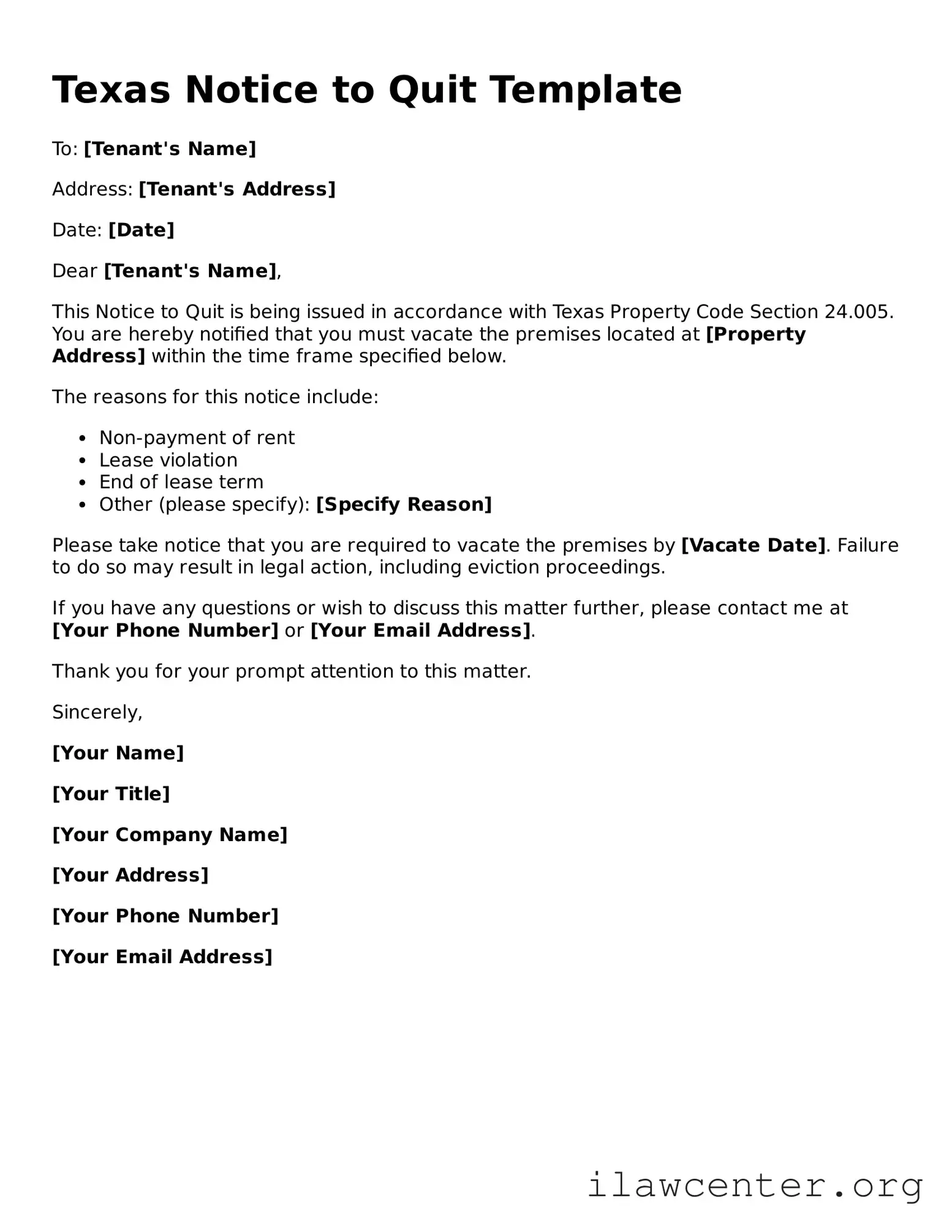
Texas Notice to Quit Preview

Texas Notice to Quit Template

To: [Tenant's Name]

Address: [Tenant's Address]

Date: [Date]

Dear [Tenant's Name],

This Notice to Quit is being issued in accordance with Texas Property Code Section 24.005. You are hereby notified that you must vacate the premises located at [Property Address] within the time frame specified below.

The reasons for this notice include:

  • Non-payment of rent
  • Lease violation
  • End of lease term
  • Other (please specify): [Specify Reason]

Please take notice that you are required to vacate the premises by [Vacate Date]. Failure to do so may result in legal action, including eviction proceedings.

If you have any questions or wish to discuss this matter further, please contact me at [Your Phone Number] or [Your Email Address].

Thank you for your prompt attention to this matter.

Sincerely,

[Your Name]

[Your Title]

[Your Company Name]

[Your Address]

[Your Phone Number]

[Your Email Address]

PDF Form Characteristics

Fact Name Description
Purpose The Texas Notice to Quit form is used by landlords to formally notify tenants to vacate the rental property.
Governing Law This form is governed by Texas Property Code, Chapter 24, which outlines the eviction process.
Delivery Methods Landlords can deliver the notice in person, by mail, or by posting it on the tenant's door.
Notice Period The required notice period varies; typically, it is 3 days for non-payment of rent, but other circumstances may require different timeframes.
Tenant's Rights Tenants have the right to contest the eviction in court if they believe the notice was unjust or improper.
Form Requirements The form must include specific details such as the tenant's name, address, and the reason for eviction.

Instructions on Utilizing Texas Notice to Quit

After obtaining the Texas Notice to Quit form, the next step involves accurately completing it to ensure it meets all necessary requirements. This form is essential for initiating the eviction process, and filling it out correctly can help avoid potential delays or legal issues.

  1. Begin by entering the date at the top of the form.
  2. Fill in the landlord's name and address in the designated fields.
  3. Provide the tenant's name and address, ensuring all information is accurate.
  4. Specify the reason for the notice. Be clear and concise.
  5. Indicate the number of days the tenant has to vacate the property, according to Texas law.
  6. Sign and date the form at the bottom, affirming the information provided is true.
  7. Make copies of the completed form for your records and for serving the tenant.

Once the form is filled out, it must be delivered to the tenant following the proper procedures outlined by Texas law. This ensures that the notice is legally valid and that the tenant is informed of the eviction process.

Important Facts about Texas Notice to Quit

What is a Texas Notice to Quit form?

The Texas Notice to Quit form is a legal document used by landlords to formally request that a tenant vacate a rental property. It serves as an official notice that the landlord intends to terminate the rental agreement and requires the tenant to leave the premises within a specified timeframe.

When should a landlord use a Notice to Quit?

A landlord should use a Notice to Quit when a tenant has violated the terms of the lease, such as not paying rent, causing damage to the property, or engaging in illegal activities. It can also be used for tenants who are on a month-to-month lease and need to be given notice to vacate.

How much notice is required in Texas?

The amount of notice required varies depending on the reason for the eviction. Generally, landlords must provide a three-day notice for non-payment of rent. For other lease violations, a landlord may give a notice period of 10 to 30 days, depending on the specific circumstances and lease terms.

Can a tenant contest a Notice to Quit?

Yes, a tenant can contest a Notice to Quit. If a tenant believes the notice is unjust or that they have not violated any lease terms, they may choose to respond in writing or seek legal assistance. It is advisable for tenants to keep records of all communications with their landlord.

What happens if a tenant does not leave after receiving a Notice to Quit?

If a tenant does not vacate the property after the notice period has expired, the landlord may proceed with legal action to evict the tenant. This typically involves filing an eviction lawsuit in court, which can lead to a formal eviction process.

Is a Notice to Quit required before filing for eviction in Texas?

Yes, in most cases, a Notice to Quit is required before a landlord can file for eviction. This notice serves to inform the tenant of the landlord's intentions and provides an opportunity for the tenant to remedy the situation, such as paying overdue rent.

Can a Notice to Quit be delivered electronically?

In Texas, a Notice to Quit can be delivered in person, via certified mail, or through posting on the property. However, electronic delivery methods are not typically recognized as valid for legal notices. It's essential to follow the legal requirements to ensure the notice is enforceable.

What should be included in a Texas Notice to Quit?

A Texas Notice to Quit should include the tenant's name, the property address, the reason for the notice, the date of the notice, and the specific timeframe the tenant has to vacate. Clear and concise language is crucial to avoid any misunderstandings.

Are there any exceptions to the Notice to Quit requirement?

Yes, certain exceptions may apply. For instance, if a tenant is engaged in illegal activities or poses an immediate threat to safety, a landlord may be able to bypass the Notice to Quit requirement and file for eviction directly. However, it is advisable to consult legal counsel in such situations.

Where can I find a Texas Notice to Quit form?

A Texas Notice to Quit form can often be found online through legal aid websites, local court websites, or by consulting an attorney. It is crucial to use a form that complies with Texas law to ensure its validity.
Common mistakes

When filling out the Texas Notice to Quit form, many individuals unknowingly make mistakes that can jeopardize their legal standing. One common error is failing to provide the correct address of the rental property. Without this crucial information, the notice may not be considered valid. Always double-check that the address is accurate and complete.

Another frequent mistake is neglecting to specify the reason for the notice. In Texas, landlords must provide a clear reason for asking a tenant to leave, whether it’s due to non-payment of rent or lease violations. Omitting this detail can lead to confusion and potential legal challenges.

Many people also overlook the importance of including the date the notice is issued. This date is essential as it establishes the timeline for the tenant to respond or vacate the premises. Without it, the notice may lack the necessary context for enforcement.

Additionally, some individuals forget to sign the Notice to Quit. A signature adds authenticity and shows that the landlord is serious about the request. A notice without a signature may be dismissed or ignored by the tenant.

Another common pitfall is using vague or unclear language. The notice should be straightforward and easy to understand. Ambiguities can lead to misunderstandings and may weaken the landlord’s position if the matter escalates to court.

People often fail to provide sufficient notice time as required by Texas law. Depending on the reason for the eviction, the notice period can vary. Failing to adhere to these timelines can render the notice ineffective.

Some landlords mistakenly think they can serve the notice in any manner they choose. However, Texas law specifies how notices must be delivered. Whether it's through personal delivery, certified mail, or posting on the property, following the correct procedure is vital.

Additionally, individuals sometimes forget to keep a copy of the Notice to Quit for their records. This oversight can create complications later on if disputes arise. Always retain a copy for your files to ensure you have documentation of your actions.

Finally, many people do not seek legal advice before issuing a Notice to Quit. Consulting with a legal expert can provide valuable insights and help avoid costly mistakes. Taking the time to understand the process can save a lot of trouble down the line.

Documents used along the form

When dealing with rental agreements and potential evictions in Texas, it is essential to understand various forms and documents that accompany the Texas Notice to Quit. Each document plays a crucial role in the process, ensuring that both landlords and tenants are informed of their rights and responsibilities. Below is a list of commonly used forms that often accompany the Notice to Quit.

  • Lease Agreement: This is the foundational document that outlines the terms and conditions of the rental arrangement between the landlord and tenant. It specifies rent amounts, payment due dates, and rules regarding the property.
  • Notice of Non-Payment of Rent: This notice is issued when a tenant fails to pay rent on time. It serves as a formal reminder and can be the first step in the eviction process.
  • Eviction Petition: If a landlord decides to proceed with eviction, this document is filed with the court. It formally requests the court to remove the tenant from the property.
  • Judgment Order: After a court hearing, if the landlord prevails, a judgment order is issued. This document grants the landlord the right to take possession of the property.
  • Writ of Possession: This is a court order that allows law enforcement to remove a tenant from the property. It is typically issued after a judgment order has been obtained.
  • Tenant’s Answer: This document is filed by the tenant in response to an eviction petition. It allows the tenant to present their side of the story and defend against the eviction.
  • Move-Out Inspection Checklist: This form is used to document the condition of the property when a tenant moves out. It helps in determining any damages that may affect the return of the security deposit.
  • Security Deposit Receipt: This document acknowledges the receipt of the security deposit from the tenant. It outlines the amount paid and the conditions under which the deposit will be returned.

Understanding these documents can empower both landlords and tenants to navigate the complexities of rental agreements and evictions more effectively. Knowledge of each form's purpose and function will help ensure that all parties are treated fairly and that their rights are respected throughout the process.

Similar forms

  • Eviction Notice: This document informs a tenant that they must vacate the property. Like the Notice to Quit, it specifies a time frame for the tenant to leave and outlines the reasons for the eviction.

  • Lease Termination Letter: A lease termination letter communicates the end of a rental agreement. Similar to the Notice to Quit, it provides notice to the tenant about the expiration of their lease and the requirement to vacate.

  • Demand for Possession: This document is often used in the eviction process to demand that a tenant leave the property. It serves a similar purpose to the Notice to Quit by establishing a formal request for the tenant to vacate.

  • Notice of Default: This notice is issued when a tenant fails to comply with lease terms, such as failing to pay rent. It shares similarities with the Notice to Quit in that it alerts the tenant to their non-compliance and potential consequences.

Dos and Don'ts

When filling out the Texas Notice to Quit form, it’s important to follow certain guidelines to ensure everything is completed correctly. Here are ten things you should and shouldn't do:

  • Do read the form carefully before starting.
  • Do include the correct names of all parties involved.
  • Do provide the full address of the property in question.
  • Do specify the reason for the notice clearly.
  • Do sign and date the form appropriately.
  • Don't use vague language or general statements.
  • Don't forget to keep a copy for your records.
  • Don't skip any required fields on the form.
  • Don't submit the form without verifying all information is accurate.
  • Don't ignore local laws that may affect the notice requirements.

Misconceptions

Understanding the Texas Notice to Quit form is crucial for both landlords and tenants. Unfortunately, several misconceptions can lead to confusion and missteps in the eviction process. Here are six common misconceptions:

  • 1. A Notice to Quit is the same as an eviction notice. Many people believe that a Notice to Quit is an eviction notice. In reality, it is a preliminary step that informs the tenant that they must vacate the property. An actual eviction requires a court process.
  • 2. A landlord can evict a tenant immediately after sending a Notice to Quit. This is not true. After receiving the Notice to Quit, tenants typically have a set period to respond or vacate the premises. The timeline can vary based on the reason for the notice.
  • 3. All Notices to Quit are the same. This misconception overlooks the fact that Notices to Quit can differ based on the reason for eviction. For example, non-payment of rent may require a different form than a lease violation.
  • 4. Tenants do not have any rights after receiving a Notice to Quit. Tenants still retain rights even after receiving this notice. They can contest the eviction in court, negotiate with the landlord, or seek legal assistance.
  • 5. A Notice to Quit can be delivered in any manner. Many believe that any form of delivery is acceptable, but Texas law requires specific methods for serving a Notice to Quit, such as personal delivery or certified mail.
  • 6. A Notice to Quit is only necessary for non-payment of rent. This is a common misunderstanding. A Notice to Quit can be issued for various reasons, including lease violations, property damage, or illegal activity on the premises.

By debunking these misconceptions, both landlords and tenants can navigate the eviction process more effectively and with a clearer understanding of their rights and responsibilities.

Key takeaways

When dealing with the Texas Notice to Quit form, it's essential to understand its purpose and proper usage. Here are some key takeaways:

  • The Notice to Quit serves as a formal communication from a landlord to a tenant, indicating the need to vacate the rental property.
  • It is important to fill out the form accurately, including the tenant's name, address, and the reason for the notice.
  • Delivery methods can vary; the notice can be personally delivered, sent via certified mail, or posted on the property.
  • Failure to comply with the notice may lead to legal action, so it is crucial for tenants to respond promptly.