Attorney-Verified  Real Estate Purchase Agreement Document for Texas

Attorney-Verified Real Estate Purchase Agreement Document for Texas

The Texas Real Estate Purchase Agreement form is a legal document used in real estate transactions to outline the terms and conditions under which a property is bought and sold in Texas. This form protects the interests of both buyers and sellers by detailing essential aspects such as the purchase price, financing terms, and contingencies. To get started on your real estate journey, fill out the form by clicking the button below.

Article Guide

The Texas Real Estate Purchase Agreement form serves as a crucial document in real estate transactions across the state. This form outlines the terms and conditions under which a property is bought and sold, ensuring that both buyers and sellers are on the same page. Key aspects include the purchase price, financing details, and the closing date, all of which play a vital role in the transaction process. Additionally, the agreement addresses contingencies, such as home inspections and financing approvals, which protect both parties in case certain conditions are not met. It also specifies the responsibilities of each party, including any disclosures that must be made regarding the property’s condition. By clearly delineating these elements, the Texas Real Estate Purchase Agreement promotes transparency and helps to minimize misunderstandings, paving the way for a smoother transaction experience.

Texas Real Estate Purchase Agreement Preview

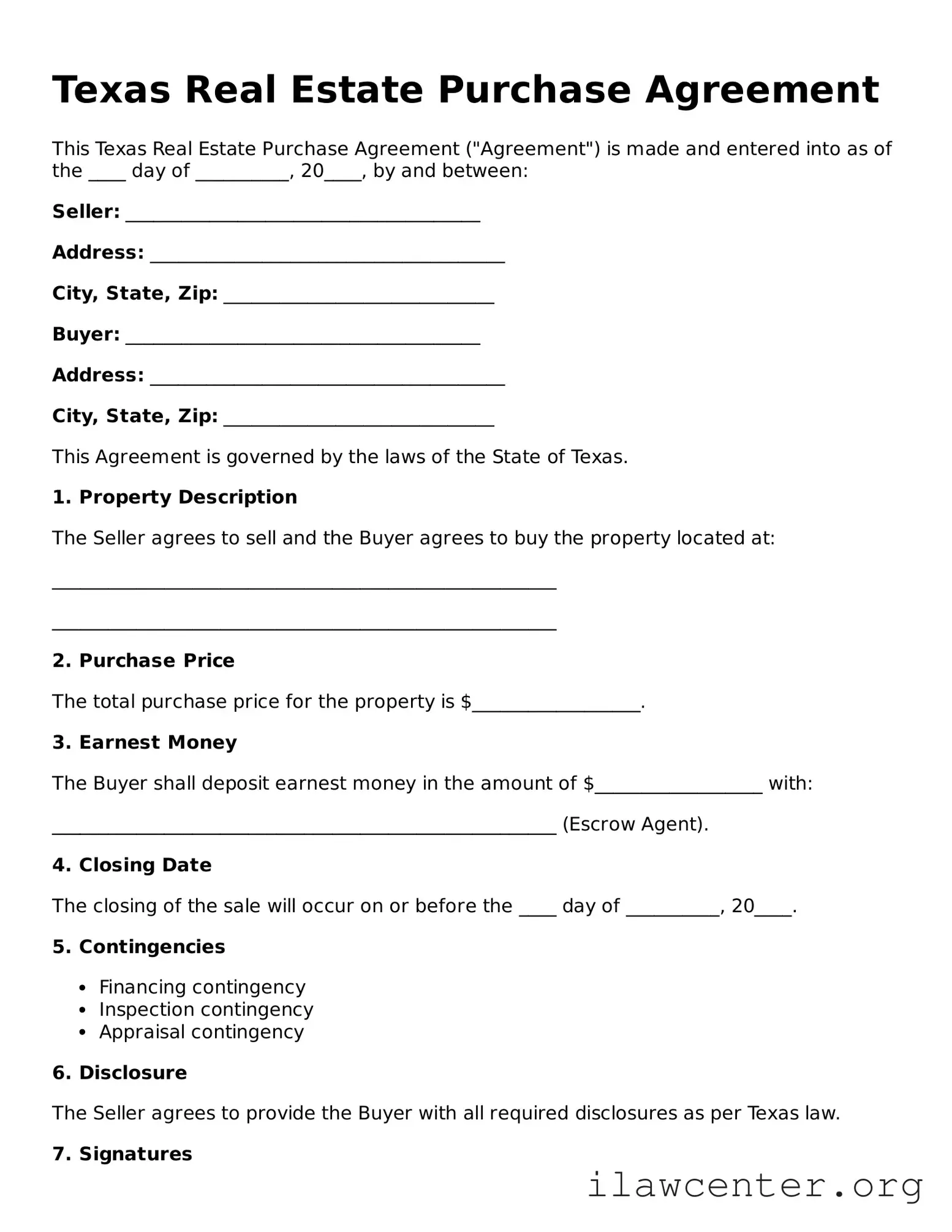
Texas Real Estate Purchase Agreement

This Texas Real Estate Purchase Agreement ("Agreement") is made and entered into as of the ____ day of __________, 20____, by and between:

Seller: ______________________________________

Address: ______________________________________

City, State, Zip: _____________________________

Buyer: ______________________________________

Address: ______________________________________

City, State, Zip: _____________________________

This Agreement is governed by the laws of the State of Texas.

1. Property Description

The Seller agrees to sell and the Buyer agrees to buy the property located at:

______________________________________________________

______________________________________________________

2. Purchase Price

The total purchase price for the property is $__________________.

3. Earnest Money

The Buyer shall deposit earnest money in the amount of $__________________ with:

______________________________________________________ (Escrow Agent).

4. Closing Date

The closing of the sale will occur on or before the ____ day of __________, 20____.

5. Contingencies

  • Financing contingency
  • Inspection contingency
  • Appraisal contingency

6. Disclosure

The Seller agrees to provide the Buyer with all required disclosures as per Texas law.

7. Signatures

By signing below, both parties agree to the terms outlined in this Agreement.

______________________________ Seller's Signature

______________________________ Date

______________________________ Buyer's Signature

______________________________ Date

PDF Form Characteristics

Fact Name Description
Governing Law The Texas Real Estate Purchase Agreement is governed by the laws of the State of Texas.
Purpose This form is used to outline the terms and conditions for the sale of real estate in Texas.
Parties Involved The agreement typically includes the buyer and seller as the primary parties.
Property Description A detailed description of the property being sold must be included in the agreement.
Purchase Price The total purchase price for the property is specified in the agreement.
Earnest Money The agreement usually requires the buyer to provide earnest money to demonstrate serious intent.
Closing Date A specific closing date for the transaction is typically established in the agreement.
Contingencies The form may include contingencies that must be met for the sale to proceed, such as financing or inspections.

Instructions on Utilizing Texas Real Estate Purchase Agreement

Filling out the Texas Real Estate Purchase Agreement form requires careful attention to detail. This document outlines the terms of the sale between the buyer and seller. Once completed, the form will facilitate the transaction process.

  1. Begin by entering the date at the top of the form.
  2. Identify the parties involved. Write the full legal names of the buyer(s) and seller(s).
  3. Provide the property address. Include the street number, street name, city, state, and ZIP code.
  4. Specify the purchase price. Clearly state the total amount the buyer agrees to pay for the property.
  5. Detail the earnest money deposit. Indicate the amount and how it will be paid.
  6. Outline the financing terms. State whether the buyer will use cash, a mortgage, or other financing methods.
  7. Include any contingencies. Note any conditions that must be met for the sale to proceed, such as inspections or financing approval.
  8. Set the closing date. Specify when the transaction will be finalized.
  9. Sign and date the form. Both parties must provide their signatures and the date of signing.

Once the form is filled out, review it for accuracy. Ensure all necessary sections are completed before submitting it to the appropriate parties.

Important Facts about Texas Real Estate Purchase Agreement

What is the Texas Real Estate Purchase Agreement?

The Texas Real Estate Purchase Agreement is a legal document that outlines the terms and conditions of a real estate transaction in Texas. It serves as a binding contract between the buyer and seller, detailing aspects such as the purchase price, property description, closing date, and any contingencies that may apply. This agreement is essential for ensuring both parties are on the same page throughout the sale process.

What information is typically included in the agreement?

The agreement generally includes the names of the buyer and seller, a detailed description of the property, the sale price, financing details, and any contingencies, such as inspections or repairs. It may also cover earnest money deposits, closing costs, and the timeline for the transaction. Each section is designed to protect the interests of both parties and to clarify their responsibilities.

How does the earnest money deposit work?

The earnest money deposit is a sum of money that the buyer provides to demonstrate their serious intent to purchase the property. This deposit is typically held in an escrow account and will be applied toward the buyer's closing costs or down payment. If the transaction falls through due to a contingency outlined in the agreement, the buyer may receive their earnest money back. However, if the buyer decides to back out without a valid reason, the seller may keep the deposit as compensation for taking the property off the market.

Can the agreement be modified after it is signed?

Yes, the Texas Real Estate Purchase Agreement can be modified after it is signed, but both parties must agree to any changes. Modifications should be documented in writing and signed by both the buyer and seller to ensure clarity and enforceability. This could include adjustments to the closing date, changes in the purchase price, or any other terms that may need to be updated during the transaction process.

What happens if one party breaches the agreement?

If one party breaches the agreement, the other party has several options. They may choose to seek damages, which could involve financial compensation for losses incurred due to the breach. Alternatively, the non-breaching party can pursue specific performance, requiring the breaching party to fulfill their obligations under the contract. Legal advice is often recommended in these situations to navigate the complexities involved.

Is it necessary to have a real estate agent when using this agreement?

While it is not mandatory to have a real estate agent when using the Texas Real Estate Purchase Agreement, having one can be beneficial. Agents bring expertise and experience to the table, helping both buyers and sellers navigate the process smoothly. They can provide valuable insights, assist with negotiations, and ensure that all necessary paperwork is completed accurately. However, individuals can also choose to handle the transaction independently if they feel confident in their understanding of the process.
Common mistakes

Filling out the Texas Real Estate Purchase Agreement can be a daunting task, and mistakes are common. One frequent error is neglecting to include all necessary parties. It’s essential to ensure that all buyers and sellers are clearly identified in the agreement. Omitting a party can lead to complications later, such as disputes over ownership or the validity of the contract.

Another mistake often made is failing to specify the purchase price and terms clearly. A vague or incomplete statement regarding the price can create confusion and lead to disagreements. Buyers and sellers should take the time to write down the exact amount and any conditions related to financing or earnest money deposits. Clear terms help to prevent misunderstandings and ensure that both parties are on the same page.

People also frequently overlook the importance of deadlines in the agreement. Missing deadlines for inspections, financing, or closing can jeopardize the transaction. It’s crucial to pay attention to these timelines and to ensure they are realistic and achievable. By clearly outlining these dates, both parties can stay organized and on track throughout the process.

Lastly, many individuals forget to include contingencies that protect their interests. Contingencies can cover a variety of situations, such as the buyer needing to sell their current home before completing the purchase. Without these clauses, buyers may find themselves in a difficult position if circumstances change. Including appropriate contingencies can provide peace of mind and safeguard against unexpected issues.

Documents used along the form

When engaging in real estate transactions in Texas, several forms and documents accompany the Texas Real Estate Purchase Agreement. Each document serves a specific purpose, ensuring that both buyers and sellers are protected and informed throughout the process. Below is a list of commonly used forms that facilitate a smooth transaction.

  • Seller's Disclosure Notice: This document requires the seller to disclose any known issues with the property. It provides transparency and helps the buyer make an informed decision.
  • Lead-Based Paint Disclosure: Required for homes built before 1978, this form informs buyers of potential lead hazards. It aims to protect health and safety, especially for families with young children.
  • Option Fee Receipt: This document outlines the buyer's payment for an option period, allowing them to conduct inspections and decide whether to proceed with the purchase.
  • Inspection Report: After an inspection, this report details the condition of the property. It highlights any repairs needed, which can be a point of negotiation between buyer and seller.
  • Amendment to Contract: Should changes be necessary after the initial agreement, this form allows both parties to modify terms, ensuring clarity and mutual consent.
  • Title Commitment: This document is issued by a title company and outlines the terms under which the title will be insured. It is crucial for confirming ownership and identifying any liens or encumbrances.
  • Closing Disclosure: This form provides a detailed account of the final loan terms and closing costs. It must be provided to the buyer at least three days before closing.
  • Deed: This legal document transfers ownership of the property from the seller to the buyer. It is essential for recording the transaction with the local government.
  • Affidavit of Title: The seller signs this affidavit to affirm that they hold clear title to the property and there are no undisclosed liens or claims against it.

Understanding these documents is vital for anyone involved in a real estate transaction. Each form plays a significant role in ensuring that the process is transparent, fair, and legally binding. Familiarity with these documents can help both buyers and sellers navigate their responsibilities and rights effectively.

Similar forms

  • Lease Agreement: This document outlines the terms under which a tenant can rent a property. Like a Real Estate Purchase Agreement, it specifies important details such as the duration of the lease, payment terms, and responsibilities of both parties.

  • Option to Purchase Agreement: This gives a tenant the right to buy the property at a later date. Similar to a Real Estate Purchase Agreement, it includes purchase price, terms, and conditions, but it allows for flexibility in timing.

  • Real Estate Listing Agreement: This is a contract between a property owner and a real estate agent. It shares similarities with the Purchase Agreement in that it outlines the terms of sale, including the listing price and commission, but focuses on the marketing aspect.

  • Seller Disclosure Statement: This document provides potential buyers with information about the condition of the property. Like a Purchase Agreement, it is crucial for transparency and helps buyers make informed decisions.

  • Title Insurance Policy: This document protects buyers from any issues related to property ownership. While it serves a different purpose than a Purchase Agreement, both documents are essential in ensuring a smooth transaction and clear ownership rights.

Dos and Don'ts

When filling out the Texas Real Estate Purchase Agreement form, it's important to be careful and thorough. Here are some do's and don'ts to keep in mind:

  • Do read the entire form carefully before starting to fill it out.
  • Do provide accurate and complete information for all parties involved.
  • Don't leave any blank spaces; if something doesn’t apply, write "N/A."
  • Don't rush through the process; take your time to ensure everything is correct.

Misconceptions

When it comes to the Texas Real Estate Purchase Agreement form, many people have misconceptions. Here are five common ones:

  1. It’s a one-size-fits-all document.

    Many believe the form can be used for any type of real estate transaction. In reality, the specifics of each deal often require adjustments to the agreement to fit unique circumstances.

  2. It’s only for residential properties.

    Some think this form applies solely to homes. However, it can also be used for commercial properties, land sales, and other real estate transactions.

  3. Once signed, it can’t be changed.

    People often assume that the agreement is set in stone once both parties sign. Amendments can be made if both parties agree to the changes, so it’s not as rigid as it may seem.

  4. It’s not legally binding.

    There’s a misconception that this form doesn’t hold legal weight. In fact, when properly executed, it is a legally binding contract that outlines the terms of the sale.

  5. Real estate agents don’t need to be involved.

    Some people think they can handle the agreement on their own. While it’s possible to fill out the form without an agent, having professional guidance can help ensure that all necessary details are included and that the process goes smoothly.

Key takeaways

When dealing with the Texas Real Estate Purchase Agreement form, it is essential to keep several key points in mind. Understanding these can help ensure a smoother transaction.

  • Accuracy is crucial. Fill out the form carefully. Any mistakes can lead to misunderstandings or legal issues down the line.
  • Include all necessary details. Be sure to provide complete information about the property, including the address, legal description, and any fixtures included in the sale.
  • Review contingencies. Pay attention to the contingencies section. This part outlines conditions that must be met for the sale to proceed, such as financing or inspections.
  • Seek professional advice. If you are unsure about any part of the agreement, consult a real estate agent or attorney. Their expertise can help you navigate the process effectively.