Tow Authorization PDF Template

Tow Authorization PDF Template

The Tow Authorization form is a document that allows property owners to authorize a towing company to remove a vehicle from their property. This form includes essential details such as the reason for the tow, the vehicle's information, and the signatures of the property owner or agent. If you need to authorize a tow, fill out the form by clicking the button below.

Article Guide

The Tow Authorization form serves as a crucial document for property owners and towing companies, facilitating the legal removal of vehicles from private property. This form captures essential details, including the date and time of the authorization, along with the name and contact information of the towing company responsible for the vehicle removal. It specifies the location from which the vehicle will be towed and outlines the reason for the tow, such as abandonment or illegal parking. Additionally, the form requires the name and signature of the law enforcement officer or property owner who authorizes the action, ensuring that proper authority is established. For vehicles deemed abandoned, reference is made to specific regulations that govern such situations. Furthermore, the form collects vital information about the vehicle itself, including its year, make, model, color, and license details. It also provides space for documenting any existing damage to the vehicle, which is important for liability purposes. Overall, the Tow Authorization form is a key tool in managing property rights and ensuring compliance with local regulations.

Tow Authorization Preview

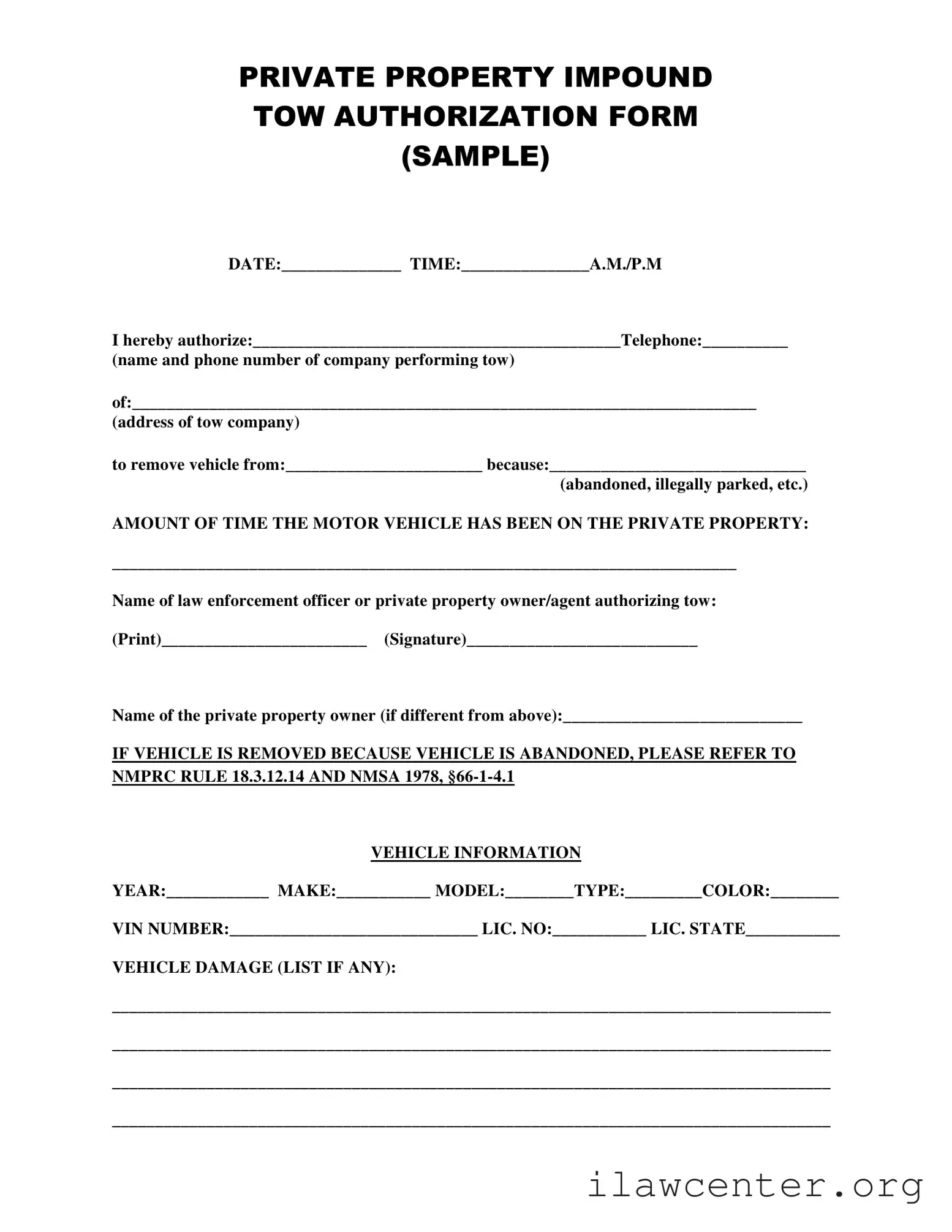
PRIVATE PROPERTY IMPOUND
TOW AUTHORIZATION FORM
(SAMPLE)
DATE:______________ TIME:_______________A.M./P.M
I hereby authorize:___________________________________________Telephone:__________
(name and phone number of company performing tow)
of:_________________________________________________________________________
(address of tow company)
to remove vehicle from:_______________________ because:______________________________
(abandoned, illegally parked, etc.)
AMOUNT OF TIME THE MOTOR VEHICLE HAS BEEN ON THE PRIVATE PROPERTY:
_________________________________________________________________________
Name of law enforcement officer or private property owner/agent authorizing tow:
(Print)________________________ (Signature)___________________________
Name of the private property owner (if different from above):____________________________
IF VEHICLE IS REMOVED BECAUSE VEHICLE IS ABANDONED, PLEASE REFER TO
NMPRC RULE 18.3.12.14 AND NMSA 1978, §66-1-4.1
VEHICLE INFORMATION
YEAR:____________ MAKE:___________ MODEL:________TYPE:_________COLOR:________
VIN NUMBER:_____________________________ LIC. NO:___________ LIC. STATE___________
VEHICLE DAMAGE (LIST IF ANY):
____________________________________________________________________________________
____________________________________________________________________________________
____________________________________________________________________________________
____________________________________________________________________________________

File Properties

Fact Name Description
Date and Time The form requires the date and time of authorization for towing.
Tow Company Information It includes the name and phone number of the towing company performing the tow.
Vehicle Location The form specifies where the vehicle is located on private property.
Reason for Tow The form requires a reason for the tow, such as "abandoned" or "illegally parked."
Time on Property It asks for the amount of time the vehicle has been on the private property.
Law Enforcement Involvement The name of the law enforcement officer or property owner authorizing the tow must be printed and signed.
Governing Law If the vehicle is towed for being abandoned, refer to NMPRC Rule 18.3.12.14 and NMSA 1978, §66-1-4.1.

Instructions on Utilizing Tow Authorization

Completing the Tow Authorization form is essential for authorizing a towing company to remove a vehicle from private property. Follow these steps to ensure all necessary information is accurately provided.

  1. Fill in the date at the top of the form.
  2. Indicate the time of the tow, specifying whether it is A.M. or P.M.
  3. Write the name and telephone number of the towing company in the designated space.
  4. Provide the address of the towing company.
  5. Specify the location from which the vehicle will be removed.
  6. State the reason for the tow (e.g., abandoned, illegally parked).
  7. Document the amount of time the vehicle has been on the private property.
  8. Print the name of the law enforcement officer or private property owner/agent authorizing the tow.
  9. Obtain the signature of the authorizing individual.
  10. Provide the name of the private property owner if different from the authorizing individual.
  11. Fill in the vehicle information: year, make, model, type, color, VIN number, license number, and license state.
  12. List any vehicle damage in the space provided.

Important Facts about Tow Authorization

What is a Tow Authorization form?

A Tow Authorization form is a legal document that grants permission for a towing company to remove a vehicle from private property. It includes details about the vehicle, the reason for the tow, and the authorization from the property owner or an authorized agent.

Who can authorize a tow using this form?

The form can be authorized by the property owner or an agent designated by the owner. This individual must provide their name, signature, and contact information to validate the authorization for the towing company.

What information is required on the Tow Authorization form?

Essential information includes the date and time of the authorization, the towing company’s name and contact number, the address of the towing company, the location of the vehicle, the reason for the tow, and the vehicle's details such as year, make, model, color, VIN number, and license plate information. Additionally, any damage to the vehicle should be noted.

What should be included in the reason for towing a vehicle?

The reason for towing must be clearly stated on the form. Common reasons include the vehicle being abandoned, illegally parked, or otherwise violating property regulations. This information helps to justify the towing action and can be important for legal purposes.

How does the amount of time a vehicle has been on private property impact the towing process?

The amount of time a vehicle has been on the property is crucial. It often determines whether the vehicle can be legally towed without prior notice to the owner. Local laws may specify a minimum duration that a vehicle must be parked illegally or abandoned before towing is permissible.

Are there any legal references included in the Tow Authorization form?

Yes, the form references specific regulations, such as NMPRC Rule 18.3.12.14 and NMSA 1978, §66-1-4.1, particularly when the vehicle is being removed due to abandonment. These references ensure that the towing process complies with local laws and regulations.

What happens if the vehicle is damaged during the towing process?

If there is any damage to the vehicle during towing, it must be documented on the Tow Authorization form. This documentation is essential for liability purposes and may affect any claims made against the towing company or the property owner.

Common mistakes

Filling out the Tow Authorization form can seem straightforward, but mistakes are common. One frequent error is failing to provide complete information about the towing company. It is essential to include the full name and telephone number of the company performing the tow. Omitting this information can lead to confusion and delays in the towing process.

Another mistake involves neglecting to specify the reason for the tow. The form requires a clear indication of why the vehicle is being removed, such as "abandoned" or "illegally parked." Without this information, the authorization may be questioned, potentially complicating the towing situation.

People often overlook the section that asks for the amount of time the vehicle has been on private property. This detail is crucial, as it helps establish the grounds for the tow. Incomplete or missing information here can weaken the case for towing the vehicle.

Additionally, signatories frequently forget to print their name and provide a signature. This step is vital for validating the authorization. A missing signature can render the entire form invalid, resulting in unnecessary complications.

Some individuals also fail to clarify the name of the private property owner if it differs from the person authorizing the tow. This can lead to disputes over ownership and authority, making it essential to fill out this section accurately.

Finally, not providing complete vehicle information can create issues. The form requires details such as the year, make, model, type, color, VIN number, and license plate information. Incomplete vehicle descriptions may hinder the towing process and cause confusion at the tow yard.

Documents used along the form

The Tow Authorization form is a crucial document for allowing the removal of a vehicle from private property. However, it often works in conjunction with several other forms and documents that help ensure the towing process is conducted legally and efficiently. Below is a list of related documents that may also be required.

  • Vehicle Release Form: This document is used to authorize the release of a towed vehicle to its owner. It typically includes the owner's information and details about the vehicle, ensuring that only the rightful owner can retrieve it.
  • Incident Report: Often created by law enforcement, this report details the circumstances surrounding the towing of the vehicle. It can provide important context and justification for the tow, especially if there are disputes later on.
  • Notice of Impoundment: This notice informs the vehicle owner that their vehicle has been impounded. It usually includes information about where the vehicle is being held, how to retrieve it, and any fees associated with the impoundment.
  • Private Property Signage: Signs posted on the property indicate that unauthorized vehicles will be towed. These signs must meet specific legal requirements to be enforceable and serve as a warning to potential violators.
  • Owner's Affidavit: This is a sworn statement from the property owner asserting their ownership of the property and their right to authorize towing. It adds a layer of legal protection for the towing company.
  • Payment Receipt: After the vehicle has been towed, the towing company usually provides a receipt for any fees paid. This document is essential for the vehicle owner to keep for their records.
  • Release of Liability Form: This form protects the towing company from claims related to damage or loss that may occur during the towing process. It is signed by the vehicle owner when retrieving their vehicle.
  • State-Specific Towing Regulations: These documents outline the specific laws and regulations governing towing in a particular state. They help ensure that all parties involved understand their rights and responsibilities.

Understanding these documents can help both property owners and vehicle owners navigate the towing process more effectively. Each form plays a unique role in ensuring that the towing is conducted legally and fairly, ultimately protecting the rights of everyone involved.

Similar forms

  • Vehicle Release Form: This document allows vehicle owners to reclaim their towed vehicles. Like the Tow Authorization form, it includes details about the vehicle and the towing company.
  • Parking Violation Notice: This notice informs vehicle owners of illegal parking. It shares similarities with the Tow Authorization form in terms of documenting the violation and the reason for towing.
  • Abandoned Vehicle Report: This report is filed when a vehicle is deemed abandoned. It parallels the Tow Authorization form by specifying the vehicle's condition and location.
  • Towing Invoice: This document outlines the costs associated with towing a vehicle. It is similar to the Tow Authorization form as it contains details about the vehicle and the towing service provided.
  • Release of Liability Waiver: This waiver protects the towing company from claims after a vehicle is towed. Like the Tow Authorization form, it requires signatures and details about the vehicle.
  • Incident Report: This report documents any incidents related to the towing process. It shares elements with the Tow Authorization form by detailing the circumstances surrounding the tow.
  • Vehicle Registration Document: This document proves ownership of a vehicle. It is similar to the Tow Authorization form in that it includes specific vehicle information such as make, model, and VIN.
  • Notice of Impoundment: This notice informs vehicle owners that their vehicle has been impounded. It is akin to the Tow Authorization form in that it outlines the reasons for impoundment and the next steps for the owner.

Dos and Don'ts

When filling out the Tow Authorization form, there are important guidelines to follow. Adhering to these can ensure a smoother process and prevent potential issues. Here’s a list of things you should and shouldn't do:

  • Do provide accurate and complete information about the vehicle, including the make, model, and VIN number.
  • Do clearly state the reason for the tow, such as "abandoned" or "illegally parked."
  • Do include the name and contact information of the towing company.
  • Do indicate how long the vehicle has been on the property.
  • Do ensure that the form is signed by the property owner or authorized agent.
  • Don't leave any sections blank; incomplete forms can lead to delays or disputes.
  • Don't forget to specify the address of the towing company.
  • Don't authorize a tow without confirming that it complies with local laws and regulations.
  • Don't overlook the importance of documenting any existing vehicle damage.

By following these guidelines, you can help ensure that the tow authorization process is handled efficiently and legally.

Misconceptions

Understanding the Tow Authorization form is essential for property owners and tow companies. However, several misconceptions exist regarding this document. Below are four common misconceptions and clarifications for each.

  • Misconception 1: The Tow Authorization form is not legally binding.
  • This form is legally binding once signed by the property owner or authorized agent. It provides the necessary permission for the towing company to remove a vehicle from private property.

  • Misconception 2: Any vehicle can be towed without a valid reason.
  • A valid reason must be specified on the form, such as abandonment or illegal parking. Towing without justification can lead to legal repercussions for the property owner.

  • Misconception 3: The form does not require the identification of the vehicle.
  • The Tow Authorization form requires detailed vehicle information, including make, model, and VIN number. This identification is crucial for ensuring the correct vehicle is towed.

  • Misconception 4: The form does not need to be filled out completely.
  • Completing all sections of the form is essential. Incomplete forms may not provide the necessary legal protection for the property owner or the towing company.

Key takeaways

Here are some key takeaways about filling out and using the Tow Authorization form:

  • Complete Information: Ensure all sections of the form are filled out completely. This includes the date, time, and details about the vehicle and towing company.
  • Specify the Reason: Clearly state the reason for the tow, such as whether the vehicle is abandoned or illegally parked. This helps justify the action taken.
  • Document Time on Property: Indicate how long the vehicle has been on the property. This information can be important for legal purposes.
  • Authorization Signature: The form must be signed by the property owner or authorized agent. Without a signature, the tow may not be legally valid.
  • Vehicle Details: Provide accurate vehicle information, including the make, model, color, and VIN number. This ensures the correct vehicle is towed.