Fillable Tractor Bill of Sale Document

Fillable Tractor Bill of Sale Document

A Tractor Bill of Sale is a legal document that serves as proof of the transfer of ownership for a tractor from the seller to the buyer. This form outlines essential details such as the purchase price, vehicle identification number, and the parties involved in the transaction. It is crucial to complete this document accurately to ensure a smooth transfer and protect both parties' interests.

To fill out the form, click the button below.

Article Guide

When buying or selling a tractor, having the right paperwork is essential. A Tractor Bill of Sale form serves as a crucial document that outlines the details of the transaction between the buyer and the seller. This form typically includes important information such as the names and addresses of both parties, a description of the tractor, its identification number, and the purchase price. Additionally, it may specify any warranties or conditions of the sale. By using this form, both parties can protect their interests and ensure a smooth transfer of ownership. It provides legal proof of the sale and can be useful for registration or tax purposes. Overall, the Tractor Bill of Sale is a simple yet effective tool that helps facilitate a clear and transparent transaction.

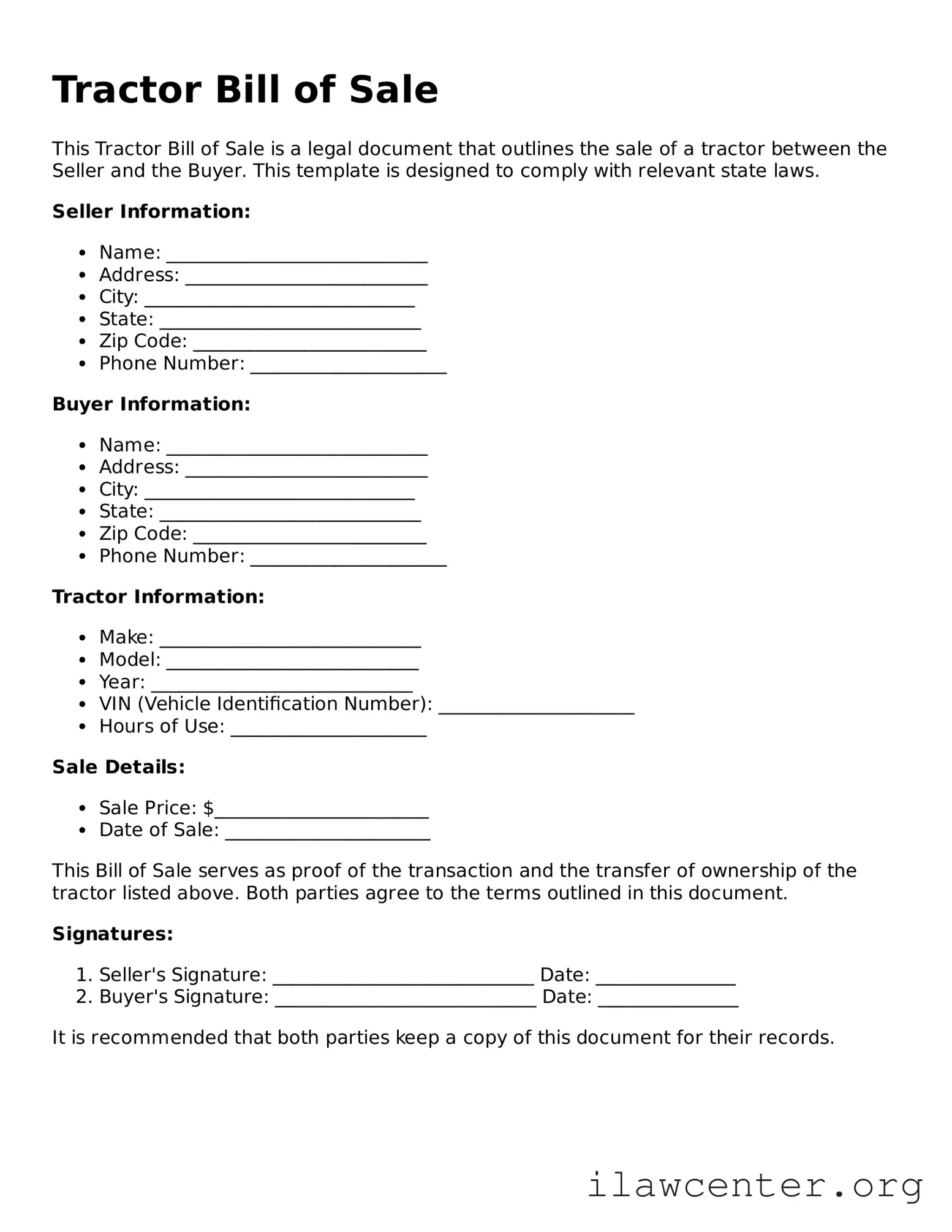
Tractor Bill of Sale Preview

Tractor Bill of Sale

This Tractor Bill of Sale is a legal document that outlines the sale of a tractor between the Seller and the Buyer. This template is designed to comply with relevant state laws.

Seller Information:

  • Name: ____________________________
  • Address: __________________________
  • City: _____________________________
  • State: ____________________________
  • Zip Code: _________________________
  • Phone Number: _____________________

Buyer Information:

  • Name: ____________________________
  • Address: __________________________
  • City: _____________________________
  • State: ____________________________
  • Zip Code: _________________________
  • Phone Number: _____________________

Tractor Information:

  • Make: ____________________________
  • Model: ___________________________
  • Year: ____________________________
  • VIN (Vehicle Identification Number): _____________________
  • Hours of Use: _____________________

Sale Details:

  • Sale Price: $_______________________
  • Date of Sale: ______________________

This Bill of Sale serves as proof of the transaction and the transfer of ownership of the tractor listed above. Both parties agree to the terms outlined in this document.

Signatures:

  1. Seller's Signature: ____________________________ Date: _______________
  2. Buyer's Signature: ____________________________ Date: _______________

It is recommended that both parties keep a copy of this document for their records.

PDF Form Characteristics

Fact Name Description
Purpose The Tractor Bill of Sale serves as a legal document that records the transfer of ownership of a tractor from the seller to the buyer.
Parties Involved This form typically includes the names and addresses of both the seller and the buyer, ensuring clear identification of both parties.
Vehicle Information Essential details about the tractor, such as make, model, year, and Vehicle Identification Number (VIN), are included to specify the item being sold.
Purchase Price The agreed-upon price for the tractor must be clearly stated to avoid any misunderstandings between the parties.
Governing Law The laws governing the sale of agricultural equipment, including tractors, vary by state. For example, in California, the Uniform Commercial Code (UCC) applies.
Signatures Both the seller and buyer must sign the document to validate the sale and confirm their agreement to the terms outlined.
Notarization Some states may require the bill of sale to be notarized to enhance its legal standing and provide an additional layer of verification.
Record Keeping It is advisable for both parties to keep a copy of the Tractor Bill of Sale for their records, as it may be needed for future reference or legal purposes.

Instructions on Utilizing Tractor Bill of Sale

After obtaining the Tractor Bill of Sale form, it is essential to accurately complete it to ensure a smooth transaction between the buyer and seller. The information provided will serve as a legal record of the sale, facilitating future ownership transfer and protecting both parties involved.

  1. Begin by entering the date of the transaction at the top of the form.
  2. Provide the full name and address of the seller in the designated section.
  3. Next, fill in the buyer's full name and address.
  4. Describe the tractor being sold. Include details such as the make, model, year, and Vehicle Identification Number (VIN).
  5. Indicate the sale price clearly. This should be the agreed-upon amount for the tractor.
  6. Include any terms of sale, such as whether the tractor is sold "as is" or if any warranties are provided.
  7. Both the buyer and seller must sign and date the form at the bottom to validate the transaction.

Once the form is completed and signed, both parties should retain a copy for their records. This document will be important for any future reference regarding the ownership of the tractor.

Important Facts about Tractor Bill of Sale

What is a Tractor Bill of Sale?

A Tractor Bill of Sale is a legal document that records the transfer of ownership of a tractor from one party to another. It includes essential details such as the buyer's and seller's names, the tractor's make, model, year, and identification number, as well as the sale price. This document serves as proof of the transaction and can be important for future reference, especially for registration and tax purposes.

Why do I need a Tractor Bill of Sale?

Having a Tractor Bill of Sale is crucial for several reasons. First, it provides a clear record of the transaction, which can help prevent disputes between the buyer and seller. Second, it may be required for registering the tractor with the state or for obtaining insurance. Lastly, it can serve as a reference for tax purposes, ensuring that both parties have documentation of the sale price and date.

What information should be included in the form?

The Tractor Bill of Sale should include specific information to ensure clarity and legality. Key details include the full names and addresses of both the buyer and seller, the tractor's make, model, year, and Vehicle Identification Number (VIN). The sale price and date of the transaction should also be documented. Additionally, any warranties or conditions of the sale can be included to protect both parties.

Is a Tractor Bill of Sale legally binding?

Yes, a Tractor Bill of Sale is legally binding once both parties have signed it. This means that both the buyer and seller are obligated to adhere to the terms outlined in the document. However, it's important to ensure that the form is filled out completely and accurately to avoid any potential legal issues in the future.

Do I need to have the Tractor Bill of Sale notarized?

Notarization is not typically required for a Tractor Bill of Sale, but it can add an extra layer of security. Having the document notarized can help verify the identities of the parties involved and the authenticity of the signatures. Some states may have specific requirements, so it's wise to check local laws to determine if notarization is necessary for your transaction.

Where can I obtain a Tractor Bill of Sale form?

You can find a Tractor Bill of Sale form through various sources. Many websites offer free or paid templates that you can customize to fit your needs. Additionally, local government offices or agricultural associations may provide forms or guidance. It's important to ensure that the form you use complies with your state's laws to ensure its validity.
Common mistakes

Filling out a Tractor Bill of Sale form can seem straightforward, but many individuals make common mistakes that can lead to complications down the line. Understanding these pitfalls can help ensure that the transaction goes smoothly and that all necessary information is accurately recorded.

One frequent error is incomplete information. Buyers and sellers often neglect to fill out all required fields, such as the names, addresses, and contact information of both parties. This lack of detail can create confusion and make it difficult to resolve any issues that may arise after the sale.

Another mistake is failing to include a clear description of the tractor. It’s crucial to provide specific details about the tractor, including the make, model, year, and Vehicle Identification Number (VIN). Without this information, it can be challenging to prove ownership or identify the tractor in the future.

People also sometimes overlook the importance of notarization. While not always required, having the bill of sale notarized can add an extra layer of legitimacy to the transaction. This step can help protect both the buyer and seller in case of disputes regarding ownership or payment.

Additionally, many individuals forget to specify the purchase price. Omitting this detail can lead to misunderstandings about the terms of the sale. It is essential to clearly state the agreed-upon price to avoid potential conflicts later on.

Another common oversight is neglecting to include any warranties or guarantees. If the seller is offering any warranties or if the tractor is sold "as is," this should be clearly stated in the bill of sale. This information helps set expectations and protects both parties.

Finally, many people fail to keep a copy of the completed bill of sale. After signing, it is vital for both the buyer and seller to retain a copy for their records. This document serves as proof of the transaction and can be useful for future reference or in case of any disputes.

Documents used along the form

When purchasing or selling a tractor, several important documents often accompany the Tractor Bill of Sale. Each of these documents plays a crucial role in ensuring a smooth transaction and protecting the interests of both the buyer and seller. Below is a list of commonly used forms and documents that can enhance the sale process.

  • Title Transfer Document: This document officially transfers ownership of the tractor from the seller to the buyer. It is essential for registering the vehicle in the new owner's name and ensuring that all legal responsibilities are clear.
  • Odometer Disclosure Statement: Required in many states, this statement provides a record of the tractor's mileage at the time of sale. This helps prevent fraud and ensures that the buyer is aware of the vehicle's usage history.
  • Sales Tax Exemption Certificate: If the buyer qualifies for a tax exemption, this certificate is necessary to avoid paying sales tax on the transaction. It must be filled out correctly to comply with state regulations.
  • Warranty Document: If the tractor comes with a warranty, this document outlines the terms and conditions of that warranty. It informs the buyer of their rights and any coverage for repairs or defects.
  • Financing Agreement: If the buyer is financing the purchase, this agreement details the terms of the loan, including interest rates, payment schedules, and any collateral involved. It ensures both parties understand their financial obligations.

By utilizing these documents alongside the Tractor Bill of Sale, both buyers and sellers can facilitate a more transparent and secure transaction. Each form serves a specific purpose, contributing to a comprehensive understanding of the sale and its implications.

Similar forms

  • Vehicle Bill of Sale: Similar in function, this document records the sale of a vehicle, detailing the buyer, seller, and vehicle specifics. It serves as proof of ownership transfer.
  • Boat Bill of Sale: This form is used for the sale of a boat. Like the Tractor Bill of Sale, it includes essential information about the buyer, seller, and the boat being sold.
  • Motorcycle Bill of Sale: This document facilitates the sale of a motorcycle, providing a clear record of the transaction. It includes details about the motorcycle and the parties involved.
  • ATV Bill of Sale: Used for all-terrain vehicles, this form captures the sale details similar to the Tractor Bill of Sale, ensuring both parties have a record of the transaction.
  • Equipment Bill of Sale: This document is designed for the sale of various types of equipment, including agricultural machinery. It outlines the specifics of the equipment and the transaction.
  • Real Estate Purchase Agreement: While more complex, this document also outlines the terms of a sale. It details the property, buyer, and seller, similar to how a Tractor Bill of Sale outlines the sale of a tractor.

Dos and Don'ts

When filling out a Tractor Bill of Sale form, it's important to be careful and thorough. Here’s a list of things you should and shouldn't do:

  • Do include the full names and addresses of both the buyer and seller.
  • Don't leave any sections blank; fill out every required field.
  • Do provide a detailed description of the tractor, including make, model, and year.
  • Don't use abbreviations that might confuse the reader.
  • Do specify the sale price clearly.
  • Don't forget to date the document to show when the sale took place.
  • Do have both parties sign the form to make it legally binding.
  • Don't overlook the need for a witness or notary if required in your state.
  • Do keep a copy of the completed form for your records.

Following these guidelines can help ensure a smooth transaction and protect both parties involved.

Misconceptions

The Tractor Bill of Sale form is an important document for anyone involved in the sale or purchase of a tractor. However, several misconceptions exist about this form that can lead to confusion. Below are ten common misconceptions, along with clarifications to help better understand its purpose and use.

  1. It is only necessary for new tractors.

    Many believe that a bill of sale is only needed for new tractors. In reality, it is essential for both new and used tractors to document the transaction.

  2. It is not legally binding.

    Some people think that a bill of sale is merely a formality. However, it is a legally binding document that can protect both the buyer and seller.

  3. Only the seller needs to sign it.

    It is a common misconception that only the seller's signature is required. Both parties should sign the document to validate the transaction.

  4. It can be created verbally.

    While verbal agreements can occur, they are often hard to enforce. A written bill of sale provides clear evidence of the transaction.

  5. It does not need to be notarized.

    Many assume notarization is unnecessary. While not always required, having a bill of sale notarized can add an extra layer of security.

  6. All states have the same requirements.

    People often think that the requirements for a bill of sale are uniform across the country. In fact, each state may have different laws regarding what must be included.

  7. It only serves as proof of purchase.

    While it does serve as proof of purchase, a bill of sale can also provide details about warranties, conditions, and any agreements made between the parties.

  8. It is not necessary if the tractor is registered.

    Some individuals believe that registration alone suffices. However, a bill of sale is still important for establishing ownership and protecting rights.

  9. It can be discarded after the sale is complete.

    Many think they can throw it away after the sale. Keeping a copy is advisable for future reference, especially for tax or legal purposes.

  10. It is a standard form that requires no customization.

    Some believe that a generic form will suffice for every transaction. However, customizing the bill of sale to include specific details about the tractor and the transaction is often beneficial.

Understanding these misconceptions can help ensure a smoother transaction process when buying or selling a tractor. It is always advisable to consult with a knowledgeable professional if there are any uncertainties regarding the bill of sale.

Key takeaways

When filling out and using a Tractor Bill of Sale form, consider the following key takeaways:

  1. Identify the parties involved: Clearly list the names and contact information of both the buyer and seller.
  2. Describe the tractor: Include specific details such as the make, model, year, and Vehicle Identification Number (VIN).
  3. State the purchase price: Clearly indicate the amount agreed upon for the sale of the tractor.
  4. Include the date of sale: Document the date when the transaction takes place to establish a record.
  5. Provide payment details: Specify the method of payment, whether cash, check, or financing.
  6. Disclose any liens: If applicable, mention any outstanding loans or liens against the tractor.
  7. Signatures are essential: Both parties must sign the document to validate the sale.
  8. Consider notarization: Having the bill of sale notarized adds an extra layer of authenticity.
  9. Keep copies: Each party should retain a copy of the signed bill of sale for their records.
  10. Consult local laws: Familiarize yourself with any state-specific requirements for tractor sales.

These steps ensure a smooth transaction and protect the interests of both the buyer and the seller.