Tsa Notification Card PDF Template

Tsa Notification Card PDF Template

The TSA Notification Card is designed for individuals with disabilities and medical conditions. This form allows travelers to communicate their specific needs during security screening. To ensure a smoother experience, consider filling out the form by clicking the button below.

Article Guide

The TSA Notification Card serves as a vital resource for travelers who have disabilities or medical conditions that may impact their security screening experience. This card allows individuals to communicate specific health conditions or the presence of medical devices, ensuring that appropriate accommodations can be made during the screening process. While the card is designed to facilitate a smoother experience, it is important to note that it does not exempt travelers from the standard security procedures. Instead, it opens the door to alternative screening methods that maintain an equivalent level of security while respecting the privacy and needs of the individual. For those requiring assistance, the TSA provides a dedicated helpline, TSA Cares, which can be reached at 1-855-787-2227, offering support on weekdays and weekends. Travelers are encouraged to contact the TSA at least 72 hours prior to their journey to arrange for the assistance of a Passenger Support Specialist at the checkpoint. Should a specialist be unavailable, asking for a Supervisory TSA Officer is always an option. This proactive approach ensures that every traveler receives the necessary support and understanding while navigating airport security.

Tsa Notification Card Preview

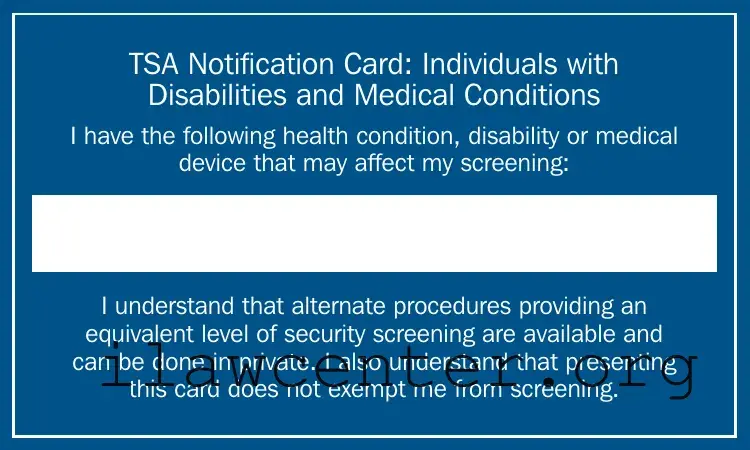
TSA Notification Card: Individuals with
Disabilities and Medical Conditions
I have the following health condition, disability or medical
device that may affect my screening:
I understand that alternate procedures providing an
equivalent level of security screening are available and
can be done in private. I also understand that presenting
this card does not exempt me from screening.
Information • Assistance Requests • Compliments • Complaints
TSA Cares
1-855-787-2227 (Federal Relay 711)
Weekdays: 8 a.m. to 11 p.m. ET
TSA-ContactCenter@tsa.dhs.gov
Weekends/Holidays: 9 a.m. to 8 p.m. ET
Hablamos Español
Automated information offered in 12 languages
Call 72 hours prior to traveling to request the assistance of a
Passenger Support Specialist (PSS) at the checkpoint. If a PSS is not
available, you may ask for a Supervisory TSA Officer at the checkpoint.

File Properties

Fact Name Details
Purpose of the Card The TSA Notification Card is designed for individuals with disabilities and medical conditions to communicate their needs during security screening.
Screening Procedures While the card helps facilitate the screening process, it does not exempt individuals from undergoing screening.
Alternate Procedures Individuals can request alternate procedures that provide an equivalent level of security screening in a private setting.
Contact Information For assistance, individuals can reach TSA Cares at 1-855-787-2227 or via email at TSA-ContactCenter@tsa.dhs.gov.
Advance Notice Travelers are encouraged to call 72 hours before their flight to request the assistance of a Passenger Support Specialist at the checkpoint.
Language Support TSA Cares offers automated information in 12 languages to accommodate diverse travelers.

Instructions on Utilizing Tsa Notification Card

Once you have the TSA Notification Card form, you will need to fill it out accurately to ensure your needs are addressed during the screening process. Follow these steps carefully to complete the form.

  1. Begin by writing your full name at the top of the form.
  2. In the next section, indicate your specific health condition, disability, or medical device that may affect your screening. Be clear and concise.
  3. Read the statement regarding alternate procedures for screening. Make sure you understand that presenting this card does not exempt you from screening.
  4. Sign and date the form at the bottom to confirm that the information you provided is accurate.
  5. Keep a copy of the completed form for your records.

If you have any questions or need assistance, you can contact TSA Cares at 1-855-787-2227 or email TSA-ContactCenter@tsa.dhs.gov. Remember to reach out at least 72 hours before your travel date if you require the help of a Passenger Support Specialist at the checkpoint.

Important Facts about Tsa Notification Card

What is the TSA Notification Card?

The TSA Notification Card is a tool designed for individuals with disabilities, medical conditions, or those who use medical devices that may impact the security screening process at airports. This card helps inform TSA officers of specific needs during screening.

Who should use the TSA Notification Card?

Individuals with health conditions, disabilities, or medical devices that could affect their screening experience are encouraged to use the TSA Notification Card. This includes, but is not limited to, those with mobility impairments, sensory disabilities, or medical devices such as pacemakers.

Does presenting the TSA Notification Card exempt me from screening?

No, presenting the TSA Notification Card does not exempt anyone from the screening process. All passengers, including those with the card, must undergo security screening to ensure the safety of all travelers.

What should I do if I need assistance at the checkpoint?

If you require assistance, you can call TSA Cares at 1-855-787-2227 at least 72 hours before your travel date. This will allow you to request the help of a Passenger Support Specialist (PSS) at the checkpoint. If a PSS is unavailable, you can ask for a Supervisory TSA Officer for assistance.

What kind of alternate procedures are available for screening?

The TSA offers alternate procedures that provide an equivalent level of security screening. These procedures can be conducted in private, ensuring that individuals with specific needs can undergo screening comfortably and with dignity.

What are the hours of operation for TSA Cares?

TSA Cares operates on weekdays from 8 a.m. to 11 p.m. ET and on weekends and holidays from 9 a.m. to 8 p.m. ET. It is important to reach out during these hours for assistance.

How can I provide feedback to TSA?

Individuals can provide compliments or complaints to TSA through various channels. You may contact TSA Cares at the provided phone number or email address, TSA-ContactCenter@tsa.dhs.gov, to share your experiences.

Is assistance available in languages other than English?

Yes, TSA Cares offers automated information in 12 different languages. This ensures that non-English speakers can access the information and assistance they need.

What should I do if I have additional questions?

If you have further questions or need more information about the TSA Notification Card or the screening process, you can contact TSA Cares at the provided phone number or email. They are available to assist you with any inquiries.

Common mistakes

Filling out the TSA Notification Card form can be a straightforward process, but there are common mistakes that individuals often make. One significant error is failing to clearly state the specific health condition, disability, or medical device. This information is crucial for TSA personnel to provide appropriate accommodations. Without clarity, there may be delays or misunderstandings during the screening process.

Another mistake is neglecting to understand the purpose of the card. Some individuals mistakenly believe that presenting the TSA Notification Card will exempt them from screening altogether. It is important to remember that this card is intended to facilitate a smoother screening experience, not to bypass it. Awareness of this distinction can help set realistic expectations.

Additionally, individuals sometimes forget to request assistance in advance. The TSA recommends calling 72 hours before traveling to arrange for a Passenger Support Specialist (PSS) at the checkpoint. Failing to do so may result in a lack of support during screening, leading to unnecessary stress and confusion.

Moreover, not utilizing the resources available can be a missed opportunity. The TSA provides various contact options for assistance, including a dedicated phone line and email. Individuals should take advantage of these resources to ask questions or express concerns. Ignoring these options can leave travelers feeling unsupported.

Lastly, some people overlook the importance of reviewing the information provided on the card. Ensuring that all details are accurate and complete is essential. Any discrepancies could complicate the screening process. Taking a moment to double-check the form can help ensure a smoother experience at the airport.

Documents used along the form

The TSA Notification Card is an important document for individuals with disabilities or medical conditions that may impact the security screening process at airports. Alongside this card, several other forms and documents can enhance the travel experience and ensure that necessary accommodations are met. Below is a list of commonly used documents that may accompany the TSA Notification Card.

  • Medical Documentation: This includes letters or reports from healthcare providers detailing the individual’s condition or medical needs. It can help TSA officers understand specific requirements during screening.
  • Disability Identification Card: Issued by various state agencies, this card serves as proof of a disability and may facilitate quicker access to necessary accommodations at the airport.
  • Travel Itinerary: A detailed schedule of flights and connections can assist TSA personnel in planning for any special assistance needed during the journey.
  • Special Assistance Request Form: This form can be submitted to the airline prior to travel to ensure that appropriate support is arranged, such as wheelchair assistance or priority boarding.
  • Emergency Contact Information: A document listing emergency contacts can be helpful in case of unexpected situations during travel.
  • Medication List: A comprehensive list of medications, including dosages and administration times, can assist TSA agents in understanding any medical needs that may arise during travel.
  • Device Documentation: For travelers with medical devices, this documentation explains the device's purpose and any specific considerations during screening.
  • Airline-Specific Forms: Some airlines may have their own forms for requesting special services or accommodations. These should be completed and submitted in advance of travel.
  • Feedback or Complaint Forms: If there are any issues during the travel experience, these forms allow travelers to provide feedback to TSA or the airline, helping to improve future services.

Having these documents ready can significantly ease the travel process for individuals with disabilities or medical conditions. Proper preparation ensures that travelers receive the necessary accommodations and support, allowing for a smoother and more comfortable journey through airport security.

Similar forms

The TSA Notification Card is designed to assist individuals with disabilities and medical conditions during the screening process. Several other documents serve similar purposes in different contexts. Here are nine documents that share similarities with the TSA Notification Card:

  • Service Animal Identification Card: This card informs TSA agents about a passenger's service animal, similar to how the TSA Notification Card communicates a passenger's health condition or disability.
  • Medical Alert Bracelet: This bracelet provides crucial health information in emergencies, akin to how the TSA Notification Card alerts screeners about specific medical needs.
  • Disability Parking Permit: This permit allows individuals with disabilities to park in designated spots, just as the TSA Notification Card facilitates smoother airport screening.
  • Special Needs Travel Card: Used by travelers with special needs, this card helps notify airline staff about necessary accommodations, similar to the TSA Notification Card's purpose.
  • Prescription Medication Label: This label indicates that a passenger has medication that may require special handling, paralleling the way the TSA Notification Card indicates a medical condition.
  • Emergency Medical Information Card: This card contains vital health information for emergencies, much like the TSA Notification Card informs screeners about a passenger’s medical needs.
  • Travel Companion Card: This card identifies a travel companion who assists a person with disabilities, similar to how the TSA Notification Card identifies a passenger's needs during screening.
  • Accessible Travel Card: This card ensures that travelers receive necessary accommodations, akin to the TSA Notification Card's role in facilitating a smoother screening process.
  • Health Condition Disclosure Form: This form allows individuals to disclose health conditions to relevant parties, similar to how the TSA Notification Card communicates important information to TSA personnel.

Each of these documents serves to enhance communication and ensure that individuals receive the support they need while traveling.

Dos and Don'ts

When filling out the TSA Notification Card form, it’s important to approach the process with care. Here are seven things to keep in mind:

  • Do provide accurate and complete information about your health condition, disability, or medical device.
  • Don't leave any sections of the form blank. Incomplete forms can lead to delays.
  • Do understand that presenting this card does not exempt you from security screening.
  • Don't assume that all TSA agents are familiar with the card. Be prepared to explain its purpose if necessary.
  • Do contact TSA Cares at 1-855-787-2227 if you need assistance or have questions prior to your travel.
  • Don't forget to request the assistance of a Passenger Support Specialist (PSS) at least 72 hours before your flight.
  • Do remain calm and patient during the screening process, as alternate procedures may take additional time.

Following these guidelines can help ensure a smoother experience at the airport. Being prepared is key.

Misconceptions

Understanding the TSA Notification Card can help individuals with disabilities and medical conditions navigate the screening process more effectively. However, several misconceptions exist. Here are nine common misunderstandings:

  • It exempts me from screening. Many believe that presenting the TSA Notification Card means they will not be screened at all. In reality, this card does not exempt anyone from the screening process.
  • Only certain disabilities qualify. Some think that only specific disabilities or medical conditions are recognized. The card is designed for a wide range of health conditions and medical devices.
  • It's mandatory to carry the card. While the card can be helpful, it is not a requirement for individuals with disabilities to have it. It is an optional tool for those who wish to communicate their needs.
  • All TSA agents are familiar with the card. Some assume that every TSA agent is fully trained on the card's purpose and use. However, knowledge may vary among agents, so it is advisable to explain your situation if needed.
  • Using the card guarantees special treatment. Many believe that presenting the card will automatically lead to expedited screening or special treatment. Instead, it simply informs agents of your needs.
  • I can only use the card at security checkpoints. Some think the card is only applicable during screening. However, it can also be used to request assistance before arriving at the checkpoint.
  • The card is only for physical disabilities. There is a misconception that the card is exclusively for physical disabilities. In fact, it is also applicable for various medical conditions that may affect screening.
  • It is not necessary to inform TSA about my condition. Some individuals believe they can keep their medical conditions private. However, sharing this information can lead to a smoother screening process.
  • I must notify TSA in advance to use the card. While it is helpful to inform TSA about your needs ahead of time, it is not a strict requirement. You can present the card at the checkpoint without prior notification.

By clearing up these misconceptions, individuals can better prepare for their travel experience and ensure their needs are met during the screening process.

Key takeaways

Filling out the TSA Notification Card can be a straightforward process, but understanding its purpose and how to use it effectively is crucial. Here are some key takeaways to keep in mind:

  • Know Your Rights: The card is designed for individuals with disabilities or medical conditions, ensuring that their needs are recognized during security screening.
  • Be Specific: Clearly indicate any health conditions, disabilities, or medical devices on the card to help TSA officers understand your situation better.
  • Privacy Matters: The TSA provides options for private screening, so don't hesitate to ask for this if you prefer it.
  • No Exemptions: Presenting the card does not exempt you from screening; it simply helps facilitate a smoother process.
  • Contact TSA Cares: If you have questions or need assistance, call TSA Cares at 1-855-787-2227 for support.
  • Plan Ahead: Contact the TSA at least 72 hours before your travel date to request assistance from a Passenger Support Specialist at the checkpoint.
  • Weekend Availability: Remember that TSA Cares is available on weekends and holidays, but hours may vary.
  • Language Support: The TSA offers automated information in 12 languages, making it easier for non-English speakers to understand the process.

By keeping these points in mind, you can navigate the airport security process with greater confidence and ease.