Fillable Vehicle Purchase Agreement Document

Fillable Vehicle Purchase Agreement Document

A Vehicle Purchase Agreement is a legal document that outlines the terms and conditions of a vehicle sale between a buyer and a seller. This form protects both parties by clearly stating the details of the transaction, including the vehicle's price, payment terms, and any warranties. Ready to make your vehicle purchase official? Fill out the form by clicking the button below.

Article Guide

When purchasing a vehicle, whether new or used, having a clear understanding of the Vehicle Purchase Agreement form is essential. This document serves as a binding contract between the buyer and the seller, outlining the terms of the sale. Key components of the agreement typically include the purchase price, vehicle identification details, and any warranties or guarantees provided. Additionally, it specifies payment methods, financing options, and any applicable taxes or fees. The form also addresses the responsibilities of both parties, such as the seller's obligation to provide a clean title and the buyer's duty to inspect the vehicle before finalizing the purchase. Understanding these aspects can help ensure a smooth transaction and protect the interests of both the buyer and seller.

Vehicle Purchase Agreement Preview

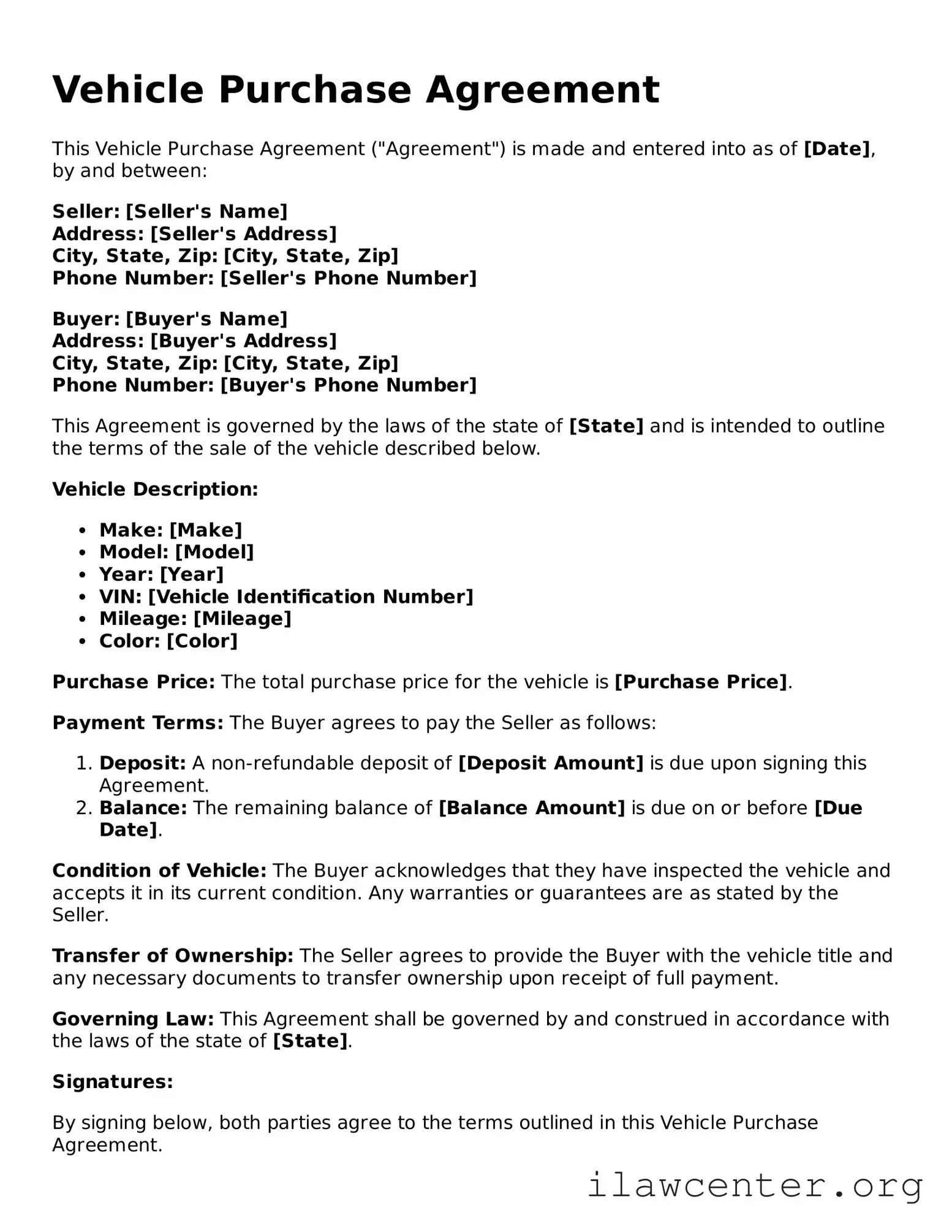
Vehicle Purchase Agreement

This Vehicle Purchase Agreement ("Agreement") is made and entered into as of [Date], by and between:

Seller: [Seller's Name]
Address: [Seller's Address]
City, State, Zip: [City, State, Zip]
Phone Number: [Seller's Phone Number]

Buyer: [Buyer's Name]
Address: [Buyer's Address]
City, State, Zip: [City, State, Zip]
Phone Number: [Buyer's Phone Number]

This Agreement is governed by the laws of the state of [State] and is intended to outline the terms of the sale of the vehicle described below.

Vehicle Description:

  • Make: [Make]
  • Model: [Model]
  • Year: [Year]
  • VIN: [Vehicle Identification Number]
  • Mileage: [Mileage]
  • Color: [Color]

Purchase Price: The total purchase price for the vehicle is [Purchase Price].

Payment Terms: The Buyer agrees to pay the Seller as follows:

  1. Deposit: A non-refundable deposit of [Deposit Amount] is due upon signing this Agreement.
  2. Balance: The remaining balance of [Balance Amount] is due on or before [Due Date].

Condition of Vehicle: The Buyer acknowledges that they have inspected the vehicle and accepts it in its current condition. Any warranties or guarantees are as stated by the Seller.

Transfer of Ownership: The Seller agrees to provide the Buyer with the vehicle title and any necessary documents to transfer ownership upon receipt of full payment.

Governing Law: This Agreement shall be governed by and construed in accordance with the laws of the state of [State].

Signatures:

By signing below, both parties agree to the terms outlined in this Vehicle Purchase Agreement.

Seller's Signature: ____________________________ Date: ________________

Buyer's Signature: ____________________________ Date: ________________

PDF Form Characteristics

Fact Name Description
Definition A Vehicle Purchase Agreement is a contract between a buyer and a seller outlining the terms of a vehicle sale.
Parties Involved The agreement typically involves a buyer and a seller, which can be an individual or a dealership.
Purchase Price The form specifies the total purchase price of the vehicle, including any taxes or fees.
Vehicle Details It includes essential information about the vehicle, such as make, model, year, and VIN (Vehicle Identification Number).
Payment Terms The agreement outlines the payment method, whether it be cash, financing, or trade-in value.
Governing Law The agreement is subject to the laws of the state where the transaction occurs, which may vary by state.
Signatures Required Both the buyer and seller must sign the agreement to make it legally binding.
Disclosure Requirements Many states require sellers to disclose any known defects or issues with the vehicle.
Cancellation Policy The agreement may include terms regarding cancellation or return of the vehicle, depending on state laws.

Instructions on Utilizing Vehicle Purchase Agreement

Once you have the Vehicle Purchase Agreement form, you will need to provide accurate information to complete it. Following these steps will help ensure that all necessary details are included for a successful transaction.

  1. Begin by entering the date at the top of the form.
  2. Fill in the buyer's full name and address in the designated fields.
  3. Provide the seller's full name and address as well.
  4. Enter the vehicle's make, model, year, and VIN (Vehicle Identification Number).
  5. Specify the purchase price of the vehicle clearly.
  6. Indicate the payment method, whether it is cash, financing, or another form.
  7. Include any additional terms or conditions that apply to the sale.
  8. Both the buyer and seller should sign and date the form at the bottom.

After completing the form, keep a copy for your records. Ensure both parties have signed the agreement before finalizing the transaction.

Important Facts about Vehicle Purchase Agreement

What is a Vehicle Purchase Agreement?

A Vehicle Purchase Agreement is a legally binding document that outlines the terms and conditions of a vehicle sale between a buyer and a seller. This agreement typically includes details such as the vehicle's make, model, year, identification number, purchase price, and payment terms. It serves to protect both parties by clearly defining their rights and obligations throughout the transaction.

Why is a Vehicle Purchase Agreement important?

This agreement is crucial because it provides a clear record of the transaction. It helps prevent misunderstandings by documenting the agreed-upon terms. In case of disputes, the Vehicle Purchase Agreement can serve as evidence in court, ensuring that both parties adhere to the terms they signed. Additionally, it can help establish the buyer's ownership of the vehicle.

What should be included in a Vehicle Purchase Agreement?

A comprehensive Vehicle Purchase Agreement should include the following elements: the names and addresses of both the buyer and seller, the vehicle's details (make, model, year, VIN), the purchase price, payment method, any warranties or guarantees, and the date of the sale. It may also include terms regarding the transfer of title and registration, as well as any contingencies that must be met before the sale is finalized.

Can I modify a Vehicle Purchase Agreement?

Yes, you can modify a Vehicle Purchase Agreement, but both parties must agree to any changes. Modifications should be documented in writing and signed by both the buyer and the seller to ensure that the new terms are enforceable. Verbal agreements or informal changes may not hold up legally if disputes arise later.

What happens if one party breaches the Vehicle Purchase Agreement?

If one party fails to uphold their end of the agreement, it is considered a breach. The non-breaching party may have several options, including seeking damages or specific performance, which means asking the court to enforce the agreement as originally intended. It is often advisable to attempt to resolve the issue through negotiation before pursuing legal action.

Is a Vehicle Purchase Agreement required by law?

While a Vehicle Purchase Agreement is not always legally required, it is highly recommended. Many states do not mandate a written contract for private vehicle sales, but having one protects both parties and clarifies the terms of the sale. Additionally, dealerships typically use such agreements to comply with consumer protection laws and to ensure transparency in their transactions.

How can I ensure that my Vehicle Purchase Agreement is valid?

To ensure the validity of your Vehicle Purchase Agreement, both parties should sign the document, and it is advisable to have it notarized. This adds an extra layer of authenticity. Make sure that all details are accurate and that both parties fully understand the terms before signing. Keeping a copy of the signed agreement is also important for future reference.

What should I do if I have questions about the Vehicle Purchase Agreement?

If you have questions about the Vehicle Purchase Agreement, it is best to consult with a legal professional who specializes in contract law or consumer protection. They can provide guidance tailored to your specific situation and help clarify any terms or conditions that may be confusing. Additionally, many online resources offer templates and explanations that can assist in understanding the agreement better.

Can I use a Vehicle Purchase Agreement template?

Yes, using a Vehicle Purchase Agreement template can be a helpful starting point. However, it is important to customize the template to fit the specific details of your transaction. Ensure that all necessary information is included and that the terms reflect the agreement reached between the buyer and seller. It is also wise to have a legal professional review the final document to confirm its adequacy and compliance with local laws.
Common mistakes

When it comes to purchasing a vehicle, the Vehicle Purchase Agreement form is a crucial document. However, many individuals make mistakes while filling it out, which can lead to complications down the road. One common error is failing to provide accurate information about the vehicle. This includes details such as the Vehicle Identification Number (VIN), make, model, and year. Inaccuracies can create problems with registration and insurance, so it’s essential to double-check this information before submitting the form.

Another frequent mistake is not reading the terms and conditions carefully. Many people rush through the process and overlook important clauses. These terms often include financing details, warranties, and return policies. Understanding these aspects is vital for ensuring that you are fully aware of your rights and responsibilities after the purchase.

Additionally, buyers sometimes neglect to include all necessary signatures. A Vehicle Purchase Agreement typically requires signatures from both the buyer and the seller. Omitting a signature can render the agreement invalid, leaving both parties in a precarious situation. It’s wise to confirm that all required signatures are present before finalizing the document.

Another area of concern is the payment section. Some individuals fail to specify the payment method clearly. Whether it’s a bank transfer, cash, or financing through a dealership, clarity is key. Misunderstandings regarding payment can lead to disputes or delays in the transaction.

Moreover, buyers often forget to check for any additional fees. Taxes, registration fees, and dealer fees can add up quickly. If these costs are not outlined in the agreement, it may lead to unexpected financial burdens later on. Always ensure that all fees are included in the final total to avoid surprises.

In the excitement of purchasing a new vehicle, individuals might overlook the importance of including any trade-in information. If you’re trading in a vehicle as part of the deal, it’s essential to accurately reflect this in the agreement. Failing to do so can result in confusion about the final price and the value of the trade-in.

Another common oversight is not providing a clear description of any included accessories or features. If the vehicle comes with added features like a navigation system or upgraded sound system, these should be explicitly mentioned in the agreement. This clarity helps prevent misunderstandings about what is included in the sale.

Buyers may also forget to keep a copy of the completed agreement. Once the form is filled out and signed, it’s important to retain a copy for personal records. This document serves as proof of the transaction and can be crucial if any disputes arise in the future.

Lastly, individuals sometimes fail to consult with a knowledgeable person before signing the agreement. Whether it’s a trusted friend or a legal expert, having someone review the document can provide valuable insights and help catch any mistakes. Taking this extra step can save time, money, and stress in the long run.

Documents used along the form

When purchasing a vehicle, several important documents accompany the Vehicle Purchase Agreement. Each document serves a specific purpose in the transaction process. Understanding these forms can help ensure a smooth and legally sound purchase.

  • Bill of Sale: This document acts as a receipt for the transaction. It includes details such as the vehicle's make, model, VIN, sale price, and the names of both the buyer and seller. It provides proof of ownership transfer.
  • Title Transfer Form: This form is necessary for transferring the vehicle's title from the seller to the buyer. It contains information about the vehicle and must be submitted to the local Department of Motor Vehicles (DMV) to officially register the new owner.
  • Odometer Disclosure Statement: This statement is required by federal law to disclose the vehicle's mileage at the time of sale. Both the buyer and seller must sign this document to confirm the accuracy of the mileage reading.
  • Financing Agreement: If the vehicle is being financed, this document outlines the terms of the loan, including interest rates, payment schedules, and any penalties for late payments. It protects both the lender and the borrower.

Having these documents ready and understanding their significance can streamline the vehicle purchasing process. Always review each document carefully to ensure all information is accurate and complete.

Similar forms

  • Bill of Sale: This document serves as a proof of sale and ownership transfer for a vehicle. It typically includes details about the buyer, seller, and vehicle, similar to the Vehicle Purchase Agreement.

  • Sales Contract: A sales contract outlines the terms of the sale, including price and payment terms. Like the Vehicle Purchase Agreement, it formalizes the agreement between the buyer and seller.

  • Lease Agreement: This document details the terms under which a vehicle is leased. It shares similarities with the Vehicle Purchase Agreement in that it outlines obligations and rights of both parties.

  • Loan Agreement: When financing a vehicle, a loan agreement specifies the terms of the loan. Both documents involve financial obligations and the specifics of the transaction.

  • Title Transfer Document: This document is essential for transferring ownership of a vehicle. It parallels the Vehicle Purchase Agreement in its role in the ownership transfer process.

  • Warranty Document: A warranty document provides guarantees about the vehicle's condition. Like the Vehicle Purchase Agreement, it may include terms that protect the buyer.

  • Inspection Report: An inspection report details the condition of the vehicle before purchase. It complements the Vehicle Purchase Agreement by providing crucial information about the vehicle's state.

  • Power of Attorney: This document allows one party to act on behalf of another in vehicle transactions. It is related to the Vehicle Purchase Agreement in facilitating the sale process.

  • Financing Application: A financing application is used to apply for a loan to purchase a vehicle. It aligns with the Vehicle Purchase Agreement by detailing the financial aspects of the purchase.

Dos and Don'ts

When filling out a Vehicle Purchase Agreement form, attention to detail is crucial. Here are five important dos and don'ts to consider:

  • Do read the entire agreement carefully before signing.
  • Do ensure all information is accurate, including names, addresses, and vehicle details.
  • Do ask questions if any terms or conditions are unclear.
  • Do keep a copy of the signed agreement for your records.
  • Do verify any financing terms and conditions before finalizing the purchase.
  • Don't rush through the form; take your time to understand it fully.
  • Don't leave any blank spaces; fill in all required fields.
  • Don't sign the agreement if you feel pressured or uncertain.
  • Don't ignore the fine print; it often contains important information.
  • Don't forget to check for any additional fees or charges that may apply.

Misconceptions

Many people have misunderstandings about the Vehicle Purchase Agreement form. Here are six common misconceptions:

  1. It’s just a formality. Many believe that signing the Vehicle Purchase Agreement is merely a formality. In reality, it serves as a legally binding contract that outlines the terms of the sale.
  2. All agreements are the same. Not all Vehicle Purchase Agreements are identical. Different dealerships may have varying terms, conditions, and fees, making it essential to read each agreement carefully.
  3. Verbal agreements are enough. Some think that a verbal agreement suffices. However, a written contract protects both the buyer and seller, ensuring clarity and reducing the risk of misunderstandings.
  4. It’s only for new vehicles. A common misconception is that this agreement applies only to new cars. In fact, it is used for both new and used vehicle purchases.
  5. You can’t negotiate the terms. Many buyers feel that the terms are set in stone. However, negotiation is often possible, especially regarding the price and financing options.
  6. Once signed, it can't be changed. Some believe that once they sign the agreement, they cannot make changes. In certain situations, amendments can be made if both parties agree to the modifications.

Understanding these misconceptions can help you navigate the vehicle purchasing process more effectively.

Key takeaways

When it comes to buying a vehicle, understanding the Vehicle Purchase Agreement form is essential. Here are some key takeaways to keep in mind:

  • Read Thoroughly: Before signing, ensure that you read the entire agreement. This helps you understand the terms and conditions of the sale.
  • Verify Information: Double-check that all details, such as the vehicle identification number (VIN), make, model, and purchase price, are correct.
  • Understand Payment Terms: Familiarize yourself with the payment structure, including any down payments, financing options, and total cost.
  • Review Warranties: Look for any warranties or guarantees provided by the seller. Knowing what is covered can save you money in the long run.
  • Keep a Copy: Always retain a copy of the signed agreement for your records. This document serves as proof of the transaction and can be useful for future reference.

By keeping these points in mind, you can navigate the vehicle purchasing process with greater confidence and clarity.