Fillable Venue Rental Agreement Document

Fillable Venue Rental Agreement Document

A Venue Rental Agreement is a legal document that outlines the terms and conditions for renting a space for events. This form protects both the venue owner and the renter by clearly defining responsibilities, payment terms, and usage guidelines. To get started, fill out the form by clicking the button below.

Article Guide

When planning an event, securing the right venue is crucial, and a Venue Rental Agreement form plays a vital role in this process. This document outlines the terms and conditions under which a venue is rented, ensuring that both the venue owner and the renter understand their rights and responsibilities. Key components typically include the rental period, payment details, and cancellation policies. Additionally, the agreement often specifies the maximum capacity of the venue, permitted uses, and any restrictions on activities. Liability clauses are also common, addressing who is responsible for damages or injuries that may occur during the event. By carefully reviewing and signing this agreement, both parties can foster a clear understanding and minimize potential disputes, setting the stage for a successful gathering.

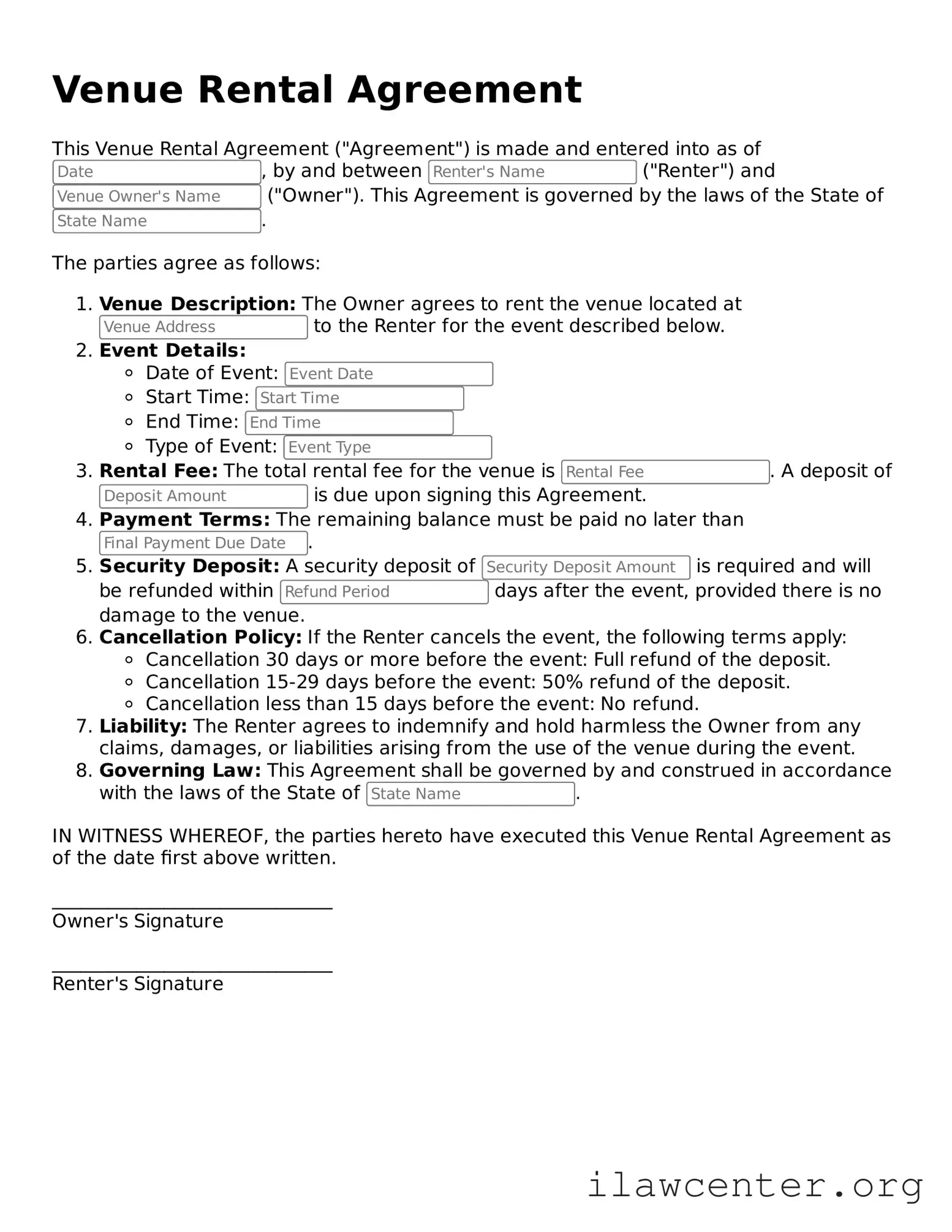
Venue Rental Agreement Preview

Venue Rental Agreement

This Venue Rental Agreement ("Agreement") is made and entered into as of , by and between ("Renter") and ("Owner"). This Agreement is governed by the laws of the State of .

The parties agree as follows:

  1. Venue Description: The Owner agrees to rent the venue located at to the Renter for the event described below.
  2. Event Details:
    • Date of Event:
    • Start Time:
    • End Time:
    • Type of Event:
  3. Rental Fee: The total rental fee for the venue is . A deposit of is due upon signing this Agreement.
  4. Payment Terms: The remaining balance must be paid no later than .
  5. Security Deposit: A security deposit of is required and will be refunded within days after the event, provided there is no damage to the venue.
  6. Cancellation Policy: If the Renter cancels the event, the following terms apply:
    • Cancellation 30 days or more before the event: Full refund of the deposit.
    • Cancellation 15-29 days before the event: 50% refund of the deposit.
    • Cancellation less than 15 days before the event: No refund.
  7. Liability: The Renter agrees to indemnify and hold harmless the Owner from any claims, damages, or liabilities arising from the use of the venue during the event.
  8. Governing Law: This Agreement shall be governed by and construed in accordance with the laws of the State of .

IN WITNESS WHEREOF, the parties hereto have executed this Venue Rental Agreement as of the date first above written.

______________________________
Owner's Signature

______________________________
Renter's Signature

PDF Form Characteristics

Fact Name Description
Purpose A Venue Rental Agreement outlines the terms under which a venue is rented for an event.
Parties Involved The agreement typically involves the venue owner and the event organizer.
Rental Fee The document specifies the total rental fee and payment schedule.
Deposit Requirement Many agreements require a security deposit to secure the reservation.
Cancellation Policy The terms for cancellation and any associated fees are clearly outlined.
Governing Law State-specific forms will reference the governing laws of that state, such as California Civil Code for California agreements.
Liability Clauses The agreement often includes clauses that limit liability for both parties.
Signature Requirement Both parties must sign the agreement for it to be legally binding.

Instructions on Utilizing Venue Rental Agreement

Completing the Venue Rental Agreement form is essential for securing the use of a venue for your event. Following the steps below will help ensure that all necessary information is accurately provided. After filling out the form, you will need to review it for completeness before submission.

  1. Begin by entering the event date in the designated field.
  2. Specify the start time and end time for your event.
  3. Provide the name of the organization or individual renting the venue.
  4. Include a contact person’s name along with their phone number and email address.
  5. Detail the type of event you are hosting, such as a wedding, conference, or party.
  6. Indicate the expected number of attendees for the event.
  7. List any special requirements or requests, such as catering or audio-visual needs.
  8. Review the terms and conditions section and confirm your understanding by signing where indicated.
  9. Date your signature to validate the agreement.

Important Facts about Venue Rental Agreement

What is a Venue Rental Agreement?

A Venue Rental Agreement is a legal document that outlines the terms and conditions for renting a space for events such as weddings, parties, or corporate gatherings. It details the responsibilities of both the venue owner and the renter, ensuring clarity and protection for both parties.

What information is typically included in the agreement?

The agreement usually includes the rental period, rental fees, security deposits, cancellation policies, and rules regarding the use of the venue. It may also specify the maximum capacity, allowed decorations, and any additional services provided by the venue.

How do I know if the venue is available for my desired date?

You can check the venue’s availability by contacting the venue manager or using an online booking system, if available. It’s advisable to inquire as early as possible, especially for popular dates, to ensure you secure the venue you want.

What happens if I need to cancel my reservation?

The cancellation policy will be detailed in the agreement. Generally, it will outline the timeframe for cancellations and any fees associated with them. Understanding this policy before signing is crucial, as it can impact your finances significantly.

Is a security deposit required?

Most venues require a security deposit to cover potential damages or additional cleaning costs. This deposit is typically refundable after the event, provided the venue is returned in good condition. The specific amount and conditions will be outlined in the agreement.

Can I make changes to the agreement after signing?

Changes to the agreement after it has been signed are generally not permitted unless both parties agree to the modifications in writing. It’s important to review the agreement thoroughly before signing to avoid the need for changes later.

Are there any restrictions on decorations or catering?

Many venues have specific rules regarding decorations and catering services. These restrictions may include limitations on open flames, types of materials used for decor, or requirements to use in-house catering. Always check the agreement for these details to avoid surprises.

What should I do if I have special requests?

If you have special requests, such as specific setup needs or additional equipment, communicate these to the venue manager early in the planning process. Many venues are willing to accommodate requests, but it’s best to get these arrangements confirmed in writing.

What are my responsibilities as a renter?

Your responsibilities typically include adhering to the venue's rules, paying the agreed-upon fees on time, and ensuring the venue is left in good condition after your event. Understanding these responsibilities helps prevent disputes and ensures a smooth rental experience.
Common mistakes

When filling out the Venue Rental Agreement form, individuals often overlook crucial details that can lead to complications later on. One common mistake is failing to provide accurate contact information. This may seem minor, but incorrect phone numbers or email addresses can result in missed communications regarding important updates or changes to the rental agreement. Always double-check that the information is current and correct.

Another frequent error involves the selection of rental dates. Many people mistakenly enter the wrong dates or overlook the need for a backup date in case of unforeseen circumstances. It is essential to clearly specify both the start and end dates of the rental period. This not only helps in securing the venue but also ensures that both parties have a clear understanding of the rental timeline.

Additionally, individuals sometimes neglect to read the terms and conditions thoroughly. This oversight can lead to misunderstandings about rental fees, deposit requirements, or cancellation policies. By skimming through the fine print, renters might inadvertently agree to terms that do not align with their expectations. Taking the time to read and comprehend these details can save headaches down the road.

Lastly, many fail to sign and date the agreement properly. A missing signature or an undated form can render the agreement invalid. This simple oversight can cause significant delays in the rental process. Ensure that all required signatures are present and that the date of signing is clearly indicated. Taking these steps helps to solidify the agreement and move forward with confidence.

Documents used along the form

A Venue Rental Agreement is an important document for securing a location for events. However, several other forms and documents are often used in conjunction with it. These documents help clarify terms, protect all parties involved, and ensure a smooth rental process.

  • Event Schedule: This document outlines the timeline of the event, including setup and breakdown times. It helps both the venue and the renter stay organized.
  • Insurance Certificate: Many venues require proof of insurance. This certificate shows that the renter has liability coverage in case of accidents or damages during the event.
  • Deposit Receipt: This receipt confirms the payment of a deposit. It serves as proof of the financial commitment made by the renter to secure the venue.
  • Cancellation Policy: This document explains the terms and conditions regarding cancellations. It details any fees or penalties that may apply if the renter decides to cancel the event.
  • Vendor Agreements: If third-party vendors are involved (like caterers or DJs), these agreements outline the terms of their services. They ensure that everyone understands their responsibilities.
  • Rules and Regulations: Venues often have specific rules that renters must follow. This document lists those rules, such as noise restrictions or decor guidelines.
  • Guest List: A list of expected attendees can help the venue prepare for the event. It may also be necessary for security or seating arrangements.
  • Payment Plan Agreement: If the rental fee is paid in installments, this document details the payment schedule. It ensures that both parties agree on when payments are due.

Using these documents alongside the Venue Rental Agreement can help ensure that all aspects of the event are covered. They provide clarity and protect the interests of both the renter and the venue.

Similar forms

  • Lease Agreement: Both documents outline the terms for renting a space, including duration, payment, and responsibilities of each party.
  • Event Contract: This document specifies the details of an event, similar to how a Venue Rental Agreement details the use of the venue for a specific occasion.
  • Service Agreement: Like the Venue Rental Agreement, it defines the obligations and expectations between parties, often including payment terms and service delivery.
  • Rental Agreement for Equipment: This document governs the rental of equipment, detailing terms and conditions much like a Venue Rental Agreement does for physical space.
  • Commercial Lease: Similar to a Venue Rental Agreement, this document addresses the leasing of commercial property, focusing on business-related use and terms.
  • Room Reservation Agreement: This type of agreement ensures a specific room is reserved for a certain period, mirroring the venue's reservation terms.
  • Usage Agreement: This document outlines how a particular space can be used, including restrictions and obligations, akin to the stipulations in a Venue Rental Agreement.

Dos and Don'ts

When it comes to filling out a Venue Rental Agreement form, attention to detail is paramount. Here are some essential dos and don'ts to guide you through the process:

  • Do read the entire agreement carefully before filling it out. Understanding all terms and conditions will prevent misunderstandings later.
  • Do provide accurate information. Double-check names, dates, and contact details to avoid any discrepancies.
  • Do ask questions if something is unclear. Clarifying any doubts with the venue manager can save you from potential issues.
  • Do keep a copy of the completed agreement for your records. Having a reference can be invaluable in case of disputes.
  • Don't rush through the form. Take your time to ensure all sections are completed thoroughly.
  • Don't ignore deadlines for submission. Late submissions can jeopardize your reservation.
  • Don't assume that verbal agreements are binding. Always ensure that all agreements are documented in writing.

Misconceptions

When it comes to Venue Rental Agreements, many people hold misconceptions that can lead to confusion and potential issues. Understanding the truth behind these misunderstandings can help ensure a smooth rental experience. Here are five common misconceptions:

  1. Misconception 1: A Venue Rental Agreement is not necessary for informal gatherings.

    Many believe that if the event is small or casual, a formal agreement is unnecessary. However, having a written contract protects both the renter and the venue owner by outlining expectations and responsibilities.

  2. Misconception 2: All Venue Rental Agreements are the same.

    People often assume that all rental agreements contain the same terms. In reality, each agreement can vary significantly based on the venue, type of event, and specific requirements. It’s crucial to read the terms carefully and understand what is included.

  3. Misconception 3: A Venue Rental Agreement is only about the rental fee.

    While the rental fee is an important aspect, the agreement covers much more. It includes details about the duration of the rental, security deposits, cancellation policies, and liability issues, among other things.

  4. Misconception 4: You can change the terms of the agreement after signing.

    Some believe that once they have signed the agreement, they can modify the terms at will. However, changes typically require mutual consent from both parties and should be documented in writing to avoid disputes.

  5. Misconception 5: The venue is responsible for all event-related issues.

    Many renters think that the venue is liable for any problems that arise during the event. In fact, the agreement usually specifies that the renter is responsible for managing the event and ensuring compliance with local laws and regulations.

By addressing these misconceptions, individuals can approach their venue rental with a clearer understanding, leading to a more enjoyable and successful event experience.

Key takeaways

When filling out and using a Venue Rental Agreement form, several key points should be kept in mind to ensure a smooth process. Here are the essential takeaways:

  1. Read the Entire Agreement: Before signing, carefully read through the entire document. This ensures you understand all terms and conditions associated with the rental.
  2. Provide Accurate Information: Fill in all required fields with accurate details. This includes your name, contact information, and the specific dates and times for the rental.
  3. Understand Payment Terms: Be aware of the payment structure outlined in the agreement. This includes any deposits, payment deadlines, and accepted payment methods.
  4. Review Cancellation Policies: Familiarize yourself with the cancellation and refund policies. Knowing these details can help you avoid unexpected fees if plans change.
  5. Check for Additional Fees: Look for any mention of additional fees that may apply, such as cleaning fees or overtime charges. Understanding these can help you budget accordingly.
  6. Keep a Copy: After signing the agreement, retain a copy for your records. This ensures you have all the details on hand should any issues arise.

By following these guidelines, you can effectively navigate the Venue Rental Agreement process and ensure a successful event.