Vics Bol PDF Template

Vics Bol PDF Template

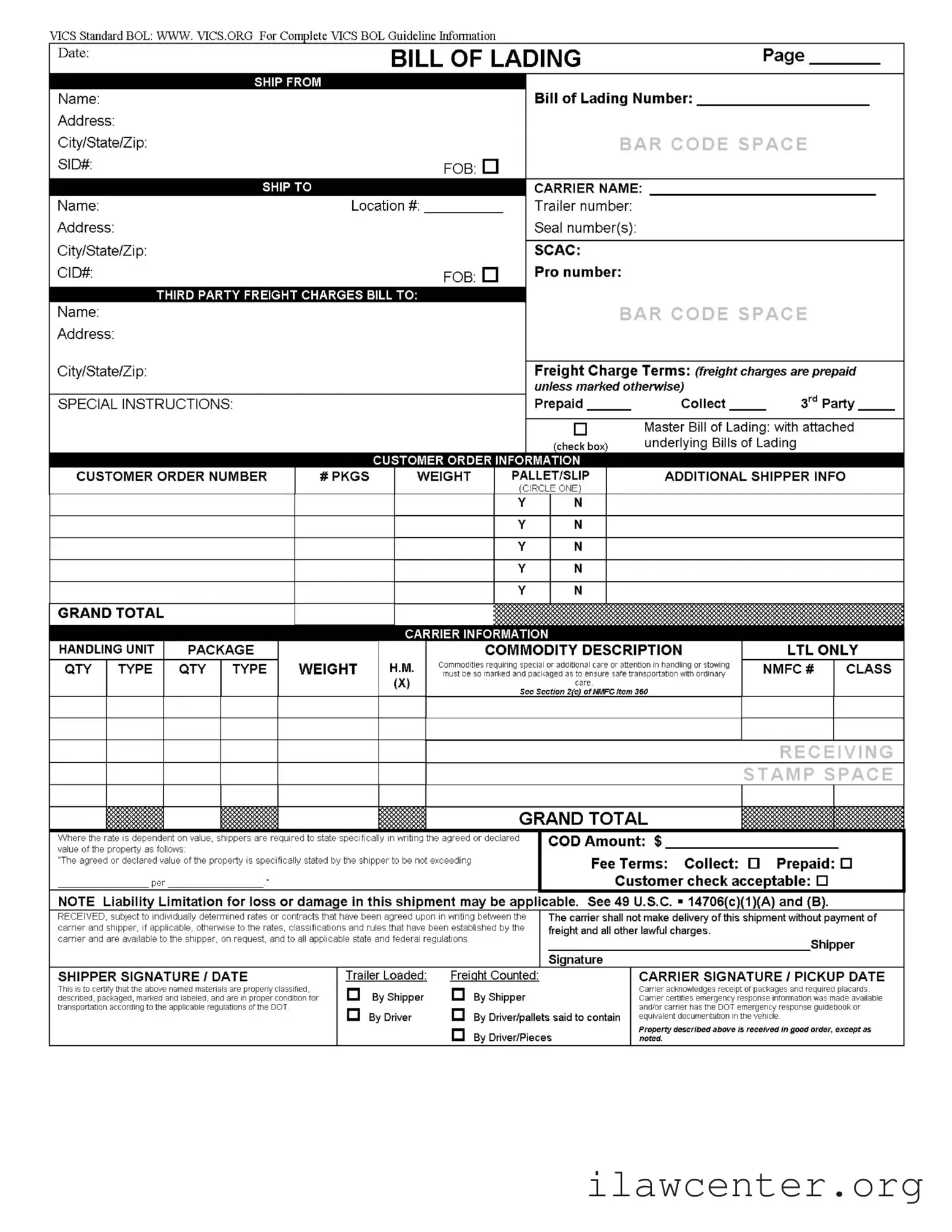
The VICS Bill of Lading (BOL) form is a crucial document used in the shipping industry to outline the details of a shipment. It includes essential information such as the shipper's and carrier's details, freight charges, and special instructions for handling. Understanding how to properly fill out this form can streamline the shipping process and ensure compliance with regulations, so be sure to fill out the form by clicking the button below.

Article Guide

The VICS Bill of Lading (BOL) form plays a crucial role in the shipping and logistics industry, serving as a key document that outlines the details of a shipment. This form includes essential information such as the shipper's and carrier's names, addresses, and contact details, along with the Bill of Lading number and various identification numbers. It captures vital shipping instructions, including freight charge terms and special handling requirements for specific commodities. Shippers must also declare the value of the property being transported, which is important for determining liability in case of loss or damage. The form emphasizes the need for proper packaging and labeling, ensuring that all materials are in suitable condition for transportation. Additionally, it contains sections for signatures from both the shipper and the carrier, confirming the receipt of goods and compliance with applicable regulations. Overall, the VICS BOL form is not just a document; it is a comprehensive record that facilitates smooth communication between all parties involved in the shipping process.

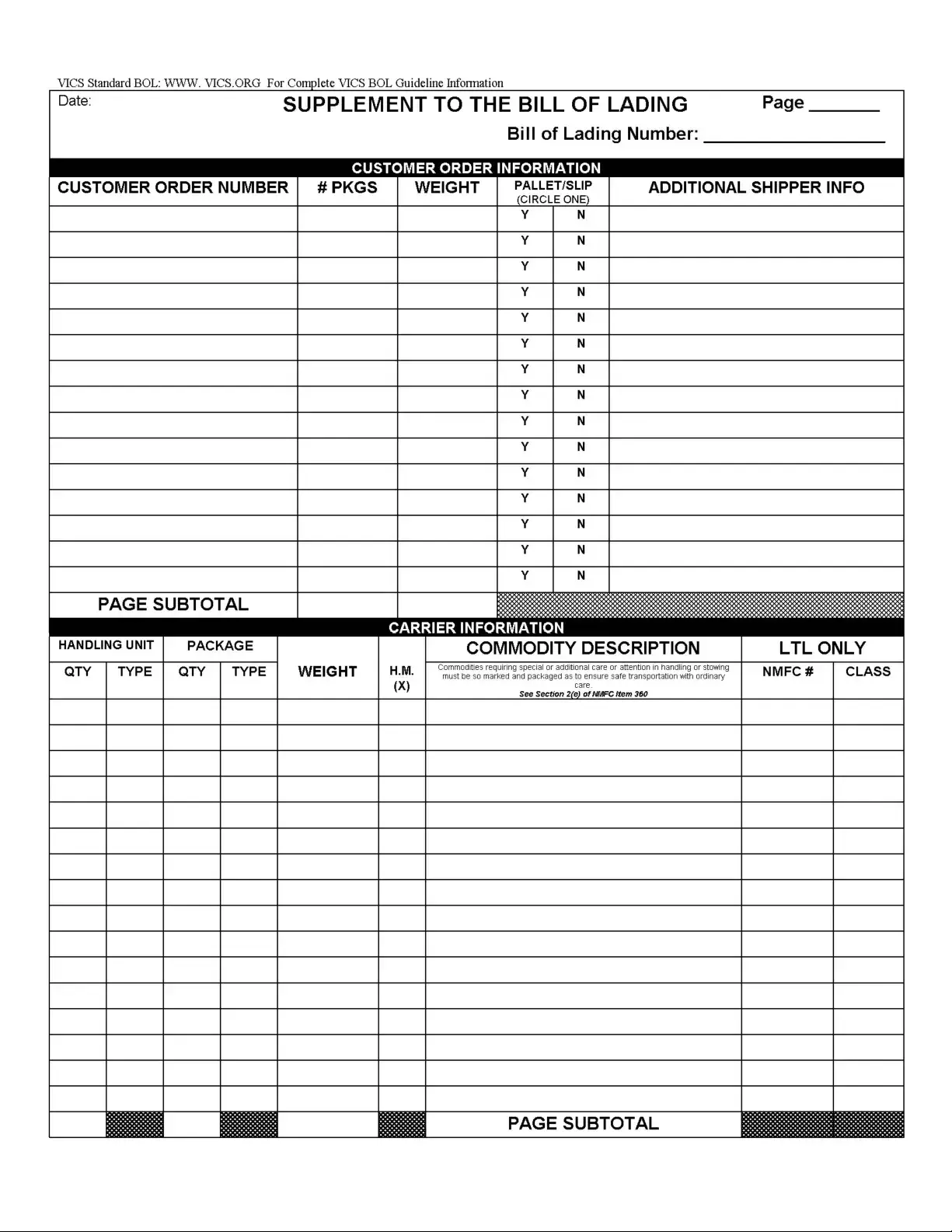
Vics Bol Preview

VICS Standard BQL: WWW. VICS.QRG For Complete VICS BQL Guideline Information

I Date:


BILL OF LADING


Page


Name:


Bill of Lading Number:


Address:


City/State/Zip:


BAR CODE SPACE

SID#:


FOB:


CARRIER NAME:


Trailer number:


Seal number(s):


SCAC:


Pro number:


BAR CODE SPACE


Freight Charge Terms: (freight charges are prepaid


unless marked otherwise)

3rd Party

SPECIAL INSTRUCTIONS:


Prepaid

Collect


Master Bill of Lading: with attached


(check box)

underlying Bills of Lading

CUSTOMER ORDER NUMBER

# PKGS

WEIGHT

PALLET/SLIP

ADDITIONAL SHIPPER INFO


(CIRCLE ONE)


GRAND TOTAL

HANDLING UNIT

PACKAGE

WEIGHT

COMMODITY DESCRIPTION

LTL ONLY

QTY TYPE

QTY TYPE

Commodities requiring special or additional care or attention in handling or stowing

NMFC#

CLASS

must be so marked and packaged as to ensure safe transportation with ordinary

care.

See Section 2(e) ofNMFC Item 360

RECEIVING

STAMP SPACE

GRAND TOTAL

Where the rate is dependent on value, shippers are required to state specifically in writing the agreed or declared value of the property as follows:

COD Amount: $

"The agreed or declared value of the property is specifically stated by the shipper to be not exceeding

Fee Terms: Collect:

Prepaid:


per

Customer check acceptable:

NOTE Liability Limitation for loss or damage in this shipment may be applicable. See 49 U.S.C. ■ 14706(c)(1)(A) and (B).

RECEIVED, subject to individually determined rates or contracts that have been agreed upon in writing between the

The carrier shall not make delivery of this shipment without payment of

carrier and shipper, if applicable, otherwise to the rates, classifications and rules that have been established by the

freight and all other lawful charges.

carrier and are available to the shipper, on request, and to all applicable state and federal regulations.

Shipper


Signature

SHIPPER SIGNATURE / DATE

Trailer Loaded:

Freight Counted:

This is to certify that the above named materials are properly classified,

О

By Shipper

О By Shipper

described, packaged, marked and labeled, and are in proper condition for

transportation according to the applicable regulations of the DOT.

Q

By Driver

О By Driver/pallets said to contain


CARRIER SIGNATURE / PICKUP DATE

Carrier acknowledges receipt of packages and required placards. Carrier certifies emergency response information was made available and/or carrier has the DOT emergency response guidebook or equivalent documentation in the vehicle.

О By Driver/Pieces

Property described above is received in good order, except as

noted.


VICS Standard BQL: WWW.VICS.ORG For Complete VICS BQL Guideline Information__________________________________________________________________

Date

SUPPLEMENT TO THE BILL OF LADING

Page


Bill of Lading Number:


File Properties

Fact Name Description
Purpose The VICS Bill of Lading (BOL) serves as a shipping document that outlines the details of the shipment, including the parties involved and the terms of transport.
Governing Laws This form is governed by federal regulations, including 49 U.S.C. § 14706, which addresses liability limitations for loss or damage during transport.
Special Instructions Shippers can provide specific instructions for handling the shipment, ensuring that any special care requirements are clearly communicated.
Freight Charge Terms Freight charges are typically prepaid unless otherwise indicated. Options include prepaid, collect, or third-party billing.
Liability Limitations Liability for loss or damage may be limited. Shippers must declare the value of the property to ensure appropriate coverage.
Signatures Required Both the shipper and carrier must sign the BOL to certify that the materials are properly classified and in good condition for transport.

Instructions on Utilizing Vics Bol

Completing the VICS Bill of Lading (BOL) form requires attention to detail and accurate information. This document is essential for ensuring that shipments are processed correctly. Below are the steps to fill out the form properly.

  1. Begin by entering the SHIP FROM information, including the name, address, city/state/zip code, and the Bill of Lading number.
  2. Provide the SID# and DDE SPACE details.
  3. Fill in the FOB and CARRIER NAME.
  4. Record the trailer number and seal number(s) under the designated fields.
  5. Include the SCAC and Pro number.
  6. Indicate the Freight Charge Terms by checking the appropriate box for prepaid, collect, or third-party charges.
  7. Write any SPECIAL INSTRUCTIONS that may be necessary for the shipment.
  8. Enter the CUSTOMER ORDER INFORMATION, including the customer order number, number of packages, weight, and whether it is a pallet or slip.
  9. If applicable, provide details for the Master Bill of Lading and any attached underlying Bills of Lading.
  10. Fill in the ADDITIONAL SHIPPER INFO section.
  11. List the CARRIER INFORMATION, including package commodity descriptions, quantity, type, and weight.
  12. For commodities needing special care, ensure that they are marked and packaged appropriately.
  13. Complete the NMFC# and CLASS fields, along with the grand total.
  14. State the agreed or declared value of the property if the rate depends on it, and include the COD amount.
  15. Indicate the Fee Terms for collect and prepaid options.
  16. Sign and date the SHIPPER SIGNATURE section to certify the accuracy of the information provided.
  17. Specify whether the trailer was loaded by the shipper or driver, and confirm the freight was counted.
  18. Finally, the carrier must sign and date the CARRIER SIGNATURE section, acknowledging receipt of the packages.

Once the form is completed, it should be retained for record-keeping and shared with the relevant parties involved in the shipment process. Ensuring that all information is accurate will help facilitate smooth transportation and delivery.

Important Facts about Vics Bol

What is the VICS BOL form?

The VICS Bill of Lading (BOL) form is a standardized document used in the shipping and transportation industry. It serves as a contract between the shipper and the carrier, detailing the specifics of the shipment, including the items being transported, their weight, and the terms of transportation. This form ensures that all parties involved have a clear understanding of their responsibilities and the conditions of the shipment.

What information is required on the VICS BOL form?

The VICS BOL form requires several key pieces of information. This includes the shipper's name and address, the bill of lading number, the carrier's name, and details about the shipment such as the number of packages, weight, and commodity description. Special instructions, freight charge terms, and any additional shipper information must also be included. Accurate completion of this form is crucial for smooth transportation and delivery.

What are the freight charge terms on the VICS BOL form?

Freight charge terms specify how shipping costs will be handled. On the VICS BOL form, these terms can be marked as prepaid, collect, or third-party. Prepaid means the shipper pays the freight charges upfront, while collect indicates that the receiver will pay upon delivery. Third-party billing allows for a different entity to pay the freight charges. Understanding these terms helps avoid disputes over payment responsibilities.

What does "FOB" mean on the VICS BOL form?

"FOB" stands for "Free on Board." It indicates the point at which the responsibility for the shipment transfers from the seller to the buyer. This term is crucial as it defines liability for loss or damage during transit. The VICS BOL form allows shippers to specify the FOB terms, which can affect shipping costs and risk management.

What is the significance of the commodity description on the form?

The commodity description is vital for identifying the goods being shipped. It provides details on the type of products, their quantity, and any special handling requirements. Accurate descriptions help carriers manage logistics effectively and ensure compliance with regulations. If the shipment includes hazardous materials, this section must clearly indicate those details to ensure safety during transportation.

How does the VICS BOL form address liability limitations?

The VICS BOL form includes a note regarding liability limitations for loss or damage during shipment. It refers to specific legal codes that outline the carrier's responsibilities. Shippers are encouraged to declare the value of their property to establish potential liability limits. Understanding these provisions can help shippers make informed decisions regarding insurance and risk management.

What is the purpose of the signature section on the VICS BOL form?

The signature section serves as a certification that the information provided is accurate and that the materials are properly classified and packaged for transportation. Both the shipper and the carrier must sign the form to acknowledge receipt of the goods and the terms of the shipment. This section provides legal backing in case of disputes or claims regarding the shipment.

What should be done if there are discrepancies noted on the VICS BOL form?

If discrepancies are noted, such as missing items or damage, they should be documented on the VICS BOL form at the time of delivery. Both the shipper and the carrier should agree on the discrepancies and note them clearly. This documentation is essential for filing claims or addressing issues with the shipment later on.

Where can I find more information about the VICS BOL guidelines?

For complete VICS BOL guideline information, you can visit the official VICS website. This resource provides detailed information about the standards and best practices for completing the BOL form, ensuring compliance with industry regulations. Staying informed about these guidelines can help streamline shipping processes and enhance communication between shippers and carriers.
Common mistakes

Completing the VICS Bill of Lading (BOL) form can seem straightforward, but several common mistakes can lead to complications in the shipping process. One frequent error is failing to provide complete information in the "SHIP FROM" section. This area requires the name, address, city, state, and zip code of the sender. Omitting any of these details can cause delays in shipment or even result in lost packages. It is crucial to double-check that all fields are filled out accurately to ensure smooth processing.

Another mistake often made is neglecting to specify the freight charge terms. The options include prepaid, collect, or third-party billing. If this section is left unchecked, it can lead to misunderstandings regarding who is responsible for payment. Clear communication about payment responsibilities is essential to avoid disputes later on. Always ensure that the appropriate box is checked to reflect the agreed terms.

In addition, people frequently overlook the importance of providing accurate details about the commodities being shipped. The "PACKAGE COMMODITY DESCRIPTION" section must clearly describe the items, including quantity and type. If the descriptions are vague or incomplete, it can lead to issues with compliance and handling. Special care must be taken to mark any items that require additional attention, as outlined in the guidelines. This ensures that the carrier is aware of any specific handling needs.

Lastly, the signature section is often rushed or improperly filled out. Both the shipper and carrier must sign and date the form to validate the transaction. Without these signatures, the document may not hold legal weight, which can complicate claims for lost or damaged goods. Ensure that all necessary signatures are obtained and that the dates are accurately recorded to maintain the integrity of the shipping process.

Documents used along the form

When dealing with the VICS Bill of Lading (BOL), several other forms and documents are commonly used to ensure smooth shipping and handling processes. Each document serves a specific purpose, enhancing communication and record-keeping between shippers and carriers. Below is a list of these important documents.

  • Master Bill of Lading: This document consolidates multiple bills of lading into one. It provides a summary of the shipment and includes all underlying bills, making it easier to track larger shipments.
  • Freight Invoice: This invoice details the charges associated with the shipment, including freight costs and any additional fees. It serves as a request for payment from the shipper to the consignee.
  • Shipping Manifest: A shipping manifest lists all items included in a shipment. It helps carriers verify that the correct items are loaded and facilitates customs clearance when shipping internationally.
  • Delivery Receipt: This document is signed by the consignee upon receiving the shipment. It confirms that the goods were delivered in good condition and serves as proof of delivery.
  • Packing List: A packing list details the contents of each package in the shipment. It assists in verifying that all items have been received and provides information on how the items are packed.
  • Carrier Rate Confirmation: This document outlines the agreed-upon rates between the shipper and the carrier. It ensures transparency regarding shipping costs and any special conditions that may apply.
  • Customs Declaration: For international shipments, a customs declaration is required. It provides information about the goods being shipped, their value, and their intended use, helping to facilitate customs clearance.
  • Insurance Certificate: This certificate provides proof of insurance coverage for the shipment. It protects the shipper and consignee against potential losses or damages during transit.

Using these documents in conjunction with the VICS Bill of Lading can help streamline the shipping process, minimize misunderstandings, and ensure compliance with regulations. Proper documentation is key to successful logistics management.

Similar forms

  • Bill of Lading (BOL): Like the VICS BOL form, a traditional Bill of Lading serves as a receipt for goods being transported. It details the items being shipped, the parties involved, and the terms of transport. Both documents ensure that the shipper and carrier have a clear understanding of the shipment's contents and conditions.
  • Master Bill of Lading: This document consolidates multiple Bills of Lading under one master contract. Similar to the VICS BOL, it provides a comprehensive overview of the shipment and includes information about the shipper and consignee. It simplifies tracking and managing shipments that consist of multiple packages.
  • Freight Bill: A Freight Bill outlines the charges associated with the transportation of goods. Like the VICS BOL, it contains information about the shipment, including weight and dimensions, as well as payment terms. Both documents are essential for billing and payment processes in shipping.
  • Shipping Manifest: This document lists all items being shipped on a particular transport vehicle. Similar to the VICS BOL, it ensures that all parties are aware of the contents being transported. It acts as a verification tool for both the shipper and the carrier.
  • Delivery Receipt: A Delivery Receipt confirms that goods have been received by the consignee. Like the VICS BOL, it serves as proof of delivery and includes details about the shipment. Both documents are important for record-keeping and resolving any potential disputes regarding the shipment.

Dos and Don'ts

When filling out the VICS Bill of Lading (BOL) form, it is essential to approach the task with care and attention to detail. Here are seven important do's and don'ts to keep in mind:

  • Do ensure that all required fields are filled out completely. Missing information can lead to delays.
  • Do double-check the accuracy of the address for both the shipper and the receiver. Incorrect addresses can result in misdeliveries.
  • Do clearly indicate the freight charge terms. Specify whether charges are prepaid, collect, or third-party.
  • Do include any special instructions that may be necessary for handling the shipment. This helps ensure proper care during transport.
  • Don't leave the "Agreed or Declared Value" section blank if the rate is dependent on value. This information is crucial for liability purposes.
  • Don't forget to sign and date the form. A missing signature can invalidate the document.
  • Don't overlook the need for proper packaging and labeling of commodities that require special care. This is essential for safe transportation.

By following these guidelines, you can help facilitate a smoother shipping process and reduce the likelihood of complications during transit.

Misconceptions

Misconceptions about the VICS BOL form can lead to confusion and errors in shipping processes. Here are nine common misunderstandings:

  • The VICS BOL form is only for large shipments. This form can be used for shipments of any size, not just large freight. It is designed to standardize information for all shipping scenarios.
  • All fields on the form are mandatory. While many fields are important, not all are required. Focus on the critical information to ensure compliance and clarity.
  • The form is only relevant for domestic shipments. The VICS BOL form can also be used for international shipments, as long as it complies with the necessary regulations.
  • Freight charges are always prepaid. Freight charges can be prepaid, collected, or billed to a third party. It is essential to indicate the correct terms on the form.
  • Special instructions are optional. Including special instructions is crucial when specific handling or shipping requirements exist. This information helps prevent mishandling.
  • Liability for loss or damage is always limited. Liability limitations may apply, but shippers can declare a higher value for their goods. This declaration must be clearly stated on the form.
  • Only the shipper needs to sign the form. Both the shipper and the carrier must sign the form to acknowledge receipt and agreement to the terms outlined.
  • The VICS BOL form is the same as a standard bill of lading. While similar, the VICS BOL form follows specific guidelines set by the Voluntary Interindustry Commerce Solutions organization, which may differ from other forms.
  • Emergency response information is optional. Providing emergency response information is a requirement. This ensures that safety measures are in place during transportation.

Understanding these misconceptions can help streamline shipping processes and ensure compliance with regulations.

Key takeaways

The VICS Bill of Lading (BOL) form is an essential document for shipping and logistics. Proper completion and understanding of this form can streamline the shipping process and ensure compliance with regulations. Below are key takeaways regarding the use of the VICS BOL form:

  • Accurate Information: Ensure that all fields are filled out accurately, including shipper and carrier details, to avoid delays or issues during transportation.
  • Freight Charge Terms: Clearly indicate whether freight charges are prepaid, collect, or third-party to establish payment responsibilities upfront.
  • Customer Order Information: Include customer order numbers, package counts, and weights to facilitate tracking and management of shipments.
  • Special Instructions: Use the special instructions section to communicate any unique handling requirements or additional information pertinent to the shipment.
  • Commodity Description: Provide a detailed description of the commodities being shipped, including quantity and type, to ensure proper handling and classification.
  • Liability Limitation: Be aware that liability limitations for loss or damage may apply, and it is crucial to state the agreed or declared value of the shipment if necessary.
  • Signatures Required: Both the shipper and carrier must sign and date the form to confirm receipt and acceptance of the shipment in good order.