Fillable Video Release Document

Fillable Video Release Document

A Video Release form is a legal document that grants permission for the use of an individual's image and likeness in video content. This form ensures that creators can legally use the footage without facing potential legal issues. To protect your rights and clarify usage, consider filling out the form by clicking the button below.

Article Guide

In the dynamic world of visual media, the Video Release form plays a crucial role in protecting the rights of all parties involved. This document serves as a formal agreement between content creators and individuals featured in their videos, ensuring that consent is granted for the use of their likeness and voice. By signing the form, individuals authorize the creator to use the footage for various purposes, including commercial distribution, marketing, or promotional activities. Additionally, the Video Release form often outlines the scope of usage, duration, and any compensation that may be involved. It is designed to prevent potential legal disputes by clearly delineating the permissions granted and the expectations of both the content creator and the individual. Understanding the nuances of this form is essential for anyone looking to navigate the complexities of video production, whether for personal projects or professional endeavors.

Video Release Preview

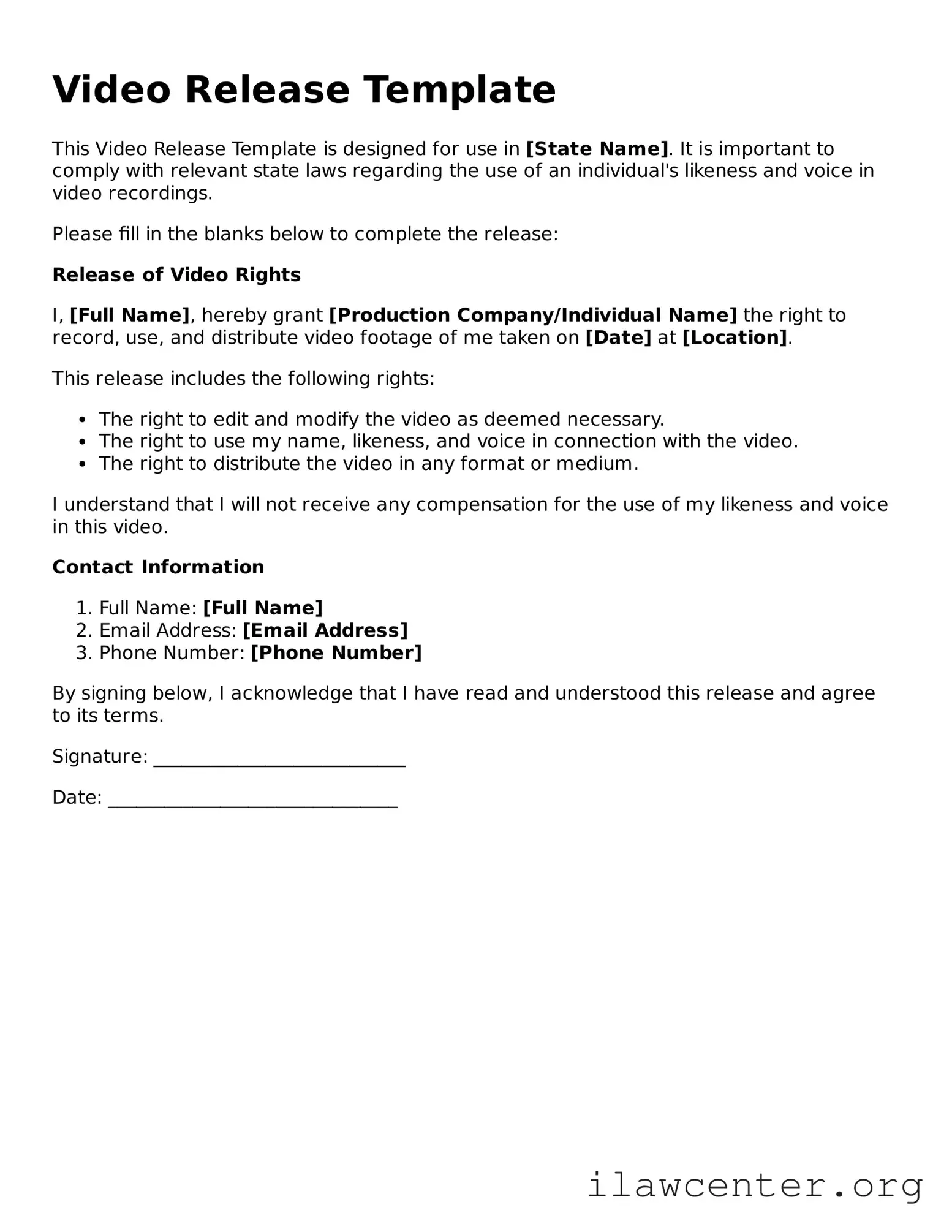
Video Release Template

This Video Release Template is designed for use in [State Name]. It is important to comply with relevant state laws regarding the use of an individual's likeness and voice in video recordings.

Please fill in the blanks below to complete the release:

Release of Video Rights

I, [Full Name], hereby grant [Production Company/Individual Name] the right to record, use, and distribute video footage of me taken on [Date] at [Location].

This release includes the following rights:

  • The right to edit and modify the video as deemed necessary.
  • The right to use my name, likeness, and voice in connection with the video.
  • The right to distribute the video in any format or medium.

I understand that I will not receive any compensation for the use of my likeness and voice in this video.

Contact Information

  1. Full Name: [Full Name]
  2. Email Address: [Email Address]
  3. Phone Number: [Phone Number]

By signing below, I acknowledge that I have read and understood this release and agree to its terms.

Signature: ___________________________

Date: _______________________________

PDF Form Characteristics

Fact Name Description
Purpose The Video Release form is used to obtain permission from individuals to use their likeness in video recordings for various purposes, such as marketing or promotional materials.
Consent Requirement Individuals must provide explicit consent for their image and voice to be recorded and used. This ensures that their rights are respected and protected.
State-Specific Forms Different states may have specific requirements for video release forms. For example, California law requires clear language regarding the use of the video.
Revocation of Consent Individuals typically have the right to revoke their consent, but this may depend on the terms outlined in the release form.
Legal Implications Failure to obtain a signed Video Release can lead to legal disputes, including claims of invasion of privacy or unauthorized use of likeness.

Instructions on Utilizing Video Release

Once you have the Video Release form in hand, you’re ready to fill it out. This form is essential for ensuring that all parties involved in the video project are on the same page regarding the use of the footage. Completing it accurately is important for protecting everyone’s rights and interests.

  1. Begin by entering the date at the top of the form. Make sure it reflects the current date.
  2. Next, provide your full name in the designated space. This identifies you as the individual granting permission.
  3. Fill in your contact information, including your phone number and email address. This helps maintain communication.
  4. In the section for the project name, write the title of the video or project for which you are granting release.
  5. Specify the purpose of the video. This could be anything from educational use to promotional material.
  6. If applicable, indicate any specific conditions or limitations regarding the use of the footage. Be clear and concise.
  7. Sign and date the form at the bottom. Your signature confirms your consent and understanding of the terms.
  8. Lastly, make a copy of the completed form for your records before submitting it as instructed.

Important Facts about Video Release

What is a Video Release form?

A Video Release form is a legal document that grants permission for the use of an individual's image or likeness in video recordings. This form ensures that the person featured in the video agrees to the recording and its potential distribution, protecting both the individual and the creator from any future claims regarding the use of the footage.

Who needs to sign a Video Release form?

Anyone who appears in a video, whether as a main subject or in the background, should sign a Video Release form. This includes actors, interviewees, and even bystanders. Obtaining consent from everyone involved helps avoid legal complications later on.

What are the benefits of using a Video Release form?

Using a Video Release form provides legal protection for the creator by ensuring that they have permission to use the footage. It also protects the individual by clarifying how their image will be used. This form can prevent disputes and misunderstandings regarding the distribution and use of the video.

Can a Video Release form be revoked?

Once a Video Release form is signed, it generally cannot be revoked. However, the terms of the release may specify certain conditions under which it can be canceled. It’s important for all parties to understand these terms before signing.

Is a Video Release form required for all videos?

While not all videos require a Video Release form, it is highly recommended for any project that will be shared publicly or commercially. If the video is for personal use and will not be shared, a release may not be necessary. However, it’s always best to err on the side of caution.

What should be included in a Video Release form?

A comprehensive Video Release form should include the names of the parties involved, a description of the video, the intended use of the footage, and any compensation details. It should also state that the individual waives any rights to royalties or claims related to the video.

Where can I obtain a Video Release form?

Video Release forms can be found online through legal document websites or obtained from legal professionals. Many organizations also provide templates that can be customized to fit specific needs. Always ensure that the form complies with local laws and regulations.

Common mistakes

When individuals fill out a Video Release form, several common mistakes can occur, potentially leading to complications later on. One frequent error is failing to provide complete contact information. This includes not only a name but also a phone number and email address. Incomplete contact details can hinder communication between the parties involved, especially if there are any questions or concerns about the use of the video.

Another mistake often made is overlooking the importance of understanding the scope of the release. People sometimes sign the form without fully grasping how their image or likeness may be used. For instance, a release may allow for commercial use, which might not align with the individual’s expectations. It is crucial to read the entire document carefully to understand the implications of granting permission.

Additionally, individuals may forget to check the date on the Video Release form. A dated signature is important as it establishes when the consent was given. If the date is missing or incorrect, it could lead to disputes about the validity of the release, especially if there is a significant gap between the signing date and the actual use of the video.

Lastly, people often neglect to ask questions before signing. If there is any uncertainty about the terms or the intended use of the video, seeking clarification is essential. Failing to address these concerns can result in dissatisfaction or regret once the video is published or shared. Taking the time to understand the form can prevent misunderstandings and ensure that all parties are on the same page.

Documents used along the form

When working with a Video Release form, several other documents may be necessary to ensure all aspects of the project are covered. Each of these forms serves a specific purpose and helps protect the rights of all parties involved. Below is a list of commonly used documents that accompany a Video Release form.

  • Talent Release Form: This document grants permission for the use of an individual's likeness and performance in the video. It ensures that the talent agrees to the terms of use.
  • Location Release Form: This form secures permission from property owners to film on their premises. It outlines any restrictions or conditions related to the location.
  • Model Release Form: Similar to a talent release, this form is specifically for models. It allows the use of their images in promotional materials or other media.
  • Production Agreement: This contract outlines the terms between the production company and various stakeholders. It includes details about the project scope, responsibilities, and payment terms.
  • Script Release Form: This document grants permission for the use of a written script. It ensures that the writer's rights are protected and outlines how the script may be used.
  • Insurance Certificate: This document provides proof of insurance coverage for the production. It protects against potential liabilities that may arise during filming.
  • Copyright Assignment: This form transfers ownership of the video's copyright from the creator to another party. It ensures that the new owner has full rights to the material.
  • Distribution Agreement: This contract outlines the terms for distributing the finished video. It specifies how the video will be shared and any revenue-sharing arrangements.
  • Confidentiality Agreement: This document protects sensitive information related to the project. It ensures that all parties involved keep proprietary information confidential.

Utilizing these forms in conjunction with the Video Release form can help streamline the production process and safeguard the interests of everyone involved. It's essential to ensure that all necessary documents are completed and signed to avoid any legal complications down the line.

Similar forms

  • Photo Release Form: Similar to a video release form, a photo release form grants permission to use an individual's likeness in photographs. Both documents protect the rights of the creator and ensure that the subject consents to the use of their image.

  • Audio Release Form: An audio release form allows the recording and distribution of an individual's voice or sound. Like the video release form, it secures permission and outlines how the audio will be used, safeguarding the rights of the individual involved.

  • Talent Release Form: This document is used when hiring actors or performers. It provides consent for the use of their performances in various media. Similar to the video release form, it clarifies the scope of use and protects both parties' interests.

  • Location Release Form: A location release form is necessary when filming on private property. It grants permission from the property owner for the use of their space. This form, like the video release form, ensures that all parties are aware of and agree to the terms of use.

  • Model Release Form: This form is used when individuals are photographed or filmed for commercial purposes. It provides consent for the use of their likeness in marketing materials. Similar to the video release form, it helps prevent future disputes regarding the use of the individual's image.

Dos and Don'ts

When filling out a Video Release form, it's essential to follow certain guidelines to ensure the process goes smoothly. Here are eight important do's and don'ts to consider:

  • Do read the entire form carefully before signing.
  • Do provide accurate information, including your name and contact details.
  • Do understand the rights you are granting by signing the form.
  • Do ask questions if you are unsure about any part of the form.
  • Don't rush through the form; take your time to ensure everything is correct.
  • Don't sign the form if you do not agree with its terms.
  • Don't forget to keep a copy of the signed form for your records.
  • Don't assume that verbal agreements will be honored; everything should be in writing.

Following these guidelines can help protect your rights and ensure that your participation is documented correctly. Always prioritize clarity and understanding when dealing with any legal forms.

Misconceptions

When it comes to video release forms, there are several common misconceptions that can lead to confusion. Understanding these can help ensure that everyone involved is on the same page and protected. Here are four misconceptions:

  • Misconception 1: A video release form is only necessary for professional filmmakers.
  • This is not true. Anyone capturing video that includes identifiable people should consider using a video release form. Whether it's for a family event, a school project, or a professional production, obtaining consent is important.

  • Misconception 2: Signing a video release form means you will receive payment.
  • Many people believe that a release form guarantees compensation. However, signing a release simply grants permission for the use of the video. Payment terms should be discussed separately.

  • Misconception 3: A verbal agreement is enough.
  • While a verbal agreement may seem sufficient, it can lead to misunderstandings. A written video release form provides clear documentation of consent, which is crucial for legal protection.

  • Misconception 4: Once a video is released, you can never take it back.
  • While it can be difficult to retract a release, it is possible in some cases. If circumstances change, discussing the issue with the other party may lead to a resolution.

Key takeaways

When filling out and using a Video Release form, it's important to keep several key points in mind. This ensures that all parties involved are protected and that the process runs smoothly.

  • Obtain consent: Always make sure that individuals appearing in the video understand and agree to the terms of the release.
  • Clear language: Use straightforward language in the form to avoid confusion about what rights are being granted.
  • Specify usage: Clearly outline how the video will be used. This includes distribution channels and potential future uses.
  • Age considerations: If minors are involved, ensure that a parent or guardian signs the release form on their behalf.
  • Keep records: Maintain copies of all signed forms for your records. This protects both you and the individuals involved.

Following these guidelines will help you navigate the process of using a Video Release form effectively.