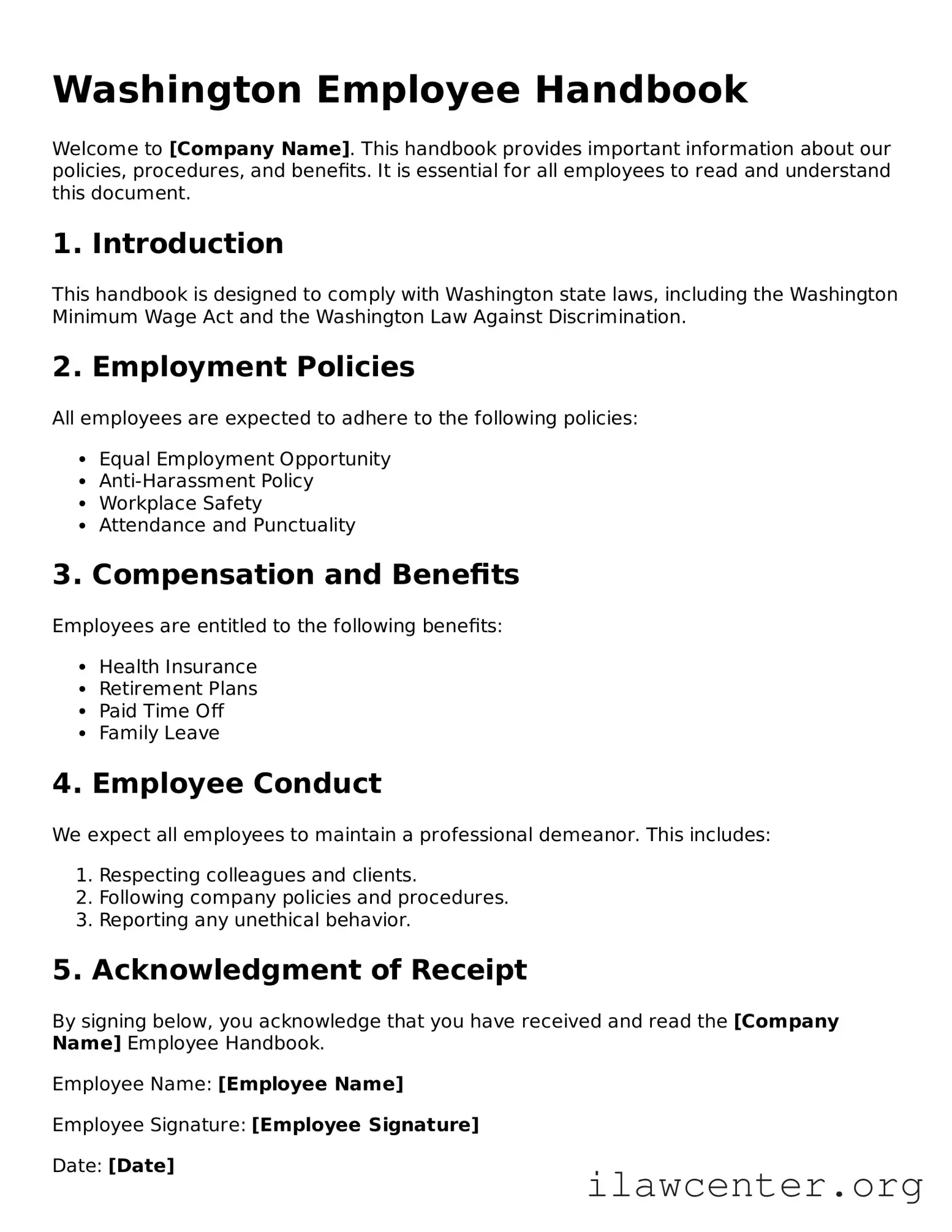
What is the Washington Employee Handbook form?
The Washington Employee Handbook form is a document that outlines the policies, procedures, and expectations of an employer regarding employee conduct and workplace standards. It serves as a guide for employees to understand their rights, responsibilities, and the company’s rules. This handbook is essential for ensuring compliance with state laws and fostering a positive work environment.
Why is an Employee Handbook important?
An Employee Handbook is crucial for several reasons. It helps to establish clear communication between the employer and employees. By detailing workplace policies, it reduces misunderstandings and sets expectations. Additionally, a well-crafted handbook can protect the employer from potential legal issues by demonstrating that the company has communicated its policies effectively.
Who should receive a copy of the Employee Handbook?
All employees should receive a copy of the Employee Handbook, whether they are full-time, part-time, or temporary workers. It is important for new hires to review the handbook during their onboarding process. Employers should also encourage existing employees to revisit the handbook periodically, especially when updates are made.
How often should the Employee Handbook be updated?
The Employee Handbook should be reviewed and updated at least annually. Changes in laws, company policies, or workplace practices may necessitate updates. Regular reviews ensure that the handbook remains current and relevant, helping to mitigate any potential legal risks.
What should be included in the Employee Handbook?
Key elements of an Employee Handbook should include an introduction to the company, employment policies, anti-discrimination policies, workplace conduct expectations, benefits information, leave policies, and procedures for reporting grievances. Additionally, it should outline the disciplinary process and any safety protocols in place.
How can employees provide feedback on the Employee Handbook?
Employees should feel encouraged to provide feedback on the Employee Handbook. Employers can create a formal process for collecting input, such as surveys or suggestion boxes. Open discussions during team meetings can also be a great way for employees to voice their thoughts. This feedback can help improve the handbook and ensure it meets the needs of the workforce.
What should an employer do if an employee does not follow the handbook?
If an employee does not follow the guidelines set forth in the Employee Handbook, the employer should address the issue promptly. This may involve a conversation with the employee to understand the situation better. Depending on the severity of the infraction, disciplinary action may be warranted, following the procedures outlined in the handbook itself. Consistency in enforcement is key to maintaining fairness and credibility.