Attorney-Verified  Land Purchase Agreement Document for Washington

Attorney-Verified Land Purchase Agreement Document for Washington

A Washington Land Purchase Agreement is a legal document that outlines the terms and conditions for the sale of land in Washington State. This agreement protects both the buyer and seller by clearly defining the obligations and expectations of each party. To get started on your land transaction, fill out the form by clicking the button below.

Article Guide

The Washington Land Purchase Agreement form serves as a crucial document in real estate transactions, ensuring clarity and protection for both buyers and sellers. This form outlines essential details such as the purchase price, property description, and terms of payment, creating a transparent framework for the exchange of land. Additionally, it addresses contingencies that may affect the sale, such as financing requirements or inspections, allowing both parties to understand their obligations and rights throughout the process. The agreement also includes provisions for disclosures, ensuring that any known issues with the property are communicated upfront. By establishing a clear timeline for closing and possession, the form helps to minimize misunderstandings and disputes. Ultimately, the Washington Land Purchase Agreement is designed to facilitate a smooth transaction while safeguarding the interests of all involved parties.

Washington Land Purchase Agreement Preview

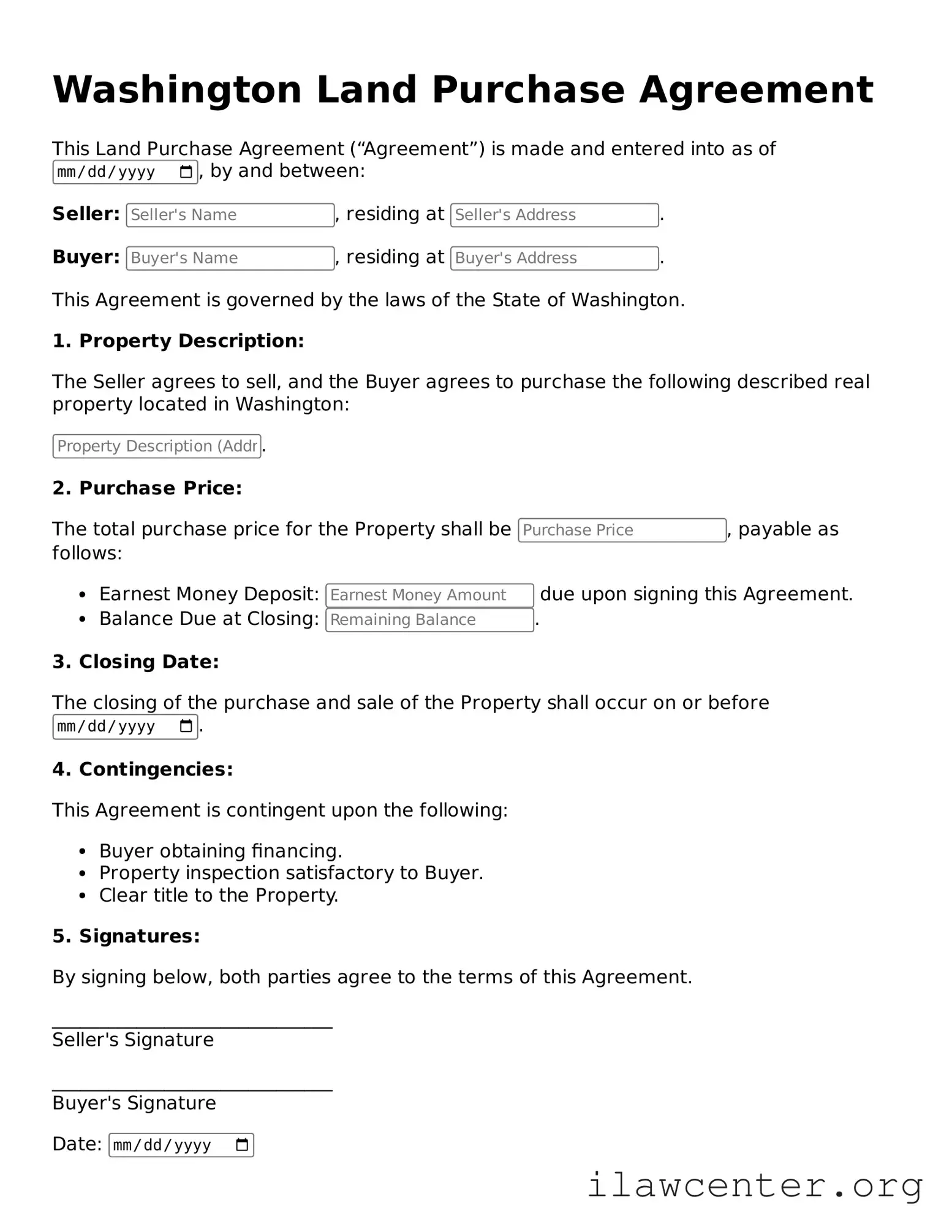
Washington Land Purchase Agreement

This Land Purchase Agreement (“Agreement”) is made and entered into as of , by and between:

Seller: , residing at .

Buyer: , residing at .

This Agreement is governed by the laws of the State of Washington.

1. Property Description:

The Seller agrees to sell, and the Buyer agrees to purchase the following described real property located in Washington:

.

2. Purchase Price:

The total purchase price for the Property shall be , payable as follows:

  • Earnest Money Deposit: due upon signing this Agreement.
  • Balance Due at Closing: .

3. Closing Date:

The closing of the purchase and sale of the Property shall occur on or before .

4. Contingencies:

This Agreement is contingent upon the following:

  • Buyer obtaining financing.
  • Property inspection satisfactory to Buyer.
  • Clear title to the Property.

5. Signatures:

By signing below, both parties agree to the terms of this Agreement.

______________________________
Seller's Signature

______________________________
Buyer's Signature

Date:

PDF Form Characteristics

Fact Name Description
Purpose The Washington Land Purchase Agreement form is used to outline the terms and conditions of a real estate transaction in Washington State.
Governing Law This agreement is governed by the laws of the State of Washington, ensuring compliance with local regulations.
Parties Involved The form typically includes information about the buyer and seller, detailing their roles in the transaction.
Property Description A clear description of the property being purchased is essential. This includes the address and any legal descriptions necessary.
Payment Terms The agreement specifies the purchase price and any financing arrangements, outlining how and when payments will be made.
Contingencies Common contingencies may include inspections, financing approvals, and other conditions that must be met before the sale is finalized.

Instructions on Utilizing Washington Land Purchase Agreement

Once you have the Washington Land Purchase Agreement form in front of you, it’s time to begin the process of filling it out. This form serves as a crucial document in real estate transactions, and completing it accurately is essential. Below are the steps to guide you through filling out the form efficiently.

  1. Begin by entering the date at the top of the form. This is important for establishing the timeline of the agreement.
  2. Next, fill in the names and addresses of both the buyer and the seller. Make sure to include any middle initials or suffixes to avoid confusion.
  3. Specify the legal description of the property. This may include the parcel number or a description of the land’s boundaries.
  4. Indicate the purchase price of the property. Be clear and precise to avoid any misunderstandings later on.
  5. Outline the terms of the payment. Will it be a lump sum, or will there be financing involved? Detail any contingencies that may apply.
  6. Include any additional terms or conditions that you and the other party have agreed upon. This could cover things like repairs, inspections, or closing dates.
  7. Both parties should sign and date the agreement at the bottom. Ensure that you provide printed names and titles if applicable.

After completing the form, review it carefully to ensure all information is accurate. Once both parties have signed, the next step will be to proceed with the transaction process as outlined in the agreement.

Important Facts about Washington Land Purchase Agreement

What is a Washington Land Purchase Agreement?

A Washington Land Purchase Agreement is a legal document that outlines the terms and conditions under which one party agrees to buy a piece of real estate from another party. This agreement includes details such as the purchase price, property description, and closing date. It serves as a binding contract between the buyer and seller, ensuring that both parties understand their rights and obligations.

What information is typically included in the agreement?

The agreement generally includes the names and addresses of the buyer and seller, a detailed description of the property, the purchase price, payment terms, contingencies (such as financing or inspections), and the closing date. Additional clauses may address issues like repairs, property disclosures, and dispute resolution methods.

Is a Washington Land Purchase Agreement legally binding?

Yes, once both parties sign the agreement, it becomes legally binding. This means that both the buyer and seller are obligated to follow the terms outlined in the document. If either party fails to comply, the other party may have legal grounds to seek remedies, such as damages or specific performance.

Can the agreement be modified after it has been signed?

Yes, the agreement can be modified, but any changes must be documented in writing and signed by both parties. Verbal agreements or informal changes are not legally enforceable. It is crucial to ensure that all modifications are clear and agreed upon to avoid potential disputes.

What happens if the buyer cannot secure financing?

If the buyer cannot secure financing, the agreement typically includes a contingency clause that allows the buyer to back out of the contract without penalty. This clause protects the buyer by ensuring they are not held liable if they cannot obtain the necessary funds to complete the purchase.

Are there any contingencies I should include?

Common contingencies include financing, home inspections, and appraisal contingencies. These clauses allow the buyer to exit the agreement if certain conditions are not met. Including appropriate contingencies can provide peace of mind and protect the buyer's interests during the transaction.

How is the closing process handled?

The closing process involves finalizing the sale and transferring ownership of the property. This usually takes place at a title company or attorney's office. During closing, both parties will review and sign documents, settle any outstanding payments, and transfer the title. It is essential to prepare all necessary documents ahead of time to ensure a smooth process.

What is the role of a title company in this agreement?

A title company plays a crucial role in the transaction by conducting a title search to ensure there are no liens or claims against the property. They also facilitate the closing process, handle the transfer of funds, and ensure that the title is properly recorded. Their involvement helps protect both the buyer and seller during the transaction.

Can I use a Washington Land Purchase Agreement for any type of property?

Yes, a Washington Land Purchase Agreement can be used for various types of real estate, including residential, commercial, and vacant land. However, specific terms may need to be adjusted based on the type of property being sold. It is advisable to tailor the agreement to fit the unique characteristics of the property in question.

What should I do if I have questions about the agreement?

If you have questions about the Washington Land Purchase Agreement, consider consulting a real estate attorney or a qualified professional. They can provide guidance on the specifics of your situation and help ensure that your interests are protected throughout the transaction.
Common mistakes

Filling out the Washington Land Purchase Agreement form can be straightforward, but many people make common mistakes that can lead to complications later. One significant error is failing to provide complete information about the property. Buyers often overlook details like the exact legal description or the parcel number. These elements are crucial for accurately identifying the property and avoiding disputes.

Another frequent mistake is not including all parties involved in the transaction. Buyers sometimes forget to list co-owners or other interested parties. This omission can create issues down the line, especially if a co-owner disputes the agreement. It’s essential to ensure that everyone who has a stake in the property is clearly named in the document.

Many people also neglect to specify the purchase price. While it may seem obvious, leaving this section blank can lead to confusion and delays. Clearly stating the agreed-upon price helps both parties understand the terms of the sale and prevents misunderstandings.

Additionally, some individuals fail to include contingencies in the agreement. Contingencies protect buyers by allowing them to back out if certain conditions aren’t met, such as failing to secure financing or satisfactory inspections. Without these clauses, buyers may find themselves locked into a deal that isn’t favorable.

Buyers sometimes rush through the signature section, which can lead to issues with the execution of the agreement. All parties must sign the document, and it’s important to ensure that signatures are dated correctly. An undated or improperly signed agreement may not be enforceable.

Another common error is not reviewing the terms of the agreement thoroughly. Buyers might skim through the document without fully understanding the implications of certain clauses. Taking the time to read and comprehend each section can prevent future legal headaches.

Some individuals also forget to include a closing date. Specifying a timeline for the transaction is essential for keeping both parties accountable. Without a clear closing date, the process can become ambiguous and lead to frustration.

Finally, failing to consult with a real estate professional can be a significant oversight. Many people attempt to fill out the agreement without seeking guidance. A real estate agent or attorney can provide valuable insights and help avoid mistakes that could complicate the transaction.

Documents used along the form

When engaging in a land purchase in Washington, several documents complement the Land Purchase Agreement. These documents help ensure a smooth transaction and protect the interests of both parties involved. Below is a list of essential forms often utilized alongside the Land Purchase Agreement.

  • Title Report: This document outlines the ownership history of the property and identifies any liens or encumbrances. It is crucial for verifying that the seller has the right to sell the property.
  • Property Disclosure Statement: Sellers are required to disclose any known issues with the property. This statement provides buyers with important information regarding the condition of the land.
  • Purchase and Sale Agreement: This is a more detailed document that outlines the terms of the sale, including price, contingencies, and timelines. It serves as a binding contract between the buyer and seller.
  • Escrow Agreement: This document establishes an escrow account where funds are held until all conditions of the sale are met. It protects both parties during the transaction.
  • Deed: A legal document that officially transfers ownership of the property from the seller to the buyer. It must be signed and recorded with the appropriate local authority.
  • Closing Statement: This document itemizes all the costs associated with the transaction. It provides a detailed account of the financial aspects, ensuring transparency for both parties.
  • Affidavit of Title: A sworn statement by the seller affirming their ownership and the absence of any undisclosed liens or claims against the property. This document adds an extra layer of protection for the buyer.

Understanding these documents is vital for anyone involved in a land purchase. Each plays a significant role in ensuring that the transaction is legally sound and that both parties are protected. Be sure to review each document carefully and consult with a professional if needed.

Similar forms

  • Real Estate Purchase Agreement: This document outlines the terms and conditions for buying a property, similar to a Land Purchase Agreement but often includes additional details about the structure and fixtures on the property.
  • Lease Agreement: A lease agreement allows a tenant to occupy a property for a specified period. Like a Land Purchase Agreement, it defines the rights and responsibilities of both parties.
  • Option to Purchase Agreement: This document gives a buyer the right to purchase a property at a later date, similar to a Land Purchase Agreement but with a focus on future transactions.
  • Deed of Trust: A deed of trust secures a loan with real property as collateral. It shares similarities with a Land Purchase Agreement in that it involves real estate transactions and outlines the terms of ownership.
  • Purchase and Sale Agreement: This document is often used in real estate transactions, detailing the sale of a property. It functions similarly to a Land Purchase Agreement, addressing price, terms, and conditions.
  • Quitclaim Deed: A quitclaim deed transfers ownership of property without warranties. While it differs in purpose, it is related to property ownership transfers like a Land Purchase Agreement.
  • Property Disclosure Statement: This document informs buyers of any known issues with a property. It complements a Land Purchase Agreement by ensuring transparency in the transaction.
  • Title Report: A title report verifies ownership and any liens on a property. It is similar to a Land Purchase Agreement as it confirms the legal standing of the property being purchased.
  • Financing Agreement: This document outlines the terms of financing a property purchase. It is related to a Land Purchase Agreement as it often accompanies the purchase process.
  • Home Inspection Agreement: This document allows a buyer to have a property inspected before purchase. It relates to a Land Purchase Agreement by ensuring the buyer is aware of the property's condition prior to finalizing the sale.

Dos and Don'ts

When filling out the Washington Land Purchase Agreement form, it’s essential to approach the task with care. This document is a critical part of the real estate transaction process. Here’s a list of things you should and shouldn’t do:

  • Do read the entire agreement carefully before filling it out.
  • Do ensure all parties involved are clearly identified.
  • Do provide accurate and complete information regarding the property.
  • Do specify the purchase price and any deposit details.
  • Do include any contingencies that may apply to the sale.
  • Don't rush through the form; take your time to avoid mistakes.
  • Don't leave any sections blank unless instructed to do so.
  • Don't make assumptions about legal terms; seek clarification if needed.
  • Don't forget to date and sign the agreement properly.
  • Don't overlook the importance of consulting a real estate professional if unsure.

Misconceptions

Understanding the Washington Land Purchase Agreement form is crucial for anyone involved in real estate transactions. However, several misconceptions can lead to confusion and potential issues. Here are six common misconceptions:

  1. It’s only for residential properties.

    This form is not limited to residential properties. It can be used for various types of real estate transactions, including commercial and agricultural land purchases.

  2. All terms are negotiable.

    While many terms can be negotiated, certain aspects of the agreement, such as state laws and regulations, must be adhered to. Buyers and sellers should understand which elements are flexible and which are not.

  3. Signing the agreement is the final step.

    Signing the Land Purchase Agreement is just one step in the process. There are other critical actions that follow, including inspections, financing arrangements, and closing procedures.

  4. It protects both parties equally.

    The agreement is designed to protect the interests of both the buyer and seller, but it may not provide equal protection in every scenario. Each party should review the terms carefully and consider legal advice to ensure their interests are safeguarded.

  5. Once signed, it cannot be changed.

    While the agreement is binding once signed, amendments can be made if both parties agree to the changes. It’s essential to document any modifications in writing to maintain clarity and legality.

  6. It is a standard form with no room for customization.

    Although the Washington Land Purchase Agreement has standard components, it can be customized to fit the specific needs of the transaction. Parties are encouraged to add clauses or conditions that reflect their unique circumstances.

By addressing these misconceptions, buyers and sellers can approach the Washington Land Purchase Agreement with a clearer understanding, leading to a smoother transaction process.

Key takeaways

When filling out and using the Washington Land Purchase Agreement form, keep these key takeaways in mind:

  1. Understand the Basics: Familiarize yourself with the essential components of the agreement, including the parties involved, property details, and purchase price.
  2. Be Accurate: Ensure all information is filled out correctly. Mistakes can lead to delays or legal issues later on.
  3. Contingencies Matter: Include any contingencies, such as financing or inspections, to protect your interests during the transaction.
  4. Review Terms Carefully: Pay close attention to the terms and conditions outlined in the agreement. This includes payment schedules and closing dates.
  5. Seek Professional Guidance: Consider consulting with a real estate attorney or agent to clarify any uncertainties and ensure compliance with local laws.
  6. Keep Copies: After signing, retain copies of the agreement for your records. This will help in future reference and any potential disputes.