Attorney-Verified  Lease Agreement Document for Washington

Attorney-Verified Lease Agreement Document for Washington

A Washington Lease Agreement form is a legal document that outlines the terms and conditions between a landlord and a tenant for renting residential or commercial property in Washington State. This form serves to protect the rights of both parties and ensures a clear understanding of the obligations involved in the lease. To get started, fill out the form by clicking the button below.

Article Guide

When entering into a rental agreement in Washington, understanding the Washington Lease Agreement form is essential for both landlords and tenants. This form outlines the terms and conditions of the lease, ensuring that both parties are clear on their rights and responsibilities. Key aspects of the agreement include the duration of the lease, rent amount, payment due dates, and security deposit requirements. It also addresses maintenance responsibilities, rules regarding pets, and procedures for terminating the lease. By clearly defining these elements, the form helps to prevent misunderstandings and disputes, fostering a smoother rental experience. Familiarity with this document can empower both landlords and tenants, allowing them to navigate their rental relationships with confidence.

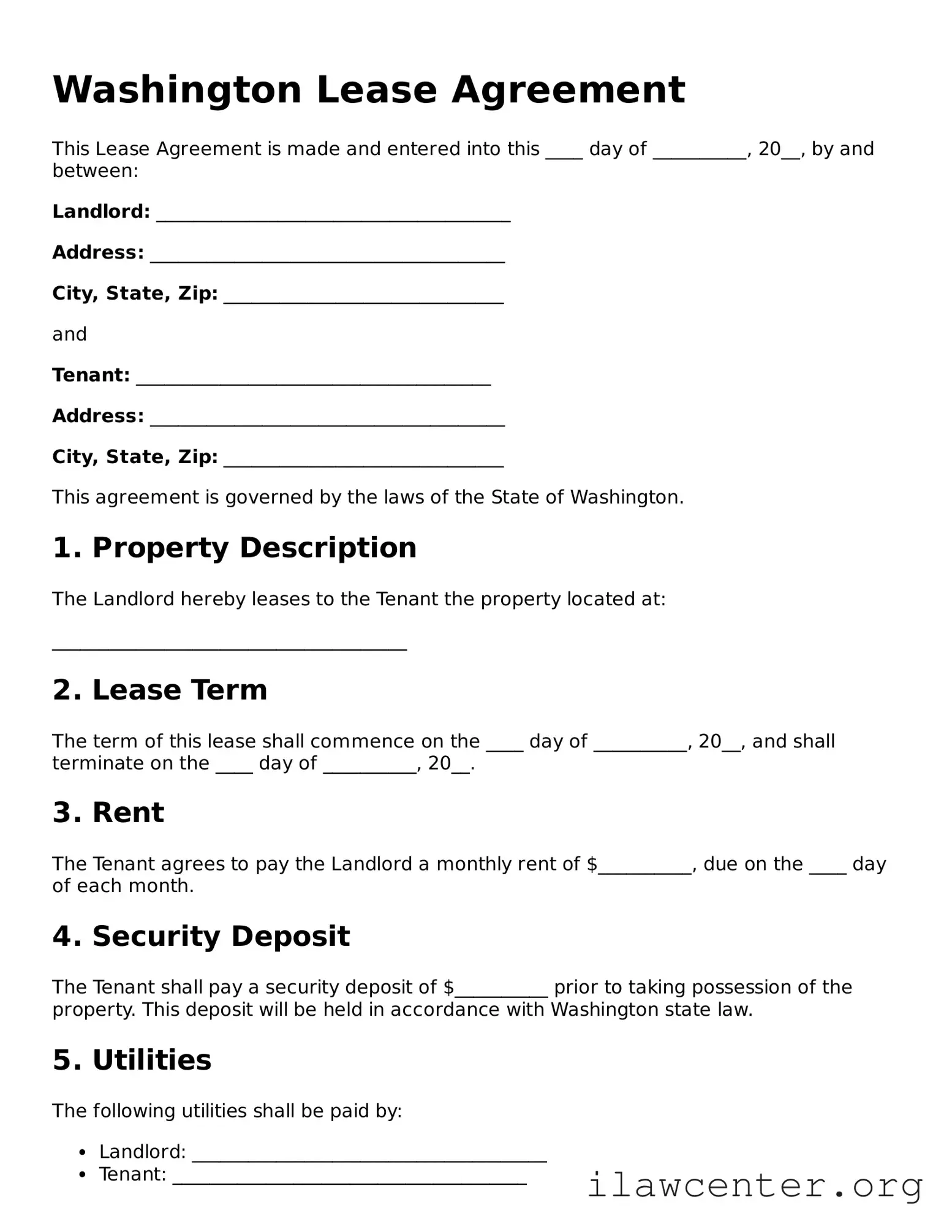
Washington Lease Agreement Preview

Washington Lease Agreement

This Lease Agreement is made and entered into this ____ day of __________, 20__, by and between:

Landlord: ______________________________________

Address: ______________________________________

City, State, Zip: ______________________________

and

Tenant: ______________________________________

Address: ______________________________________

City, State, Zip: ______________________________

This agreement is governed by the laws of the State of Washington.

1. Property Description

The Landlord hereby leases to the Tenant the property located at:

______________________________________

2. Lease Term

The term of this lease shall commence on the ____ day of __________, 20__, and shall terminate on the ____ day of __________, 20__.

3. Rent

The Tenant agrees to pay the Landlord a monthly rent of $__________, due on the ____ day of each month.

4. Security Deposit

The Tenant shall pay a security deposit of $__________ prior to taking possession of the property. This deposit will be held in accordance with Washington state law.

5. Utilities

The following utilities shall be paid by:

  • Landlord: ______________________________________
  • Tenant: ______________________________________

6. Maintenance and Repairs

The Tenant agrees to maintain the property in good condition and report any necessary repairs to the Landlord promptly.

7. Governing Law

This lease shall be governed by the laws of the State of Washington. Any disputes arising from this agreement shall be resolved in accordance with Washington state law.

8. Signatures

By signing below, both parties agree to the terms of this Lease Agreement.

Landlord Signature: ____________________________ Date: ____________

Tenant Signature: ____________________________ Date: ____________

PDF Form Characteristics

Fact Name Description
Purpose The Washington Lease Agreement form is used to outline the terms and conditions between a landlord and tenant for renting residential or commercial property.
Governing Law This agreement is governed by Washington State law, specifically the Revised Code of Washington (RCW) Title 59.
Duration The lease can be for a fixed term or month-to-month, depending on the agreement between the parties involved.
Security Deposit Landlords may require a security deposit, which must comply with Washington State regulations regarding the maximum amount and return timeline.
Disclosure Requirements Landlords must provide specific disclosures, including information about lead-based paint and the property's condition, as mandated by state law.

Instructions on Utilizing Washington Lease Agreement

Filling out a Washington Lease Agreement form is an important step in establishing a rental arrangement. This document outlines the responsibilities and rights of both the landlord and the tenant. Taking the time to carefully complete the form ensures clarity and helps prevent misunderstandings in the future.

  1. Begin by entering the date at the top of the form. This is important as it marks the official start of the agreement.
  2. Provide the name and address of the landlord. Make sure to include any contact information for easy communication.
  3. Next, fill in the tenant's name and current address. This identifies who will be residing in the rental property.
  4. Clearly state the address of the rental property. This should include the full street address, city, and zip code.
  5. Specify the lease term. Indicate whether it is a month-to-month lease or a fixed-term lease, and include the start and end dates if applicable.
  6. Detail the rent amount. Write down how much the tenant will pay each month and when the payment is due.
  7. Include any security deposit information. State the amount and the conditions under which it may be withheld at the end of the lease.
  8. Outline any additional fees or utilities that the tenant is responsible for. This could include water, gas, or electricity costs.
  9. Review any rules or regulations regarding pets, smoking, or other important policies. Be clear about what is allowed and what is not.
  10. Both the landlord and tenant should sign and date the agreement at the bottom of the form. This signifies that both parties agree to the terms laid out in the document.

After completing the form, ensure that both parties retain a copy for their records. This helps maintain transparency and provides a reference point should any questions arise during the tenancy.

Important Facts about Washington Lease Agreement

What is a Washington Lease Agreement?

A Washington Lease Agreement is a legal document that outlines the terms and conditions between a landlord and a tenant for renting residential or commercial property in Washington State. It details responsibilities, rights, and obligations of both parties throughout the lease period.

What essential elements should be included in the Lease Agreement?

Key components of a Washington Lease Agreement include the names of the landlord and tenant, property address, lease term (duration), rent amount, payment due dates, security deposit details, and any specific rules or regulations applicable to the property.

How long can a lease term be in Washington?

In Washington, lease terms can vary widely. They can be short-term (month-to-month) or long-term (typically one year or more). The length of the lease should be agreed upon by both parties and clearly stated in the agreement.

Are there any specific laws governing lease agreements in Washington?

Yes, Washington has specific laws that govern lease agreements, including the Residential Landlord-Tenant Act. This law provides protections for both landlords and tenants, addressing issues such as security deposits, eviction procedures, and tenant rights.

What is a security deposit, and what are the rules regarding it?

A security deposit is a sum of money collected by the landlord to cover potential damages or unpaid rent. In Washington, landlords can charge a security deposit, but they must provide a written receipt and cannot exceed one month's rent for residential properties. The deposit must be returned within 21 days after the lease ends, minus any lawful deductions.

Can a tenant break a lease early in Washington?

Yes, a tenant can break a lease early in Washington, but they may be responsible for paying rent until a new tenant is found or until the lease term ends, depending on the lease terms. Certain circumstances, such as domestic violence or military deployment, may allow for breaking the lease without penalty.

What happens if the landlord wants to terminate the lease?

If a landlord wishes to terminate a lease, they must provide proper notice as specified in the agreement or under state law. For month-to-month leases, a 20-day notice is typically required. For fixed-term leases, the landlord usually cannot terminate the lease without cause until the lease term ends.

Is it necessary to have a written lease agreement?

While verbal agreements can be legally binding, it is highly advisable to have a written lease agreement. A written document provides clarity and protects both parties by outlining specific terms and conditions. It serves as a reference in case of disputes.

What should a tenant do if they have a dispute with their landlord?

If a tenant has a dispute with their landlord, they should first try to communicate and resolve the issue directly. If that fails, they may seek mediation or legal advice. Washington offers resources through local housing authorities and legal aid organizations to help tenants understand their rights and options.

Common mistakes

When filling out the Washington Lease Agreement form, many people overlook important details that can lead to misunderstandings or legal issues. One common mistake is failing to include all necessary parties. It’s essential to list everyone who will be living in the rental property. This ensures that all tenants are legally recognized and bound by the terms of the lease.

Another frequent error is neglecting to specify the lease term. A lease should clearly state whether it is month-to-month or for a fixed term, such as one year. Without this information, both landlords and tenants may face confusion regarding their rights and responsibilities.

People often forget to detail the rent amount and payment schedule. It’s crucial to outline how much rent is due, when it is due, and the acceptable methods of payment. Leaving this information vague can lead to disputes down the line.

Additionally, tenants sometimes miss the importance of noting the security deposit. The lease should clearly state the amount of the deposit, the conditions for its return, and any deductions that may be taken. This protects both parties and helps avoid potential conflicts when the lease ends.

Another mistake involves not addressing maintenance responsibilities. The lease should specify who is responsible for repairs and maintenance of the property. This clarity can prevent disputes over who is liable for damages or necessary upkeep.

People often overlook the inclusion of pet policies. If pets are allowed or prohibited, this should be clearly stated in the lease. Not addressing this can lead to misunderstandings and potential violations of the lease terms.

Moreover, failing to include provisions for lease termination can create issues later. The lease should outline the process for terminating the agreement, including notice periods and any penalties. This ensures that both parties understand their rights if they need to end the lease early.

Another common mistake is not reviewing the lease thoroughly before signing. It’s vital to read the entire document and ask questions about anything that is unclear. Signing a lease without fully understanding its terms can lead to serious consequences.

Finally, people sometimes forget to keep a copy of the signed lease. After both parties have signed, it’s important to retain a copy for future reference. This serves as a record of the agreement and can be invaluable in case of disputes.

Documents used along the form

When entering into a rental agreement in Washington, it's essential to understand that the Washington Lease Agreement form is just one piece of the puzzle. Several other documents can complement this lease, providing clarity and protecting the rights of both landlords and tenants. Below are some of the key forms often used alongside the Washington Lease Agreement.

  • Rental Application: This document is typically filled out by prospective tenants. It collects personal information, employment history, and references. Landlords use this information to screen applicants and make informed decisions about who to rent to.
  • Move-In Checklist: This checklist is used to document the condition of the rental unit before a tenant moves in. It helps both parties agree on the state of the property, which can prevent disputes over security deposits when the tenant moves out.
  • Security Deposit Receipt: This receipt acknowledges the amount of the security deposit paid by the tenant. It serves as proof of the deposit and outlines the conditions under which it may be withheld at the end of the lease.
  • Lease Addendum: An addendum is a document added to the lease agreement to modify or add specific terms. This could include pet policies, additional fees, or rules regarding common areas. It ensures that both parties are clear on any special arrangements.

Understanding these documents is crucial for a smooth rental experience. They provide essential information and protections that benefit both landlords and tenants, fostering a transparent and cooperative rental relationship.

Similar forms

  • Rental Agreement: Similar to a lease, a rental agreement outlines the terms under which a property is rented. It typically covers the duration of the rental period, payment terms, and responsibilities of both parties. Unlike a lease, it may be more flexible and can be renewed on a month-to-month basis.

  • Sublease Agreement: A sublease agreement allows a tenant to rent out their leased property to another party. This document details the rights and obligations of the original tenant and the subtenant, ensuring that the original lease terms are still honored.

  • Commercial Lease: This document is specifically designed for rental agreements in commercial properties. It includes terms related to business operations, maintenance responsibilities, and often has different legal implications than residential leases.

  • Property Management Agreement: A property management agreement outlines the relationship between a property owner and a management company. It details the responsibilities of the management company in handling tenant relations, maintenance, and financial management.

  • Tenancy Agreement: This document is similar to a lease but may be used in situations where the arrangement is more informal. It sets the terms of occupancy and can be used for both short-term and long-term arrangements.

  • Roommate Agreement: A roommate agreement is designed for individuals sharing a rental property. It specifies how rent and utilities will be split, as well as house rules and responsibilities, helping to prevent disputes among roommates.

Dos and Don'ts

When filling out the Washington Lease Agreement form, it’s important to approach the task with care and attention to detail. Here are some essential dos and don’ts to keep in mind:

  • Do read the entire lease agreement thoroughly before filling it out. Understanding the terms is crucial.
  • Do provide accurate information. Double-check names, addresses, and dates to avoid confusion later.
  • Do ask questions if something is unclear. Clarifying terms with the landlord can prevent misunderstandings.
  • Do keep a copy of the completed lease for your records. This can be helpful for future reference.
  • Don't rush through the form. Taking your time can help you avoid mistakes.
  • Don't leave any sections blank unless instructed. Unanswered questions can lead to complications.
  • Don't ignore the fine print. Important details often hide in the less obvious sections.
  • Don't sign the lease until you fully understand all terms and conditions. Signing is a commitment.

Misconceptions

Many people have misconceptions about the Washington Lease Agreement form. Understanding these misconceptions can help clarify the rights and responsibilities of both landlords and tenants. Here are six common misunderstandings:

  1. All leases must be in writing.

    While it is recommended to have a written lease, oral agreements can also be legally binding in Washington. However, having a written document helps prevent disputes.

  2. Security deposits are non-refundable.

    This is not always true. In Washington, tenants may be entitled to a refund of their security deposit, minus any deductions for damages or unpaid rent.

  3. Landlords can enter the property at any time.

    Landlords must provide reasonable notice before entering a rental unit, usually 48 hours, except in emergencies.

  4. All repairs are the landlord's responsibility.

    While landlords are generally responsible for major repairs, tenants also have a duty to maintain the property and report issues promptly.

  5. Lease agreements cannot be changed.

    Lease agreements can be modified if both parties agree to the changes in writing. Verbal agreements may not hold up in court.

  6. Eviction can happen without notice.

    In Washington, landlords must provide written notice before beginning the eviction process. The notice period varies depending on the reason for eviction.

Key takeaways

When filling out and using the Washington Lease Agreement form, several key points should be considered to ensure clarity and compliance with state laws.

  • The lease should clearly identify the landlord and tenant, including their full names and contact information.
  • Specify the rental property address accurately to avoid any confusion regarding the premises being leased.
  • Outline the lease term, which can be either a fixed-term lease or a month-to-month agreement, and include start and end dates.
  • Detail the rent amount and payment schedule, including due dates and acceptable payment methods.
  • Include information about security deposits, such as the amount required and the conditions under which it may be withheld.
  • Clearly state the responsibilities of both parties regarding maintenance and repairs of the property.
  • Incorporate any rules and regulations that tenants must follow, such as noise restrictions or pet policies.
  • Ensure that the lease complies with Washington state laws, including disclosure requirements and tenant rights.
  • Both parties should sign and date the lease agreement to indicate their acceptance of the terms outlined.

Properly completing and utilizing the Washington Lease Agreement form can facilitate a smoother rental experience for both landlords and tenants.