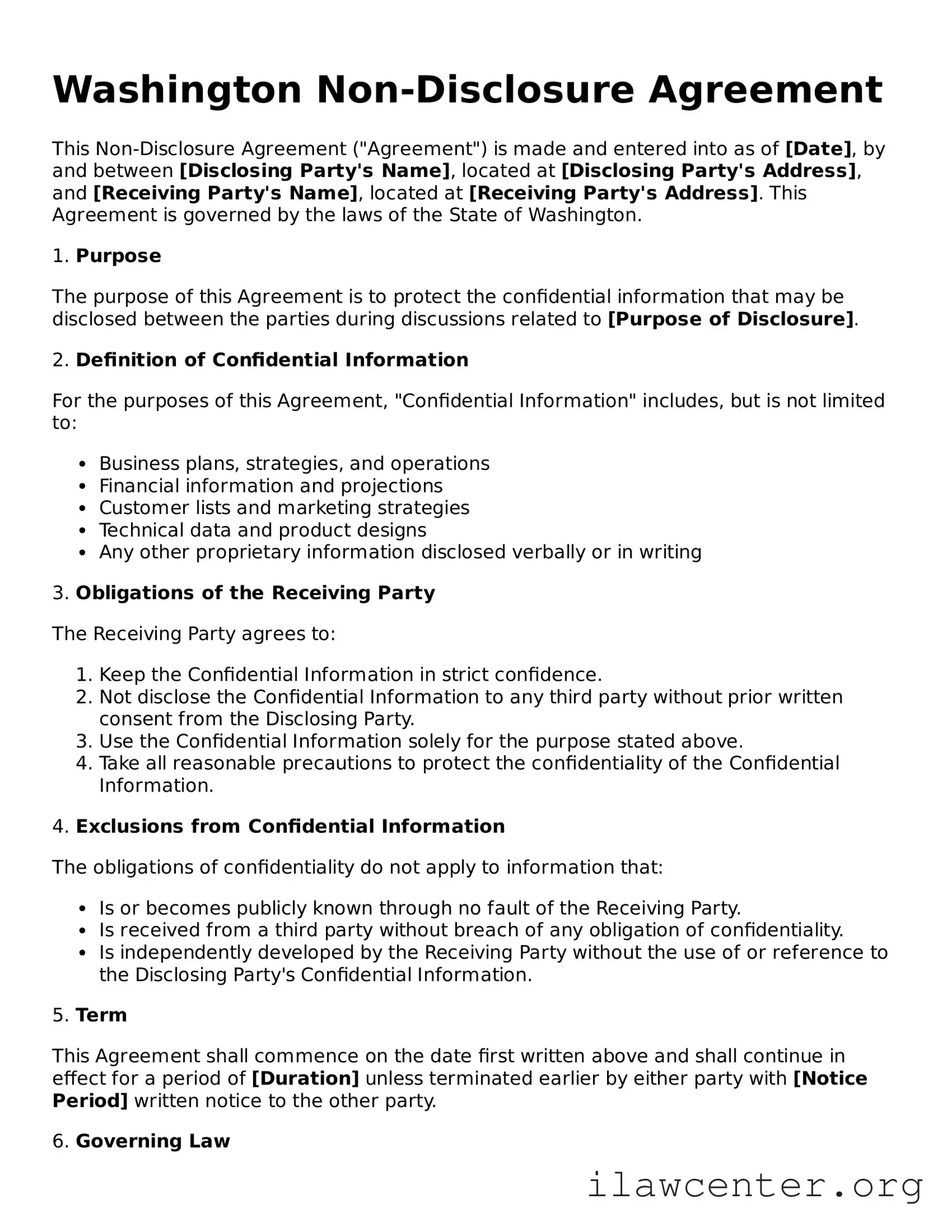
What is a Non-disclosure Agreement (NDA) in Washington State?
A Non-disclosure Agreement, or NDA, is a legally binding contract that protects confidential information shared between parties. In Washington State, it ensures that sensitive information, such as trade secrets, business plans, or proprietary data, is not disclosed to unauthorized individuals or entities. This agreement fosters trust and allows for open communication while safeguarding valuable information.
Who typically uses a Non-disclosure Agreement?
NDAs are commonly used by businesses, entrepreneurs, and individuals who share sensitive information. For instance, companies may require employees to sign an NDA to protect trade secrets. Similarly, when businesses engage in discussions with potential partners or investors, an NDA helps ensure that proprietary information remains confidential during negotiations.
What should be included in a Washington Non-disclosure Agreement?
A comprehensive NDA should clearly outline the definition of confidential information, the obligations of the receiving party, the duration of confidentiality, and any exclusions. Additionally, it should specify the purpose of sharing the information and the consequences of breaching the agreement. Clarity is essential to prevent misunderstandings in the future.
How long does the confidentiality obligation last?
The duration of confidentiality obligations can vary based on the agreement. Typically, NDAs specify a time frame, which can range from a few years to an indefinite period. It is important to consider the nature of the information being protected when determining how long the confidentiality should last. Some information may remain sensitive indefinitely, while others may become less so over time.
Can I modify a Non-disclosure Agreement?
Yes, NDAs can be modified to better suit the needs of the parties involved. Any changes should be made in writing and signed by all parties to ensure that the modifications are legally enforceable. It is advisable to review the agreement carefully before signing, especially if alterations are made, to ensure that all parties are in agreement on the terms.
What happens if someone breaches the NDA?
If a party breaches the NDA, the injured party may seek legal remedies. This can include monetary damages, injunctive relief, or specific performance, depending on the circumstances. It is crucial to document any breach thoroughly, as this evidence will support any legal claims. Open communication may also help resolve issues before they escalate to legal action.
Is it necessary to have a lawyer review my NDA?
While it is not legally required to have a lawyer review your NDA, it is highly advisable. A legal professional can help ensure that the agreement complies with Washington State laws and adequately protects your interests. They can also provide guidance on the specific terms that should be included, tailored to your unique situation.
Can an NDA be enforced in Washington State?
Yes, NDAs are enforceable in Washington State, provided they meet legal requirements. The agreement must be clear, reasonable, and not overly broad. Courts will typically uphold NDAs as long as they protect legitimate business interests and do not impose unfair restrictions on the parties involved. If disputes arise, having a well-drafted NDA can significantly strengthen your position.