Fillable Wedding Venue Contract Document

Fillable Wedding Venue Contract Document

A Wedding Venue Contract is a formal agreement between a couple and a venue, outlining the terms and conditions for hosting a wedding. This document serves to protect both parties by detailing essential information such as the date, fees, and cancellation policies. Understanding this contract is crucial for ensuring a smooth planning process and a memorable celebration.

To get started, please fill out the form by clicking the button below.

Article Guide

Planning a wedding involves countless details, and one of the most critical elements is securing the right venue. A Wedding Venue Contract serves as the formal agreement between you and the venue, outlining essential aspects that ensure your special day goes off without a hitch. This contract typically includes key information such as the date and time of the event, the total rental fee, and any deposits required. It also specifies the venue's capacity, the services included—like catering, decoration, or audio-visual equipment—and the policies regarding cancellations or changes. Additionally, it may address liability issues, insurance requirements, and any restrictions on decorations or music. Understanding each component of this contract is vital, as it protects both parties and sets clear expectations, allowing you to focus on what truly matters: celebrating your love with family and friends.

Wedding Venue Contract Preview

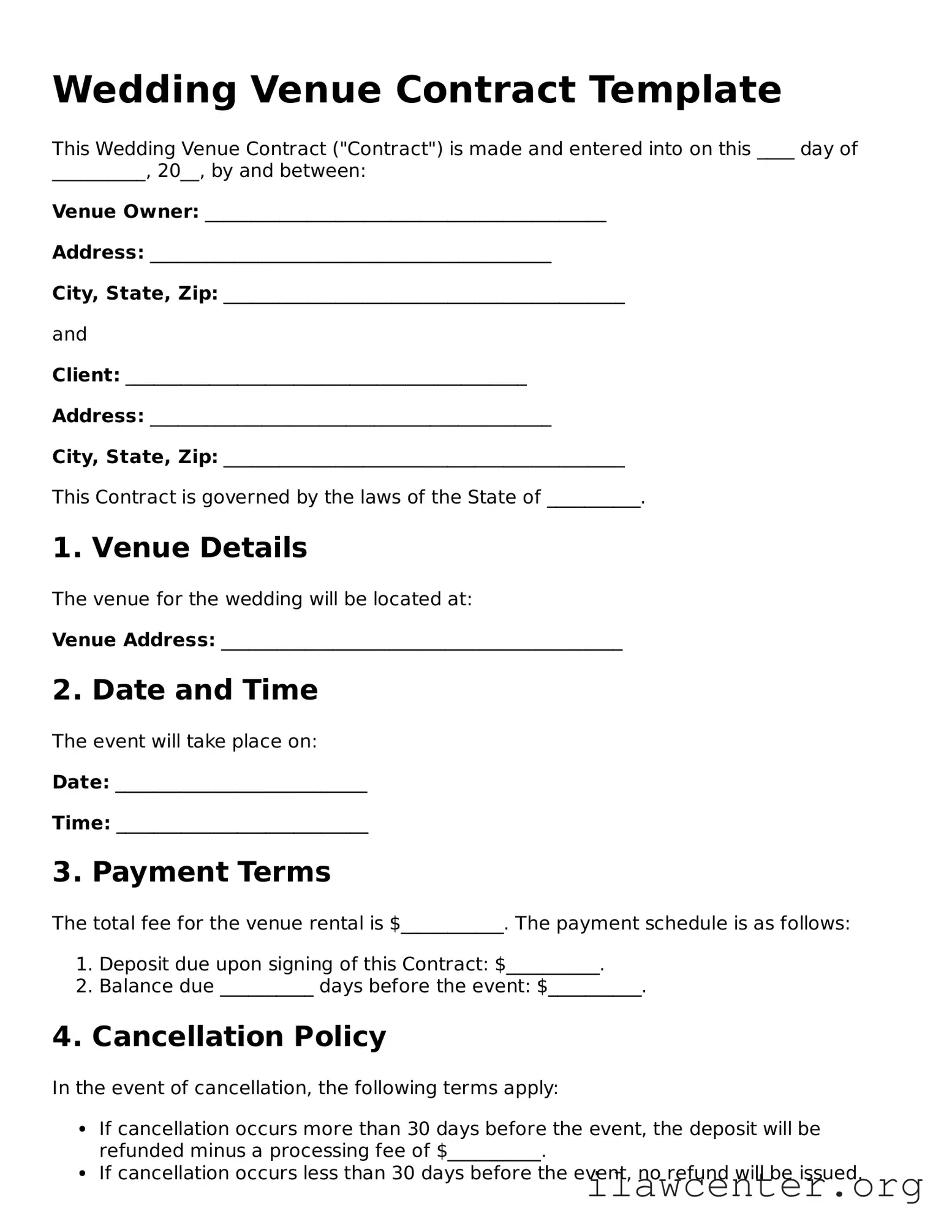
Wedding Venue Contract Template

This Wedding Venue Contract ("Contract") is made and entered into on this ____ day of __________, 20__, by and between:

Venue Owner: ___________________________________________

Address: ___________________________________________

City, State, Zip: ___________________________________________

and

Client: ___________________________________________

Address: ___________________________________________

City, State, Zip: ___________________________________________

This Contract is governed by the laws of the State of __________.

1. Venue Details

The venue for the wedding will be located at:

Venue Address: ___________________________________________

2. Date and Time

The event will take place on:

Date: ___________________________

Time: ___________________________

3. Payment Terms

The total fee for the venue rental is $___________. The payment schedule is as follows:

  1. Deposit due upon signing of this Contract: $__________.
  2. Balance due __________ days before the event: $__________.

4. Cancellation Policy

In the event of cancellation, the following terms apply:

  • If cancellation occurs more than 30 days before the event, the deposit will be refunded minus a processing fee of $__________.
  • If cancellation occurs less than 30 days before the event, no refund will be issued.

5. Responsibilities of the Venue Owner

The Venue Owner agrees to:

  • Provide the venue in a clean and safe condition.
  • Ensure that all facilities are operational on the day of the event.

6. Responsibilities of the Client

The Client agrees to:

  • Adhere to the agreed-upon schedule and terms of use.
  • Be responsible for any damages incurred during the event.

7. Indemnification

The Client agrees to indemnify and hold harmless the Venue Owner from any claims, damages, or liabilities arising from the event.

8. Signatures

By signing below, both parties agree to the terms outlined in this Contract.

Venue Owner Signature: ___________________________ Date: _____________

Client Signature: ___________________________ Date: _____________

PDF Form Characteristics

Fact Name Details
Definition A Wedding Venue Contract is a legal agreement between a couple and a venue for hosting their wedding event.
Purpose This contract outlines the terms and conditions, including payment, cancellation policies, and services provided by the venue.
Deposit Requirements Most venues require a non-refundable deposit to secure the booking date, often a percentage of the total cost.
Cancellation Policy The contract should specify the terms under which either party can cancel, including any penalties or forfeiture of deposits.
Governing Law In the United States, the governing law will vary by state; for example, California contracts are governed by California law.
Inclusions The contract typically includes details about the venue's amenities, such as seating, catering, and decoration options.
Liability Clauses It often contains clauses that limit the venue's liability in case of accidents or damages during the event.
Signature Requirement Both parties must sign the contract for it to be legally binding, ensuring mutual agreement on the terms.

Instructions on Utilizing Wedding Venue Contract

Completing the Wedding Venue Contract form is an essential step in securing your chosen location for your special day. Ensuring that all details are accurately filled out will help prevent any misunderstandings and ensure a smooth planning process. Follow the steps below to fill out the form correctly.

  1. Read the Entire Contract: Before filling out any information, take the time to read through the entire contract to understand the terms and conditions.
  2. Fill in the Venue Information: Enter the name and address of the wedding venue at the designated section.
  3. Provide Your Details: Input your full name, contact number, and email address. Make sure this information is accurate for communication purposes.
  4. Enter the Event Date: Clearly write the date of your wedding. Double-check this date to avoid any errors.
  5. Specify the Time: Indicate the start and end times for your event. This helps the venue staff prepare accordingly.
  6. List the Number of Guests: Estimate the number of guests you expect to attend. This information is crucial for seating arrangements and catering.
  7. Review Payment Terms: Fill out the payment section, including any deposits required and the total cost of the venue rental.
  8. Sign the Contract: After ensuring all information is correct, sign the contract where indicated. Your signature signifies your agreement to the terms.
  9. Date Your Signature: Don’t forget to write the date next to your signature to validate the contract.

After completing the form, keep a copy for your records and submit it to the venue as instructed. This will help ensure that your booking is confirmed and that all arrangements are in place for your wedding day.

Important Facts about Wedding Venue Contract

What is a Wedding Venue Contract?

A Wedding Venue Contract is a formal agreement between you and the venue where your wedding will take place. This document outlines the terms and conditions of your rental, including details such as the date, time, fees, and any specific services provided by the venue. It serves to protect both parties and ensures that everyone is on the same page regarding expectations.

Why do I need a Wedding Venue Contract?

Having a Wedding Venue Contract is essential for several reasons. First, it provides legal protection, ensuring that your rights are upheld if any issues arise. Second, it clearly defines the responsibilities of both you and the venue, reducing the chances of misunderstandings. Finally, it helps secure your date and venue, giving you peace of mind as you plan your special day.

What should I look for in a Wedding Venue Contract?

When reviewing a Wedding Venue Contract, pay close attention to several key elements. Look for the total cost, including deposits, payment schedules, and cancellation policies. Check the details regarding the venue's capacity, available services (like catering or decoration), and any restrictions (such as noise ordinances). Make sure to understand the terms for liability and insurance as well.

What happens if I need to cancel my wedding?

Cancellation policies can vary widely between venues, so it’s crucial to understand the specific terms outlined in your contract. Typically, you may lose your deposit, but some venues might offer partial refunds depending on how far in advance you cancel. Always review the cancellation terms to know what to expect and consider discussing options with the venue if you find yourself in this situation.

Can I make changes to the contract after signing?

Yes, changes can often be made to the contract, but both parties must agree to these modifications. It’s best to document any changes in writing, and both you and the venue should sign off on these updates. This ensures that everyone is aware of the new terms and helps avoid any confusion later on.

What if the venue double-books my date?

In the event of a double booking, the venue should have a policy in place to address this issue. Typically, they will either offer you a different date or assist you in finding an alternative venue. Review the contract to see how this situation is handled and ensure that you have a clear understanding of your options should it arise.

Are there any additional fees I should be aware of?

Additional fees can often catch couples off guard. Common extra charges include service fees, cleaning fees, and charges for overtime if your event runs longer than agreed. Before signing, ask the venue for a complete breakdown of all potential costs to avoid surprises on your wedding day.

What if I have specific requests for my wedding?

If you have particular requests, such as unique decorations or specific catering needs, discuss these with the venue before signing the contract. Some venues may be flexible and willing to accommodate your wishes, while others may have strict guidelines. Clarifying these details upfront can help ensure your vision for the wedding is realized.

How do I ensure the venue is up to code?

To ensure the venue meets safety and legal requirements, you can ask for documentation showing that the venue is licensed and compliant with local regulations. Inquire about their insurance coverage and safety measures in place. It’s always a good idea to visit the venue and assess its condition before making a final commitment.

What should I do if I have a dispute with the venue?

If a dispute arises, the first step is to communicate directly with the venue management. Many issues can be resolved through open dialogue. If that doesn’t work, refer back to the contract for guidance on dispute resolution procedures. Consider mediation or legal advice if necessary, but try to resolve matters amicably whenever possible.
Common mistakes

When filling out a Wedding Venue Contract form, many individuals overlook essential details that can lead to complications down the line. One common mistake is failing to read the entire contract thoroughly. This oversight can result in misunderstandings about what is included in the rental fee and what additional costs may arise. Taking the time to review each section carefully can prevent unexpected expenses and ensure that all parties are on the same page.

Another frequent error involves incorrect dates or times. It is crucial to double-check the date of the wedding and the time for the ceremony and reception. A simple typo could lead to a venue being booked on the wrong day, causing significant stress and potential loss of deposits. Always confirm these details with the venue to avoid any confusion.

People often forget to include important contact information. When filling out the contract, it’s vital to provide accurate details for both the couple and any wedding planners or coordinators involved. This information ensures that the venue can communicate effectively regarding any changes or requirements leading up to the event. Missing contact information can lead to delays and miscommunication.

Lastly, neglecting to understand the cancellation and refund policies is a mistake that can have serious consequences. Many contracts contain specific clauses regarding what happens if plans change. Couples should take the time to familiarize themselves with these policies to know their rights and obligations. This understanding can provide peace of mind and help in making informed decisions if circumstances require a change in plans.

Documents used along the form

When planning a wedding, several key documents complement the Wedding Venue Contract. Each of these forms serves a specific purpose, ensuring that all aspects of the event are well-organized and legally sound.

  • Event Planning Agreement: This document outlines the terms between the couple and the wedding planner. It details services provided, fees, and responsibilities, helping to prevent misunderstandings.
  • Catering Contract: This agreement is between the couple and the catering service. It specifies the menu, pricing, and service details, ensuring that food and beverage needs are met on the wedding day.
  • Photography Agreement: This contract establishes the terms of service between the couple and the photographer. It covers the scope of work, deliverables, and payment terms, ensuring that memories are captured as desired.
  • Floral Agreement: This document outlines the arrangement between the couple and the florist. It details flower selection, delivery, and setup, ensuring that the venue is beautifully decorated.
  • Entertainment Contract: This agreement is between the couple and the entertainment provider, such as a band or DJ. It specifies performance details, duration, and payment, ensuring a lively atmosphere.
  • Rental Agreement: This document is for any rental items needed for the wedding, such as tables, chairs, and linens. It outlines the terms of rental, including delivery and pickup arrangements.
  • Insurance Policy: This is a crucial document that provides coverage for potential liabilities. It protects against accidents or damages that may occur during the event.
  • Guest List: While not a formal contract, this document is essential for planning. It helps manage invitations, seating arrangements, and catering needs, ensuring that all guests are accounted for.

Each of these documents plays a vital role in the smooth execution of a wedding. By understanding their importance, couples can better navigate the planning process and ensure a successful celebration.

Similar forms

  • Event Space Rental Agreement: This document outlines the terms for renting a space for various events, similar to a wedding venue contract. Both specify rental fees, duration, and any rules regarding the use of the space.
  • Vendor Agreement: A vendor agreement details the relationship between a client and a service provider, such as a caterer or florist. Like the wedding venue contract, it includes services provided, payment terms, and cancellation policies.
  • Photography Contract: This document governs the relationship between a couple and their photographer. It shares similarities with the wedding venue contract in terms of defining deliverables, fees, and usage rights for the images taken during the event.
  • Wedding Planner Agreement: This agreement outlines the services a wedding planner will provide. Much like the wedding venue contract, it covers payment details, responsibilities, and timelines to ensure a smooth planning process.

Dos and Don'ts

When filling out a Wedding Venue Contract form, attention to detail is crucial. This document can significantly impact your special day, so here are some important dos and don'ts to consider.

Things You Should Do:

  • Read the entire contract thoroughly. Understanding every clause is essential to avoid surprises later.
  • Clearly specify the date and time of your event. This ensures that the venue is reserved for your specific needs.
  • Double-check the payment terms. Make sure you know the deposit amount and payment schedule.
  • Confirm the cancellation policy. Knowing the terms can save you from potential financial loss if plans change.
  • Ask questions. If anything is unclear, seek clarification from the venue manager.

Things You Shouldn't Do:

  • Don't rush through the contract. Take your time to review each section carefully.
  • Avoid making verbal agreements. Ensure that all promises are documented in writing.
  • Don't overlook the fine print. Important details are often found in the smaller text.
  • Never assume everything is included. Confirm what services and amenities are part of the package.
  • Don't sign without a final review. A last-minute check can catch any overlooked issues.

By following these guidelines, you can navigate the Wedding Venue Contract form with confidence, ensuring a smoother planning process for your big day.

Misconceptions

Many people have misunderstandings about the Wedding Venue Contract. These misconceptions can lead to confusion and unexpected issues. Here are seven common misconceptions explained:

  1. The contract is just a formality.

    Some believe that signing the contract is merely a formality. In reality, it is a legally binding document that outlines the rights and responsibilities of both parties.

  2. All venues have the same contract terms.

    This is not true. Each venue may have different terms, conditions, and policies. It is essential to read and understand the specific contract for your chosen venue.

  3. Verbal agreements are sufficient.

    Many think that verbal agreements will hold up in court. However, without written documentation, it can be challenging to enforce any promises made verbally.

  4. Deposit payments are non-refundable.

    While some venues have strict deposit policies, others may offer refunds under certain conditions. Always check the contract for specific refund policies regarding deposits.

  5. Changing the date is always easy.

    Some assume that changing the wedding date is a simple process. However, this may incur additional fees or require renegotiation of terms, depending on the venue's policy.

  6. The venue is responsible for all aspects of the event.

    Many people mistakenly believe the venue will handle everything. In truth, the couple is often responsible for coordinating vendors, decorations, and other details.

  7. Contracts are only necessary for large weddings.

    Some think that contracts are only needed for large events. However, even small gatherings benefit from clear agreements to avoid misunderstandings.

Understanding these misconceptions can help ensure a smoother planning process for your wedding.

Key takeaways

When it comes to securing your wedding venue, understanding the contract is crucial. Here are some key takeaways to keep in mind:

  • Read the Entire Contract: It’s essential to read the entire contract carefully. This document outlines all terms and conditions related to your venue, including payment schedules, cancellation policies, and any restrictions.
  • Clarify Payment Details: Ensure you understand the payment structure. Know how much is due upfront, when the final payment is required, and what forms of payment are accepted.
  • Ask About Refund Policies: Life can be unpredictable, so inquire about the venue's refund policies. Understanding how cancellations or changes affect your deposit can save you money and stress later.
  • Confirm Amenities and Services: Make sure the contract specifies what is included in your rental. This can range from tables and chairs to sound systems and catering services. Clear details help avoid misunderstandings.

By keeping these points in mind, you can navigate the wedding venue contract with confidence and ensure a smooth planning process for your special day.