Fillable Weekly Rental Agreement Document

Fillable Weekly Rental Agreement Document

A Weekly Rental Agreement is a legal document that outlines the terms and conditions for renting a property on a weekly basis. This form serves to protect both the landlord and the tenant by clearly defining expectations, responsibilities, and payment details. To ensure a smooth rental experience, consider filling out the agreement by clicking the button below.

Article Guide

When engaging in short-term rental arrangements, clarity and mutual understanding between landlords and tenants are paramount. The Weekly Rental Agreement form serves as a crucial document in this context, outlining the terms and conditions that govern the rental relationship. This form typically includes essential details such as the rental property’s address, the duration of the lease, and the weekly rental rate. It also specifies the responsibilities of both parties, addressing issues like maintenance, utilities, and any rules regarding the use of the property. Additionally, the agreement often outlines the process for handling disputes and the conditions under which either party may terminate the lease. By establishing these parameters, the Weekly Rental Agreement not only protects the interests of both landlords and tenants but also fosters a respectful and transparent rental experience.

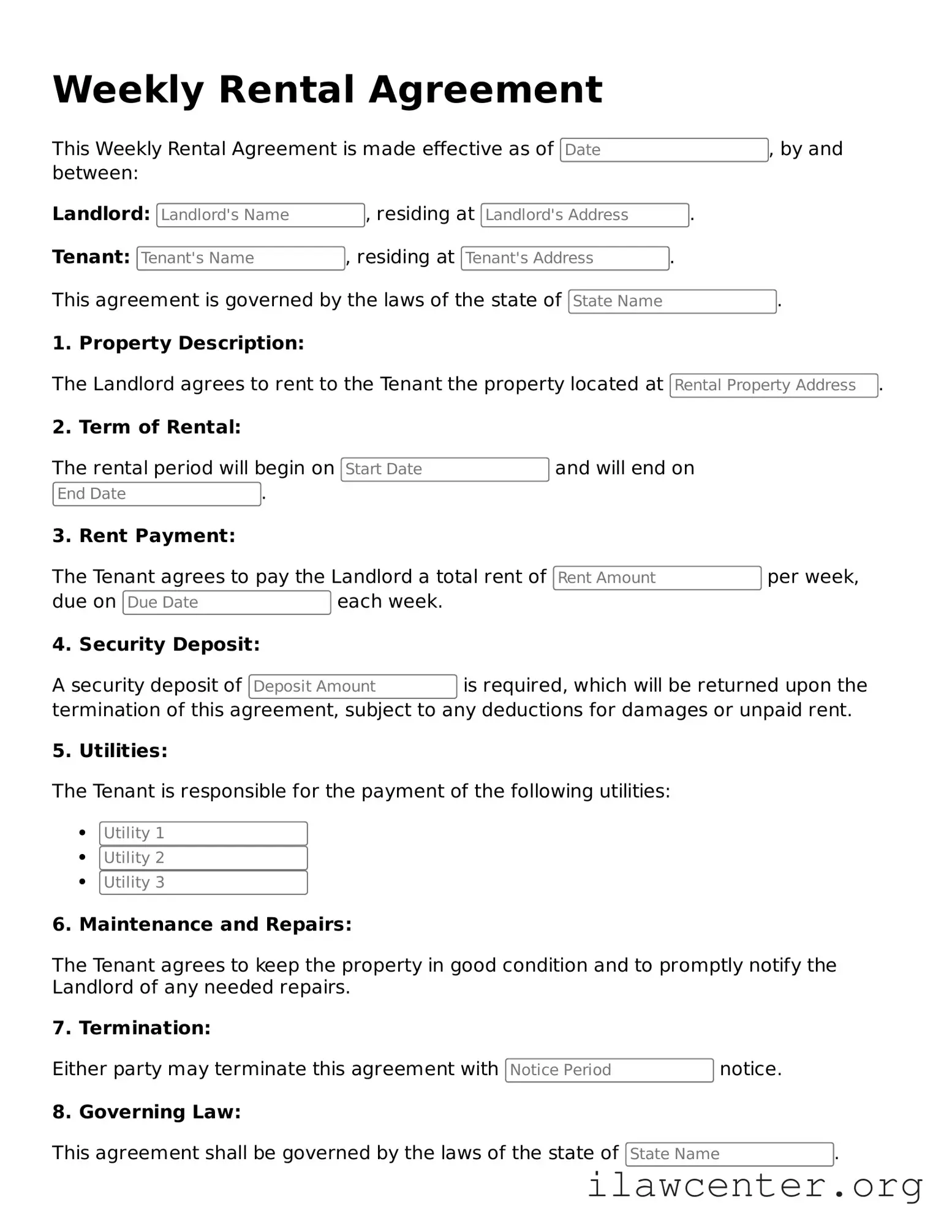
Weekly Rental Agreement Preview

Weekly Rental Agreement

This Weekly Rental Agreement is made effective as of , by and between:

Landlord: , residing at .

Tenant: , residing at .

This agreement is governed by the laws of the state of .

1. Property Description:

The Landlord agrees to rent to the Tenant the property located at .

2. Term of Rental:

The rental period will begin on and will end on .

3. Rent Payment:

The Tenant agrees to pay the Landlord a total rent of per week, due on each week.

4. Security Deposit:

A security deposit of is required, which will be returned upon the termination of this agreement, subject to any deductions for damages or unpaid rent.

5. Utilities:

The Tenant is responsible for the payment of the following utilities:

6. Maintenance and Repairs:

The Tenant agrees to keep the property in good condition and to promptly notify the Landlord of any needed repairs.

7. Termination:

Either party may terminate this agreement with notice.

8. Governing Law:

This agreement shall be governed by the laws of the state of .

IN WITNESS WHEREOF, the parties have executed this Weekly Rental Agreement as of the date first above written.

Landlord Signature: ____________________________ Date: ___________

Tenant Signature: ____________________________ Date: ___________

PDF Form Characteristics

Fact Name Description
Definition A Weekly Rental Agreement is a contract between a landlord and tenant that outlines the terms of renting a property on a weekly basis.
Duration This agreement typically lasts for one week and can be renewed or terminated as per the terms set forth in the document.
Governing Law The agreement is governed by state-specific laws, which vary by location. For example, in California, it is governed by the California Civil Code.
Security Deposit Landlords may require a security deposit, which is usually refundable at the end of the rental period, provided there is no damage to the property.
Payment Terms The agreement specifies the rental amount due each week and the acceptable methods of payment, such as cash, check, or electronic transfer.
Responsibilities Both parties have responsibilities outlined in the agreement, including maintenance of the property and payment of utilities.
Termination Clause The agreement includes a termination clause, detailing how either party can end the rental arrangement, often requiring advance notice.
Additional Provisions Landlords may include additional provisions, such as rules regarding pets, smoking, or the number of occupants allowed in the property.

Instructions on Utilizing Weekly Rental Agreement

Filling out the Weekly Rental Agreement form is an important step in establishing the terms of a rental arrangement. Once the form is completed, both parties can review the details, ensuring that everyone is on the same page regarding the rental conditions.

  1. Begin by entering the date at the top of the form. This helps establish when the agreement is being made.
  2. In the next section, provide the landlord's name and contact information. This ensures that the tenant knows who to reach out to if they have questions or concerns.
  3. Next, fill in the tenant's name and contact information. Accurate details are essential for communication.
  4. Specify the property address being rented. This includes the street address, city, and zip code.
  5. Indicate the rental amount due each week. Make sure this is clear to avoid any confusion later.
  6. Enter the security deposit amount, if applicable. This is often required to cover any potential damages.
  7. Clearly state the rental period. This defines how long the agreement will be in effect.
  8. Include any special terms or conditions that apply to the rental. This could cover rules about pets, maintenance, or other important details.
  9. Both the landlord and tenant should sign and date the form at the bottom. This finalizes the agreement and makes it legally binding.

Important Facts about Weekly Rental Agreement

What is a Weekly Rental Agreement?

A Weekly Rental Agreement is a legal document that outlines the terms and conditions under which a property is rented on a weekly basis. It typically includes details about the rental amount, duration, responsibilities of both the landlord and tenant, and any rules that must be followed during the rental period.

Who should use a Weekly Rental Agreement?

This agreement is ideal for landlords who rent out properties on a short-term basis, such as vacation rentals or temporary housing. It is also useful for tenants looking for flexible rental options without committing to a long-term lease.

What information is included in the Weekly Rental Agreement?

The agreement generally includes the names of the landlord and tenant, property address, rental amount, payment due dates, security deposit details, and any specific rules regarding the property. It may also outline maintenance responsibilities and procedures for terminating the agreement.

How is the rental amount determined?

The rental amount is usually based on factors such as the property's location, size, amenities, and market demand. Landlords often research similar properties in the area to set a competitive rate.

Can the rental amount be changed during the agreement?

Typically, the rental amount remains fixed for the duration of the agreement unless otherwise stated. Any changes should be clearly outlined in the agreement and agreed upon by both parties. It's important to communicate any potential increases well in advance.

What happens if the tenant wants to leave early?

If a tenant wishes to leave before the agreement ends, they should review the terms of the agreement. Many agreements include a notice period or penalties for early termination. Open communication with the landlord can sometimes lead to a mutual agreement.

Is a security deposit required?

Most landlords require a security deposit to cover potential damages or unpaid rent. The amount is usually specified in the agreement. It’s essential for tenants to understand the conditions under which the deposit may be withheld or returned.

What if there are disputes between the landlord and tenant?

Disputes can often be resolved through direct communication. If that fails, the agreement may specify a mediation process or other steps to follow. In some cases, legal action may be necessary, but it’s best to try to resolve issues amicably first.

How can both parties ensure the agreement is legally binding?

To make the agreement legally binding, both parties should sign and date the document. It’s advisable to keep a copy for personal records. Additionally, having the agreement notarized can add an extra layer of security.

Can the Weekly Rental Agreement be modified?

Yes, the agreement can be modified, but any changes must be documented in writing and signed by both parties. Verbal agreements are generally not enforceable, so it’s crucial to have everything in writing.
Common mistakes

Filling out a Weekly Rental Agreement form can seem straightforward, but many people make common mistakes that can lead to misunderstandings or disputes later on. One frequent error is failing to provide accurate personal information. This includes not only names but also addresses and contact details. If the information is incorrect, it can complicate communication and even legal matters down the line.

Another common mistake is not reading the terms and conditions thoroughly. Many people skim through the agreement, assuming they understand it. However, overlooking specific clauses can lead to unexpected obligations or fees. It’s crucial to know what you’re agreeing to before signing on the dotted line.

Some individuals neglect to specify the rental period clearly. This can create confusion about when the rental starts and ends. Without clear dates, both parties may have different expectations, leading to disputes. Always double-check that the rental period is clearly stated.

In addition, people often forget to note any pre-existing damages or issues with the property. If these details are not documented, it can lead to disputes over security deposits when the rental ends. Taking the time to note any issues protects both the renter and the property owner.

Another mistake involves not understanding the payment terms. Renters may overlook details about when payments are due or how they should be made. This can result in late fees or other penalties. It’s essential to clarify these terms to avoid any surprises.

Lastly, many individuals fail to keep a copy of the signed agreement. After signing, it’s important to retain a copy for personal records. Without it, you may find yourself without proof of the terms you agreed to, which can be problematic if disputes arise later.

Documents used along the form

The Weekly Rental Agreement form is an essential document for landlords and tenants who engage in short-term rental arrangements. Alongside this agreement, several other forms and documents may be necessary to ensure a smooth rental process. Below is a list of these documents, each serving a specific purpose in the rental transaction.

  • Rental Application: This form collects information about the prospective tenant, including their employment history, rental history, and references. It helps landlords assess the suitability of applicants.
  • Credit Check Authorization: This document allows landlords to obtain a credit report on the potential tenant. It provides insights into the tenant's financial history and reliability.
  • Move-In Inspection Checklist: This checklist is used to document the condition of the rental property before the tenant moves in. It helps prevent disputes over security deposits later on.
  • Security Deposit Receipt: This receipt acknowledges the payment of a security deposit by the tenant. It serves as proof of the amount received and outlines the conditions for its return.
  • Rules and Regulations: This document outlines the specific rules that tenants must follow while living in the rental property. It may cover topics such as noise levels, maintenance responsibilities, and pet policies.
  • Lease Addendum: This is an additional document that modifies or adds to the original rental agreement. It may include changes to terms or conditions agreed upon after the initial contract was signed.
  • Notice to Quit: This form is used by landlords to formally notify tenants of their need to vacate the property. It often includes the reasons for the eviction and the time frame for moving out.
  • Termination of Tenancy Notice: This document is used to officially end the rental agreement. It outlines the final terms and conditions for the termination, including any obligations that remain.

Using these forms and documents in conjunction with the Weekly Rental Agreement can help both landlords and tenants clarify their rights and responsibilities. A well-organized approach to rental documentation fosters better communication and reduces potential conflicts.

Similar forms

  • Lease Agreement: A lease agreement outlines the terms under which a tenant rents property from a landlord. Like the Weekly Rental Agreement, it specifies the duration of the rental, payment details, and responsibilities of both parties.

  • Month-to-Month Rental Agreement: This document allows tenants to rent property on a monthly basis without a long-term commitment. Similar to the Weekly Rental Agreement, it includes terms for payment and notice requirements for termination.

  • Sublease Agreement: A sublease agreement permits a tenant to rent out their leased property to another person. It shares similarities with the Weekly Rental Agreement in terms of specifying rental terms and responsibilities, but it involves multiple parties.

  • Room Rental Agreement: This type of agreement is used when renting out a room in a shared living space. Like the Weekly Rental Agreement, it details payment, duration, and house rules, but focuses on individual rooms rather than entire properties.

  • Short-Term Rental Agreement: Often used for vacation rentals, this agreement covers rentals for a limited time. Similar to the Weekly Rental Agreement, it includes payment terms and house rules, but typically caters to a transient audience.

  • Commercial Rental Agreement: This document is used for renting commercial spaces. While it is tailored for businesses, it mirrors the Weekly Rental Agreement in terms of outlining payment, duration, and responsibilities of the tenant and landlord.

Dos and Don'ts

When filling out the Weekly Rental Agreement form, it's important to be careful and thorough. Here are some guidelines to follow:

  • Do read the entire form before filling it out.
  • Do provide accurate and complete information.
  • Do double-check your contact details for any errors.
  • Do sign and date the form where required.
  • Do keep a copy of the completed form for your records.
  • Don't rush through the form; take your time.
  • Don't leave any required fields blank.
  • Don't provide false information or misrepresent your situation.
  • Don't forget to read the terms and conditions.
  • Don't ignore deadlines for submission.

Misconceptions

Many people have misunderstandings about the Weekly Rental Agreement form. Here are four common misconceptions:

  • It is only for short-term rentals. Some believe this form is only suitable for vacation rentals or brief stays. In reality, it can also be used for longer-term arrangements, depending on the terms agreed upon by both parties.
  • It does not require signatures. Another misconception is that a verbal agreement suffices. A written contract, complete with signatures, is crucial for both parties to ensure clarity and enforceability.
  • It is a standard form with no room for customization. Many think the Weekly Rental Agreement is a one-size-fits-all document. However, it can be tailored to fit specific needs, including unique terms and conditions that both the landlord and tenant agree upon.
  • It does not protect the tenant's rights. Some assume that this form only benefits the landlord. In fact, it outlines the rights and responsibilities of both parties, providing essential protections for tenants as well.

Key takeaways

When filling out and using the Weekly Rental Agreement form, it’s important to keep several key points in mind to ensure a smooth rental experience. Below are some essential takeaways:

  • Complete Information: Ensure that all required fields are filled out accurately. This includes the names of both the landlord and tenant, property address, and rental terms.
  • Rental Amount: Clearly state the weekly rental amount. Specify the payment due date to avoid any confusion later on.
  • Security Deposit: If a security deposit is required, include the amount and explain the conditions under which it may be withheld.
  • Duration of Agreement: Specify the start and end dates of the rental period. This helps both parties understand the timeframe of the agreement.
  • Rules and Regulations: Outline any specific rules that tenants must follow. This could include pet policies, noise restrictions, or maintenance responsibilities.
  • Signatures: Both the landlord and tenant must sign the agreement. This confirms that both parties understand and agree to the terms laid out in the document.

By keeping these points in mind, both landlords and tenants can help ensure a clear understanding of the rental terms and responsibilities.